
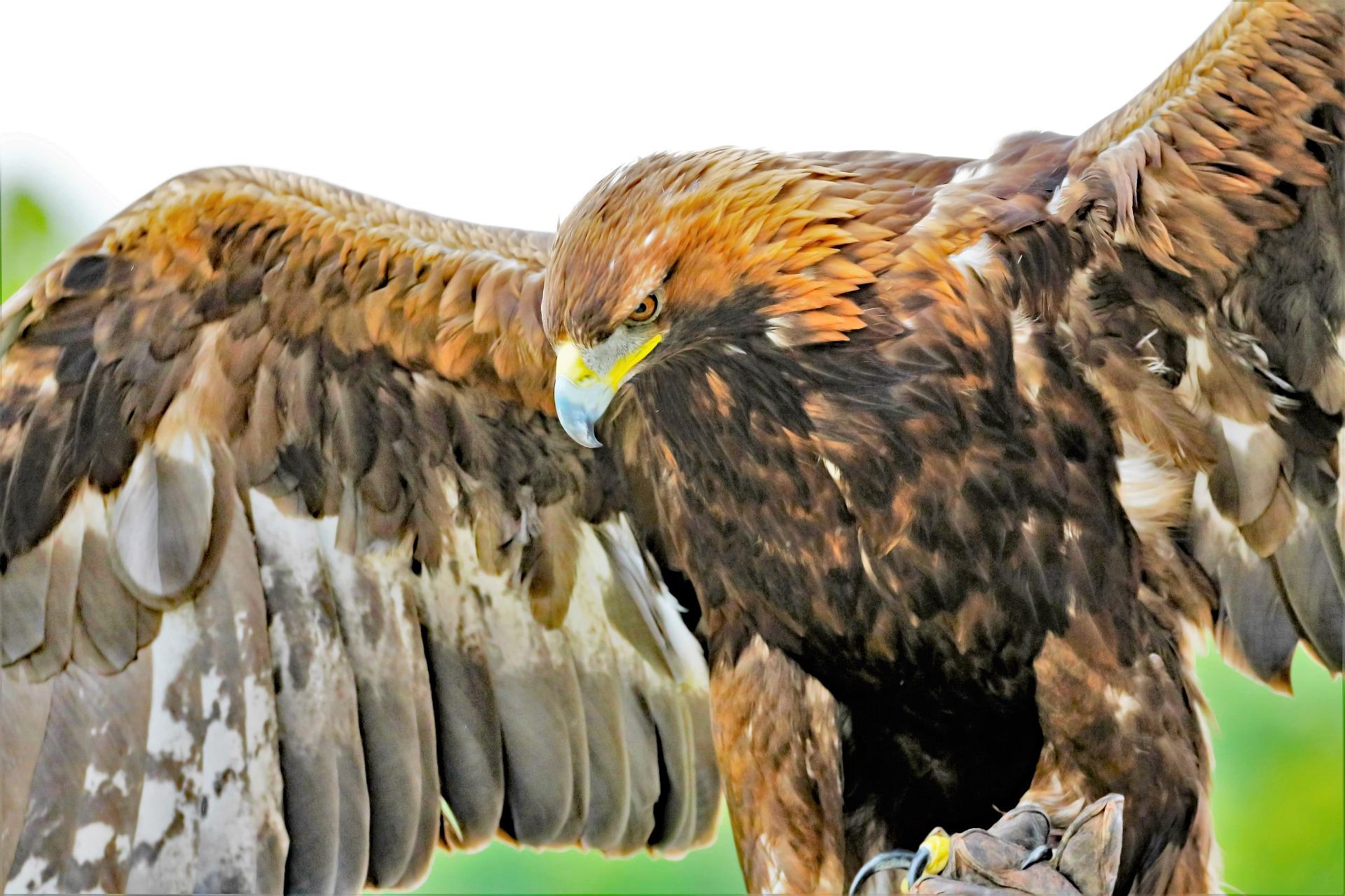
The federal government regulated the use of golden eagles for hunting and training through the Migratory Bird Treaty Act of 1918. It is considered an act of poaching to take or possess a golden eagle without the proper permits.
Golden eagles are one of the best raptors to use for falconry. You will need a permit to house them, and you must be willing to dedicate time, money and patience to et the bird to the desired level. You need extensive knowledge of falconry before attempting to use this bird to hunt.
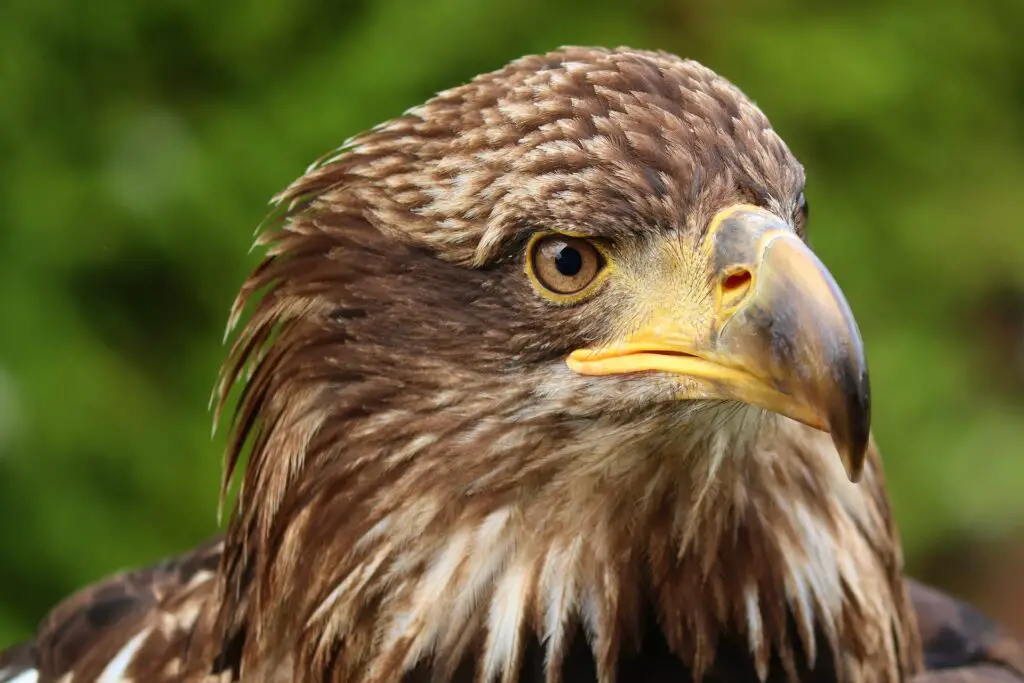
Golden eagles are the jewels of falconry. These prestigious birds are hard to come by but worth the investment if you are willing to put in the work. It’s best that you have professional help or mentor you through it because they are such unique birds. The following information below is a guide on what is best for them, so read on for more knowledge regarding golden eagles.
How much weight can a golden eagle carry?
Golden eagles are among the most feared predators in the animal kingdom. But while they are undoubtedly formidable hunters, they typically only go after small prey like rabbits and hares. These birds can weigh up to fourteen pounds, but they usually fall between eight and twelve pounds on the lower end of that spectrum. Their wingspan is also relatively modest for a raptor, reaching up to seven feet. However, they lack in size more than make up for in strength and speed. Their sharp beak and talons can kill their prey instantly, making them a force to be reckoned with in the wild.
How fast can a golden eagle fly?
Golden eagles can fly up to speeds of around 40 mph, making them one of the fastest raptors in North America. In addition, they can use their large wingspans and powerful muscles to easily navigate through the air, allowing them to cover great distances quickly. While they are not as fast as some other raptor species, golden eagles are still capable of flying at high speeds and reaching their destination quickly.
Are the wings of a golden eagle bigger than other birds of prey?
The wingspans of golden eagles can be up to 8 feet wide, making them one of the largest raptors in North America. They are able to use their large wingspans and powerful muscles to navigate through the air with ease, allowing them to cover great distances quickly. While they are not as fast as some other raptor species, golden eagles are still capable of flying at high speeds and reaching their destination quickly.
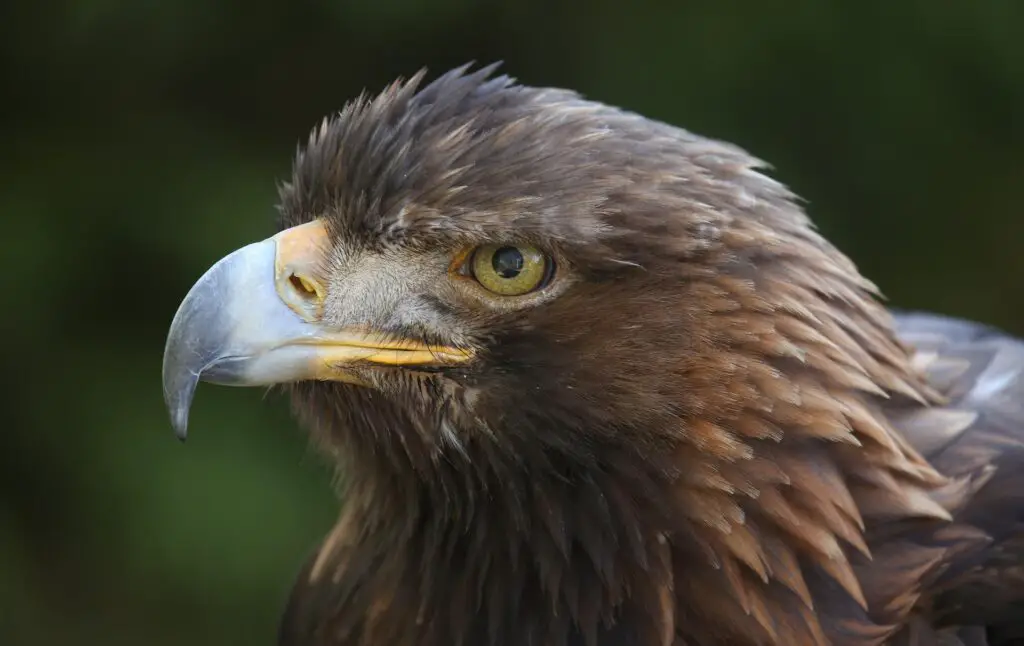
What are golden eagles’ natural food sources?
Golden eagles are natural predators, and their diet consists mainly of small mammals, such as rabbits, hares, and rodents. However, they will also prey on birds, reptiles, and insects, making them one of the most versatile raptors in terms of diet. Golden eagles typically hunt for food by soaring high in the sky and then diving down onto their prey when they see it. They are also known to kill larger animals, such as deer and elk, by swooping down on them from a great height.
Are golden eagles suitable for beginners?
While golden eagles are not necessarily the best raptors for beginners, they can be an excellent choice for those who are established in falconry. However, they are not one of the easiest raptors to train, and they are also very versatile in terms of their diet.
Golden eagles can be found in many different parts of North America and are typically effortless to spot due to their large size. With proper training, they can be an excellent hunting companion. However, it is essential to note that they require a significant amount of care and attention. Therefore, those who are considering owning a golden eagle should be prepared to commit a considerable amount of time and energy to ensure that their bird is healthy and happy.
What does a golden eagles diet consist off?
Golden eagles are one of the most feared predators in North America. These massive birds of prey can have a wingspan of up to 7 feet, and they’re known for their powerful talons and sharp beaks. Golden eagles typically hunt small mammals, such as rabbits and prairie dogs, but they will also take on larger animals, such as deer and elk. Birds, reptiles, amphibians, and fish are also occasionally on the menu.
Golden eagles are opportunistic predators, which means that they will take advantage of whatever food source is available. This makes them a potential threat to any animal that crosses their path. Thankfully, golden eagles are not typically aggressive towards humans. However, it’s essential to be aware of their presence and give them a wide berth if you encounter one in the wild.
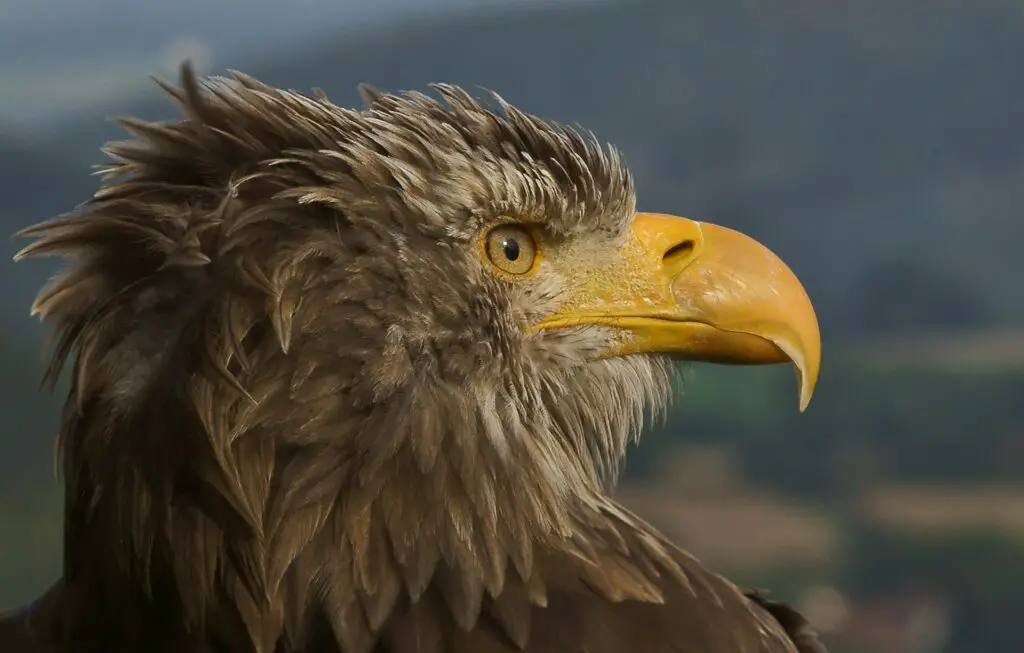
How can a breed golden eagles?
It is a well-known fact that golden eagles are one of the most iconic bird species in North America. With their striking plumage and powerful hunting skills, they have long been revered by Native Americans and European settlers alike. Today, golden eagles are still a famous symbol of strength and courage, and many people hope to see them in the wild. Unfortunately, however, captive breeding programs have had mixed results.
While it is possible to breed golden eagles in captivity, it is not easy. They require a lot of space, and they need to be able to hunt for their food. It is also essential to provide them with a mate, as they are social birds. As a result, few zoos or private individuals have been successful in breeding golden eagles in captivity. Nevertheless, captive breeding programs continue to be an important tool for preserving this species.
Golden eagles are a fantastic choice for experienced falconers. These birds are adaptable and can be trained to hunt a variety of prey items. However, it is vital to provide them with the extra care and persistence they need to master the art of falconry.