

Experiencing the breathtaking speed of Peregrine Falcons, surpassing 240 miles per hour in their hunting dives, is truly one of the best experiences I have had. But have you ever wondered how fast these birds really fly and what makes them such expert hunters? Compared to other raptors, Peregrine Falcons stand out as the fastest and most agile. Let’s take a look at the speed of Peregrine Falcons and discover the amazing adaptations that allow them to reach such speeds.
Peregrine Falcons: Masters of Speed
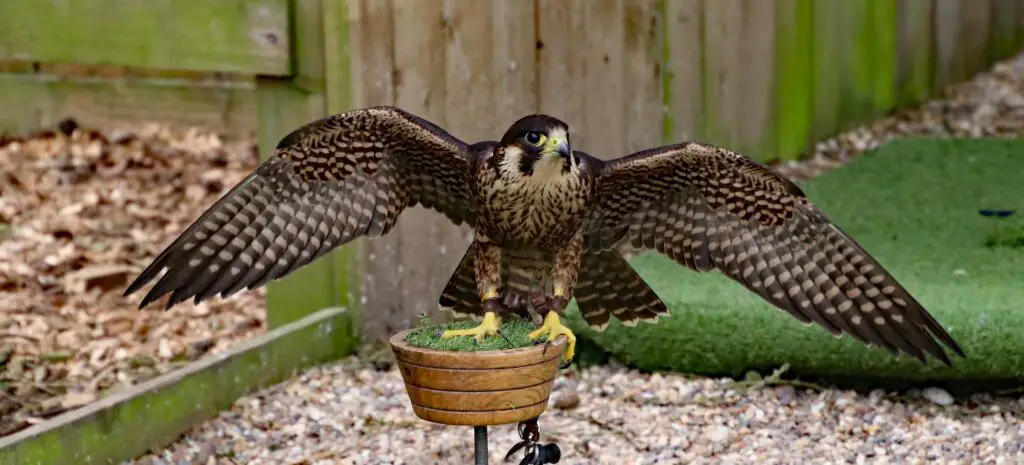
Peregrine falcons are truly the masters of speed in the bird world. These incredible birds can reach speeds of over 200 miles per hour when they dive, making them the fastest animals on the planet. Imagine a bird flying faster than most cars on the highway! They use this remarkable speed to their advantage when hunting, diving from great heights to catch their prey, usually other birds, in mid-air. Their aerodynamic shape, powerful wings, and keen eyesight all contribute to their exceptional hunting skills. Watching a peregrine falcon in action is a breathtaking sight and a testament to nature’s incredible abilities.
Factors Affecting Falcon Flight Speed
There are several factors can influence the flight speed of peregrine falcons, such as:
- Environmental Conditions: Wind speed and direction can significantly affect a falcon’s flight speed. Tailwinds can boost their speed, while headwinds can hinder it. Atmospheric conditions, such as air density and temperature, can also impact flight performance.
- Altitude: Peregrine falcons often use thermal currents to gain altitude without expending much energy. Flying at higher altitudes can offer them a better vantage point for hunting and can influence their flight speed due to differences in air density and temperature.
- Age and Physical Condition: Younger falcons and those in peak physical condition may exhibit faster flight speeds compared to older or injured birds.
- Purpose of Flight: The speed of a peregrine falcon can vary depending on whether it’s in pursuit of prey, migrating, or engaging in territorial or courtship displays. Hunting dives, known as stoops, can see these birds reach incredible speeds as they dive towards their prey.
- Body Weight: The weight of the falcon, including its recent meal, can affect its flight performance. Lighter birds may achieve faster speeds compared to those carrying extra weight.
- Wing Shape and Aerodynamics: The peregrine falcon’s streamlined body and long, pointed wings contribute to its exceptional aerodynamic efficiency. The shape and condition of its feathers can also impact its flight speed.
- Experience and Skill: Like any skilled athlete, a peregrine falcon’s experience and proficiency in flying can influence its speed and maneuverability.
- Thermal Soaring: Peregrine falcons are known to utilize thermal currents to soar and gain altitude with minimal effort. This soaring technique can affect their average cruising speed.
It’s worth noting that while the peregrine falcon is incredibly fast, reaching speeds of up to 240 mph (386 km/h) during hunting dives, their average cruising speed is typically lower. Factors such as wind conditions and the purpose of flight can cause this speed to vary.
How Peregrine Falcons Achieve High Speeds
Apart from the natural adaptations of their aerodynamic bodies and powerful muscles, there are also physiological factors that allow peregrine falcons to achieve such high speeds. These include:
- High Metabolic Rate: Peregrine falcons have a much higher metabolic rate compared to other birds, allowing them to generate energy quickly for bursts of speed during hunting dives. This high metabolism also requires them to consume a large amount of food daily.
- Muscle Fibers: The muscles of peregrine falcons are made up mostly of fast-twitch muscle fibers, which provide explosive power and rapid movement for quick acceleration and high speeds.
- Specialized Respiratory System: The respiratory system of the peregrine falcon is designed to maximize oxygen intake during flight, allowing them to maintain high speeds and maneuverability for extended periods.
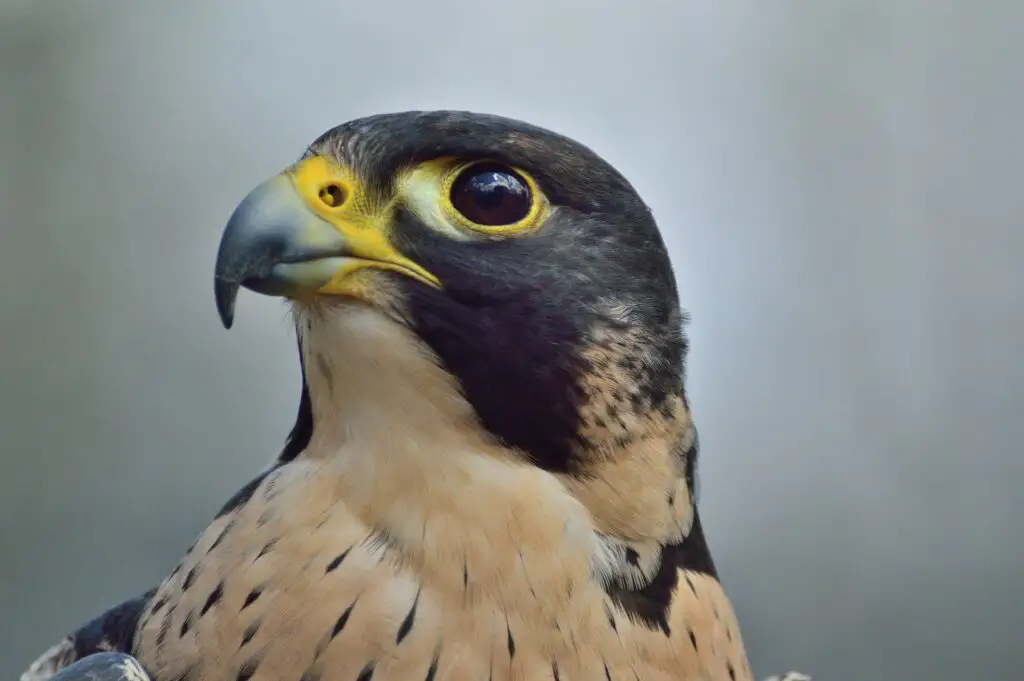
- Vision: Along with their speed, peregrine falcons are also known for their incredible eyesight, which allows them to spot prey from great distances and track it even at high speeds.
- Streamlined Body: Peregrine falcons have a sleek and aerodynamic body shape, which minimizes air resistance, allowing them to cut through the air with minimal drag.
- Powerful Wing Beats: Their wings are long and pointed, providing strong and rapid wing beats that generate the necessary lift and propulsion required for high-speed flight.
- High Muscle Power: Peregrine falcons have powerful breast muscles, enabling them to generate significant thrust during flight. This muscle power is essential for accelerating to high speeds and maintaining momentum.
- Aerodynamic Feathers: The feathers of a peregrine falcon are designed to reduce drag and turbulence during flight. They are stiff and overlap closely, creating a smooth surface that helps streamline the bird’s body and wings.
- Tail Control: The falcon’s tail plays a vital role in controlling its flight at high speeds. By adjusting the position of its tail feathers, the bird can make rapid turns and maneuvers without losing stability or speed.
- Utilizing Wind Currents: Peregrine falcons often take advantage of wind currents to assist their flight and increase their speed. By soaring in thermal updrafts or using tailwinds to their advantage, they can achieve and maintain higher speeds with less effort.
Comparing Peregrine Falcon Speed to Other Raptors
Peregrine Falcon (Falco peregrinus):
- Max Speed: Up to 240 mph (386 km/h) during hunting dives.
- Cruising Speed: Typically ranges from 40 to 60 mph (64 to 97 km/h).
Golden Eagle (Aquila chrysaetos):
- Max Speed: Estimated to reach speeds of up to 200 mph (322 km/h) during hunting dives.
- Cruising Speed: Usually between 30 to 45 mph (48 to 72 km/h).
Gyrfalcon (Falco rusticolus):
- Max Speed: Can achieve speeds of up to 130 mph (209 km/h) in level flight.
- Cruising Speed: Typically around 40 to 60 mph (64 to 97 km/h).
Lanner Falcon (Falco biarmicus):
- Max Speed: Can reach speeds of up to 90 mph (145 km/h) in level flight.
- Cruising Speed: Usually between 35 to 55 mph (56 to 89 km/h).
Harris’s Hawk (Parabuteo unicinctus):
- Max Speed: Can reach speeds of up to 40 mph (64 km/h) in level flight.
- Cruising Speed: Usually between 20 to 30 mph (32 to 48 km/h).
Red-tailed Hawk (Buteo jamaicensis):
- Max Speed: Estimated to achieve speeds of up to 120 mph (193 km/h) in dives.
- Cruising Speed: Typically around 20 to 40 mph (32 to 64 km/h).
Cooper’s Hawk (Accipiter cooperii):
- Max Speed: Can reach speeds of up to 60 mph (97 km/h) in level flight.
- Cruising Speed: Usually between 20 to 35 mph (32 to 56 km/h).
American Kestrel (Falco sparverius):
- Max Speed: Can achieve speeds of up to 40 mph (64 km/h) in level flight.
- Cruising Speed: Typically around 20 to 30 mph (32 to 48 km/h).
Northern Goshawk (Accipiter gentilis):
- Max Speed: Can reach speeds of up to 40 mph (64 km/h) in level flight.
- Cruising Speed: Usually between 20 to 30 mph (32 to 48 km/h).
Frequently Asked Questions
Do Peregrine Falcons Fly at Top Speed All the Time?
- They don’t fly at top speed all the time. Peregrine falcons conserve energy by cruising at slower speeds when not hunting.
Are There Any Factors That Can Slow Down a Falcon in Flight?
- There are various factors that can slow down a falcon in flight, such as strong headwinds, fatigue, and obstacles in the environment. These challenges can affect a falcon’s speed and maneuverability.