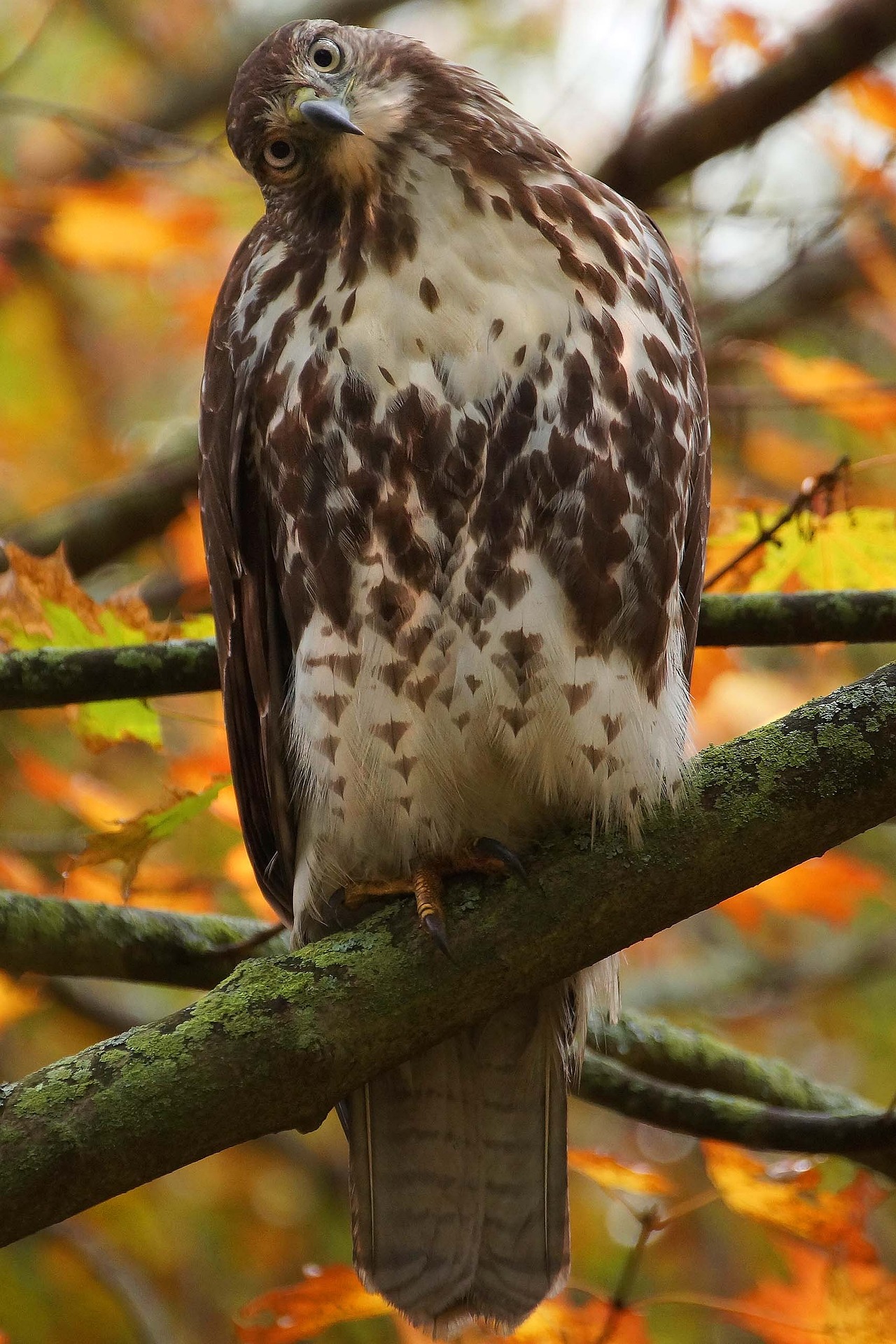

Red-tailed hawks fear aerial predators like Great Horned Owls and Golden Eagles due to their size and speed. Severe weather, including thunderstorms and hurricanes, causes these raptors to take cover; sometimes, you will hear the fear in their noises. If this does occur, you should ensure the bird is well protected and sheltered; if it isn’t, consider moving them indoors. These are just a few things that red-tailed hawks are afraid of, but many other factors can cause fear in these raptors, and I will reveal all of them below.
Red-Tailed Hawks are afraid of the following:
The Red-Tailed Hawk is one of the most popular birds used in falconry due to its impressive hunting abilities. However, even in captivity, these hawks still have natural predators that they fear and avoid.
Great Horned Owls
Great Horned Owls are known to be fierce predators and are often referred to as the “tigers of the sky.” They pose a significant threat to Red-Tailed Hawks, especially during nesting season when they prey on young hawks or steal their nests. In falconry, it is crucial to keep these two species separated and provide adequate protection for the hawks from potential owl attacks.
Golden Eagles
Golden Eagles are another aerial predator that threatens Red-Tailed Hawks. These powerful and fast eagles are formidable opponents for the hawks. In the wild, golden eagles often compete with Red-Tailed Hawks for food sources such as rabbits and squirrels. In falconry, trainers must be cautious when hunting with their Red-Tailed Hawks in areas where golden eagles may also be present.
Bobcats and Coyotes
While not aerial predators, bobcats and coyotes are still a significant threat to Red-Tailed Hawks. These land predators often target young hawks or their nests for food. In falconry, taking precautions to protect the hawk from these potential threats while out hunting is essential.
Bald eagles
Bald Eagles are the national bird of the United States and pose a significant threat to Red-Tailed Hawks. These large birds of prey have a hunting style similar to that of hawks, making them compete for food sources. They also have powerful talons that can easily harm or even kill a Red-Tailed Hawk in an aerial battle. In falconry, it is vital to monitor the presence of Bald Eagles in the hunting areas and take necessary precautions to prevent any conflicts.
Severe Weather Conditions
Red-tailed hawks are naturally wary of severe weather conditions due to the numerous risks such weather poses to their survival. In falconry, severe weather can damage the hawks’ feathers, reduce their flight capability, and even lead to hypothermia if they become too wet or cold. High winds and storms can also pose a direct physical threat, potentially forcing the hawk off course or into objects, causing injury. Falconers need to be vigilant and provide sheltered, secure environments for their Red-Tailed Hawks during such conditions to ensure their safety and well-being.

Strategies for Protection Against Predators
Red-tailed hawks have developed various strategies to protect themselves from predators, including camouflage, distraction displays, and vocalizations. In falconry, trainers can also adopt additional measures to ensure the safety of their birds.
Camouflage
Red-tailed hawks have excellent camouflage capabilities that allow them to blend into their surroundings easily. This helps them hide from potential predators while hunting or nesting. In falconry, trainers can use camouflage materials to build shelter for their hawks and help them feel safe.
Distraction Displays
Hawks have a unique defense mechanism known as “distraction displays,” where they feign injury or weakness to distract predators away from their nests or young. This behavior is often seen in falcons when they have eggs or hatchlings in their nests. Trainers can observe this natural behavior and use it to protect their birds by imitating the distraction display during potential predator attacks.
Vocalizations
Red-tailed hawks are vocal birds with various calls used for different purposes, including defending against predators. They can make loud screeching sounds to alert other hawks of danger or use softer calls to communicate with their mate or young. In falconry, trainers can also use vocalizations to keep their hawks safe by imitating the hawk’s warning calls to potential predators.
Overall, red-tailed hawks are afraid of a variety of predators, human disturbances, severe weather conditions, and larger birds of prey. These factors can impact their ability to hunt, nest, and survive. Understanding what red-tailed hawks fear can help us better protect and conserve these majestic birds of prey for future generations to admire and appreciate.