

If you’ve ever seen a kestrel (a small falcon) perched on a tree branch, you may have noticed that it bobs its head up and down. It does this in a rapid move up and down, so what exactly are they doing? Some people think that the kestrel is nodding hello to passersby, but what actually is a good reason for this behaviour?
Kestrels are able to see very well, and they use their head-bobbing behaviour to get a better view of their prey. By tilting their head up and down, they can see movement more clearly and make sure that they are targeting the right animal. This may also be a method of communication among kestrels.
Kestrels are famous for head bobbing, and while many assume they know the answer as to why there is still much doubt surrounding this topic, so below I will discuss the reasons why kestrels bob their heads and what it means for them. So stay tuned to learn more about these fascinating birds!

What is head bobbing
Kestrels are a type of small falcon that is known for their head-bobbing behaviour. This is when they rapidly move their head up and down, and it serves several essential functions. For one, it helps the kestrel to keep its balance while perched on a branch or wire. It also allows the kestrel to keep an eye on its surroundings since the rapid movement of its head makes it easier to spot potential predators or prey. Finally, head bobbing is also used to communicate between kestrels. When two kestrels meet, they will often engage in a “bobbing contest” in which each bird tries to outdo the other with the most significant and most exaggerated bobbing movements. This behaviour helps to establish dominance and hierarchy within a group of kestrels. Head bobbing is thus an essential part of kestrel behaviour and has numerous functions.
Do all kestrels bob their head, or only males? How does it work?
Kestrels are a type of small falcon that is known for its typical hunting behaviour. When seeking prey, kestrels will often hover in the air and scan the ground below. During this process, they will frequently bob their head up and down. While it was once believed that this behaviour helped the kestrels to spot potential prey, recent studies have shown that it may actually serve a different purpose. It is now thought that head-bobbing helps the kestrels to maintain balance while hovering. This is because the kestrels’ eyes are located on the sides of their head, making it difficult to judge distances accurately. In addition, by constantly moving their head up and down, kestrels can create a “rolling” effect that gives them a better sense of depth perception. Although not all kestrels display this behaviour, it is most commonly seen in males during breeding. Therefore, it is likely that head-bobbing serves as a form of courtship ritual.
Do kestrels use head bobbing as a method of communication?
There is still much to learn about the methods of communication used by kestrels, but it is thought that head bobbing may play a role. This behaviour, which involves rapidly moving the head up and down, is often seen when kestrels interact. It has been suggested that head bobbing may be used to convey information about nesting sites, food availability, or potential mates. In addition, kestrels often use vocalizations to communicate with each other. These sounds can vary depending on the situation, but they may be used to express alarm, threaten rivals, or attract mates. Therefore, it is likely that kestrels use a combination of vocalizations and body language to communicate with each other. Although we have only just begun to understand the complexities of kestrel communication, several methods have been found to be effective in conveying information through these birds.
Is head bobbing among kestrels a mating call?
Kestrels are a type of small hawk that is found in many parts of the world. These birds are known for their distinct head bobbing, which they often do when they are hunting. However, recent research has suggested that head bobbing may also serve as a mating call. In one study, male kestrels were observed to increase their head bobbing during the breeding season. This behaviour was most common when the males were near potential mates. The researchers suggest that head bobbing may help to attract mates and increase the chances of reproduction. In spite of the fact that more research is needed in order to confirm these findings, the study provides new insight into the fascinating world of kestrels.
How does head bobbing affect the way they hunt?
Head bobbing is a distinctive hunting behaviour displayed by kestrels, a type of small falcon. When scanning the ground for prey, kestrels will intermittently dip their heads down and then quickly back up again. Scientists believe this behaviour may help the birds better locate prey items. When a kestrel drops its head, its eyes are brought closer to the ground, allowing it to see small objects that might be camouflaged against the background. By comparison, when the kestrel raises its head, its gaze is directed more towards the horizon, providing a broader view of the area. As a result, head bobbing may help kestrels to both find and track prey items. In addition, this behaviour may also help to reduce glare from the sun, making it easier for the birds to see potential prey items.
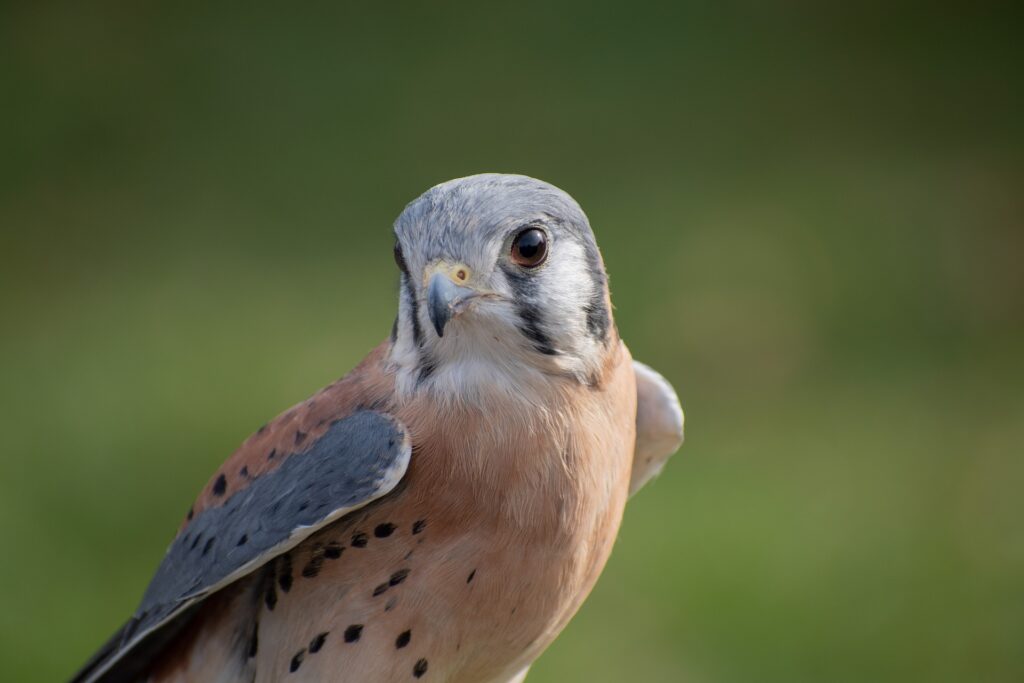
Kestrels bob their heads to improve their vision. By constantly moving their head, they keep the image of what they are looking at in focus. This helps them spot prey more efficiently and stay safe while hunting. If you’ve ever seen a kestrel perched on a fence post, you may have noticed that it bobs its head up and down. Now you know why! Next time you see one, take a moment to watch its head move back and forth. It’s a fantastic sight to behold.