

I recently had the opportunity to work with a stunning specimen known as the common buzzard in falconry. These birds of prey are not commonly associated with the sport, raising questions about their role and capabilities. However, the buzzard’s unique characteristics and hunting techniques make them valuable in certain falconry practices. Let me explain further, but first, you need to know that many hawks are actually called buzzards; while the rest of the world refers to them as buzzards, Americans still refer to them as hawks (certain species see the list below). Now digest that, and let’s see what buzzards are used in falconry.
What Buzzards are used in falconry
As an experienced falconer, I’ve had the privilege of working with a range of buzzards in my profession, so I have listed them according to how common they are to falconry:
- Red-tailed hawk
- Red-shouldered hawk
- Harris’s Hawk
- Ferruginous Hawk
- Swainson’s Hawk
- Common buzzards
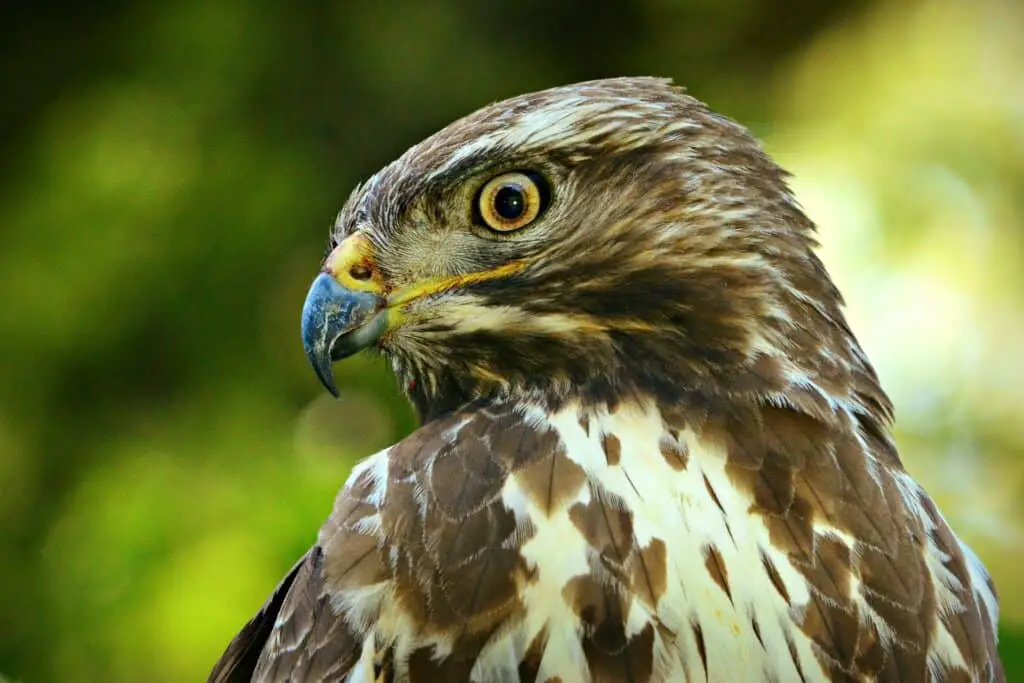
Red-tailed hawk
Originating from North America, the Red-tailed hawk, scientifically known as Buteo jamaicensis, is a popular buzzard species utilized in falconry for its impressive hunting abilities and adaptability to various environments. With a wingspan of up to four feet, these raptors are known for their incredible strength and agility in flight. With their sharp talons and powerful beak, they are efficient hunters, capable of capturing prey such as rabbits, squirrels, and small birds. They are generally fierce and dominant birds, making them ideal for falconry use.
Red-shouldered hawk
Red-shouldered hawks, also known as buzzards in falconry, are native to North America and are scientifically classified as Buteo lineatus. They are called buzzards in falconry due to their size and hunting habits, which are similar to true buzzards in Europe and Africa. These birds of prey are known for their distinctive reddish-brown shoulders and barred black and white tails. In falconry, red-shouldered hawks are valued for their agility and keen hunting skills. They excel in hunting small mammals, reptiles, and other birds.
Harris’s Hawk
Harris’s hawk, scientifically known as Parabuteo unicinctus, is a popular buzzard species in falconry due to its sociable nature and versatility. Originating from the southwestern United States, these birds have adapted well to hunting in groups, making them ideal for team hunting in falconry. Their unique cooperative hunting techniques make them successful predators of rabbits and other small animals. They are also known for their intelligence, making them easy to train and work within falconry.
Ferruginous Hawk
The Ferruginous hawk, scientifically classified as Buteo regalis, is one of the largest buzzard species used in falconry. Originating from North America, these birds have a wingspan of up to five feet, making them powerful and intimidating hunters. They are known for their distinctive rusty-red colouration and light underside, making them easy to spot in flight. In falconry, these birds are valued for their strength and hunting prowess, primarily used for hunting larger prey such as hares and ground squirrels.
Swainson’s Hawk
Swainson’s hawks, scientifically known as Buteo swainsoni, are another large buzzard species found in North America and popularly used in falconry. These birds are known for their migratory habits, travelling long distances between breeding and wintering grounds. In falconry, they are valued for their endurance and stamina, making them ideal for flying long durations during hunts. They are also known for their keen eyesight and impressive hunting techniques, capable of capturing prey such as rodents and small birds.

Common buzzard
Last but not least, the common buzzard, scientifically known as Buteo buteo, is a true buzzard species found in Europe and certain parts of Asia. In falconry, these birds are valued for their versatility and endurance, making them suitable for various hunting situations. They are known for their sharp vision and excellent soaring abilities, making them successful hunters of small mammals and birds. Due to their abundance in the wild, they are widely used in European falconry.
Are there any differences between true Hawks and Buzzards
In comparing true hawks and buzzards, the difference lies in their hunting strategies, and behaviour plays a significant role in distinguishing them from true hawks. Here are some key differences between the two:
- Hunting Techniques: Buzzards are opportunistic hunters, often relying on scavenging for food, while true hawks are more active hunters, using their speed and agility to catch prey.
- Physical Chfalconrystics: Buzzards generally have broader wings and shorter tails than true hawks, aiding them to soar for long periods.
- Training Challenges: Training buzzards for falconry can be more challenging due to their independent nature and reluctance to cooperate with humans (at first).
What distinguishes a bird of prey to be called a buzzard
Typically, the term ‘buzzard’ describes a broad-winged, medium to large-sized bird of prey within the genus Buteo. Buzzards can be identified by their broad wings, sturdy build, and typically broad tails. They often exhibit a soaring flight pattern, using currents to glide effortlessly. When hunting, buzzards rely on their keen eyesight to spot prey from great heights, then swoop down to capture it with their sharp talons. Buzzards hold symbolic significance in various countries, representing vision, protection, and freedom.
Why are buzzards outside America not common in falconry
Buzzards outside America are not common in falconry primarily due to limited availability in the regions where falconry is practised. Habitat limitations play a significant role; buzzards thrive in diverse environments, making them less predictable in falconry pursuits compared to more specialized raptors. Legal restrictions also impede their use, as some countries have stringent regulations regarding capturing and training wild birds for falconry. It is also important to note that in some countries, a buzzard from their region may be very popular and used for centuries to hunt.
After exploring the world of buzzards in falconry, one thing is clear – these majestic birds are referred to as hawks, but they certainly have their unique qualities. While some may overlook them, true falconers know the value of a well-trained buzzard in their arsenal. So next time you see a buzzard soaring in the sky, remember they may not be the flashy choice, but they are certainly a force to be reckoned with in the falconry world.
falconry