
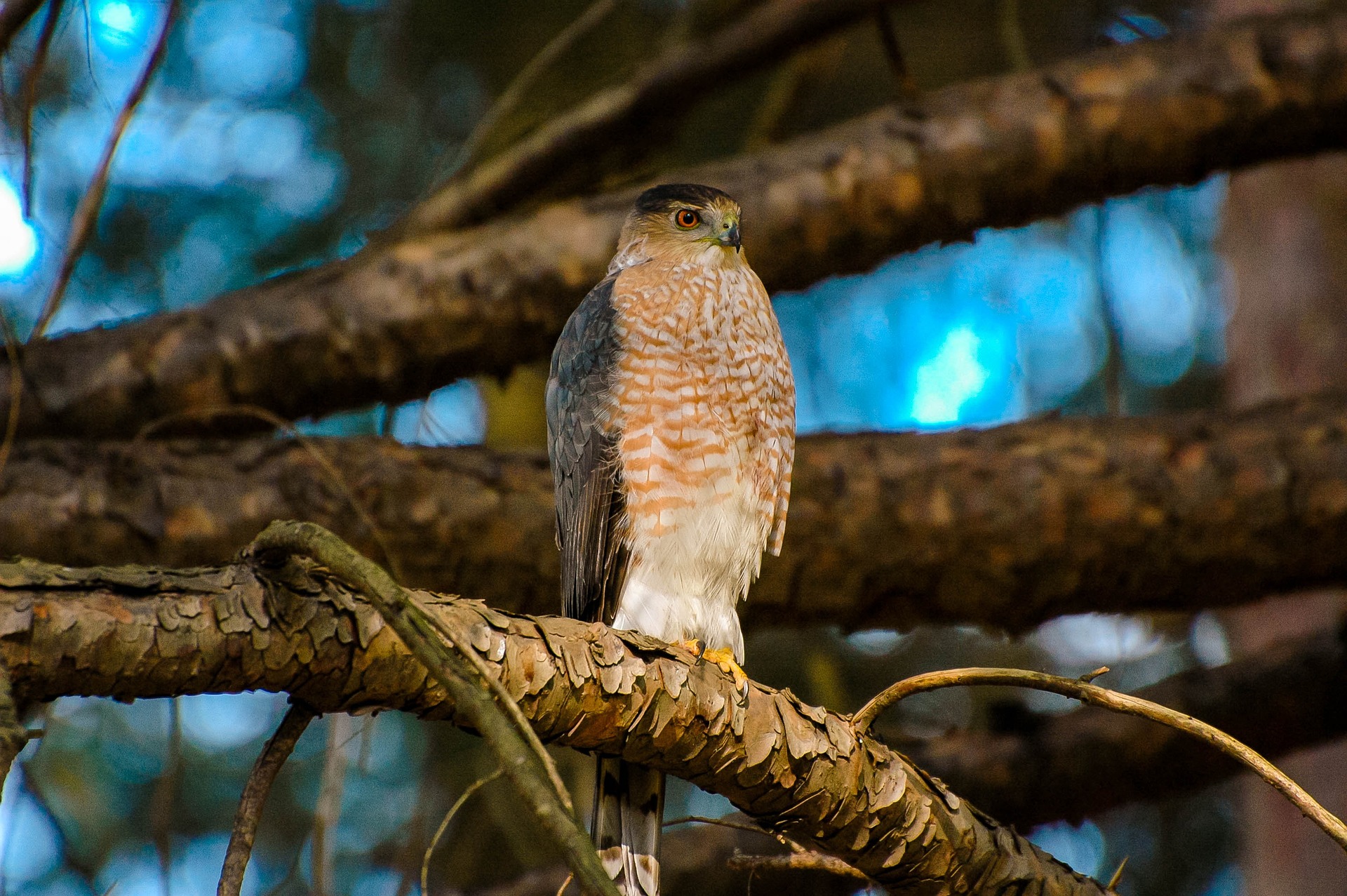
I adore my Cooper’s Hawk bird with its sleek slate-gray feathers, striking rusty-orange chest, and sharp yellow eyes. There are so many things to admire about these raptors, and I aim to cover the basics about them, their history, and their characteristics, among other things. So have a read through the content below that will educate you more about the remarkable Cooper’s Hawk.
History of a coopers hawk
Throughout my experience with Cooper’s Hawks in falconry, I have delved into the fascinating history of these birds of prey. Cooper’s Hawks, scientifically known as Accipiter cooperii, have a rich history that spans cultures and continents. Native American tribes revered them for their agility and hunting prowess, often depicting them in their folklore and art. Some tribes even used these birds in hunting practices, taking advantage of their unparalleled speed and precision.
European settlers later encountered these magnificent birds and admired their hunting skills. In the 19th and early 20th centuries, Cooper’s Hawks faced persecution due to misconceptions about their impact on game bird populations. However, as conservation efforts grew, the understanding of these raptors evolved, leading to increased protection.
Beyond North America, birds similar to Cooper’s Hawks have been used in falconry in various countries. In ancient Egypt, hawks were considered sacred and were often associated with deities like Horus. Falcons, a close relative, were used in hunting by the nobility in ancient Persia and Mongolia.

Today, Cooper’s Hawks are celebrated for their role in maintaining ecological balance. Falconers also appreciate their intelligence and adaptability in the sport of falconry. Understanding the historical context of Cooper’s Hawks adds depth to my bond with these birds and highlights the importance of conservation efforts to ensure their continued presence in our ecosystem.
Physical Characteristics
My Cooper’s Hawks usually have sleek, slate-gray feathers with a striking rusty-orange barred chest, sharp yellow eyes, and a distinctive hooked beak. This raptor’s physical characteristics are designed for efficient hunting. Its long tail helps with agility and maneuverability during high-speed pursuits through dense forest or urban environments. The hooked beak is a formidable tool for tearing into prey, while the sharp talons are perfect for grasping and carrying off captured meals. The yellow eyes are keen and allow for exceptional vision, which is crucial for spotting movement from great distances.
Observing my hawk closely, I notice its impressive wingspan, allowing for swift flight and sudden dives to catch prey by surprise. The intricate patterns on its chest feathers aid in camouflaging during hunting. The overall build is muscular and compact, perfect for a predator that relies on speed and stealth to secure its next meal. Each feature of this magnificent bird combines to create a striking and effective hunter in the avian world.
Diet in falconry
In falconry, we take great care to provide a balanced diet for our birds. Cooper’s Hawks primarily feed on other birds as carnivores, often targeting smaller species like doves and sparrows. In the wild, they also prey on small mammals such as mice and rabbits.
In falconry, we feed our hawks a varied diet consisting of game birds such as quail or pheasant, as well as commercially available food specifically formulated for raptors. We falconers also supplement their diet with vitamins and minerals to ensure optimal health.
Understanding my hawk’s dietary needs is crucial to maintaining its strength and vitality in the sport I love. Proper nutrition ensures that my bird remains healthy and able to perform at its best during hunting flights.
Hunting Behavior
When observing the Cooper’s Hawk’s hunting behavior, its swift aerial pursuits through dense vegetation showcase its predatory prowess in precisely surprising and capturing prey. This bird of prey demonstrates remarkable agility and focus when hunting. It uses its keen eyesight to spot potential prey from high vantage points before swiftly diving down to catch it. The Cooper’s Hawk employs a strategy of stealth and surprise, often using obstacles like trees and bushes to conceal its approach before swooping in for the kill.
I have witnessed my Cooper’s Hawk bird exhibit incredible patience while waiting for the perfect moment to strike. Its ability to maneuver through tight spaces with incredible speed and accuracy is truly awe-inspiring. Once in pursuit, the hawk’s sharp talons and powerful grip make it nearly impossible for its prey to escape. It’s fascinating to watch how effortlessly the Cooper’s Hawk can adapt its hunting techniques depending on the prey it targets. This bird’s hunting behavior truly exemplifies the skill and precision of a top predator in the avian world.
Trainability in falconry
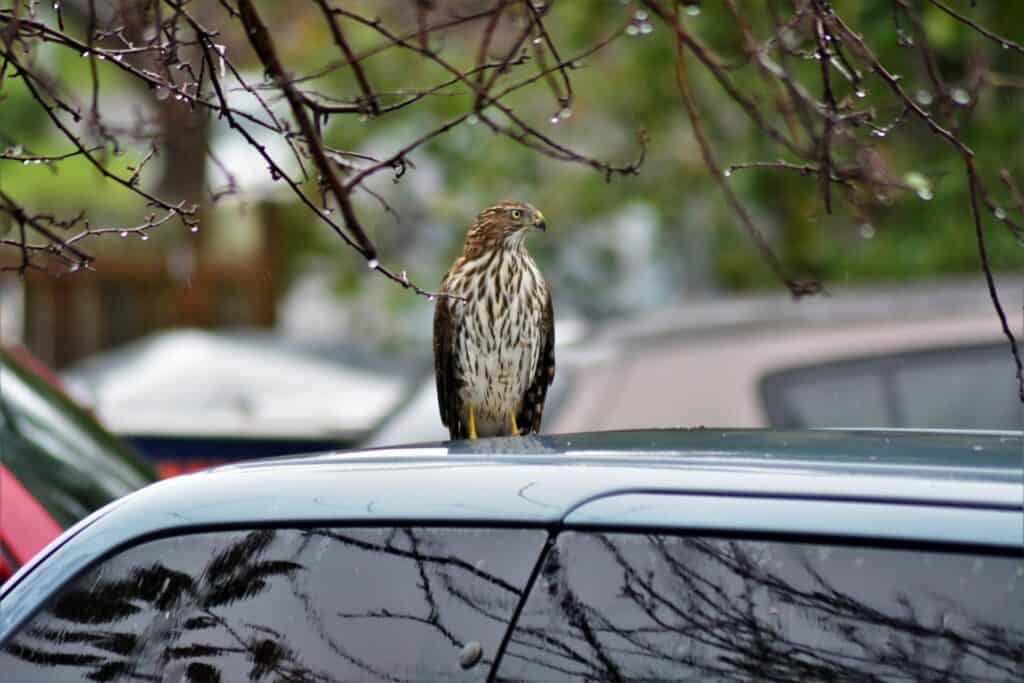
Observing the Cooper’s Hawk’s trainability in falconry reveals its remarkable ability to adapt to the training methods used by falconers. This bird, known for its fierce hunting skills, can also be trained to work alongside humans effectively. In my experience, I’ve found that Cooper’s Hawks quickly learn to respond to commands and cues, making them valuable assets in the ancient art of falconry.
Patience and consistency are the key to successfully training a Cooper’s Hawk. These birds are intelligent and perceptive, quickly picking up on patterns and signals. By using positive reinforcement, like rewarding desired behaviors with food or praise, falconers can establish a strong bond with their hawk and encourage it to cooperate willingly.
While Cooper’s Hawks may have their own personalities and quirks, their trainability remains consistent. With proper guidance and training, these birds can become skilled hunters and loyal companions, showcasing the beauty of the partnership between humans and hawks in the world of falconry.
Interesting facts about Cooper hawk
- Cooper’s Hawks belong to the family Accipitridae, which includes over 200 species of hawks, eagles, kites, and other birds of prey.
- Female Cooper’s Hawks are significantly larger than males, with a wingspan of up to 35 inches compared to the male’s average wingspan of 29 inches.
- Female Cooper’s Hawks are often preferred in falconry due to their larger size and strength.
- These birds reach speeds of up to 60 miles per hour in flight.
- The oldest recorded wild Cooper’s Hawk was over twenty years old.
Cooper’s hawks are fascinating raptors with their sleek, powerful build and impressive hunting skills. Watching it in action, whether soaring through the sky or swooping down on its prey, is always a thrilling experience. The bond we share through falconry training has only deepened my appreciation for this magnificent creature. I feel grateful to have the opportunity to work with such a remarkable bird.