
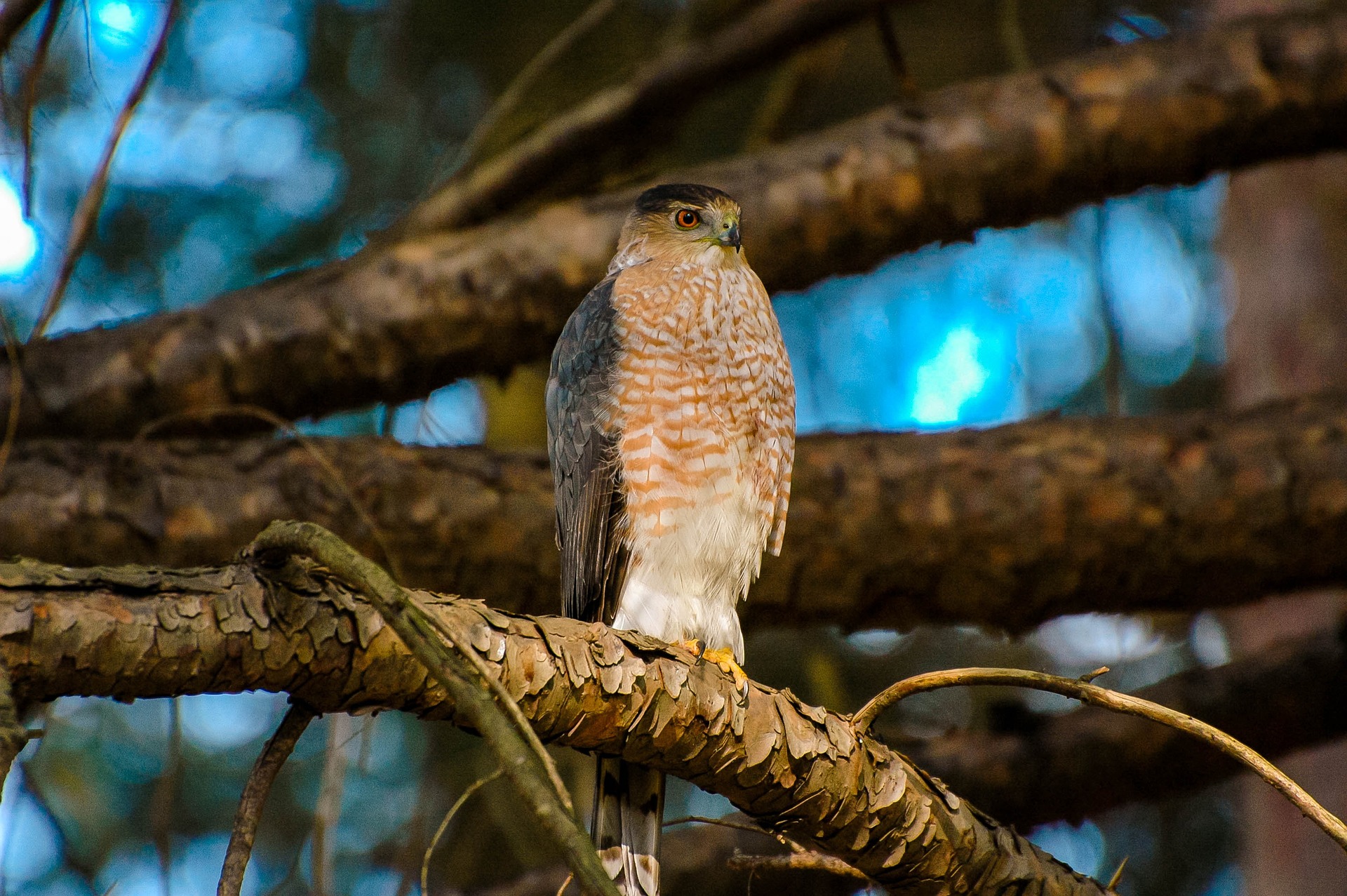
From my time-keeping Cooper’s Hawks, I’ve gathered some insights that might help you determine which sex would better suit your needs. From their size to their plumage, there are several key differences between male and female Cooper’s Hawks that every falconer should know. Here are the main differences to keep in mind between male and female Cooper’s hawks:
Difference between male and female
Male coopers hawks
While observing male Cooper’s hawks, I noticed distinct differences in size and physical characteristics compared to females. Their plumage variation stood out, with males often having lighter coloring on their chests and underparts. Additionally, in terms of hunting abilities, males displayed impressive agility and speed during their pursuits.
Size and Physical Differences
Male Cooper’s hawks are typically smaller and leaner than females. They have a wingspan of around 23-27 inches (58-69 cm), while their weight ranges from 8-14 ounces (227-397 grams). Their tails are also shorter and more narrow compared to females.

In terms of physical characteristics, males often have bluer-gray coloring on their backs and upper wings, with reddish-orange barring on the chest and underparts. Their heads are also smaller in proportion to their body size.
Plumage Variation
Male Cooper’s hawks exhibit very noticeable differences in plumage variation. Their feather coloration tends to be bluish-gray on the back with a rust-colored barring on the chest. Molt patterns result in a sleek appearance. Males typically have shorter wing lengths compared to females. Notably, their tail markings are characterized by broad dark bands. Additionally, male Cooper’s hawks often display bright red-orange eye color, adding to their distinctive appearance.
Hunting Abilities
Another notable difference between male and female Cooper’s hawks is their hunting abilities. While both sexes are skilled hunters, males tend to be more agile and quicker in flight, making them better suited for pursuing small, fast-moving prey. This makes them ideal for flying at game birds such as quail or partridge.
Temperament
Male Cooper’s hawks are known for being more aggressive and territorial compared to females. They can defend their territory quickly and may display aggression towards other birds in captivity. Falconers need to establish a strong bond with male Cooper’s hawks through training to help manage their temperamental tendencies.
Female coopers hawks
Female Cooper’s hawks are larger and have different physical characteristics compared to males. I’ve noticed that they also have distinct behaviors and hunting strategies.
Size and Physical Differences
Compared to males, female Cooper’s hawks are much larger. They have a wingspan of around 27-31 inches (69-79 cm) and weigh between 14-24 ounces (397-680 grams). Their tails are longer and more broad, giving them greater maneuverability during flight.
In terms of physical characteristics, female Cooper’s hawks exhibit darker coloring on their backs and upper wings, with rusty-brown barring on the chest and underparts. Their heads are also larger in proportion to their body size.
Plumage Variation
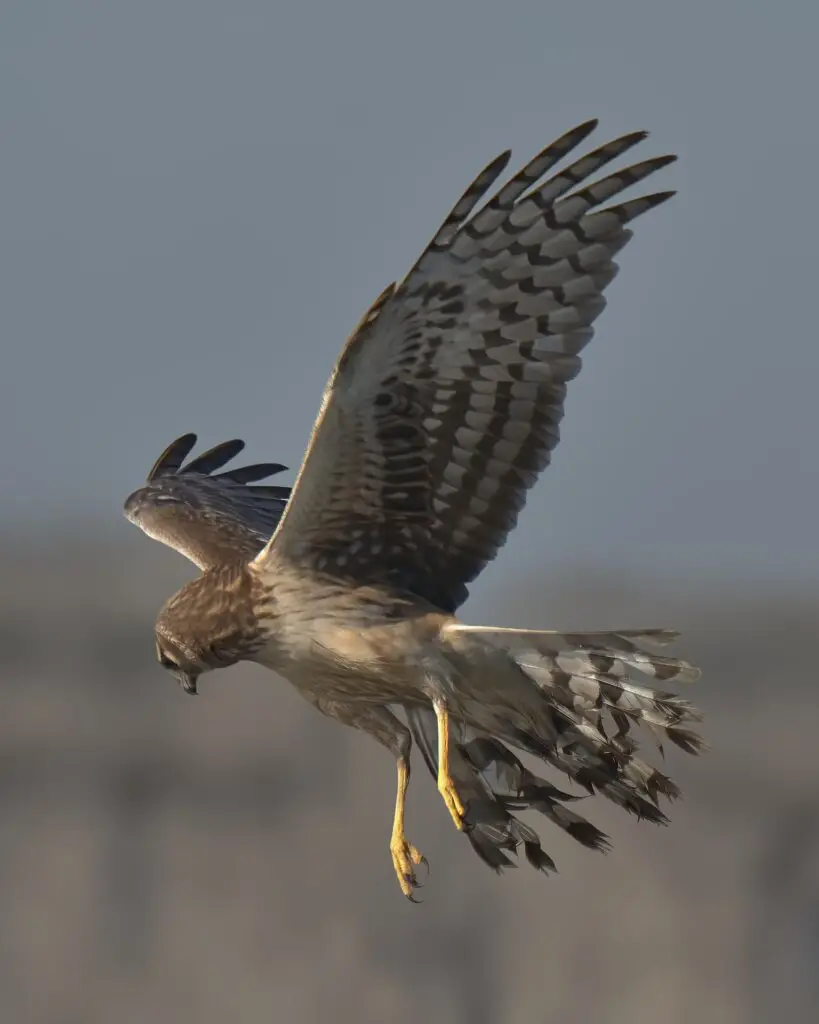
Similar to males, female Cooper’s hawks also display distinct plumage variation. Their feather coloration tends to be more brownish on the back with a rust-colored barring on the chest. During molting season, their appearance can appear less sleek compared to males.
Hunting Abilities
Female Cooper’s hawks have a different hunting strategy compared to males. While still agile and quick in flight, they tend to rely more on stealth and surprise attacks to catch their prey. This makes them better suited for hunting larger birds like pigeons or doves.
Temperament
Female Cooper’s hawks are typically more docile and easier to handle compared to males. They are less territorial and tend to display calmer behaviors in captivity. However, they still require proper training and handling by falconers to develop a strong bond.
In summary, male and female Cooper’s hawks have distinct differences in size, physical characteristics, hunting abilities, and temperament. While both sexes make excellent hunting partners, falconers need to understand these differences and choose the best fit for their needs. With proper training and care, both male and female Cooper’s hawks can be successful hunting companions.
Frequently Asked Questions
How Can You Tell the Age of a Cooper’s Hawk?
- To determine a Cooper’s Hawk’s age, one can examine feather coloration, eye color, behavior patterns, physical size, and molt patterns. These indicators provide clues that, when carefully observed, can help estimate the age of the bird.
Which sex of Cooper’s Hawk is more aggressive in hunting?
- Both sexes are aggressive hunters, but females may appear more dominant due to their size.
Which is easier to train for falconry, male or female Cooper’s Hawks?
- It varies; some falconers prefer females for their size, and others prefer males for agility. Ultimately, it comes down to the individual bird and their training and handling experience.
Are male Cooper’s Hawks better for hunting small game?
- Male Cooper’s hawks are better suited for hunting small game due to their agility and speed.
Are there any physical differences between male and female juveniles of Cooper’s Hawks?
- Juvenile males tend to be smaller than juvenile females, with shorter tails and narrower wings. However, these characteristics may only be as distinct once the birds reach full maturity. Overall, it can be difficult to determine the sex of a juvenile Cooper’s hawk based on physical appearance alone.