
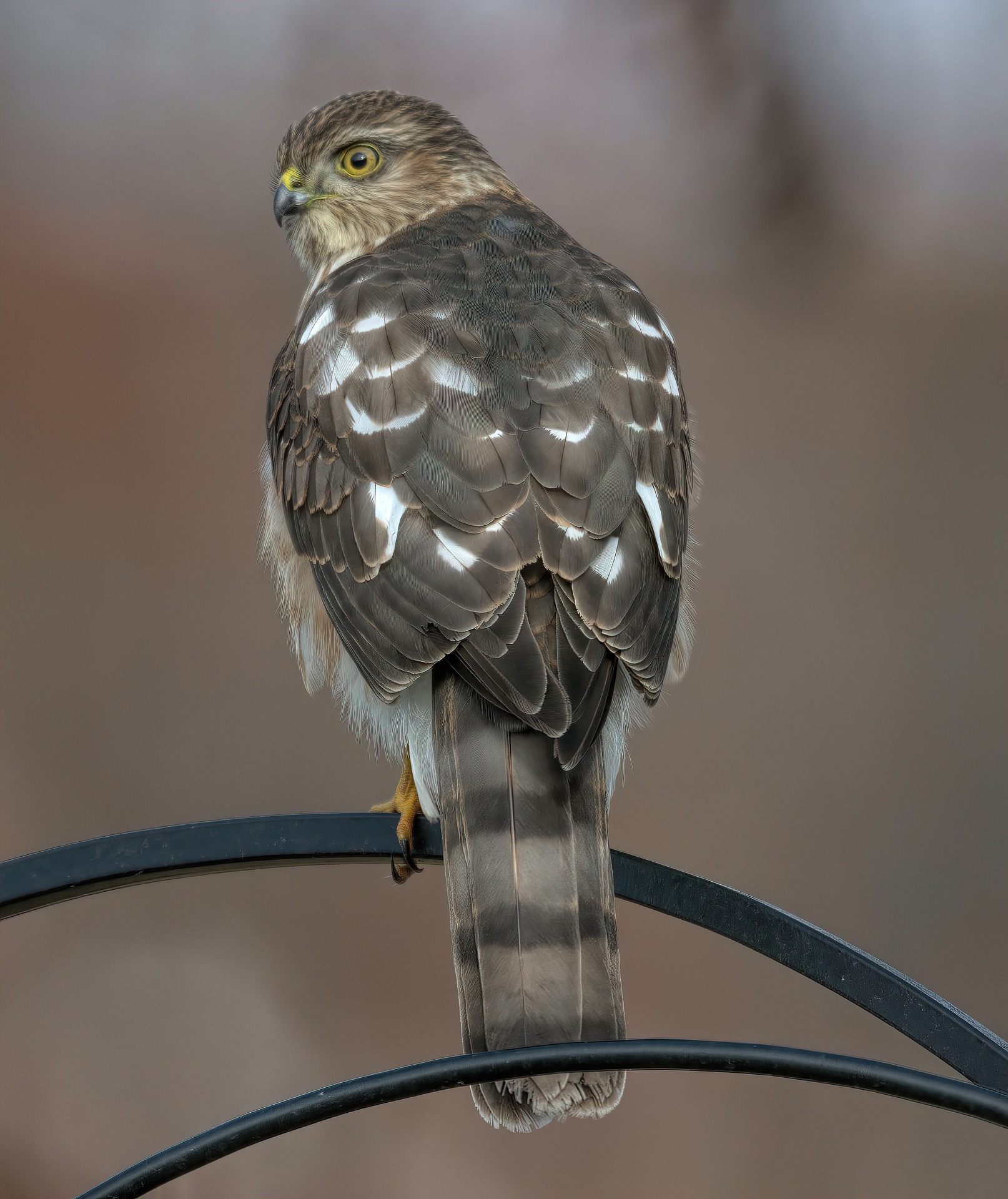
Juvenile coopers hawks are a pleasure to watch, especially when they are learning to fly. I have successfully kept many broods and watched these juveniles transition to adults many times in my falconry journey. From what I picked up, I will share with you the most important things you should know before caring for juvenile hawks.
Juvenile Coopers hawk development
Juvenile Cooper’s Hawks undergo a series of developmental stages as they mature into fully grown birds. As falconers, it is crucial to understand these stages and adapt our training methods accordingly.
At around 10 days old, juvenile Cooper’s Hawks start developing their primary feathers and begin practicing their wing flapping skills. By day 14, they can hop out of the nest and onto nearby branches with some assistance from their parents or handlers.
By week four, the young hawk has developed its signature red eyes and starts actively preening its feathers. It also begins to show signs of hunting instincts by chasing after insects and small prey that come near the nest.
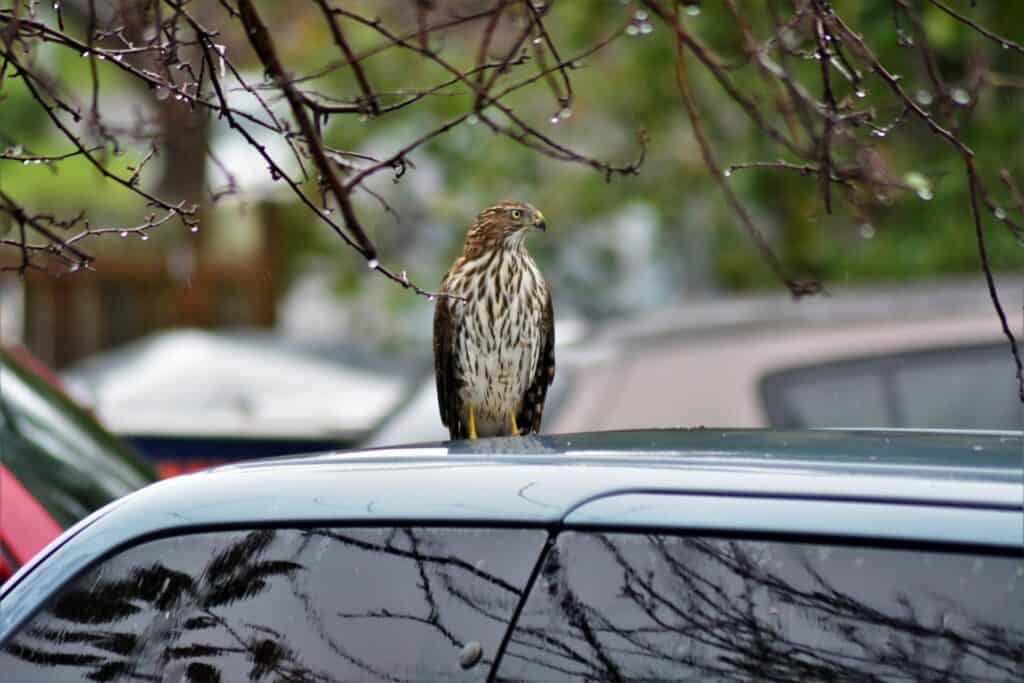
As the juvenile hawk reaches full feather development, typically around week six, it becomes more independent and starts exploring its surroundings. This is also when it starts vocalizing with distinct chattering sounds to communicate with its siblings and parents.
Physical and Behavioral Traits
During the juvenile Cooper’s Hawk development stage, their physical traits undergo notable changes as they mature into adult birds of prey. Observing my juvenile Cooper Hawk, I noticed several key physical and behavioral traits that are crucial for their survival and development:
- Flight Behavior: Juvenile Coopers Hawks display unsteady flight patterns as they learn to master their aerial skills, gradually improving their agility and speed.
- Vocal Communication: Vocalizations play a vital role in the communication between juvenile Cooper’s Hawks and their parents, helping them coordinate during hunting and nesting activities.
- Hunting Techniques: Young Coopers Hawks start developing their hunting techniques by practicing pouncing on small prey items under the guidance of their parents.
- Nest Building: While not actively involved in nest building as juveniles, they observe their parents constructing and maintaining the nest, learning essential skills for their future reproductive endeavors.
- Behavior and aggression: Juvenile Cooper hawks may exhibit aggressive behavior towards their siblings, competing for food and dominance within the nest. This is a natural part of their development and allows them to establish a hierarchy within the family unit.
Plumage
When I observe my juveniles, the development of their plumage is a key indicator of their progression towards adulthood. As they grow, their feather development and coloration undergo significant changes. The molting process, which occurs yearly, is crucial for maintaining healthy feathers. Understanding the timing of molting is essential to monitoring the bird’s plumage health.
The juvenile plumage of the Coopers Hawk displays intricate patterns that serve as camouflage adaptation, aiding in its survival. These patterns and age-related changes in markings help the hawk blend into its surroundings, making it less visible to potential threats. Over time, the plumage transforms, acquiring the distinctive features of an adult Cooper Hawk.
The evolution of the hawk’s plumage reflects its journey from juvenile to adult, with each stage providing insights into its growth and development. By closely observing the changes in feather patterns, coloration, and molting, I understand my juvenile Coopers Hawk’s transition into maturity.
Size and Shape
How does the size and shape of a juvenile Coopers Hawk evolve as it progresses toward adulthood? My juveniles undergo significant changes in their physical characteristics as they mature. Here is a breakdown of the evolution in their size and shape:
- Wing Span, Body Size: Juveniles have smaller wingspans and bodies than adults. Juvenile Coopers Hawks typically have a wingspan of 16-18 inches (41-46 cm), which increases to 24-35 inches (61-89 cm) in adults, allowing for better flight efficiency.
- Flight Patterns and Hunting Techniques: Young Coopers Hawks develop unique flight patterns and hunting techniques during their growth stages. These skills become more refined with experience, allowing them to catch prey efficiently.
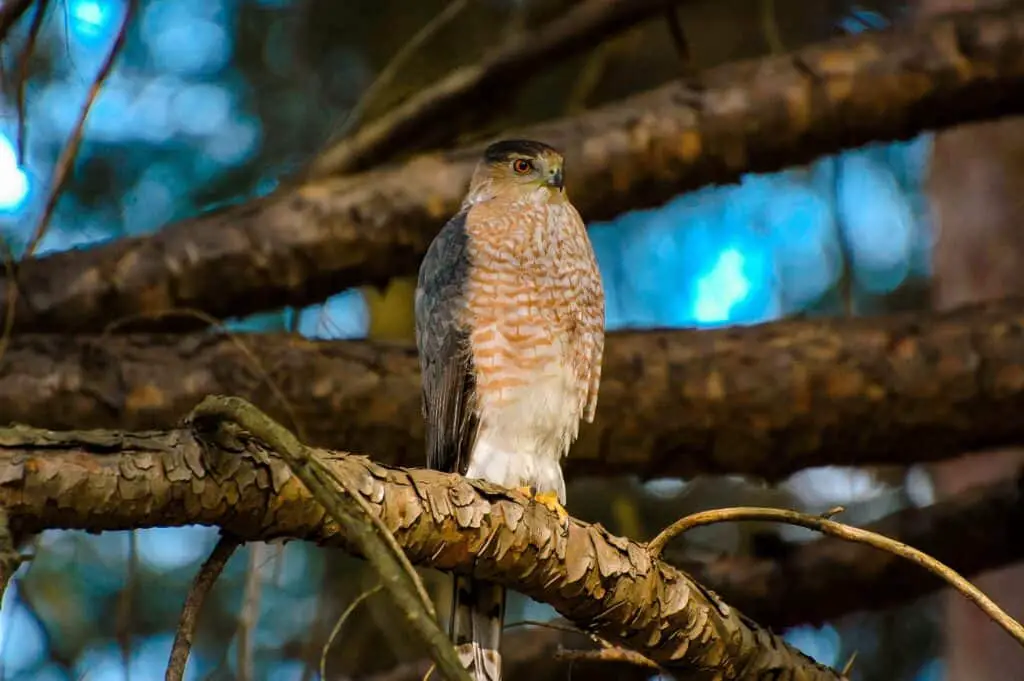
- Color Patterns, Tail Shape: The color patterns on juvenile Coopers Hawks’ feathers may differ from those of adults. Juvenile feathers often exhibit brown streaks, while adults have more solid gray and white patterns. Their tail shape also transforms gradually as they reach maturity, becoming more squared off.

Hunting Skills
As a juvenile Cooper Hawk develops, its hunting skills progressively sharpen, adapting to the demands of securing prey efficiently in its environment. Hunting techniques play a crucial role in the hawk’s development. Initially, the young hawk observes its parents, learning essential skills such as stealth, agility, and precision in flight.
Prey selection is a vital aspect of honing hunting skills. The juvenile hawk starts with smaller prey like insects and gradually progresses to larger prey such as small birds and rodents as it grows and gains confidence.
Nesting habits also contribute to the hawk’s hunting proficiency. The nest provides a safe space for the hawk to rest and strategize its hunting techniques. Flight training is another essential aspect of skill development. The juvenile hawk improves its speed and accuracy in capturing prey through practice flights.
Food sharing among siblings further enhances the juveniles’ hunting skills. Observing and competing with its siblings during feeding, the hawk learns valuable lessons in efficiently securing and consuming prey.
Territorial Displays
As the juvenile Cooper’s hawk nears adulthood, it begins to establish its own territory and display territorial behaviors. These displays involve vocalization, flights, and aggressive posturing toward potential rivals. Territorial defense is crucial for securing a reliable food source and a suitable nesting site.
Through these territorial displays, juveniles gain confidence in their abilities while also communicating to other hawks that they are ready to take on adult responsibilities. It is an essential part of their maturation process and prepares them for independence.
Transition from Nesting to Independence in falconry
For falconers, the transition of a juvenile Coopers Hawk from nesting to independence is an exciting and critical stage. During this time, the hawk continues learning essential hunting skills while forming a strong bond with its falconer.
Falconers provide opportunities for their birds to hunt in controlled environments, allowing them to gain experience and confidence. This process involves gradually increasing the hawk’s flight range and prey size, preparing it for successful integration.
The transition from nesting to independence is a significant milestone for both the hawk and the falconer. It marks the fulfillment of the juvenile’s development into a skilled hunter, ready to embark on its journey in the wild. As a falconer, it is a rewarding experience to witness this transformation and be part of the hawk’s growth and maturity.
Overall, observing the development of a juvenile Cooper Hawk provides valuable insights into their species’ behavior and evolution, making it an enriching experience for any bird enthusiast or falconer.
Juvenile Hawk Diet and Feeding Habits
During the growth stages, a juvenile Cooper Hawk’s diet consists primarily of insects, small birds, and rodents. As they mature and develop hunting skills, they begin to hunt larger prey, such as medium-sized birds like pigeons and doves.
Their feeding habits also evolve as they transition towards independence. Juveniles start by consuming food provided by their parents in the nest but eventually learn to hunt and catch prey on their own. At this stage, falconers can introduce live prey during training sessions to help the hawk hone its skills further.
With each successful hunt, juveniles gain confidence and become more independent in finding and catching food. This transition from dependence on their parents to self-sufficiency is crucial for their survival in the wild.
Social Dynamics Among Juveniles
Social dynamics among juvenile Cooper’s Hawks involve intricate interactions that shape their behavior and development within their communal environment. These interactions are crucial for the young hawks to learn essential skills and behaviors necessary for survival and successful integration into the adult hawk society.
- Playful Interactions: Juvenile Coopers Hawks engage in playful activities such as aerial acrobatics and chasing games, which help them develop their hunting techniques and agility.
- Social Hierarchy: Within the juvenile hawk group, a social hierarchy is established based on dominance and submission, influencing access to resources and mating opportunities.
- Aggressive Behaviors: Competition for food and territory can lead to displays of aggression among juvenile hawks, including vocalizations, posturing, and physical confrontations.
- Group Hunting: Juvenile hawks sometimes collaborate in group hunting efforts, working together to ambush prey or drive targets towards waiting group members, enhancing their hunting success.
- Peer Bonding: Through these interactions, juvenile Coopers Hawks form strong bonds with their peers, fostering cooperation and mutual support within the group.
Sibling Training
Juvenile Cooper’s Hawks often hatch in a brood of 2-7, with an average of 3-4 siblings per clutch. These siblings play an essential role in each other’s training and development, especially when it comes to hunting skills.
As they grow and mature together, they engage in sibling rivalry over food items provided by their parents, which helps strengthen their predatory instincts and hunting techniques.
Watching how siblings interact and learn from one another is fascinating, often mimicking their parents’ behaviors. This cooperative learning enhances their abilities and prepares them for successful integration into the wild.
Environmental Exploration and Adaptation
Upon leaving the nest, juvenile Cooper hawks engage in extensive environmental exploration to adapt to their surroundings and develop crucial survival skills. They meticulously navigate their habitat, honing their predatory behavior and foraging techniques to ensure their survival. Here are key aspects of their adaptation process:
- Habitat Exploration: Juvenile Coopers Hawks meticulously survey their surroundings, familiarizing themselves with potential perches, hunting grounds, and sources of prey.
- Survival Instincts: These young hawks instinctively learn to assess threats, recognize opportunities, and respond swiftly to environmental changes.
- Adaptation Strategies: They develop strategies to blend into their surroundings, utilizing camouflage techniques and adjusting their hunting techniques based on prey availability.
- Foraging Techniques: Through trial and error, juvenile Cooper’s Hawks refine their hunting techniques, learning to stalk, ambush, and capture prey effectively.
This relentless exploration and adaptation are crucial for the juvenile hawks to thrive in their environment and establish themselves as skilled predators.
Watching my juvenile coopers hawk grow and develop has been a fascinating experience. Every moment has been filled with wonder, from observing their territorial displays to witnessing their transition from nesting to independence. I hope this information helps you during your time as a caretaker for your juveniles.