
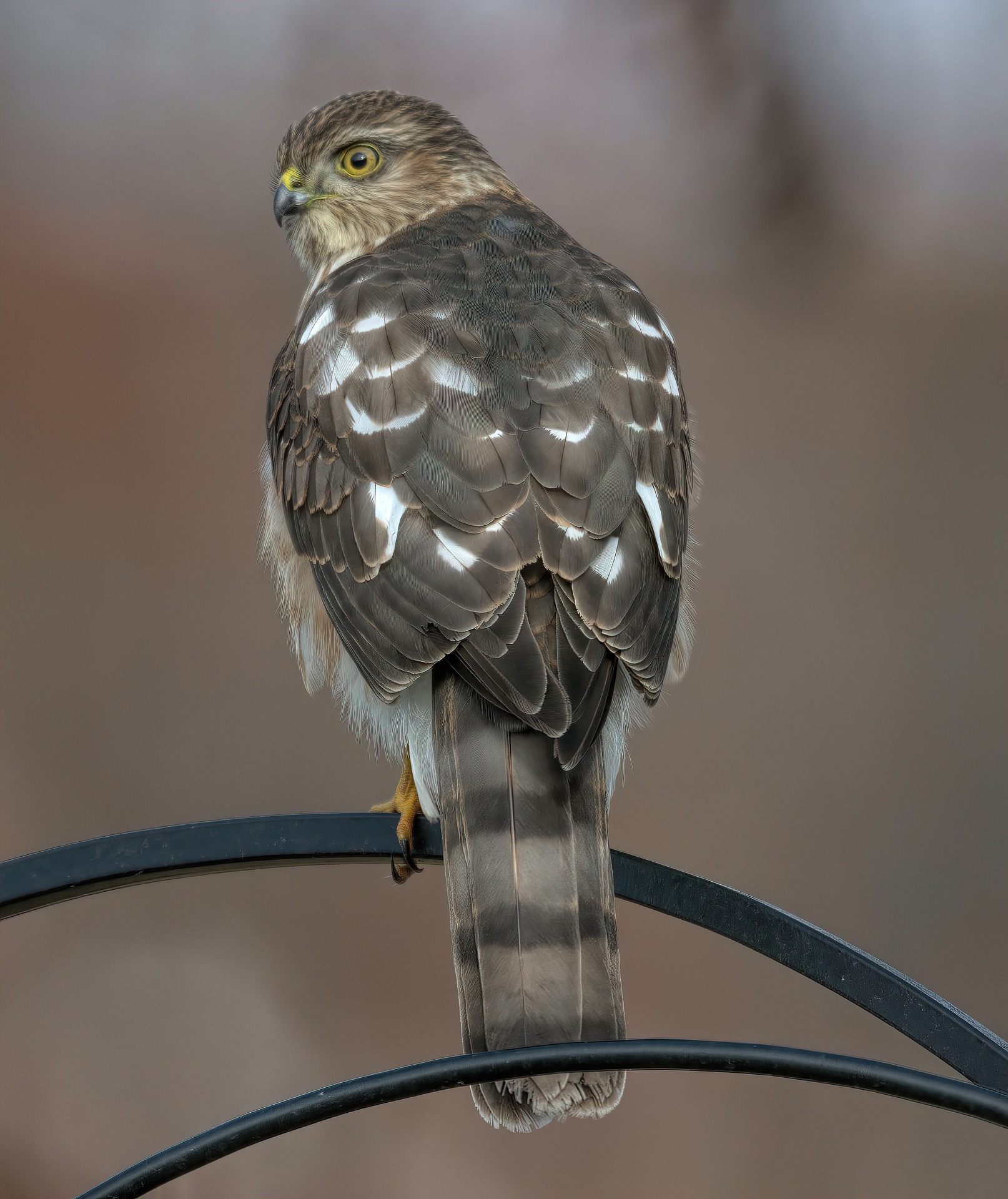
Cooper’s Hawks (Accipiter cooperii) are medium-sized raptors commonly found across North America, and I have had the pleasure of keeping quite a few of them. I can attest to their ever-changing weight from birth until it stabilizes in adulthood. Based on this experience, I will shed light below on the various stages of their lives and their weight during these stages.
Cooper’s Hawk Weight
The weight of Cooper’s Hawks varies significantly throughout their development, from birth to adulthood. These raptor chicks are incredibly light at birth, weighing just a fraction of an ounce (approximately 1-2 grams). Their weight increases rapidly as they grow, particularly during the nestling stage, when they are between one to two weeks old. During this period, a predictable growth pattern is observed, with a continuous increase in their body mass as they prepare for their first flight.
Young Cooper’s hawk
During the early days of their life, young Cooper’s Hawks start off very light, generally weighing just a few grams or a fraction of an ounce. This initial weight is enough to sustain them through the first delicate days post-hatching. The nestling stage is marked by rapid weight gain as their parents feed the chicks frequently. By the time they are one to two weeks old, they experience significant growth, with their weight rapidly climbing from a few grams (1-2 grams) to several ounces (28-56 grams). This growth is critical and is driven by their voracious appetite and the high-protein diet provided by their parents.

How big is a juvenile Cooper’s hawk
By the time Cooper’s Hawks reach the fledgling stage, usually around four to five weeks of age, their weight has increased substantially. Juvenile Cooper’s Hawks typically weigh between 8 to 20 ounces (227 to 567 grams), with females generally being heavier than males. This weight range is critical for their survival, as it influences their ability to hunt and fend for themselves. The development of flight feathers and strengthening of their muscles during this stage is crucial as they learn to fly and start practicing hunting techniques. The disparity in weight between males and females, known as sexual dimorphism, begins to manifest more clearly during the juvenile stage.
How big is an adult Cooper’s hawk
As Cooper’s Hawks transition into full adulthood, their weight stabilizes. Adult males typically weigh between 10 to 12 ounces (283 to 340 grams), whereas females are heavier, ranging from 12 to 18 ounces (340 to 510 grams). These weight differences are crucial, as they reflect the birds’ sexual dimorphism and play an integral role in their hunting tactics and reproductive behaviors. The heavier body mass of females is advantageous during egg production and nesting, providing the necessary reserves for the demanding period of raising chicks. Conversely, the lighter males are more agile, aiding in efficient hunting to provide for the family.
Cooper’s Hawk male vs female size difference
In Cooper’s Hawks, the size difference between males and females is notably distinct, with females generally being larger and heavier than males. This sexual dimorphism is common in birds of prey, including Cooper’s Hawks. The physical differences between male and female Cooper’s Hawks are evident in size and various other aspects. Here are some key points to consider regarding the male vs female size difference:
- Size comparison: Female Cooper’s Hawks can be up to 30% larger in size than males.
- Sexual dimorphism: This size dimorphism is a result of differing reproductive roles between male and female hawks.
- Physical differences: Apart from size, females tend to have broader wings and longer tails compared to males.
- Growth patterns: Female Cooper’s Hawks generally experience a longer growth period during their juvenile stage.
- Size variations: While size differences exist, individual variations within each sex can also be observed in Cooper’s Hawks.
Cooper’s hawk wingspan
In addition to their weight, Cooper’s Hawks also have impressive wingspans that aid in their hunting and flying abilities. The average wingspan ranges from 27 to 36 inches (69 to 91 cm), with females having a slightly larger wingspan than males. These long, broad wings allow for agile flight and quick maneuvering in pursuit of prey. As the birds mature into adulthood, their wing feathers become more defined and develop distinctive patterns unique to each bird.

Young vs. adult Cooper’s hawk wingspan
The difference in size between juvenile and adult Cooper’s Hawks is also evident in their wingspan measurements. Juvenile hawks have smaller wing spans ranging from 20-28 inches (51-71 cm) compared to adults. As they mature and develop their flight feathers, the wingspan gradually increases, reaching full adult size at around one year of age. The longer wingspan allows for more efficient flight and maneuvering, aiding in hunting success.
Wingspan variations
While there are average ranges for Cooper’s Hawks’ wingspans based on gender and developmental stage, some variations can occur due to environmental factors such as diet, habitat availability, and overall health. These variations may be minimal but can impact the birds’ abilities to hunt or navigate through their environment effectively. Observing these differences in the field can provide valuable insights into a hawk’s life history and potential challenges it may face.
Tail Size of Cooper’s Hawks
In addition to their impressive wingspans, Cooper’s Hawks have long tails that aid in their flying and hunting abilities. The average tail length ranges from 8 to 13 inches (20 to 33 cm), with females having slightly longer tails than males. This difference is due to the female hawks’ larger size and weight, which require a longer tail for balance and maneuvering during flight.
Juvenile vs adult Cooper’s hawk tail size
Similar to wing span measurements, there is a noticeable increase in tail size as Cooper’s Hawks mature into adulthood. Juveniles have shorter tails ranging from 5-8 inches (13-20 cm) compared to adults. As they develop and grow during the first year of life, their tails also grow and reach full adult size. The longer tail is crucial for stability and control during flight, especially when chasing prey through dense vegetation or tight spaces.
Cooper’s hawks can vary in size, with males typically being slightly smaller than females. The average weight of a Cooper’s hawk ranges from 8-14 ounces, with females generally being larger and heavier than males. This size difference can help distinguish between the sexes when observing these birds in the wild. Understanding these size variations can provide valuable insight into the behavior and biology of these fascinating raptors.