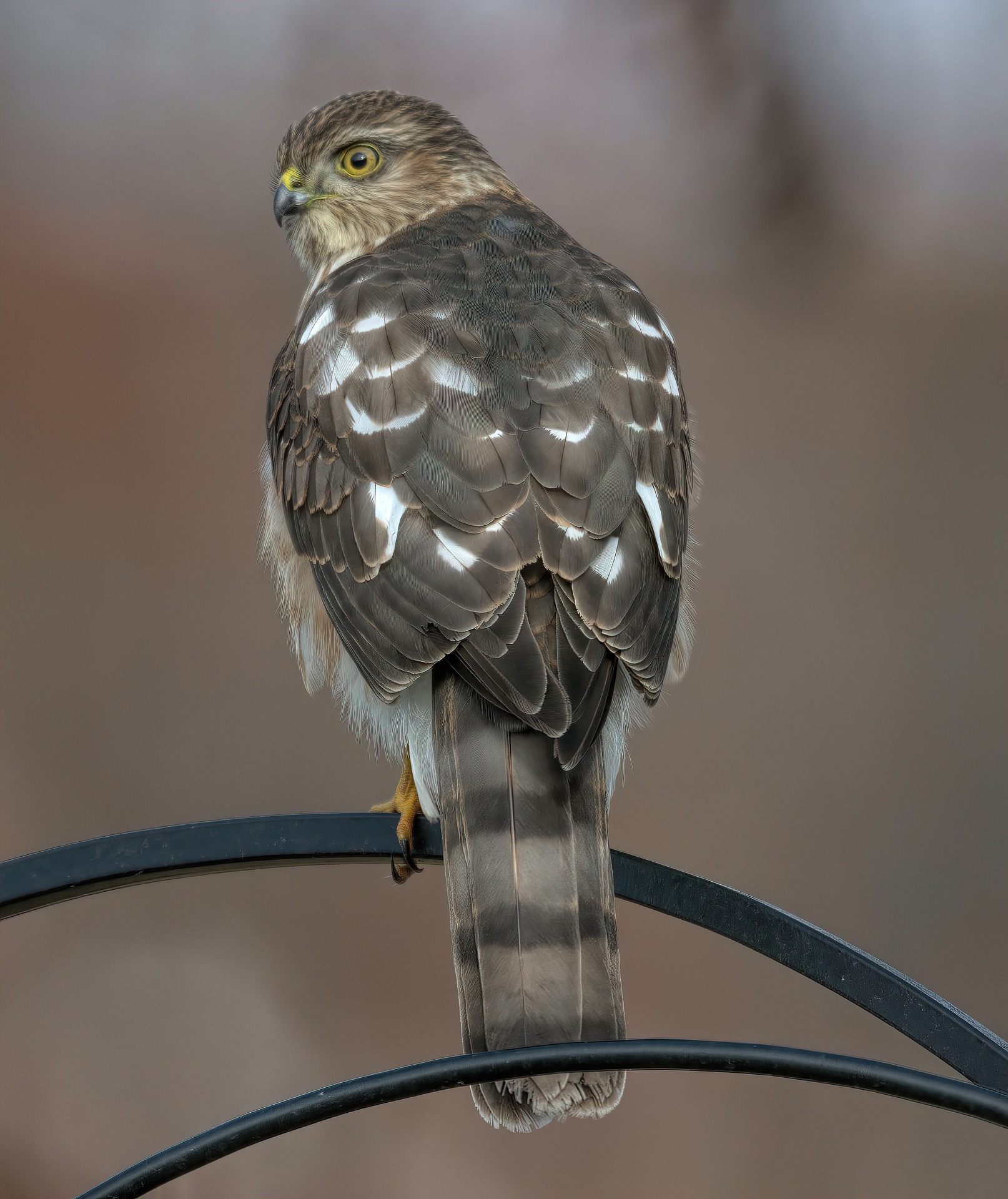
Are you looking to add a new member to your family in the form of a stunning Copper’s hawk? These majestic creatures might look intimidating initially, but with the right knowledge and care – they can provide an incredible bond that will last for many years. But before you go thinking about already hunting with your Cooper’s hawk, you need to know what exactly you need to house the bird in the first place.
The basics of keeping a coopers hawk include:
For housing
- Enough area to house a large aviary
- different types of perches with different material
- A Nesting box
- Cover for your bird
- A well-fenced area
- toys for stimulation
- Heaters
- Fans
- access to a food supplier
For hunting
- Glove
- Jesses
- Leashes
- Telemetry device
- Bells
- Feeders
- Hood
- Creances
- Whistles
- Training Equipment
- Hunting Equipment
When you are attempting to house a coopers hawk, you need to consider basics because as you get more into the hobby, you will find that you require more, and that’s when you should spend on nonessentials, so I will discuss all the aspects you need to consider before making this important decision. From understanding their needs for food and housing to providing them with enough exercise and stimulation on a daily basis, getting ready to own a Copper’s hawk is no small task. So keep reading if you want all the tips and tricks that come with owning one of these amazing birds!
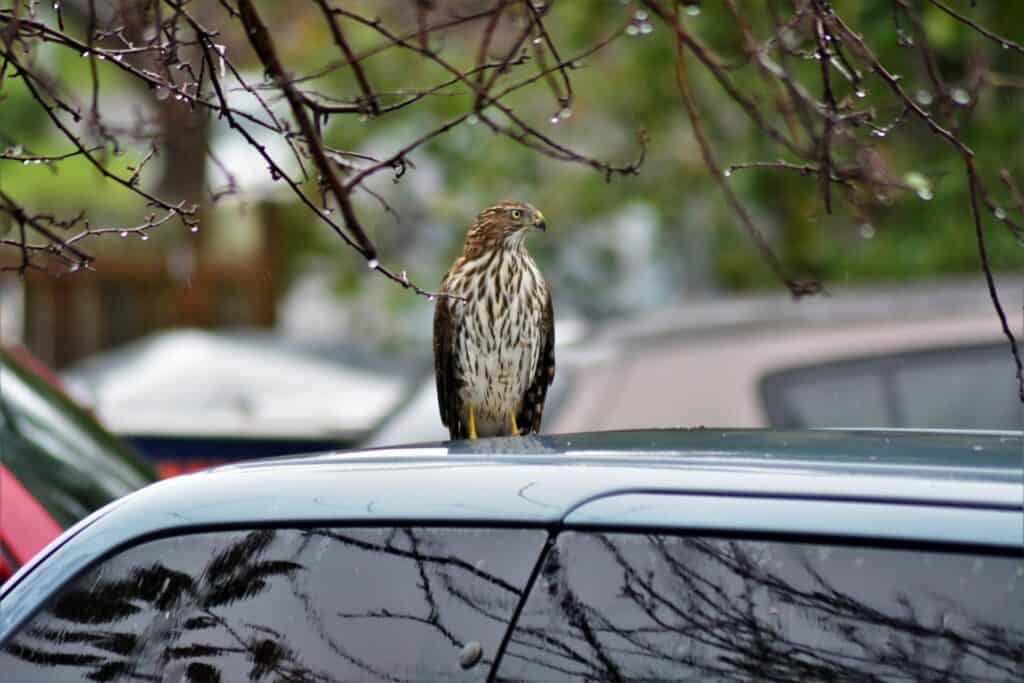
What items are essential to keeping a coopers hawk, and why?
Enough area to house a large aviary
A large aviary is necessary for housing a Cooper’s Hawk, as it requires ample space to fly and exercise its wings. It is important that the aviary have enough height to allow the hawk to soar in its natural habitat, mimicking their airborne lifestyle in the wild. This larger aviary also allows for more opportunities for mental stimulation.
Different types of perches with different material
Cooper’s hawks need perches with varying materials to allow them to build natural musculature and strength in their feet. Hardwood or metal branches can help build up the talons, while softer materials such as leather or rope can provide the necessary comfort for long-term sitting.
A Nesting box
Nesting boxes are essential for any bird that you plan to keep, especially Cooper’s hawks, as they have specific needs when it comes to nesting. The box should be made of wood and sturdy enough to withstand the force of the hawk entering and exiting it.
Cover for your bird
You will need a cover that can adequately protect your Cooper’s hawk from wind, rain, and harsh sunlight if you intend to take it out in public. For this, lightweight material like nylon or canvas is recommended. This is a great idea for any outdoor adventure and can also aid with training.
A well-fenced area
When it comes to housing a Cooper’s hawk, having a secure perimeter is of utmost importance. A high fence is necessary to prevent the bird from straying and getting injured or lost.
Toys for stimulation
Toys are essential for providing mental and physical stimulation for your hawk and promoting natural behaviours. These can range from stuffed animal toys to large bird swings and puzzles.
Heaters
Heaters and fans should be included in an aviary with Cooper’s hawks, as they need a regulated temperature to maintain their health and well-being.
Fans
Fans should also be included in an aviary with Cooper’s hawks as they help keep the air circulating and provide ventilation. This is important to maintain a healthy environment for these birds, as well as provide some extra cooling during those hot summer days.
Food supply
When it comes to caring for Cooper’s hawks, having a consistent food source is crucial because they occasionally have particular dietary needs. Choose a local provider who can provide the required meals frequently if at all possible. In the long term, this can save you time and money while also ensuring that your bird is receiving the right nutrition.
Glove
When handling your Cooper’s hawk, wearing a high-quality leather glove is crucial because this bird can become fairly aggressive and unpredictable when startled. In addition, the glove will offer additional defence against the hawks’ razor-sharp talons.
Jesses
Jesses are straps that help hold the bird in place when being handled. They are commonly made of leather or nylon. Both training and public release of the hawk depend on this.
Leashes
When you want to take your hawk out in public and give it a safe method to be controlled, leashes are a crucial tool. Strong materials, such as leather or nylon, should be used to create the leash.
Telemetry device
Tracking your hawk’s activities is a breeze using telemetry equipment, especially when it comes to flying vast distances. This is useful for observing migration patterns, breeding behaviours, and other things. This mini gadget is lightweight and easy to pin onto your raptor, and it won’t cause a distraction or irritation.
Bells
The purpose of a bell is to ring when the bird moves. By doing this, you can judge how far or how fast the raptor is travelling. This helps massively while out hunting to give you a sense of what your raptor is up to, or it’s whereabouts.
Feeders
Feeders are a great addition to any aviary, as they provide a safe and simple way to feed your hawk while eliminating the need for constant hand-feeding, as well as reducing any mess or waste that might otherwise occur with hand-feeding.
Hoods
A hood for your raptor is essential, and I don’t think any falconer has practised falconry without hoods in the modern day. This piece of equipment is used to block out the raptor’s vision so that it won’t be startled by sudden movements of larger objects; thus, what they can’t see can’t hurt them.
Creances
the purpose of a creance is to allow distant flights while keeping the bird from escaping. This is a long piece of nylon or leather (comes in various sizes) that attaches to the bird. It is usually so lightweight that it won’t affect your raptor too much while giving you a chance to call your raptor from distances during training.
Whistles
Whistles are a great way to capture the attention of your hawk quickly. These can be used in combination with other sounds, like clickers or whistles, to help teach commands. Also, if your raptor’s attention wanders, then with this tool, it’s easy to bring them back in line.
Training Equipment
Having the right training equipment on hand is essential for teaching your hawk new skills and commands. This can include items such as lures, perches, target sticks, and a variety of clickers that help reinforce positive behaviours.
Hunting Equipment
When hunting with your Cooper’s hawk, it is important to have the necessary equipment on hand. This includes items such as gloves for handling, a good quality hood for calming the bird down, and telemetry devices for tracking its progress in the field.

After reviewing the essentials needed to house a Copper’s Hawk, it is clear that patience and hard work are required to create a comfortable and safe environment for your feathered friend. Taking the right measures to ensure their well-being means that they can live in harmony with you, your home and its surroundings. Remember, these creatures have complex needs and require special care – always make sure you do research within recommended bird keeper forums for additional insight into what is required for successful raptor ownership! With dedication and commitment, your day-to-day life with a Copper’s Hawk will be nothing but memorable and rewarding.