

Have you ever wondered what it takes to train an eagle in falconry? The answer to that question is not as straightforward as one might think. But I would say, in my opinion, No it is not easy or simple to train an eagle, and below, I have listed the most obvious reasons why
Natural Instincts and Behaviors
Training eagles in falconry can be formidable due to their innate behaviours and instincts. These majestic birds possess instinctual hunting abilities and exhibit aggressive behaviour, making it challenging for inexperienced falconers to establish control. Flight training is crucial, as eagles must be trained to fly and return to their handler consistently. Their strong prey drive can cause distractions during training sessions, requiring careful management to maintain focus. Additionally, eagles have a complex social hierarchy, which the falconer must understand and respect. These natural instincts and behaviours require patience, skill, and expertise to overcome. Falconers need to deeply understand eagle psychology and employ effective training techniques to work with these magnificent creatures successfully.
Physical Characteristics and Handling Challenges
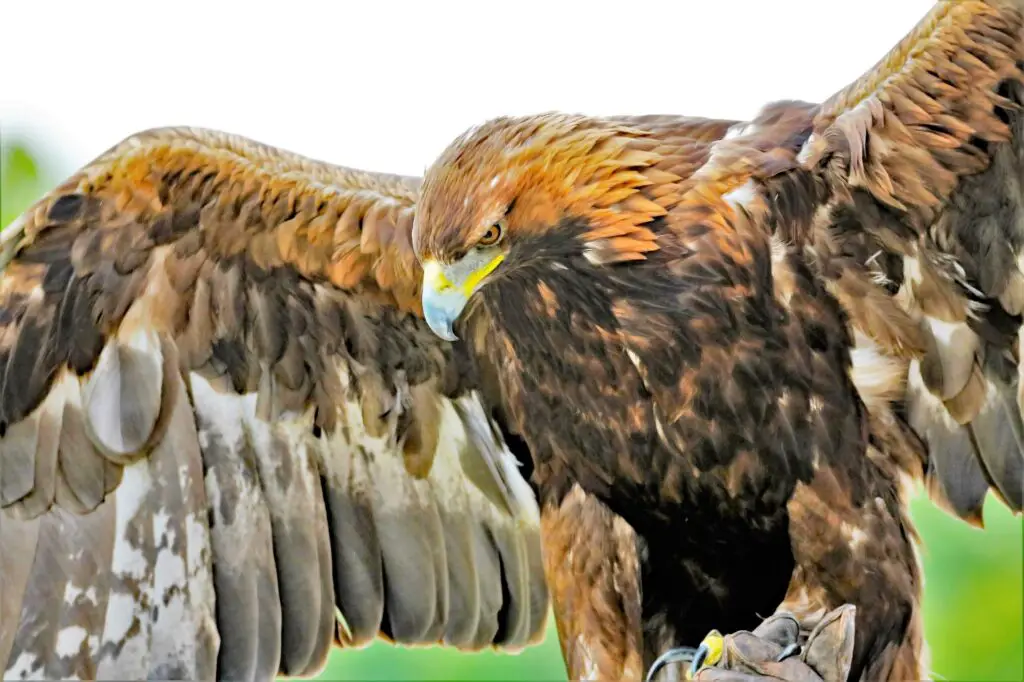
Handling eagles in falconry requires a deep understanding of their physical characteristics and challenges. Eagles are commonly known for their impressive size and strength, which can pose difficulties during training. Their large talons and powerful beaks require careful handling to avoid injury. Additionally, eagles have unique physicalities, such as their keen eyesight and remarkable flying ability, which must be taken into consideration when developing training techniques. Due to their adaptability, eagles can be trained to perform a broad range of tasks, but this also means that trainers must be prepared to address different challenges that may arise. Effective communication methods, such as positive reinforcement and consistency, are key to building a strong relationship with an eagle and overcoming any training obstacles.
Bonding and Trust Building
Establishing a strong bond and building trust between the falconer and the eagle is essential for successful training in falconry. Trust development requires patience, as it takes time for the eagle to feel comfortable and secure with its handler. Effective communication plays a pivotal role in building this trust, with body language being a key component. The falconer must understand and respect the eagle’s needs and preferences, fostering a mutual understanding between them. Consistency and positive reinforcement are vital in the training process, as they reinforce the trust and bond between the falconer and the eagle. Bonding exercises, such as spending quality time together, also contribute to the development of a strong relationship. Investing time and effort in building trust and bonding with the eagle is necessary for successful training in falconry.
Individual Variability and Temperament
Each eagle possesses its own unique temperament, which greatly influences its response to training efforts. When it comes to training eagles in falconry, understanding and working with their individual temperament is crucial. Here are some key points to consider:
- Behavioural challenges: Eagles may exhibit various behavioural challenges during training, such as aggression, fearfulness, or stubbornness.
- Training struggles: Some eagles may require more time and effort to learn and respond to training cues compared to others.
- Temperament differences: Each eagle has its own temperament, which can range from docile and cooperative to independent and resistant.
- Personality traits: Eagles, like humans, have distinct personality traits that affect their training experience. Some may be more curious and eager to learn, while others may be more cautious and hesitant.

Understanding these temperament differences and adapting training techniques accordingly is essential for successful falconry. It is important to recognize and respect each eagle’s individual responses to ensure effective training outcomes.
Expertise and Experience of the Falconer
The expertise and experience of the falconer are absolutely critical when training an eagle for falconry. Unlike domesticated animals, eagles are wild at heart, commanding a unique set of skills from their handlers. An accomplished falconer must possess an encyclopedic knowledge of avian behaviour and the finesse and intuition that come from years of hands-on experience. Success in training these regal birds hinges on the ability to read subtle cues, anticipate reactions, and adjust training strategies in real time. Those new to falconry might find themselves overpowered or outwitted by these intelligent raptors. Therefore, an in-depth understanding of conservation, welfare, and training techniques rooted in expertise is indispensable to ensuring the eagle’s well-being and the falconer’s safety.
Training eagles in falconry is a challenging task that requires expertise and experience. Their natural instincts and physical characteristics present unique handling challenges. However, with the right training methods and patience, a bond of trust will be built between the falconer and the eagle. Each eagle’s temperament and individual variability must be considered during training.
Frequently Asked Questions
Can Any Type of Eagle Be Trained for Falconry, or Are Some Species More Difficult to Work With Than Others?
- Some species of eagles may be more difficult to train for falconry due to their behaviour.
How Long Does It Typically Take to Train an Eagle for Falconry Purposes?
- Training an eagle for falconry purposes requires time, patience, and expertise. Techniques such as positive reinforcement and trust-building are key. The timeline varies, but it can take months to years.
Are There Any Specific Challenges or Difficulties That Falconers Commonly Encounter When Training Eagles?
- Challenges faced in training eagles for falconry include behavioural issues, physical limitations, and species compatibility.
What Are Some Common Methods Used to Build Trust and Establish a Bond Between a Falconer and an Eagle?
- Building trust and establishing a bond between a falconer and an eagle requires patience, consistency, and positive reinforcement. Training methods such as reward-based techniques and consistent handling help in building a strong connection and trust between us.