
Falconers always look for methods or products to keep their birds safe and healthy. Tail guards are a great product for protection. Whether you’re a new or experienced falconer, understanding what a tail guard is and why it can help increase your enjoyment and success with this thrilling sport.
A Tail guard is a protective cover that falconers use to keep their bird’s tail feathers from getting damaged or falling off. Most tail guards are only used during transportation, but some falconers use them during a hunt, although this may affect their flight.
Let’s explore the purpose of tail guards when falconing. I’ll delve into different materials used to make them and offer advice on which type is better suited for specific tasks from my personal experience. So read on to discover all there is to know about how to save your birds’ tails!
What exactly is a tail guard?
In falconry, a tail guard is an important protective gear that helps the bird remain safe. As their name suggests, tail guards protect the base of the tail feathers from damage due to friction and wear and tear. Although they are not mandatory for all birds in falconry, many experienced trainers, including myself, choose to include a tail guard when training their birds. Since I started using tail guards, I have noticed that my birds’ feathers have been thriving, and they don’t lose as many feathers off their tails.
How do you put on a tail guard?
Putting on a tail guard for your raptor can initially seem daunting, but it’s quite a simple process. Before putting the tail guard on, I ensure my raptor is calm and relaxed. If they’re feeling particularly fidgety that day, you may need to wait until they’ve settled down a bit before beginning. It’s important to remember to be gentle and slow throughout the entire process so as not to agitate them further.
To begin, make sure you have the right size tail guard. When measuring, include the length of the base of the tail feathers to get a better fit. Once you have the correct size, start threading it into each side of your raptor’s tail before tying it around once to help keep it secure. For tail guards made from softer fabrics, you may need to use a long cotton thread and lightly roll the cotton around the raptor’s tail. This will pull the feathers closer together, making it easier for you to slip the tail into the Guard and then slowly unroll the cotton thread from the tail once the Guard is on. To finish off, snug down the straps for added security. Once the Guard is safely and securely fitted onto the birds, I ensure the tail guard does not cover the bird’s Cloaca. That way ensures no bird poop gets stuck inside the tail guard.
If done correctly, your raptor should be able to move freely while having enough room for its long feathers!
Do tail guards come in different sizes?
Yes! Raptor tail guards come in various sizes, from extra-small to large. This means that regardless of the size and weight of your raptor, there’s sure to be a tail guard that will fit them perfectly. To size my bird’s tail, I often use X-ray film paper and trace out the exact size of my bird’s tail.
What materials are tail guards made from?
Raptor tail guards can be crafted from various materials, depending on the needs of the raptor. Traditional options are often made from leather or reinforced nylon. Plastic is also an acceptable material. I’ve often used old X-ray film paper and made a few perfect tail guards for my birds. Ultimately, whatever material is used must be strong enough to protect the raptor’s tail feathers and light enough that the raptor isn’t encumbered when moving around.
Do tail guards make the bird feel uncomfortable?
The answer to this will depend on the type of tail guard, the size you choose and how you put it on. I have always ensured to properly measure the bird’s tail before attempting to put a tail guard on it. You should be fine if the measurements are correct and the materials you choose are appropriate and not heavy for your bird. While they might appear a little strange to the birds at first, as long as the Guard is durable and fitted correctly, the bird shouldn’t have any trouble with it or feel uncomfortable wearing it. Over time and with proper socialization, the bird will become accustomed to it and comfortable having it around their tail feathers.
Can you use a tail guard while hunting?
Generally, when a hawk or falcon is in its mews, this protective Guard helps ensure that its feathers are healthy. During transportation, the tail guard helps to keep the bird safe from external elements and limits the amount of damage caused by stress and bumps along the way. Although not frequently necessary while hunting, there may be certain situations where a tail guard is useful in protecting sensitive feathering or providing additional cushioning in crash landings onto terrains such as trees or rocky surfaces.
Does it affect the flight?
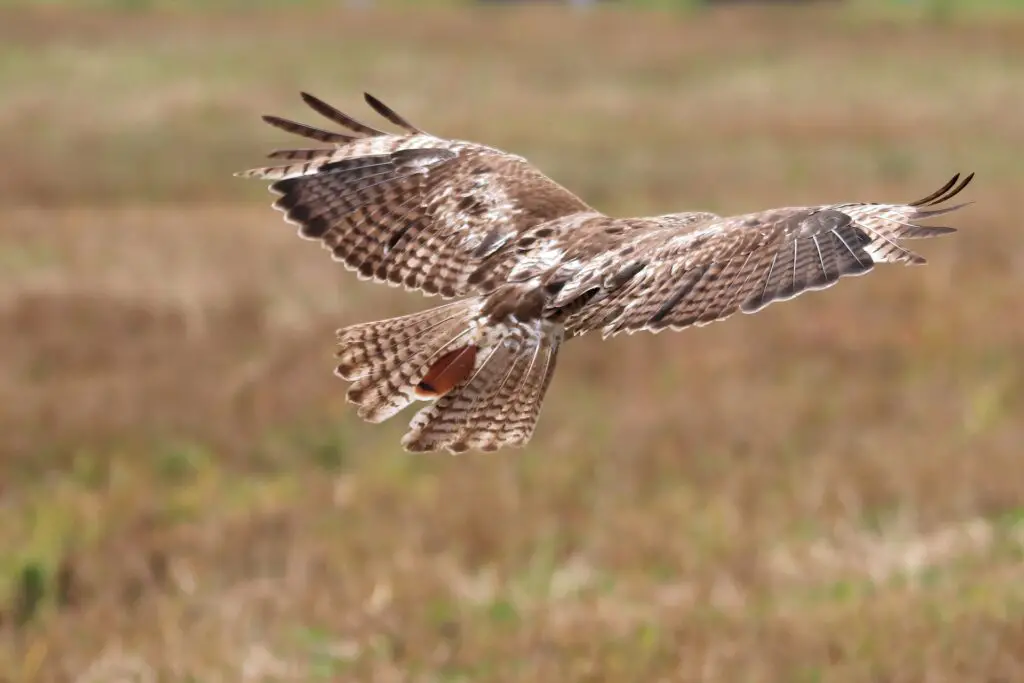
From an aerodynamic standpoint, having a tail guard on your bird can restrict them from moving in the air as normal due to the sudden decrease in drag they experience while soaring. Usually, when a bird is gliding or speeding in the air, it relies heavily on its tail feathers to change direction and gain momentum when needed. While this may be advantageous for keeping predators at bay, it reduces their ability to manoeuvre effectively. As such, tail guards can make the flight more difficult for birds and reduce range or speed. For these reasons, I always remove the tail guard off my birds when they are free-flying or training.
Why is it important to keep the tail feathers of a hawk in good condition?
A hawk’s tail is essential to its aerodynamics. The first thing to note about hawk tail feathers is that they are incredibly important for navigation. Hawks use their tail feathers to help them steer and change directions while in flight, and if even one feather is damaged or not properly maintained, it can throw off the bird’s entire flight pattern. In addition to helping with navigation, tail feathers also play a role in communication. Certain hawk species use their tails to send visual signals to other hawks, and a V-shaped tail feather display is often used to indicate aggression. If a hawk’s tail feathers are not in good condition, it could alter its flight and capture ability when hunting. This is why having a tail guard fitted on your raptor is essential.
These are the main pointers I have learnt through the years when using a tail guard. It is there to help protect your bird’s delicate tail feathers from damage or breaking. It’s also a good idea to have several tail guards on hand so you can rotate them as needed. These simple steps will help ensure your bird of prey stays healthy and happy for years.