

Falconry isn’t just an art form – it’s also a science. From the equipment used to train and hunt with raptors to the rules for handling them, each aspect of this ancient sport has been carefully crafted over thousands of years in order to keep both humans and birds safe. One such tool in falconry is whistles, but how do you utilize them in falconry? When I started using them in falconry, I found that:
Whistles in falconry can be used for a variety of reasons. One use is to signal the start and end of a falconry session. For example, the trainer or ‘falconer’ blows the whistle when they want their bird to come back or at the end of a hunting session as a signal that it’s time for them to return home. Whistles can also be used to call the bird in from a distance or to train them by providing sound cues.
When using a whistle in falconry, it can be beneficial to both the falconer and the raptor, so we will jump into a few points surrounding whistles to give you a better understanding and explain more about them
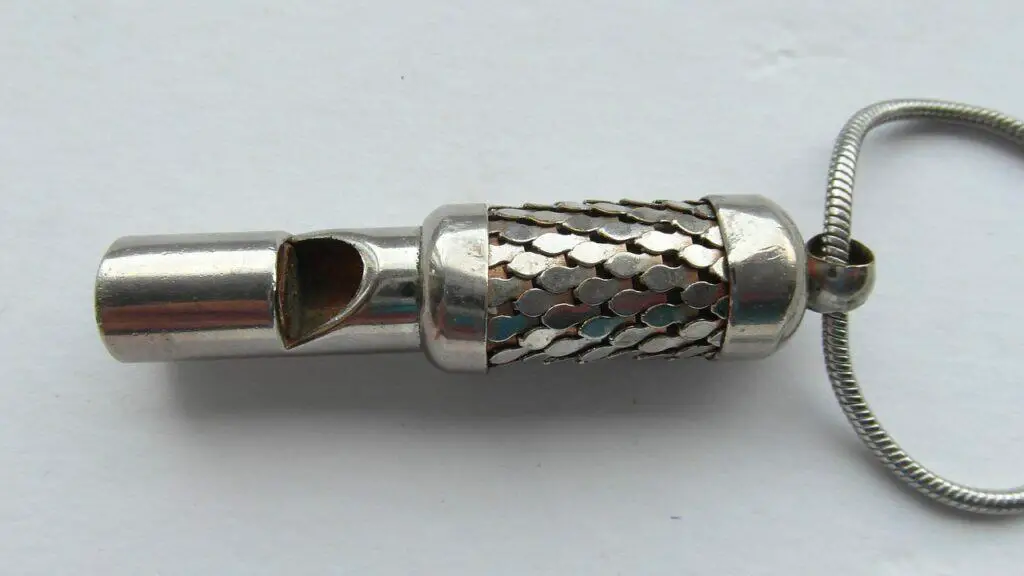
Why do falconers use whistles when training and hunting
Falconers use whistles to communicate with the birds they are training and hunting. Whistles allow bird trainers to easily give commands, reward behaviours, and make corrections while working with various species of falcons, hawks, and other birds of prey. By pinpointing specific notes and tones, trainers can call on a bird to return or release when they hear the whistle while in flight. Training sessions also become much more efficient with the use of a whistle, as crucial behaviours and commands can be rewarded immediately.
How to use a whistle in falconry
Using a whistle in falconry is a great way to communicate with your bird and keep them engaged. Before you begin, it is important to make sure that your bird is comfortable with the sound of the whistle by training them with positive reinforcements when they respond correctly. Establishing a basic set of commands with the whistle will help ensure that your bird understands what you want them to do when they hear it. Repeating these commands multiple times until they respond correctly will help ingrain the signal into their psyche. The reward should be given shortly after they demonstrate that they understand what you are asking them to do. With patience and practice, your bird will eventually be able to understand even more complicated whistles signals.
Different types of whistles used in falconry
Falconry has long been a popular sport among affluent enthusiasts and bird watchers, who can train birds of prey to hunt game. Communication is key to successful falconry, and many practitioners depend on whistles to relay commands to their birds. These whistles come in many shapes and sizes – from the distinct “squeaker” used for hawks, which emits a sharp sound that mimics prey movements, to the harmonic whistle designed exclusively for eagles, which produces a melodic noise.

How long will trained birds of prey take to respond to whistle commands
Depending on the bird, it can take anywhere from a week to several months of consistent training before they respond to whistle commands from their handler. During that time, the animals will learn to identify individual notes and associate them with specific behaviours, such as fetching items or flying up to perches. The process is heavily reliant on positive reinforcement, as rewards are provided after successful attempts at following the given command. Birds have remarkable intelligence, and it is not unusual for them to come away from training with a vast understanding of basic commands, so much so that they can be used by falconers in hunting expeditions and other pursuits.
Whistles are used for many different things in falconry. For example, they can be used to help train the bird, signal to the bird that it is time to come back or get the bird’s attention. Many types of whistles are available, so finding the right one for you and your bird is important. Make sure you consult with a falconer to help get you started.