
Falconry, the ancient art of hunting with birds of prey, predominantly involves four main types of raptors today. All these birds belong to the order Falconiformes. Below, we’ll break down the taxonomy and characteristics of these remarkable hunters, offering insight into their behavior, biology, and role in falconry.
Taxonomic Overview
- Kingdom: Animalia
- Phylum: Chordata
- Class: Aves
- Order: Falconiformes
Within each genus, the birds are usually ordered from smallest to largest to provide a sense of scale. Generally, males tend to be smaller, more active, and slightly more skittish than females. Males also seem capable of hunting later into the breeding season, which aligns with their ecological role.
Hawks, accipiters, and eagles share a closer kinship with one another than they do with falcons. Members of the family Accipitridae—which includes hawks, accipiters, and eagles—are distinct in several ways, including their oval-shaped nostrils and powerful talons, which are their primary weapons. Falcons, in contrast, belong to the family Falconidae and differ noticeably in their beak shape, nostril design, and body proportions.
Below, we explore the unique traits of these birds in more detail.
Hawks
Hawks belong to the family Accipitridae and genus Buteo. Often referred to as “broad wings” or, in some English dialects, “buzzards,” these birds are heavy-bodied with broad tails and wide wings. They are masters of soaring, using even the slightest breeze to stay aloft.
Common Hawks Used in Falconry
- Swainson’s Hawk (Buteo swainsoni)
- Red-shouldered hawk (Buteo lineatus)
- Red-tailed hawk (Buteo jamaicensis)
- Ferruginous Hawk (Buteo regalis)
These hawks’ hunting technique relies on powerful feet and sharp talons. They constrict prey in their grasp or pierce its vital organs, making them effective predators.
Accipiters
The Accipiter genus, also part of the Accipitridae family, includes what are often called “true hawks,” “short wings,” or “yellow-eyed hawks.” These birds have shorter wings, long tails, and an aura of near-constant motion. Juveniles typically have yellow eyes that turn red as they mature.
Common Accipiters in Falconry
- Sharp-Shinned Hawk (Accipiter striatus)
- Eurasian Sparrowhawk (Accipiter nisus)
- Cooper’s Hawk (Accipiter cooperii)
- Northern Goshawk (Accipiter gentiles)
Accipiters excel at stealth, often ambushing prey by darting around trees or swooping swiftly from above. Their flight style includes a characteristic rhythm of rapid wing beats followed by a gliding phase.
However, these birds can be prone to stress-related conditions like seizures, especially the smaller species with higher metabolic rates.
Once an accipiter catches its prey, it repeatedly punctures its quarry with its talons to ensure a swift kill.
Eagles
Eagles, belonging to the genus Aquila within the Accipitridae family, are large raptors with broad wings and medium-length tails. These powerful birds are known for their impressive strength and hunting ability.
Common Eagles in Falconry
- Golden Eagle (Aquila chrysaetos)
Golden eagles are among the most majestic birds used in falconry. While bald eagles aren’t typically trained for this purpose, their iris transformation from brown to yellow as they age is a point of fascination.
Falcons
Falcons stand apart from other raptors in both behavior and anatomy. Part of the Falconidae family and Falco genus, these birds are often called “long wings” or “dark-eyed hawks.” Falcons have a global range, thriving almost everywhere except the extreme poles.
Common Falcons in Falconry
- American Kestrel (Falco sparverius)
- European Kestrel (Falco tinnunculus)
- Merlin (Falco columbarius)
- Aplomado Falcon (Falco femoralis)
- Prairie Falcon (Falco mexicanus)
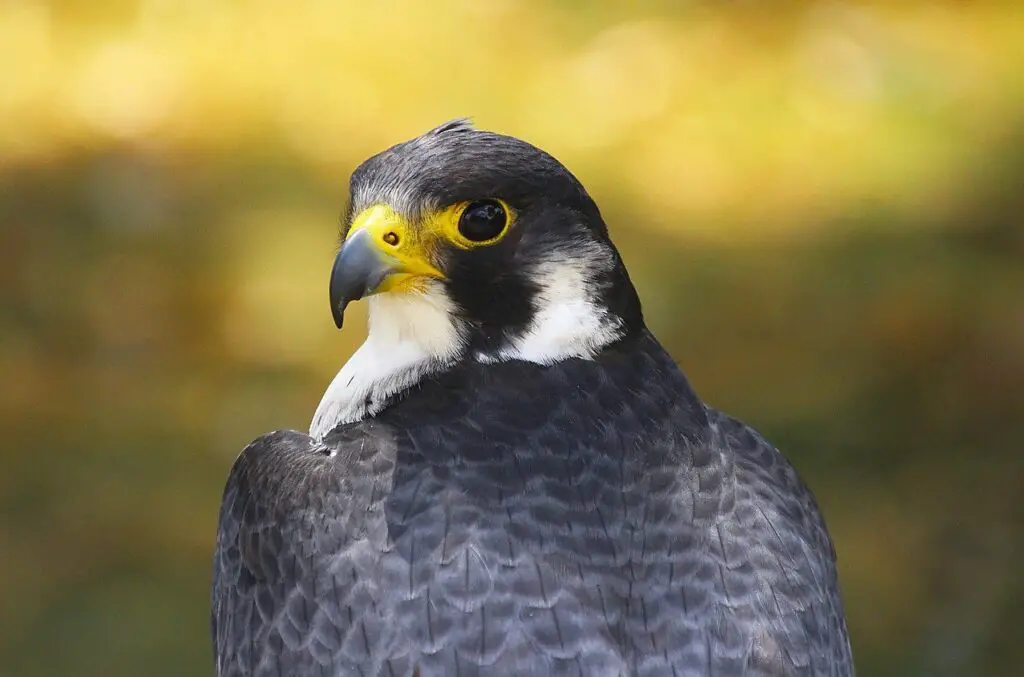
- Peregrine Falcon (Falco peregrinus)
- Saker Falcon (Falco cherrug)
- Gyrfalcon (Falco rusticolus)
- Lanner Falcon (Falco biarmicus)
Falcons are known for their aerodynamic build, with long, pointed wings and extended tails. Their hooked beaks feature a tomial tooth, or “notch,” designed for efficiently snapping the necks of prey. Unlike other raptors, they have smaller, circular nostrils adapted for high-speed stoops, allowing them to breathe even during rapid dives.
Falcons’ hunting methods vary widely, but they are most famous for their high-speed stoops. Most species also exhibit a distinctive dark facial stripe, which is thought to reduce glare.
Interestingly, falcons do not build nests of their own; instead, they opt for ledges, tree hollows, or old nests left by other birds.
Other Raptors
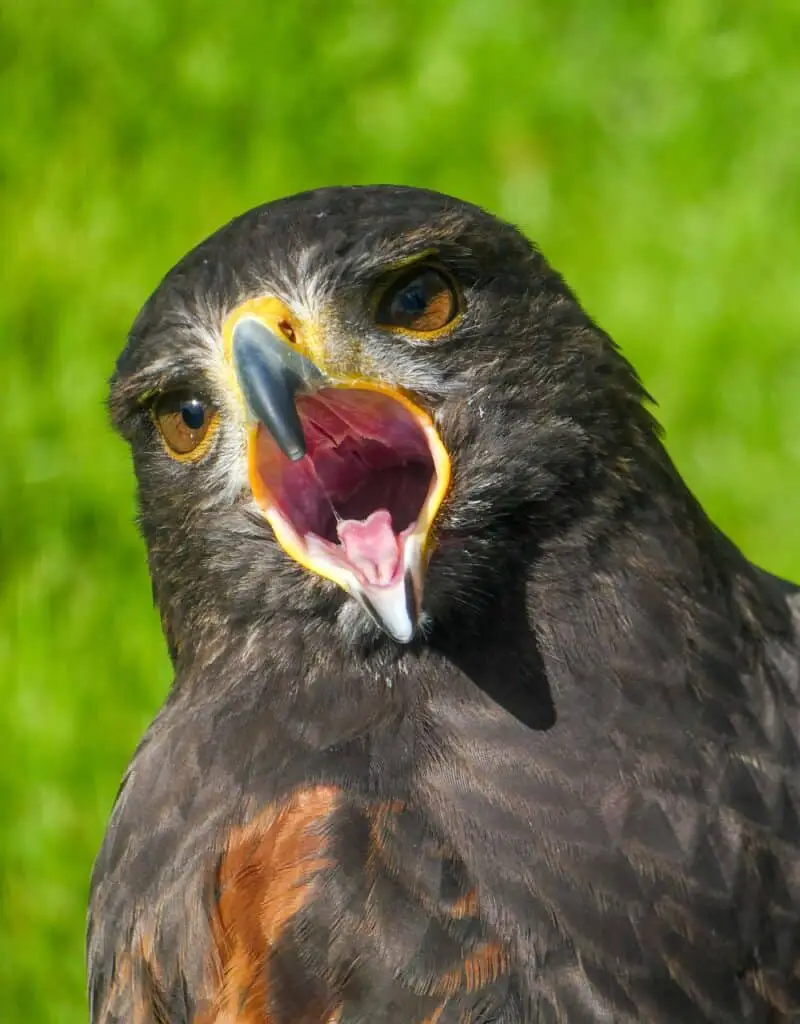
Harris’s Hawk (Parabuteo unicinctus)
Native to the American Southwest, Harris’s hawks are highly social and often hunt cooperatively in groups. Their adaptable nature and ease of training make them a favorite choice for beginner falconers.
Owls (Strigiformes)
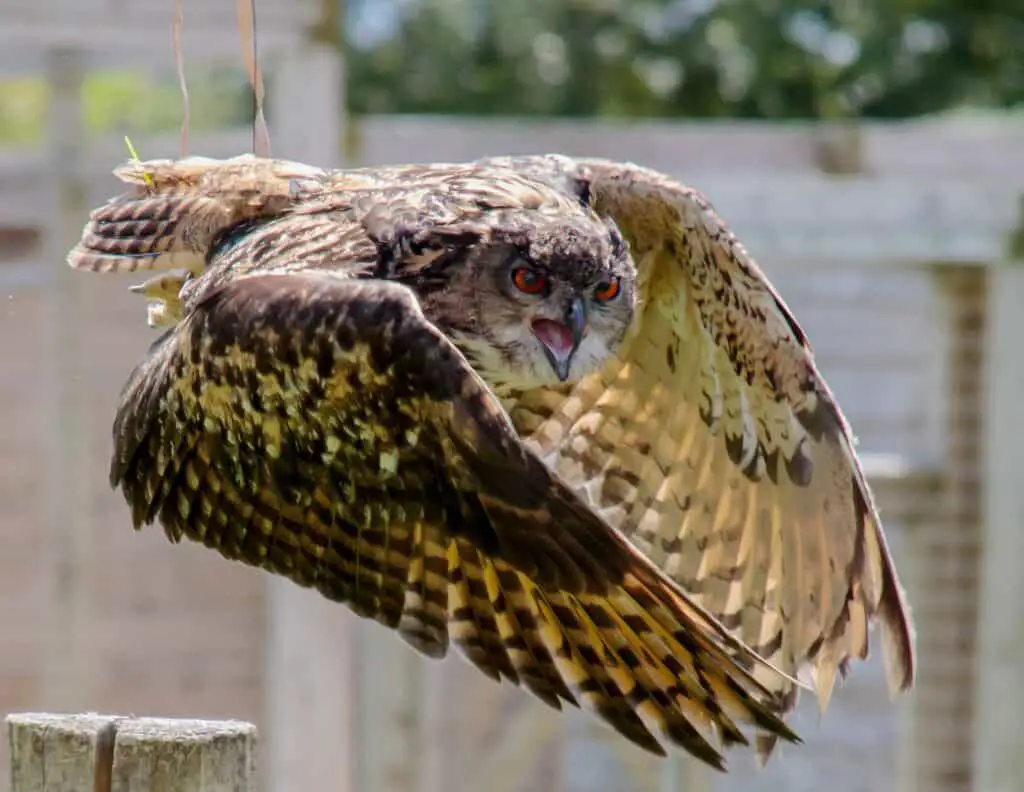
Owls, such as the Eurasian Eagle Owl and Great Horned Owl, have been used with varying degrees of success. While more common in Europe as display birds, some owls, like the Great Horned Owl, have been trained for hunting. Owl species often give clues to their activity patterns based on eye color—black eyes indicate nocturnal behavior, while orange or yellow eyes suggest daytime activity.
Uncommon and Experimental Birds
Other species, such as harriers and ospreys, have occasionally been hunted, though less commonly. Ospreys, prized for their fishing abilities, can be challenging to train due to their specific dietary needs and hunting instincts.
With evolving regulations, falconers in North America now have the opportunity to explore training with species like pygmy owls, snowy owls, and other historically unused birds. This opens up exciting prospects for the art of falconry, promising innovation and adventure in the years ahead.
Conclusion
Falconry celebrates the relationship between humans and these magnificent hunters. Whether soaring with hawks, pursuing prey with falcons, or experimenting with owls and other species, falconers continue a rich tradition of connection with nature.
Want to explore the fascinating world of falconry more? Dive into our in-depth guides on training techniques, raptor behavior, and conservation efforts. Keep discovering the art of falconry today!