

So, you may be wondering, how do falconers get their birds? Well, let me tell you there are various methods that falconers use to obtain their raptors. In the content below, I will explain how falconers, myself included, get our birds.
Methods to obtain a bird for falconry
When obtaining birds for falconry, falconers can employ several methods. One common method is
- Capturing birds
- Purchasing birds
- Breed your own birds
- Birds from rehabilitation centres
- Government programs

Capture from the Wild
To obtain a bird for falconry, falconers often employ various methods to capture them from the wild. Ethical considerations are important in this process, as minimizing harm to the birds and their populations is crucial. Falconers typically use two primary methods to capture birds of prey from the wild without causing harm: the Bal-Chatri and the Dho-Gaza.
Bal-Chatri: A Bal-Chatri is a cage-like trap that is covered in nooses. It is baited with a live mouse or other small animal to attract a bird of prey. As the bird lands on the trap to get the bait, its talons become entangled in the nooses. This trap is designed to hold the bird without causing injury until the falconer arrives to remove it safely.
Dho-Gaza: The Dho-Gaza is another ethical trapping method that uses a large net. The net is set up in a location that a bird of prey is known to frequent. When the bird flies into the net, it becomes entangled. The falconer can then carefully extricate the bird from the net.
Both these methods are designed to capture birds of prey without causing harm, keeping the welfare of the bird at the forefront.
Purchase from Licensed Breeders
I buy falconry birds from licensed breeders. To ensure the best birds for my sport, I follow legal requirements and work with breeders who specialize in exotic species. Here’s how the process works:
1. Legal requirements: I ensure that the breeders I work with comply with all legal regulations regarding the sale and transportation of falconry birds.
2. Bird transportation: The breeders take great care in transporting the birds safely and securely to their new homes, ensuring their well-being throughout the journey.
3. Quality assurance: Licensed breeders have extensive knowledge and experience in breeding and raising birds for falconry, guaranteeing the highest quality birds for enthusiasts like myself.

Breeding Your Own Birds
Breeding your own birds for falconry is an intricate task that requires Expertise in the matter and a deep understanding of these splendid raptors. Genetic selection is vital to this process; it is this that ensures the offspring have the ideal characteristics for falconry. Managing the aviary is another indispensable aspect, as creating a conducive environment for breeding and nesting is essential to the success of the venture.
Reproductive techniques, such as artificial insemination, are occasionally employed to increase the chances of successful breeding, especially when dealing with raptors that have specific or complex mating rituals or requirements. Following the mating, the process of chick rearing entails vigilant attention and specialized care to ensure the fledglings grow into healthy raptors, ready for the demands of falconry.
Additionally, aligning the breeding process with the raptors’ natural breeding season is paramount. Aligning with the natural rhythms of the birds increases the likelihood of successful breeding and results in robust and ready-to-be-trained chicks. Breeding your own birds for falconry is indeed a challenging task, but with meticulous dedication, it can be a rewarding way to obtain a bird for this ancient sport.
Rehabilitation Centers
At rehabilitation centres, falconers can acquire a limited number of birds for falconry through a carefully regulated process. These centres play a crucial role in the conservation efforts of birds of prey. Here, success stories of birds recovering from injuries are common. Falconers use various training techniques to prepare the birds for falconry, ensuring they are able to hunt effectively. Release strategies are implemented to ensure a smooth transition back into the wild. Species-specific challenges are taken into account to provide the best care possible.
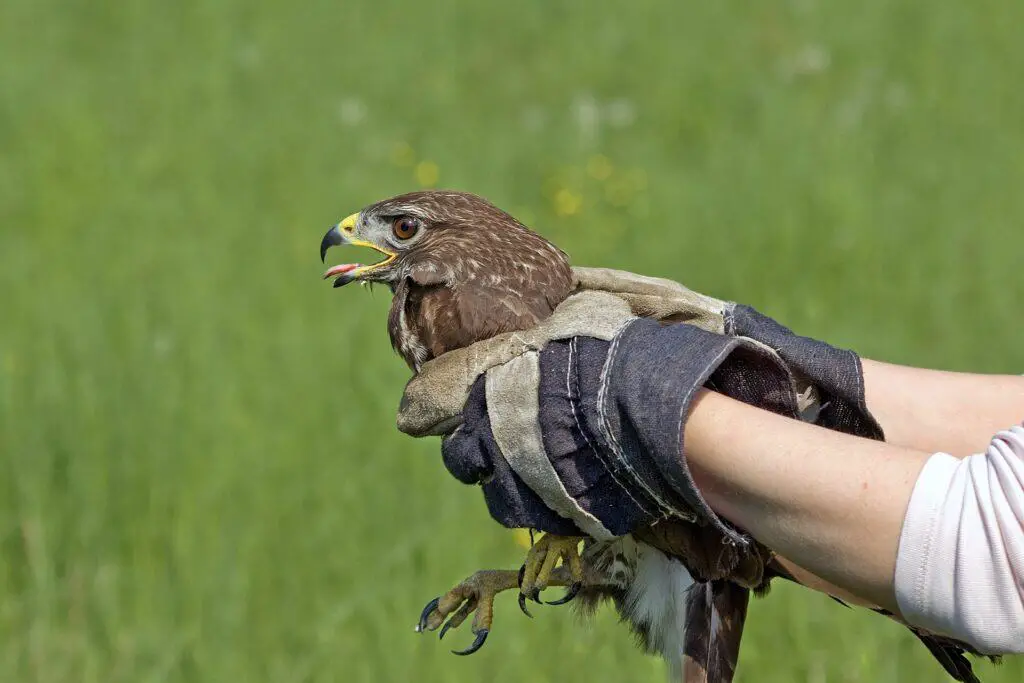
Government Programs
Through government programs, you can obtain a bird for falconry use. Government assistance is available in the form of falconry regulations, permits, and training programs. These programs ensure that falconers have the necessary knowledge and skills to care for and train their birds. Additionally, government programs may provide financial support for falconry equipment, making it more accessible for aspiring falconers to enter this unique and rewarding sport.
The bond between falconer and bird is a remarkable coincidence in the world of falconry. Through dedicated training and patience, falconers obtain their birds through a captivating and awe-inspiring process. These majestic creatures are not merely acquired but earned through a profound understanding of the art of falconry. The connection forged between falconer and bird is a testament to the power of human-animal relationships, leaving us in awe of the beauty and synergy between the two species.
Frequently Asked Questions
Can falconers catch wild birds for falconry?
- Yes, some falconers may trap wild birds, but it requires strict adherence to legal regulations and obtaining the necessary permits. Trapping is carefully regulated to ensure the conservation and welfare of wild bird populations.
Is buying a bird of prey a common practice among falconers?
- Yes, purchasing birds from reputable breeders is a common and ethical practice among falconers. This allows them to choose specific species and ensures that the birds have been raised in controlled environments with proper care.
Are there specific considerations when acquiring a bird for falconry?
- Yes, falconers consider factors such as the bird’s species, age, health, and temperament when acquiring a bird. Compatibility with the falconer’s skill level and the intended use of the bird in falconry also play crucial roles.
What role do falconry regulations play in obtaining birds?
- Falconry is highly regulated, and falconers must adhere to local, state, and federal regulations. Obtaining the required permits is essential, whether acquiring a bird through trapping, purchase, or breeding.
Do falconers engage in captive breeding programs?
- Yes, many falconers participate in captive breeding programs, contributing to the conservation of raptor species. This ensures a sustainable source of birds for falconry while promoting genetic diversity and welfare