

I have spent countless hours training and working with birds of prey. While falcons and hawks are often the stars of the show, there are many other species that can be used in this ancient sport. In fact, some of these lesser-known birds may surprise you with their unique abilities and impressive hunting skills.
Long-legged Buzzard (Buteo rufinus)
Black Kite (Milvus migrans)
Barbary Falcon (Falco pelegrinoides)
Prairie Falcon (Falco mexicanus)
Bonelli’s Eagle (Aquila fasciata)
Steppe Eagle (Aquila nipalensis)
Tawny Eagle (Aquila rapax)
Egyptian Vulture (Neophron percnopterus)
Bearded Vulture (Gypaetus barbatus)
Sooty Falcon (Falco concolor)
Lesser Kestrel (Falco naumanni)
Eurasian Sparrowhawk (Accipiter nisus)
Northern Goshawk (Accipiter gentilis)
White-tailed Eagle (Haliaeetus albicilla)
Rough-legged Buzzard (Buteo lagopus)
Ferruginous Hawk (Buteo regalis)
Crested Caracara (Caracara cheriway)
Gyrkin (Gyrfalcon x American Kestrel hybrid)
Gyr-Peregrine Falcon hybrid (Falco rusticolus x Falco peregrinus)
Prairie Merlin (Falco columbarius richardsonii)
Marsh Harrier (Circus aeruginosus)
Steppe Buzzard (Buteo vulpinus)
While it’s true that falcons and hawks dominate the world of falconry, using other species can add an exciting dimension to the experience. From owls to eagles to vultures, each bird brings its own set of challenges and rewards for both handler and bird alike. So if you’re ready to expand your horizons as a falconer or just curious about what else is out there, read on to discover some amazing birds that are also used in this fascinating pursuit.

Long-Legged Buzzard (Buteo Rufinus)
I’ve enjoyed working with a variety of birds over the years. The Long-legged Buzzard (Buteo rufinus), a bird, is one that particularly jumps out to me. These magnificent birds can soar through the skies with ease thanks to their long legs and large wingspan.
There are numerous locations where you can find the Long-legged Buzzard across Europe, Asia, and Africa. They favour wide-open spaces like fields or deserts where they can see their prey clearly from above. They eat insects and reptiles in addition to small animals like rats and rabbits, which make up the majority of their diet. Patience is essential while raising these birds for falconry. Trust between the bird and the handler must be developed over time and with effort. However, once trained, these birds may be highly successful hunters. Their incisive talons quickly dispatch their victims, and their acute vision enables them to identify possible prey at a vast distance.
Black Kite (Milvus Migrans)
The Black Kite, a member of the Accipitridae family, is renowned for its superb hunting abilities. As opportunistic hunters, these birds will consume carrion as well as small animals, reptiles, and insects. They are perfect candidates for falconry because of their keen vision and swift flying.
Understanding a Black Kite’s natural behavior patterns is crucial when teaching one for falconry. Although very bright, these birds may also be rather independent. Therefore, when dealing with them, patience and persistence are crucial. They are frequently employed in nations like India and Nepal.
Barbary Falcon (Falco Pelegrinoides)
The Barbary Falcon is renowned for its intelligence, speed, and agility, making it the perfect wingman for any expert or aspiring falconer. The Barbary Falcon’s versatility is one quality that sets it different from other birds used in falconry. These birds can hunt a wide range of prey, including smaller birds like doves and quails as well as small animals like rabbits, hares, and mice. They are extremely adaptable in the field and may also occasionally pursue larger animals. Particularly throughout the Middle East and North Africa, these birds can be found.
The Barbary Falcon requires persistence and patience during training. They must establish confidence with their handler, as with any birds employed in falconry, before they can start to learn commands and comply with instructions. The bond between a bird and a human takes some time to create, but once it does, it is extremely satisfying to watch your feathery buddy soar through the air on a successful hunt.
Prairie Falcon (Falco Mexicanus)
Western North America is home to the medium-sized Prairie Falcon, also referred to as the Mexican Falcon. These birds are prized by falconers who enjoy hunting sage grouse, pheasants, and other small mammals because of their speed and agility. The capacity of Prairie Falcons to successfully adapt to many surroundings is one of its distinctive characteristics. They feel at home in barren deserts or rocky alpine areas. As a result, falconers have an easier time training them because they have no trouble adjusting to new environments.
The Prairie Falcon’s size is another benefit in falconry. Compared to larger birds like eagles or hawks, which have wingspan averages of three feet or more, they are simpler to handle and carry. Even though they are tiny, these birds nevertheless have impressive hunting abilities.
Bonelli’s Eagle (Aquila Fasciata)
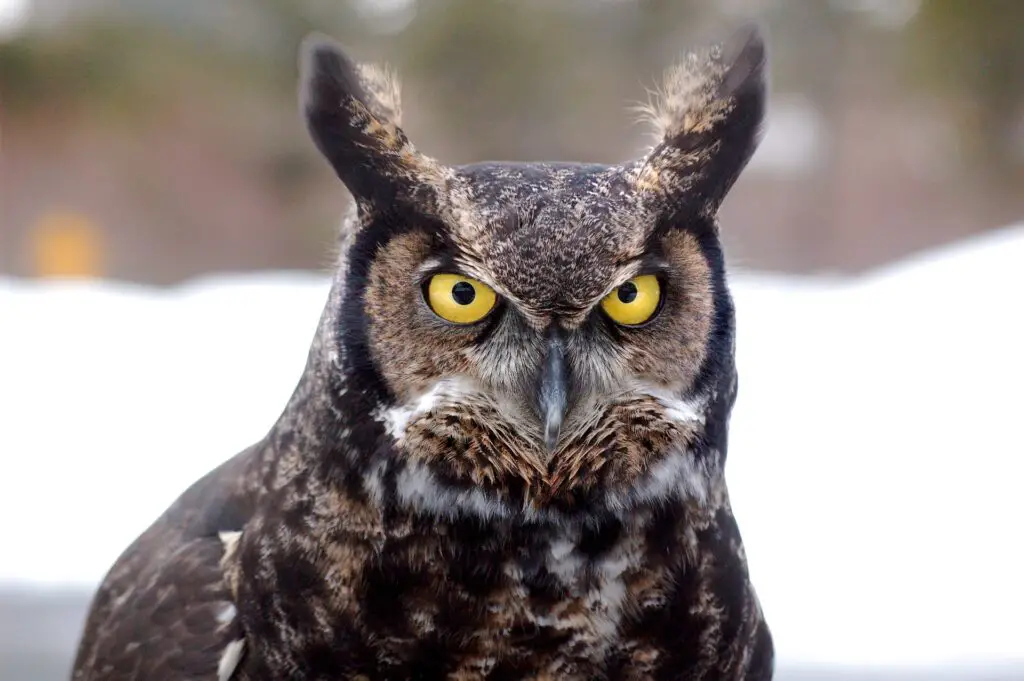
After discussing the prairie falcon, let’s move on to another raptor employed in falconry: the Bonelli’s eagle. This majestic bird may weigh between 5-8 pounds and has a wingspan of up to 7 feet. They are the perfect choice for falconers that reside in those regions because they are indigenous to southern Europe, North Africa, and Asia. Famous French falconer Jacques-Olivier Travers used a Bonelli’s eagle in falconry in one instance back in 2004. In order to hunt wolves in Mongolia alongside Kazakh hunters, he trained his Bonelli’s eagle, Eole. During these hunts, the eagle’s formidable talons and beak proved to be a useful tool.
Steppe Eagle (Aquila Nipalensis)
A powerful raptor found in Central Asia, Russia, and India is the steppe eagle, also referred to as the Indian eagle. This magnificent eagle may weigh more than 10 pounds and has wingspan of up to 7 feet. It is understandable why this bird is frequently utilized in falconry given its strong talons and pointed beak. The Steppe Eagle is a great hunter and is quite trainable. It has excellent endurance and stamina, making it perfect for prolonged flights during hunting excursions. Because of its excellent vision, it can see prey from considerable distances, which makes it simpler for the handler to point the bird in the right direction.
However, training takes time, effort, and talent, just like with any other bird employed in falconry. Before employing more sophisticated strategies, such as focusing on a particular prey item or flying at higher heights, one must first practice fundamental obedience drills. Nutrition and proper care are also essential components in preserving the health of these lovely creatures.
Tawny Eagle (Aquila Rapax)
After discussing the Steppe Eagle, let’s move on to another magnificent raptor that can be utilized in falconry: the Tawny Eagle. I have some experience using this bird for hunting, and I have to admit that it is a spectacular sight to behold.
The Tawny Eagle, which is distributed throughout Africa and some of Asia, is a member of the same genus as the Steppe Eagle. It is comparable in size to the Golden Eagle and has wings that can spread out to around six feet. Although each individual’s plumage is different, it often includes of brown hues with lighter patches on the back. The Tawny Eagle needs substantial training to fly proficiently, unlike other eagles employed in falconry like the Golden or Bald Eagles. They are notorious for being intelligent and independent, which can make working with them difficult. They do make superb hunters and fiercely devoted companions, though, once taught.
When thinking about utilizing a Tawny Eagle for falconry, it’s important to consider their food. They often prey on small animals like rats and hares in their natural habitat as opposed to birds like the majority of other raptors. For your eagle, you will therefore need access to a consistent supply of alternate food sources.
Egyptian Vulture (Neophron Percnopterus)
Parts of Europe, Africa, and Asia are home to the Egyptian Vulture, also called the Pharaoh’s Chicken. Due of its special traits, this bird has been employed for falconry for generations. The Egyptian Vulture is a superb choice for falconry for 3 reasons:
Extremely manoeuvrable and capable of flying at high speeds, the Egyptian Vulture is an extraordinarily nimble bird. Its mobility makes it ideal for hunting down prey and very simple to catch.
Highly intelligent: It has been discovered that these birds use tools to gather food in the wild, demonstrating their high level of intelligence. Because of their intelligence, they may quickly pick up new skills when trained by skilled falconers.
Adaptable: The Egyptian Vulture is a type of bird that is resilient and adaptable to different habitats such as grasslands, mountainsides, and deserts. This makes them a versatile option for those looking for a bird that can thrive in different environments.
Bearded Vulture (Gypaetus Barbatus)
Moving on from the Egyptian Vulture, the Bearded Vulture is another bird frequently employed in falconry. With a wingspan of up to 3 meters, this majestic species can be found in mountainous areas throughout Europe and Asia. The tufts of feathers around their beak that mimic a beard give them a distinctive look that distinguishes them from other birds of prey.
Bearded vultures are surprisingly friendly animals when handled for training despite their enormous size. They are perfect candidates for falconry since they have a strong bond with their handlers. But when choose a bird to employ in falconry, much care must be given because of their endangered condition. The main components of the Bearded Vulture’s diet are bones and bone marrow, which is rare for raptors. In order to aid them in digesting these challenging ingredients, they have really evolved some amazing adaptations! As a result, it’s critical for any prospective owner or handler to comprehend the greatest methods for feeding and caring for this incredibly special bird.
Sooty Falcon (Falco Concolor)
You might be asking, “Why choose a Sooty Falcon for falconry when there are other birds that are bigger and faster?” First of all, they differ from other raptors in that they have a special hunting technique. When they hunt in pairs, one bird startsle the prey into coming out of concealment while the other swoops in to finish the job. Second, despite their small size, Sooty Falcons are adept hunters. They can catch quick-moving prey like doves and larks thanks to their ability to fly quickly and move quickly. They are therefore perfect for hunting lesser game. Last but not least, these falcons have stunning plumage that enhances their allure. They look striking on your arm during your next hunt with their sleek black feathers and piercing golden eyes.
Lesser Kestrel (Falco Naumanni)
This little falcon can be found all over Europe and Asia, and some populations move to Africa in the winter. The Lesser Kestrel has been employed in falconry for ages and is a formidable predator despite its small size.
As you can see, compared to other birds commonly used in falconry, the Lesser Kestrel is considerably smaller. But despite their size, these birds are remarkably agile and swift on their feet. They are frequently employed in the pursuit of small game like larks and sparrows. Patience is essential while raising a Lesser Kestrel for falconry. These birds can take longer than larger raptors to develop a bond with their handler since they have a strong sense for self-preservation. However, they become devoted hunting partners once they gain your trust.
Eurasian Sparrowhawk (Accipiter Nisus)
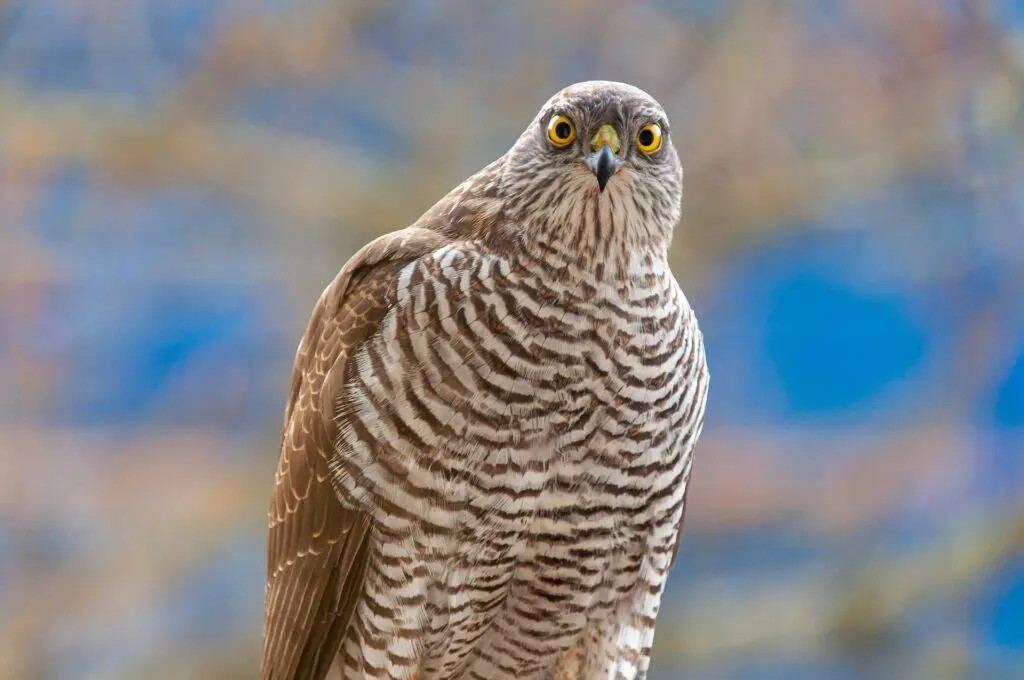
The Accipiter nisus, popularly known as the Eurasian Sparrowhawk, is a diminutive yet ferocious member of the falconry family. They are widespread in Europe and Asia, with diverse subspecies that have adapted to various conditions. For seasoned falconers, they make ideal hunting partners thanks to their powerful wings and sharp talons.
Working with Eurasian Sparrowhawks has many benefits, including their nimble flight. They are perfect for hunting birds like pigeons or starlings that frequently frequent these locations because they can easily travel through dense forests or urban areas. They are also easier to control than larger birds of prey like eagles or hawks due to their tiny size. Establishing confidence between the handler and the Eurasian Sparrowhawk is crucial while training the bird for falconry. This entails spending time with the bird outside of hunting trips and making sure it trusts you. Following the formation of this link, the bird can be trained using age-old techniques like lure dragging and creance flying.
Northern Goshawk (Accipiter Gentilis)
The Northern Goshawk, known as the “gentle falcon,” is highly valued in the world of falconry. Skilled in hunting, expert falconers have been using these impressive birds for many years.
With their large wingspan and sharp talons, these are ideal for hunting small mammals like rabbits, squirrels, and other birds. However, working with these ferocious predators requires extensive training since, if handled incorrectly, they may become highly violent towards their handlers.
It’s crucial to choose a Northern Goshawk that has been bred expressly for falconry when choosing one to employ. Goshawks that have been captured from the wild are typically harder to train and could be more dangerous for both the operator and the prey.
White-Tailed Eagle (Haliaeetus Albicilla)
Both North America and Eurasia are home to this magnificent raptor. Although it was once employed for falconry, its use has decreased as a result of its protected status as an endangered species. The employment of eagles like the White-tailed Eagle is still legal in some nations where falconry is still practiced, such as Mongolia.
This eagle is a strong hunting ally due to its outstanding size and strength. They can take down greater prey than many other falconry birds because of their 8-foot wingspan. However, because of their size, they can be dangerous to train or carry to hunting grounds. Patience and expertise are needed while training a White-tailed Eagle. Compared to smaller birds like hawks or owls, they may take longer to develop a bond with their handler since they have strong personalities. It can also be difficult, but gratifying once learned, to train them to hunt terrestrial animals because they are mostly fish-eaters in the wild.
Rough-Legged Buzzard (Buteo Lagopus)
A raptor that breeds in the Arctic regions is the Rough-legged Buzzard, commonly referred to as the Arctic buzzard or rough-legged hawk. It is a wonderful hunting companion for falconers who live in comparable situations because it has adapted well to living in cold and severe locations. Due of its elusiveness, the rough-legged buzzard is not frequently utilized in falconry, but those who have taught them commend them for their intelligence and competence.
Depending on the bird’s age and location, its plumage might vary, but it normally comprises of light-colored underparts with a topcoat of dark brown feathers. It is smaller than some other birds used in falconry, such as eagles or peregrine falcons, with a wingspan that ranges from 52 to 58 inches (132 to 147 cm). They can kill tiny mammals like rats, rabbits, and even hares despite their diminutive size since they are still skilled hunters. Because they do not naturally associate with people as easily as other birds employed in falconry, rough-legged buzzards are thought to require more difficult training. Once they form a link, they are fiercely devoted to their handler and will put in endless effort to capture prey. They may use advanced strategies like night flying or working with decoys because of their intelligence.
Ferruginous Hawk (Buteo Regalis)
Let’s look at another species that can be employed in falconry after the Rough-legged Buzzard: the Ferruginous Hawk. North America is the home of this magnificent animal.
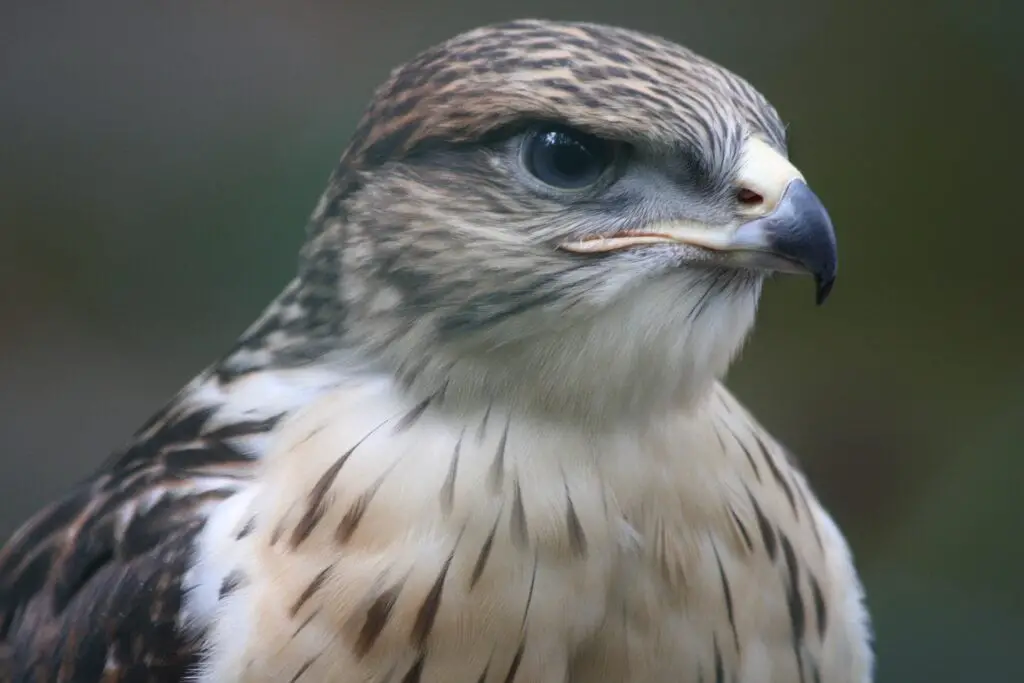
The rust-colored feathers of the ferruginous hawk, which also has white underparts and dark wingtips, give it its name. These birds are frequently seen hunting rabbits, rats, snakes, and other small animals in open grasslands or deserts. They can see their prey clearly and from large distances. The Ferruginous Hawk can be a great hunting partner for falconers if properly trained. But it’s important to remember that these birds need a lot of room to fly and hunt properly. Additionally, compared to certain other species employed in falconry, they have a tendency to be more hostile, therefore training must be done cautiously and patiently.
Crested Caracara (Caracara Cheriway)
The Crested Caracara (Caracara cheriway), if you’re searching for a distinctive bird to add to your falconry armory, is something to think about. These birds are getting more and more well-liked among falconers thanks to their unusual appearance and remarkable hunting ability.
Large raptors known as crested caracaras are found in portions of North, Central, and South America. They have white feathers on their breast and belly and dark feathers on their back and wings. The distinctive black feather crest on their head is their most distinguishing characteristic. These birds can kill prey that is much bigger than themselves since they are skilled hunters. They have been observed pursuing small mammals like foxes or deer calves as well as rabbits, snakes, and lizards. They are a great asset to any falconer’s team because of this.
Gyr-Peregrine Falcon Hybrid (Falco Rusticolus X Falco Peregrinus)
Good, good, good! You haven’t seen anything yet if you thought the Gyrkin was an impressive falconry bird. Let me tell you about the magnificent Gyr-Peregrine Falcon hybrid.
This magnificent bird is a product of cross-breeding between the Gyrfalcon and Peregrine Falcon, two of the world’s strongest and most agile raptors. This hybrid can kill even bigger prey than its forebears thanks to its size and speed. The Gyr-Peregrine Falcon bears characteristics from both parents in terms of hunting habits. In addition to possessing excellent endurance like Gyrfalcons, it has the aerial skill and quick dives of Peregrines.
However, because of their incredible strength and unpredictable nature, these hybrids are often only used by skilled falconers. So, if you enjoy a challenge and want to demonstrate actual power over nature’s predators, the amazing Gyr-Peregrine Falcon hybrid is the only choice.
Gyrkin (Gyrfalcon X American Kestrel Hybrid)
A new bird called the Gyrkin has been bred by mating a Gyrfalcon with an American Kestrel. This hybrid species possesses exceptional speed, agility, and hunting skills inherited from its parents. It has been tamed and extensively used for falconry because of its impressive abilities, making it a very successful hunter.
Falconers often use gyrkins in falconry because they have inherited the excellent hunting abilities of their parent species. Due to their remarkable skills, these birds are highly desirable among experienced falconers. They have been observed to be successful in catching prey, as they dive down with great accuracy and capture it effectively. Gyrkins must be trained for falconry while taking into account both their unique characteristics and those passed down from their parents. They might behave differently than either purebred Gyrfalcons or American Kestrels because they are hybrids. They will acquire all the abilities required for fruitful hunts, while also retaining good health and behavior, if they receive the proper training.
Prairie Merlin (Falco Columbarius Richardsonii)
Since I’ve been practising falconry for more than ten years, I can say that one of my favourite birds to employ in this activity is the Prairie Merlin. Their usual length is between 11 and 13 inches, and they have a wingspan of about two feet. These gorgeous creatures are little but mighty.
Because of their speed and agility, prairie merlins are well-suited for pursuing smaller prey like songbirds or rodents. They are also very bright birds that can easily obey their handler’s directions. Prairie Merlins are a great choice for novice falconers due to their fast and efficient training. However, it’s important to note that they aren’t as commonly used for falconry as other bird species. If you do come across a Prairie Merlin, they are definitely worth considering. These birds epitomize the qualities of a falconer with their exceptional hunting skills and loyalty to their handlers.
As a professional falconer, I have had the opportunity to work with several types of raptors. While the peregrine falcon is the most popular bird used in this sport, there are many other bird species that can be trained as well.