
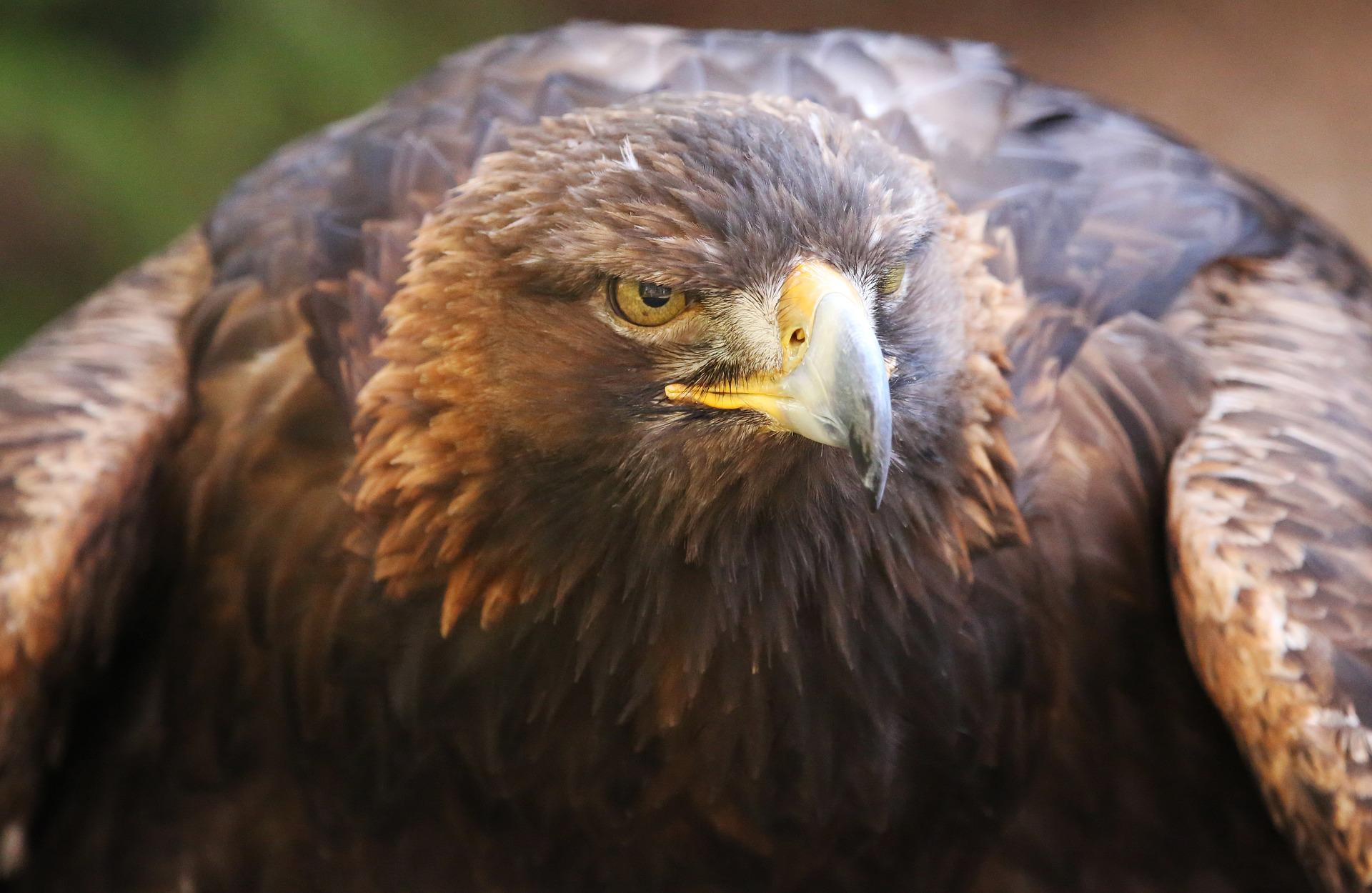
These birds of prey are known for their keen eyesight, which helps them hunt down prey from high in the sky. This is due to their specially adapted eyes allowing them to see even when little light is available. A golden eagle’s eyesight is imperative for them when hunting with their falconers, and it’s a magnificent tool in their arsenal, but how far and from what distance can they see?
Golden eagles are known for their excellent vision. They can see up to 8 times better than humans and spot their prey from 2 miles away (3.2km). This incredible feat is due to their large eyes and particular adaptations, such as a high number of light-sensitive cells. Golden Eagles can also zoom in on small objects from very far away.
A golden eagle’s vision is not just limited to spotting prey; they can spot other golden eagles, recognize their mate and offspring from a great distance, and any potential danger or predators. So let us dive into a golden eagle’s vision.
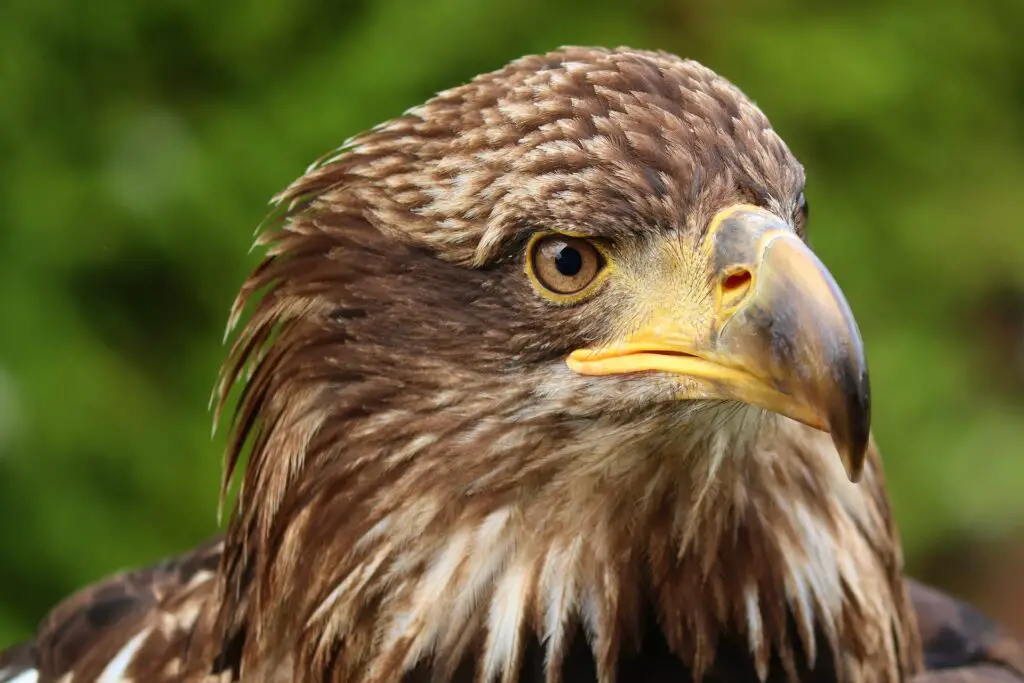
How good is a golden eagles vision
Golden eagles are renowned for their keen eyesight, which allows them to spot prey from great heights. But just how good is their vision? Studies have shown that golden eagles can see up to eight times better than humans, with an estimated three million cones in each eye. This exceptional level of visual acuity is made possible by a number of factors, including the eagle’s large eyeballs and highly developed fovea. Additionally, golden eagles have more cells responsible for detecting colour, allowing them to see a greater range of hues than we can. All of these adaptations combine to give golden eagles some of the best eyesight in the animal kingdom. Thanks to this keen vision, they can effortlessly scan the ground for signs of movement, giving them a real advantage when hunting.
Is the golden eagle able to see just as well at night?
Much like our own eyes, a golden eagle’s eyes are designed to function best in bright light. This is because their retinas contain a high concentration of light-sensitive cells known as cones. Cones are responsible for providing sharp central vision and colour vision, both of which are essential for daytime hunting. At night, the cones in a golden eagle’s retina are not active, leaving them relying on their rods. Rods are much less sensitive to light than cones, but they allow eagles to see well enough to detect movement in low-light conditions. So while a golden eagle’s night vision is not as good as its daytime vision, it is still superior to our own.
How does the golden eagle use its sight for hunting and surviving in the wild
The golden eagle is a raptor, or bird of prey, that uses its keen eyesight for hunting in falconry and surviving in the wild. Eagles have binocular vision, meaning that they see an object with two eyes at the same time. This allows them to judge distances accurately and track moving objects. Eagles also have a high visual acuity, meaning they can see small details clearly. This is an advantage when it comes to spotting potential prey from a distance. In addition, eagles have good depth perception, which helps them judge their prey’s speed and direction when swooping down for a kill. All of these adaptations help make the golden eagle one of the most efficient predators in the falconry world.
Are golden eagles colour-blind?
Contrary to popular belief, golden eagles are not actually colour-blind. However, their vision is less keen than that of humans. Eagles have two colour receptors in their eyes, allowing them to see both blue and green. They also have a third type of receptor, called a rod, which helps them to see in low-light conditions. So while eagles can’t see all the colours that we can, they can see a broader range of colours than we can. Their sensitivity to light also allows them to spot prey from great distances. So while they may not be able to appreciate the beauty of a rainbow in the same way that we do, their excellent vision serves them well in their everyday lives.
How good is a golden eagle’s sight compared to a human’s?
While the human eye is an impressive organ, it pales in comparison to the golden eagle’s eye. For starters, eagles have three times as many rods as humans, which allows them to see much better in low-light conditions. In addition, their eyes are almost twice as big as ours, giving them a wider field of view. As a result, eagles can spot prey from great distances away – up to two miles in some cases. Furthermore, eagles have an extra set of eyelids that act like built-in binoculars, allowing them to see even more clearly. So while the human eye is impressive in its own right, it is no match for the Golden Eagle’s sight.
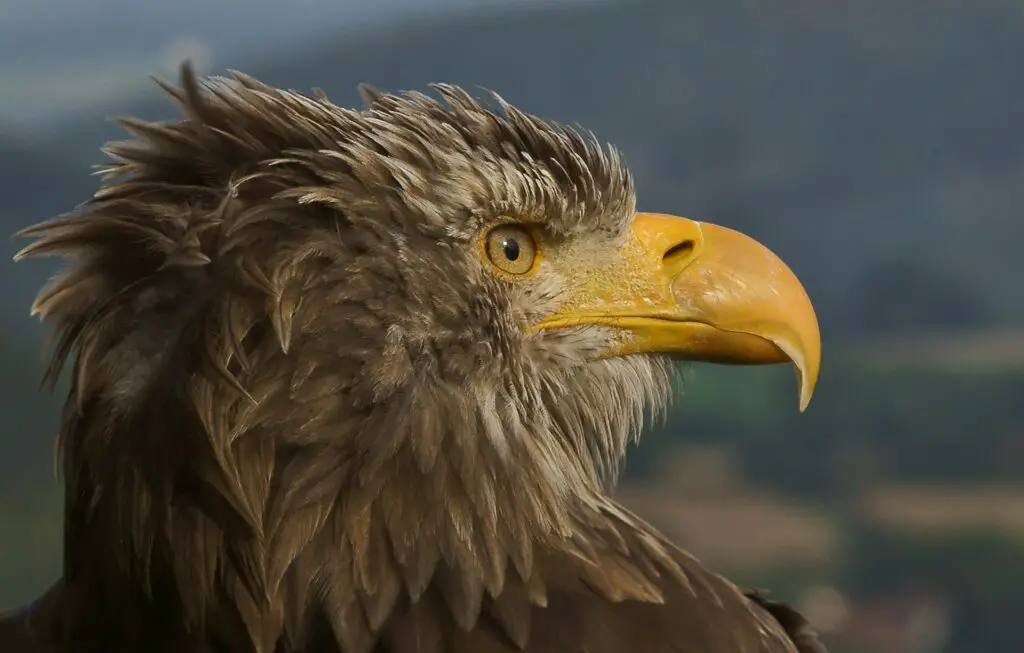
Does a golden eagle’s vision deteriorate with age?
There currently needs to be a consensus on whether or not a golden eagle’s vision deteriorates with age. Some falconers believe that the bird’s eyesight deteriorates as it ages, while others contend that the eagle’s eye remains sharp throughout its lifespan. Golden eagles are mighty hunters, and their keen eyesight is crucial to their success. Therefore, if the bird’s vision deteriorates with age, it could significantly impact its ability to hunt and survive in the wild. However, once more research is conducted, it is only possible to say for sure whether or not a golden eagle’s vision declines with age.
Golden eagles can see up to 8 miles away and spot prey from over 2,000 feet in the air. That’s incredible! Remember this next time you are out birding; if you see a golden eagle, you are much closer than you think. While they may not be as common as other raptors, they are definitely worth keeping an eye out for. With their excellent eyesight, it is no wonder that these birds of prey are one of the most successful species in the world.