
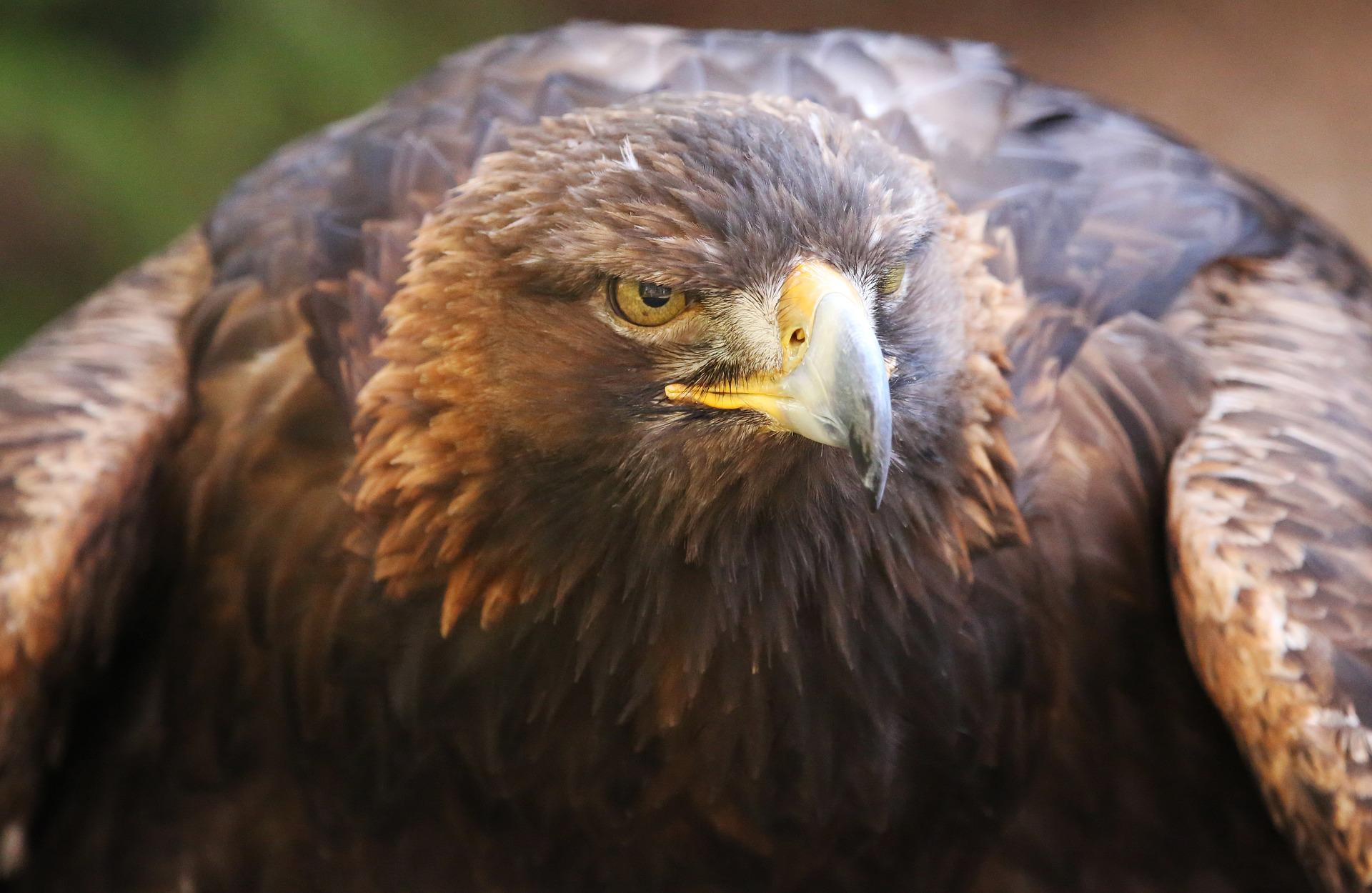
A golden eagle is a powerful bird of prey that is also a raptor of choice in many nomadic countries. This raptor’s history goes back even further than the Vikings era. For centuries mankind has used these marvellous raptors for hunting, and I’m sure when you see one in action, you look in awe, wondering how did they even train that raptor to do this?
To train a golden eagle, you will need some basic equipment, time, patience and a solid understanding of its needs. Training involves teaching your bird to perch, come when called, release prey, strike a lure and more. This is done by utilising different whistles and getting the bird accustomed to different sounds relating to different tasks always use positive reinforcement(food) to reward the bird.
I have had the pleasure of training one of these birds. Even though at first I was ready to throw in the towel because I pushed on and dedicated my time to the task, my relationship with my golden eagle lasted 26 years and what a beautiful experience it was. So based on what I stumbled upon, I created a guide on the basics of how you should go about training your golden eagle.
Getting Started: Preparing for Golden Eagle Training.
Are you psyched to start your journey with training a Golden Eagle? It’s definitely exciting, but it can also be daunting, especially if you’re not sure where to start. But worry not, my friend! Preparing for Golden Eagle training is actually pretty simple. First and foremost, you must ensure you’re in good physical condition because a Golden Eagle handler requires strength and stamina. Once you’ve covered that, it’s time to do your research. Read up on everything you can find about Golden Eagles, their habits, and their behaviour. You should also familiarise yourself with the equipment you’ll be using, such as gloves and jesses, so that when you eventually use them on your bird, you won’t fumble to get it working. It might be worth visiting a conservation site or bird sanctuary or even visiting other falconers who have these birds to get first-hand experience handling these birds. Don’t forget to mentally prepare yourself because it is going to be a challenging process that will require dedication, but for people who love animals, this experience will be one of a kind.
Establishing Trust: Building a Relationship with Your Golden Eagle
Establishing a trusting relationship with your raptor will take time, and it will also require a substantial amount of patience and husbandry. This will require you to know your raptor’s preferences and things that will drive it to do better. Nine Times out of ten, this will develop as you feed and care for the bird and simply spend lots of time with him or her. Try to make your bird associate you with food and let it see that you are not a threat. Once you’ve earned the eagle’s trust, you may train it to hunt with you since it will feel more at ease and submissive. You can earn the raptor’s trust by using positive reinforcement to reward them and also show them that you aren’t a threat to them in any way, even when they are feeding. Nurturing that relationship requires consistency, kindness, and mutual respect. As with any relationship, communication is key, and you must learn to speak the eagle’s language to be successful. Remember, building a relationship with a golden eagle is a lifelong journey, but the rewards are immeasurable.
Basic Training Techniques: Lure, Tether, hoping to the glove, and Creance Training
Training a golden eagle is not for the faint of heart. It takes dedication, patience, and a willingness to learn the proper techniques. Of course, there are many ways to train an eagle, but the best methods involve using basic techniques such as lure training, tether training, hopping to the glove, and creance training. Lure training involves tempting the eagle with a juicy piece of meat, making it follow the lure to the desired spot. Tether training focuses on keeping the eagle in place so it doesn’t fly away during the process. Hopping to the glove helps the eagle learn to fly on command to and from the glove. Finally, creance training involves using a long line to help train the eagle to fly back to the glove and build better bird-hand communication. Overall, these techniques are critical for successful training, but it takes time and work to become an expert at them.
Moving to the Field: Free-Flight Training
When attempting to perform free flight, it may be a very scary experience, and like all other falconers before you, the thought of losing your bird will grip you with fear, but free flight requires you to give the bird space to roam and see how it responds. You should start with shorter distances and gradually work your way up. Never push your raptor too much, especially in its first stages of free flight, as this may stress your raptor and cause it to flee. Make sure that your bird is completely comfortable with you before you even consider a free flight. You should also create a special bond with your eagle where it will only fly back to you. You can achieve this by continuously training with it, building trust and rewarding its obedience. When it is finally the time for your eagle to free-fly, make sure you give it the space it needs. When selecting the terrain to hunt, you must ensure that the area is free from
- Predators that could harm your bird
- Powerlines that could cause death due to exposure.
- Highways as your bird could be struck by vehicles.
- Always keep an eye on your raptor and monitor the distance.
Keep your raptor a safe distance so that if you were to call it back, it would be close enough. Of course, this will fall away as your relationship builds with the bird, but for a start, be safe and keep it a safe distance apart.
Perfecting the Basics: Fine-Tuning Your Golden Eagle Training.
Now that you have accomplished the task prior, you need to hone in on these skills so that these tasks will become second nature to you and your raptor. To accomplish your goal of fine-tuning their skills:
- Focus on areas that your bird struggles with, and keep covering all other areas.
- Once you’ve identified these weak points, tailor your training to address them.
- Constantly monitor your bird’s progress and adjust your training regime accordingly.
- Remember that patience is key, and Rome wasn’t built in a day.
- Don’t be afraid to seek advice from experts or other experienced falconers to help you along the way.
In this case of fine-tuning, practice and more practice will make perfection.
Now that you have the basics of how to go about training your golden eagle, make sure you follow a few simple pointers to keep your raptor hungry but not starving, as this will make them respond better, and avoid feeding them before training. Also, ensure that before you move to each new step, your raptor is comfortable with the task you are moving onto and ready for the next challenge, be patient, and it will all work out for you soon.