

Greetings, my fellow falconer! If you’re anything like me, having a golden eagle as a pet is a thrilling idea. These beautiful birds are a favourite among both bird watchers and animal enthusiasts due to their large wingspan and aggressive hunting prowess.
You would need ample space and access to a food supplier to house a golden eagle. You will also require a host of items to put into your enclosure to keep the raptor well-stimulated and occupied. This will include perches
Before starting this magnificent journey, you must understand how to properly care for this exotic bird of prey. As a falconer with years of experience in the field, owning a golden eagle requires more than just enthusiasm – it also requires dedication and knowledge.
In this article, we’ll explore everything you need to know about creating a suitable habitat for your feathered friend. From enclosure size to diet requirements, we’ve got you covered. So let’s dive in and learn how to give our magnificent golden eagles the best possible home!

The Importance Of Adequate Space
Being a falconer for almost 31 years, I understand the importance of providing adequate space for any animal in captivity. When it comes to housing a golden eagle, this is especially crucial.
These majestic birds are known for their impressive nesting habits and flight patterns, which require ample room to stretch their wings. Golden eagles have been observed travelling up to 200 miles in one day during migration periods. This highlights just how much these creatures need to move around freely.
They also tend to be solitary animals with territorial tendencies, so having enough space reduces stress and aggressive behaviour. It’s essential to consider not only horizontal but vertical space as well since eagles can fly at incredible heights.
A minimum aviary size should be at least 20 feet long by 10 feet wide and 15 feet high. However, bigger is always better when it comes to bird enclosures! With enough room, you’ll provide your golden eagle with an environment that closely resembles its natural habitat while still maintaining safety standards.
With such powerful predators like golden eagles, keeping them in proper conditions requires careful attention and dedication. Building an aviary or outdoor enclosure will help ensure they thrive under your care without compromising their welfare needs.
Building An Aviary Or Outdoor Enclosure
As a wildlife biologist and conservationist, I understand the importance of providing a safe and suitable environment for animals in captivity. When it comes to housing a magnificent bird like the golden eagle, there are several design considerations that must be taken into account when building an outdoor enclosure.
Firstly, size is crucial. A fully grown golden eagle needs plenty of room to stretch its wings and fly around comfortably. The minimum recommended dimensions for an aviary should be at least 10 feet wide by 20 feet long with a height of no less than 15 feet.
Additionally, you’ll need strong fencing material such as chain-link or welded wire mesh to keep your eagle from escaping or predators from getting in.
When it comes to materials needed for construction, wood is often used for framing, while galvanized steel or aluminium can be used for roofing and reinforcement purposes. It’s important to avoid using toxic materials that could harm your eagle if ingested accidentally.
As far as maintenance requirements go, regular cleaning of the enclosure will be necessary to prevent disease transmission and ensure optimal hygiene levels.
Providing proper shelter and enough space is just one aspect of creating a healthy living environment for your golden eagle. In the next section, we’ll discuss establishing a reliable food source which is essential for their survival and overall well-being.
Establishing A Reliable Food Source
The next step is to create a dependable food source for your golden eagle after creating an outdoor enclosure or aviary for it.
To develop a feeding regimen that will keep them healthy and content, seek the advice of other falconers for the types of prey you should choose and one that benefits their nutritional requirements.
Golden eagles are carnivores that mainly hunt small mammals like rabbits, hares, squirrels, and rodents. They also consume carrion, fish, birds, and reptiles. You need to make sure your eagle is eating a balanced meal with adequate protein and fat to maintain their energy levels when choosing their meal.
The health of your eagle depends on feeding them on a regular schedule, and don’t stray from it. Adult golden eagles should be fed at least once a day, while young raptors need to be fed two or even three times a day. It is also important to have access to fresh water all the time.
Stay tuned for the next section about providing enrichment and stimulation for your golden eagle!
Providing Enrichment And Stimulation
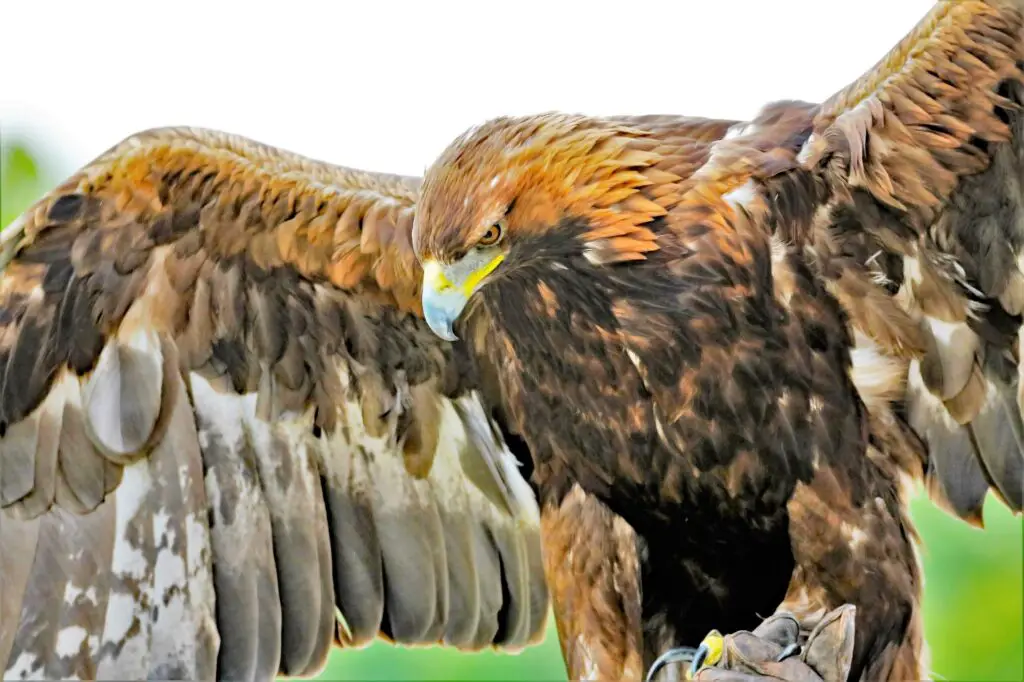
Did you know that golden eagles are one of the largest birds of prey in North America, with a wingspan of up to seven feet? These majestic creatures require ample space for exercise and flight, making indoor options less than ideal.
However, if outdoor accommodations aren’t possible due to environmental considerations or legal restrictions, there are some indoor options available you just have to search for them and travel a bit in some instances.
Training techniques can also play a key role in keeping your golden eagle stimulated while indoors. Interactive toys such as puzzle feeders or tug-of-war ropes provide mental stimulation and physical exercise. Additionally, regular training sessions using positive reinforcement can help build trust between you and your bird, leading to a stronger bond and healthier relationship overall.
When considering housing for your golden eagle, it’s important to take into account its natural environment. Providing perches at varying heights mimics trees in the wild and allows them to move around comfortably. Adding branches or other natural elements provides additional enrichment opportunities for your bird to explore and interact with their surroundings.
As wildlife enthusiasts, we have an innate desire to serve our animal friends well. By providing proper housing and enrichment for our feathered companions, like the golden eagle, we can ensure they live healthy and fulfilling lives under our care.
Next, let’s discuss navigating the legal requirements and permits necessary for owning these magnificent birds of prey.
Navigating Legal Requirements And Permits
So, you’re interested in housing a golden eagle? It’s important to note that these majestic birds are protected under the Bald and Golden Eagle Protection Act. This means that acquiring one legally requires applying for permits from both state and federal agencies.
Applying for permits can be a complex process, but it is necessary for ensuring the welfare of the bird as well as complying with laws and regulations. Generally, a permit will require detailed information about your intended location, facilities, experience level with raptors, and plans for conservation education or research. Costs and expenses associated with obtaining permits should also be taken into account before pursuing ownership.
Additionally, there may be location restrictions depending on where you live. Some states prohibit private individuals from owning eagles altogether, while others have specific zoning requirements or property size limitations.
I highly recommend thoroughly researching all legal requirements and restrictions before making any decisions regarding eagle ownership.
Remember, taking care of a golden eagle is no small task – they require specialized diets, large enclosures with plenty of space to fly and exercise, regular veterinary care, and ongoing training to ensure their safety and comfort. But if done properly through legal means, providing a home for an injured or orphaned eagle can be incredibly rewarding.
Frequently Asked Questions
What Are The Common Health Issues That Golden Eagles May Face In Captivity?
I have seen firsthand the importance of proper nutrition and exercise for golden eagles in captivity. These majestic birds require a balanced diet consisting of fresh meat and bones to maintain their strong muscles and sharp talons.
However, even with the best care, common diseases such as avian pox or respiratory infections can still arise. That’s why medical care is crucial for ensuring that these birds receive prompt treatment when needed.
As caretakers, it’s our responsibility to provide the best possible health outcomes for these amazing creatures so that they can continue to soar high above us with strength and vitality.
Can Golden Eagles Be Kept As Pets?
As a Falconer, it’s important for me to address the topic of keeping golden eagles as pets.
While they may be majestic creatures, there are legal restrictions in place that prohibit private ownership of these birds.
Ethical considerations come into play when considering taking an apex predator out of its natural habitat for personal entertainment.
How Do You Train A Golden Eagle For Hunting Or Other Activities?
Training a golden eagle for hunting or other activities requires patience and dedication, but the results are worth it. I have found that establishing trust with your bird is essential to successful training techniques.
Jesses, anklets, and a leash are all essential pieces of equipment for this activity. It is essential to keep in mind that the nutritional needs of birds change with their age, sexuality, and the amount of activity they engage in. The effectiveness of the training process can be improved by providing opportunities for positive reinforcement in the form of edible rewards.
What Type Of Perch Is Best For A Golden Eagle?
There are a few essential aspects to take into consideration when it comes to the perches that these hunters use. To begin, you will need to make a decision regarding whether you favour a natural or an artificial perch. Natural materials, such as wood, have the potential to offer a greater degree of texture and grip; nevertheless, they necessitate greater maintenance compared to their artificial counterparts.
Next up is height – golden eagles need plenty of room to stretch their wings and move around comfortably, so be sure to choose a perch that’s at least 6-8 feet high.
Finally, when selecting your perch material, keep in mind that golden eagles have powerful talons that can easily shred softer materials like foam or cardboard. Instead, opt for something sturdy like metal or hardwood.
With careful consideration of these factors, you can create an ideal environment for your feathered friend!
How Do You Transport A Golden Eagle Safely?
Oh, transporting a golden eagle safely? Piece of cake. All you need is a cardboard box and some duct tape.
Just kidding! I know that transportation safety for any animal requires proper equipment and preparation to mitigate potential risks.
When it comes to Golden Eagles, they require large travel crates with secure locks, padded walls and flooring to prevent injury during transport. Additionally, one must ensure the crate has adequate ventilation while also minimizing exposure to noise and light, which can cause stress in the bird.
It’s crucial we take every precaution necessary when moving these majestic creatures from place to place because their protection is our top priority as conservationists.
I must stress that keeping a golden eagle in captivity is not an easy task. It requires great care and effort to ensure the bird’s safety and well-being.
The common health issues that golden eagles may face should be taken seriously, and regular check-ups with a veterinarian are highly recommended.
Overall, a golden eagle is an incredibly majestic and powerful bird. Taking on a golden eagle as a pet requires a lengthy investment in resources, money and emotional investment. Such care should be taken so that the bird can live as closely as possible to its wild lifestyle.