

The Gyrfalcon (Falco Rusticolus) is North America’s largest and most impressive falcon. They are also one of the best raptors for falconry due to their size, strength, and hunting ability. While Gyrfalcons can be difficult to train, they are worth the effort for experienced falconers.
Yes, Gyrfalcons make good falconry birds. They are especially well-suited for colder climates and tend to be very hardy. Although they can be expensive, Gyrfalcons provide a lot of bang for your buck and are definitely worth considering if you’re interested in pursuing falconry.
In this post, we’ll take a closer look at what makes Gyrfalcons such a great choice for falconry and highlight some of their unique characteristics. So, if you’re on the fence about whether or not to add a Gyrfalcon to your hunting bird collection, keep reading! We think you’ll be pleasantly surprised by what you learn.
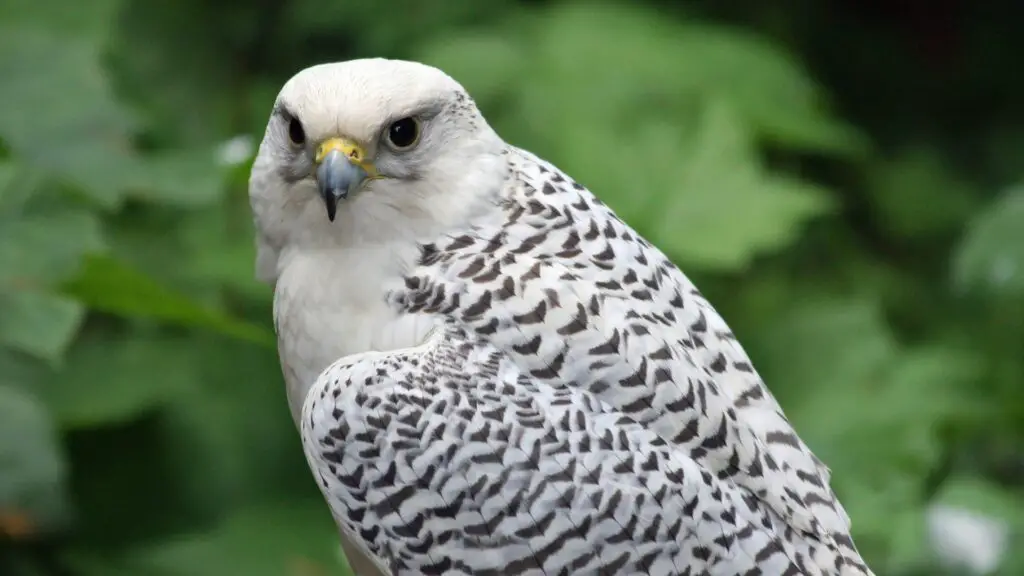
What are gyrfalcons?
The Gyrfalcon is a large bird of prey that can be found in the Arctic regions of North America, Europe, and Asia. The name “gyrfalcon” comes from the Old Norse word for “falcon,” which is “eyeful.” The Gyrfalcon is the largest member of the falcon family, with males reaching up to 24 inches in length and females up to 31 inches. The Gyrfalcon is primarily white with greyish-brown spots on its wings and tail. However, some birds are all white, while others are all dark brown or black. Gyrfalcons typically mate for life and build their nests on cliffs or in trees. These birds primarily eat small mammals such as lemmings, voles, and hares. In recent years, the gyrfalcon population has declined due to habitat loss and persecution by humans. However, the bird is still classified as “least concern” by the International Union for Conservation of Nature.
How did Gyrfalcons become so famous for falconry pursuits?
Gyrfalcons are the largest and fastest member of the falcon family, making them highly prized for falconry. These powerful predators can reach speeds of up to 200 miles per hour when diving for prey, and they have a wingspan of up to six feet. Gyrfalcons are also known for their striking appearance, with plumage that can range from white to grey to almost black. In addition, their long tail and large claws make them well-suited for hunting large prey such as rabbits and hares. All of these attributes make Gyrfalcons highly sought-after by falconers, and their popularity has only increased in recent years due to the growing popularity of falconry as a sport. As a result, Gyrfalcons are now one of the most popular birds used in falconry, and their numbers in the wild have declined as a result.
How long does it take to train a Gyrfalcon?
Training a gyrfalcon can be lengthy, depending on the bird’s age, previous experience, and level of intelligence. Gyrfalcons typically reach maturity at around three years of age, and it can take up to two years to train them to hunt effectively. Younger birds tend to be more playful and less cooperative, while older birds may be more independent and more difficult to train. The most intelligent birds often require the least amount of training, while the less intelligent ones may never fully learn all the hunting skills they need. As a result, there is no simple answer to the question of how long it takes to train a gyrfalcon. It depends on a variety of factors, and each bird must be evaluated on an individual basis.

The benefits of hunting with a gyrfalcon
Humans have hunted with falcons for centuries, and the Gyrfalcon is among the most prized of these birds. Native to the Arctic regions of North America, Europe, and Asia, the Gyrfalcon is known for its powerful hunting abilities. Capable of flying at high speeds and reaching great heights, the Gyrfalcon is an impressive sight in the sky. When hunting with a gyrfalcon, hunters often use a method known as “passing game.” This involves releasing the bird from a perch near the prey and then following it as it chases down its quarry. The Gyrfalcon’s speed and agility make it an ideal partner for this type of hunting, and its sharp eyesight ensures that few animals escape its clutches. In addition to being an effective hunter, the Gyrfalcon is also a beautiful bird with striking plumage that ranges from white to grey. For many falconers, the Gyrfalcon is the perfect hunting companion – powerful, swift, and graceful.
How to train your Gyrfalcon for falconry
Though it may seem daunting at first, training your Gyrfalcon for falconry is a rewarding experience. Here are a few tips to get you started. The first step is to gain the trust of your bird. This can be done by regularly providing food and water and ensuring that their living quarters are clean and comfortable. Once you have established a rapport with your Gyrfalcon, you can begin to train them. Start with simple commands such as ‘come’ and ‘stay’. As your bird becomes more comfortable with basic commands, you can move on to more complex tricks. Remember to be patient and to take small steps – too much too soon will only overwhelm your Gyrfalcon and make training more difficult. With time and patience, you will be well on your way to a fully-trained falcon that you can enjoy for many years.
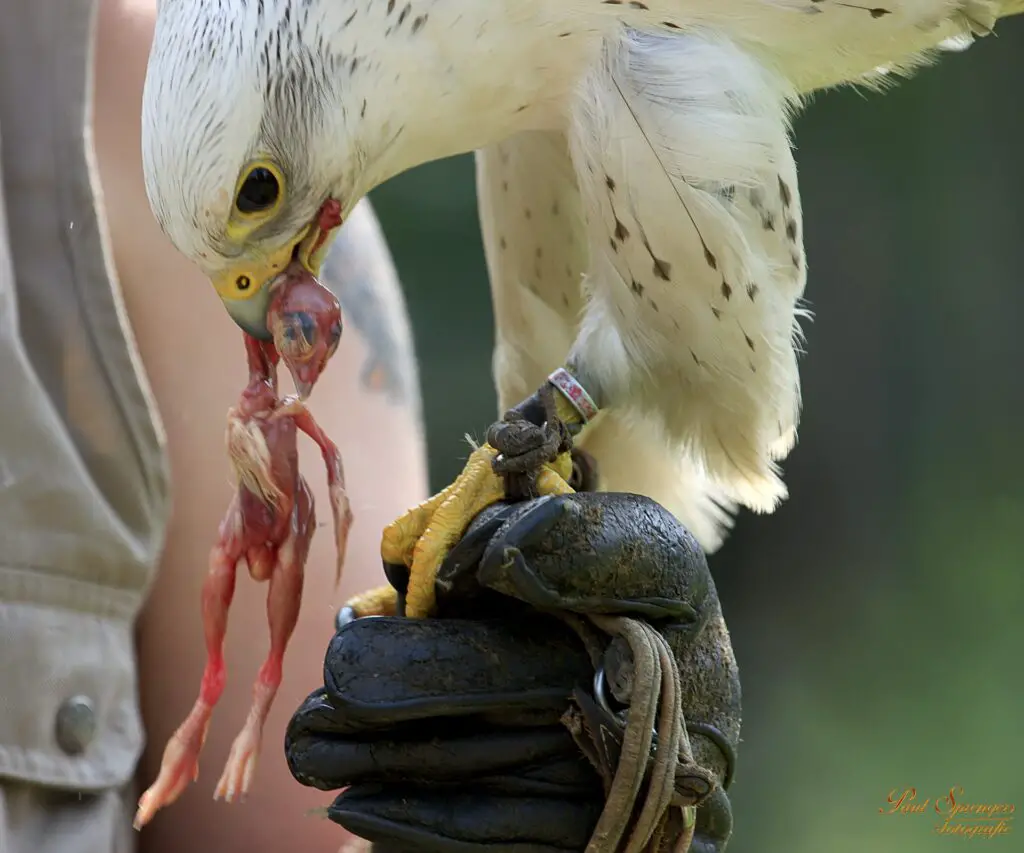
What kinds of prey can a gyrfalcon hunt down successfully in North America’s and Europe’s wilds?
In North America, gyrfalcons have been known to hunt down rabbits, hares, ptarmigans, and the occasional fox or arctic ground squirrel. In Europe, their diet is similar, although they may also take down larger prey such as red deer or sheep. Gyrfalcons are fast and agile flyers, able to reach speeds of up to 100 miles per hour in level flight. This allows them to quickly close in on their prey, giving them a greater chance of success. In addition, gyrfalcons are equipped with sharp talons and powerful beaks that can kill their prey instantly. With their impressive hunting skills, it is no wonder that gyrfalcons are one of the top predators in both North America and Europe.