
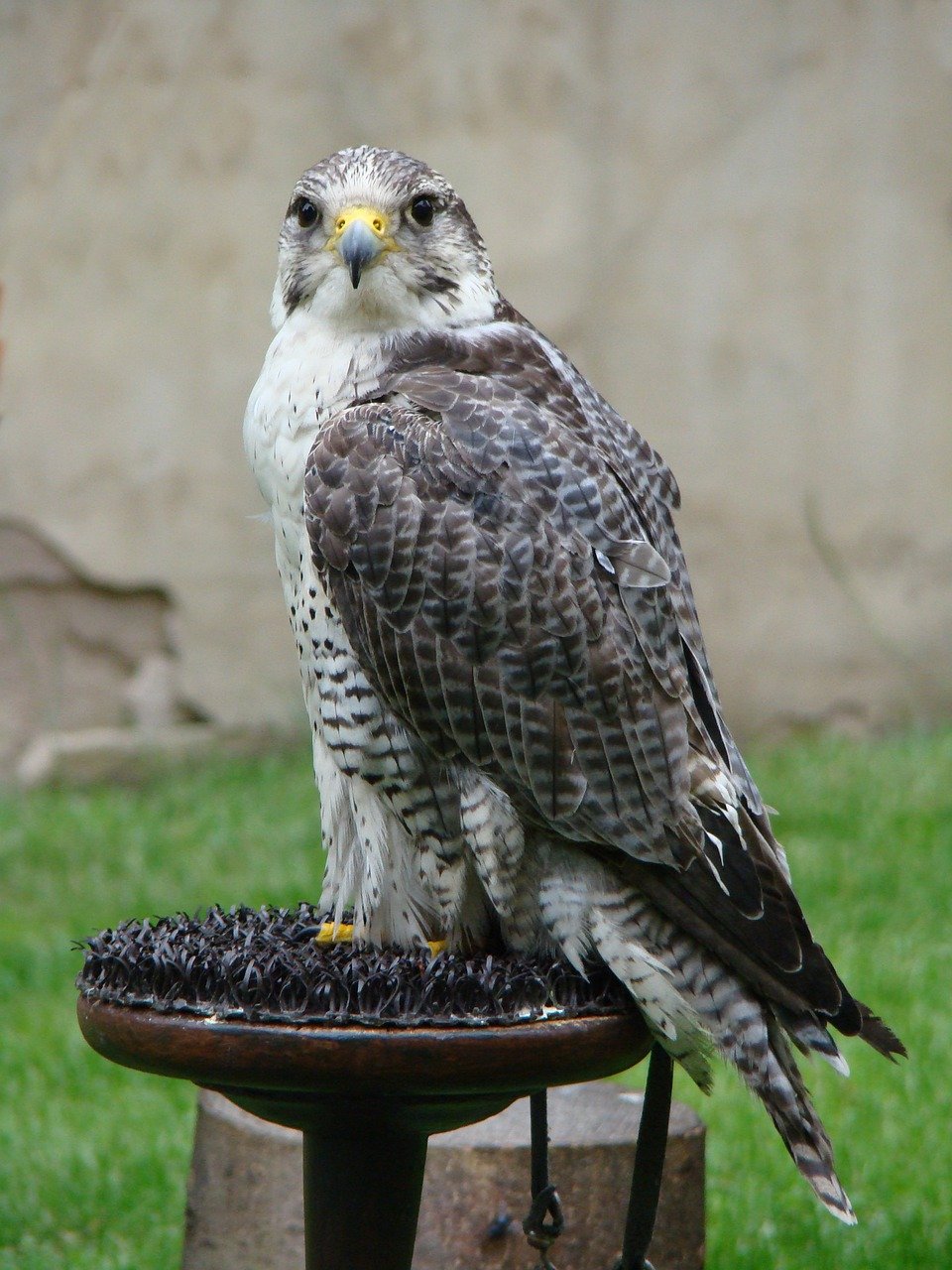
When it comes to training a gyrfalcon for falconry, having the right equipment is crucial. Not only does it ensure the safety and well-being of both the bird and trainer, but it also helps facilitate effective training sessions.
Here are some essential equipment that you will need when training a gyrfalcon:
Basic Equipment
Falconry Glove:
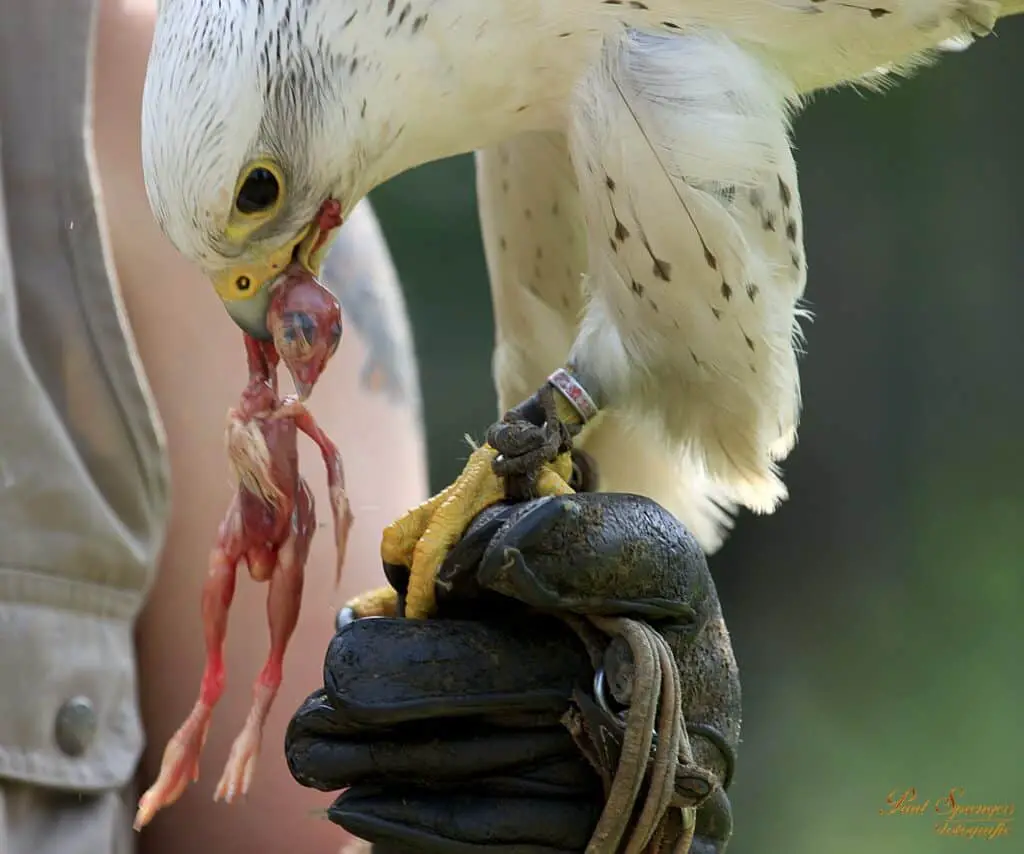
A falconry glove is a specialized glove worn on the hand that the bird lands on during training and hunting. This glove serves several key purposes.
Firstly, it protects your hand from the sharp talons of the gyrfalcon, preventing injuries during handling and training sessions. Secondly, the glove provides a stable and comfortable landing surface for the bird, helping to build trust between the falconer and the gyrfalcon. The falconry glove allows you to control the bird more effectively by providing a designated landing spot. This helps prevent the bird from perching in unwanted places or potentially causing harm. The glove also gives you a sense of security and confidence when handling the powerful bird of prey.
Jess and Leash:
Using a jess and leash helps to control your gyrfalcon during falconry training and hunting sessions. The jess is a leather strap that attaches to the gyrfalcon’s legs, while the leash is a longer strap that allows you to handle and restrain the bird during training or when not flying. These tools are crucial for managing your gyrfalcon’s movements and ensuring its safety and the safety of others around you.
Below is a table summarizing the benefits of using a jess and leash in falconry training:
| Jess and Leash Benefits | Description |
| Control | Helps in managing the bird’s actions |
| Safety | Prevents the bird from flying away |
| Training Aid | Enables better handling during training |
| Restraint | Allows for safe transportation |
| Communication | Facilitates bonding and communication |
Hood:
The hood provides a sense of security and calmness for the bird. When training a gyrfalcon, the hood plays a vital role in reducing visual stimuli that may agitate or distract the bird during transportation or when not hunting. It helps in keeping the bird calm and prevents it from getting anxious in unfamiliar surroundings.
To use the hood effectively, gently place it over the gyrfalcon’s head, ensuring it fits snugly but not too tightly. This process should be done calmly and confidently to reassure the bird. Once the hood is in place, monitor the bird’s behavior to ensure it remains calm and settled. Always remember to remove the hood before the bird starts its hunting activity to maintain its focus and alertness.
Perches:
When choosing perches, I prefer using different materials, such as natural branches of varying diameters, to help exercise the bird’s feet and prevent foot issues. You can also provide flat perches for resting and higher perches for observation, and roosting is essential for the bird’s well-being.
It is recommended that both stationary perches and swinging perches be included to engage the falcon’s muscles and coordination. Swinging perches can simulate the movement of branches in the wind, enhancing the bird’s balance and agility.
Training Tools
Lure:
A lure is a key training tool for falconry, used to teach the gyrfalcon to fly towards and land on a target. It typically consists of a piece of leather or fabric shaped like a bird or small animal, attached to a line.
During training, the lure is swung in circles to mimic the flight of prey, enticing the gyrfalcon to chase after it. Once the bird captures the lure, it can be rewarded with a treat, reinforcing the behavior of returning to the falconer.
The lure also aids in conditioning the gyrfalcon to respond promptly to the falconer’s signals, preparing it for successful hunting sessions in the future.
Whistle:
The whistle is typically used to signal commands or cues during hunting sessions or when the bird is out flying. Different whistles can be assigned for different commands, such as calling the bird back to the glove or signaling it to fly in a specific direction.
Establish consistent whistle commands and practice them regularly with the gyrfalcon during training to ensure effective communication between the bird and falconer.
Creance:
A creance is a long line used in falconry training to allow a gyrfalcon to fly and practice hunting while remaining under control. It’s an essential tool for safely and effectively training birds of prey.
Using a creance allows the falconer to control the bird’s flight and behavior, preventing it from flying too far or getting into dangerous situations. It also allows for gradual training and conditioning of the gyrfalcon without risking its safety or escaping.
Kite:
When training a gyrfalcon, I find that using a kite is essential for simulating natural hunting scenarios. The kite mimics the movements of prey similar to a lure, such as a bird in flight, which helps the gyrfalcon develop its hunting skills and agility.
To use a kite effectively in training, I recommend attaching a lure or bait to it. By doing so, the gyrfalcon learns to associate the kite’s movements with the reward of catching prey. This method helps build the bird’s focus and determination during flight training sessions.
Additionally, flying a kite at varying speeds and heights challenges the gyrfalcon’s aerial abilities, preparing it for real hunting situations where quick maneuvers are crucial. The kite also aids in improving the bird’s stamina and endurance, ensuring it’s in top physical condition for successful hunting expeditions.
Health Supplies
Being prepared with the right health supplies is a key aspect of responsible falconry.
First Aid Kit:
- Sterile Gauze Pads and Bandages: These are crucial for covering wounds and stopping bleeding in case of cuts or injuries.
- Antiseptic Solution: Having an antiseptic solution like Betadine can help clean and disinfect wounds to prevent infections.
- Tweezers and Scissors: These tools are handy for removing debris from wounds, cutting bandages to size, or handling other minor medical procedures.
- Thermometer: A thermometer is necessary for monitoring the bird’s body temperature, which can indicate illness or infection.
- Eye Wash: In case of eye injuries or irritations, having an eye wash solution can help clean and soothe the bird’s eyes.
- Anesthetic Cream: Anesthetic cream can be used to numb areas for minor medical procedures, such as removing splinters or treating small wounds.
- Latex Gloves: Always have a pair of latex gloves in your first aid kit to protect yourself and the bird from potential infections.
Tracking and Monitoring
Telemetry Equipment:
I use telemetry as a source of confidence in tracking my gyrfalcon during hunting sessions. It essentially involves attaching a small transmitter to the bird’s leg, which sends out signals that can be picked up by a receiver.
Here are three key ways telemetry helps track your gyrfalcon:
- Real-Time Location Monitoring: Telemetry equipment provides instant updates on the exact whereabouts of your gyrfalcon, allowing you to track its movements with precision.
- Behavior Analysis: By monitoring the bird’s behavior through telemetry data, I can gain valuable insights into its flying patterns, hunting techniques, and overall health.
- Safety Measures: Telemetry equipment enables me to set up virtual boundaries for my gyrfalcon, alerting me if the bird strays too far or enters restricted areas, ensuring its safety at all times.
I can confidently train my gyrfalcon with telemetry equipment while prioritizing its welfare and training success.
GPS Tracker:
This device attaches to the bird’s leg or tail and allows falconers to track their falcon during flights or training sessions. The GPS tracker is especially useful when the gyrfalcon is learning to hunt, as it enables trainers to analyze flight patterns, altitude changes, and specific hunting locations. By having access to this real-time information, falconers can adjust training techniques, assess the falcon’s progress, and ensure the bird’s safety during flights.
In addition to monitoring the gyrfalcon’s movements, a GPS tracker also aids in locating the bird in case it becomes lost or flies out of sight. This feature provides peace of mind to both the falconer and the bird, as it allows for quick retrieval and minimizes the risk of the falcon getting lost in unfamiliar territories.
Having the right equipment is essential for training a gyrfalcon for falconry. From jesses to lures, each tool serves a specific purpose in building a strong bond with your majestic bird of prey. By understanding the significance of these items and how they’re utilized, you can enhance your skills and create a successful partnership with your gyrfalcon. Invest in the necessary equipment and enjoy the rewarding experience of training these birds.