
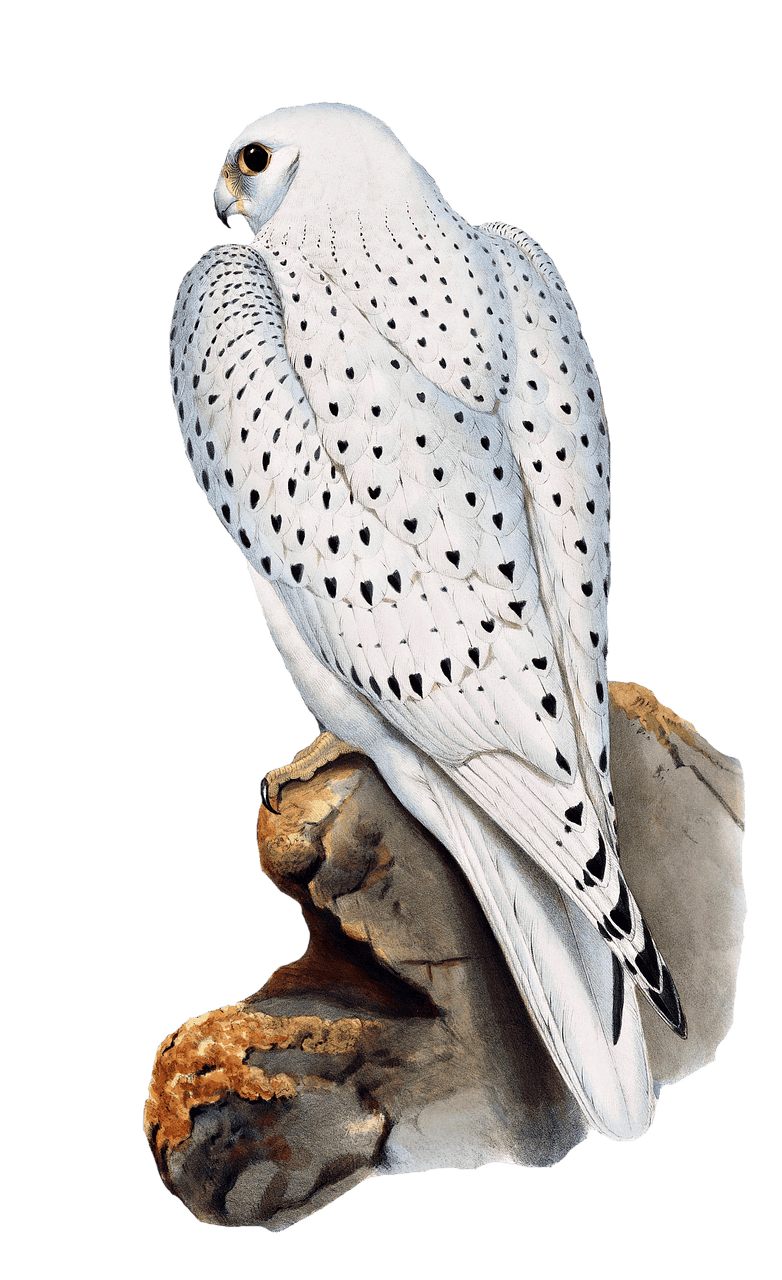
Feeding a Gyrfalcon is essential for its health and vitality. Typically, I feed my adult Gyrfalcon once a day, adjusting for its activity levels. Young Gyrfalcons may need more frequent feeding, while the older or less active ones might require less. It’s important to monitor their appetite and adjust the feeding schedule accordingly. Balancing their nutrition with high-quality proteins, essential fats, vitamins, and minerals is necessary. I tailor each of my bird’s feeding schedules to their individual age, health, and activity, making sure my Gyrfalcon remains in peak condition.
Understanding Gyrfalcon Feeding Needs
Understanding the feeding needs of a gyrfalcon is crucial for their health, well-being, and performance in falconry. As apex predators, gyrfalcons have specific dietary requirements that reflect their natural hunting behaviors and metabolic needs. Here’s a comprehensive guide to understanding and meeting the feeding needs of gyrfalcons:
1. Natural Diet
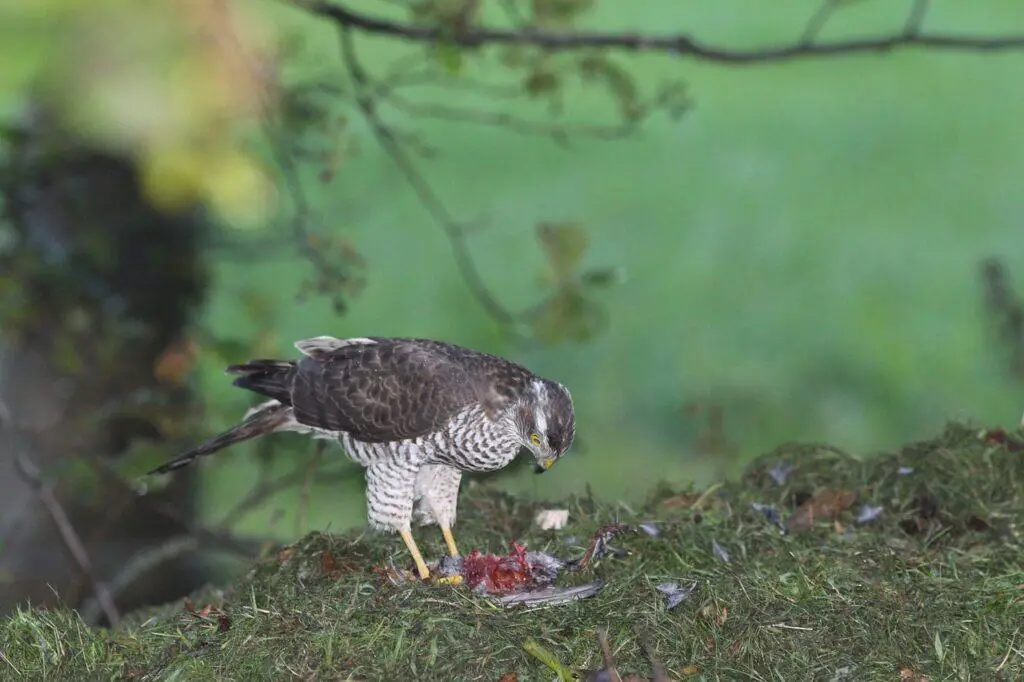
Gyrfalcons are carnivorous birds of prey that primarily feed on small to medium-sized birds, such as ptarmigan, grouse, waterfowl, and songbirds.
2. Whole Prey Items
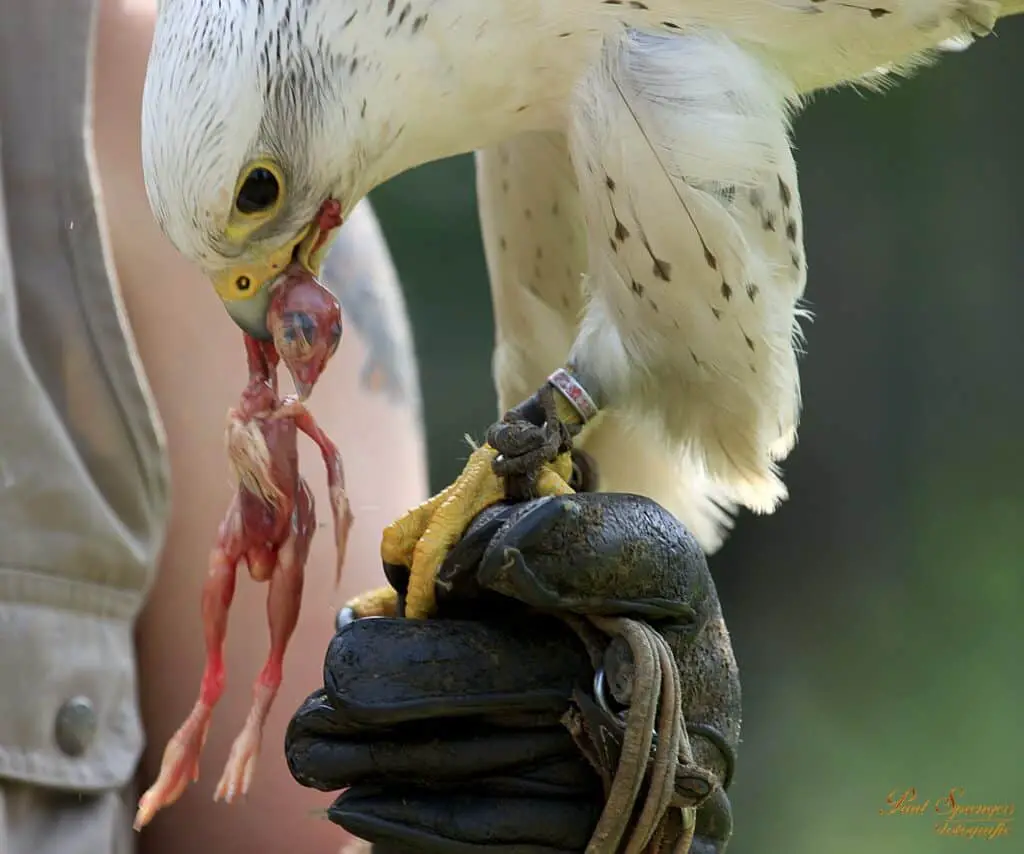
I like to offer whole prey items whenever possible to provide a natural and nutritionally complete diet for your Gyrfalcon. Suitable prey items include quail, pigeons, rats, mice, and chicks. Feeding whole prey allows your bird to consume bones, feathers, and organs, which are essential for their overall health and digestive function.
3. Variety
Introduce variety into your Gyrfalcon’s diet to ensure they receive a wide range of nutrients. Offer different types of prey, such as game birds, poultry, and rodents, as well as occasional supplements like vitamin-rich organs or calcium sources.
4. Feeding Schedule
Establish a regular feeding schedule based on your Gyrfalcon’s age, weight, activity level, and metabolic rate. Adult gyrfalcons typically require feeding every 1-2 days, while juveniles may need more frequent meals. Monitor your bird’s weight and adjust their feeding schedule as needed to maintain optimal body condition.
5. Monitoring Food Intake
Monitor your Gyrfalcon’s food intake to ensure they are consuming an adequate amount of food. Keep track of the types and quantities of prey they consume, as well as any changes in appetite or behavior that may indicate health issues or dietary imbalances.
6. Hydration
Ensure your Gyrfalcon has access to fresh water at all times to stay hydrated. Offer water in a shallow dish or through a water dispenser that is easily accessible and regularly cleaned to prevent contamination.
7. Avoid Overfeeding
Avoid overfeeding your Gyrfalcon, as excess weight can negatively impact your health and performance. Monitor their body condition regularly and adjust their diet and feeding schedule accordingly to prevent obesity and associated health problems.
Frequency of Feeding: What Falconers Should Know
Typically, adult gyrfalcons require feeding once a day. This ensures they receive an adequate amount of nutrition to sustain their high energy levels and maintain their physical condition. However, it’s imperative to adjust the feeding frequency based on the bird’s individual needs and activity levels.
Young gyrfalcons, such as chicks or fledglings, may need to be fed more frequently to support their rapid growth and development. On the other hand, older or less active gyrfalcons may require feeding less often to prevent overfeeding and potential health issues.
Tailoring Feeding Schedule to Gyrfalcon’s Age and Health
When tailoring the feeding schedule for my Gyrfalcon, I consider the following factors:
- Age: Young gyrfalcons require more frequent feeding due to their rapid growth and high energy levels.
- Health Condition: Adjust the feeding schedule based on any health issues or injuries your Gyrfalcon may have.
- Activity Level: A more active gyrfalcon may need additional food to sustain its energy levels.
- Weight: Regularly monitor your Gyrfalcon’s weight to make sure it’s receiving the appropriate amount of food.
- Special Dietary Needs: Some gyrfalcons may have specific dietary requirements, such as more protein or certain vitamins.
Monitoring Appetite: Signs of Hunger in Gyrfalcons
Below is a table outlining common behaviors and physical indications that may suggest a gyrfalcon is hungry:
| Signs of Hunger in Gyrfalcons | Description |
| Increased vocalization | More frequent vocal calls |
| Restlessness | Pacing or fidgeting |
| Aggression towards food | Attempting to snatch food |
| Weight loss | Noticeable decrease in body mass |
| Reduced activity levels | Less energy or flying less |
Balancing Nutrition: Ensuring Proper Diet for Falconry Gyrfalcons
Maintaining a balanced and nutritious diet is crucial for the health and performance of your Gyrfalcon in falconry. Here are some tips to ensure your bird receives optimal nutrition:
- High-quality proteins: Include protein-rich prey items like quail, pigeons, or rodents in their daily diet.
- Essential fats: Offer fatty prey items such as mice or rats to provide essential fats and energy for your Gyrfalcon.
- Vitamins and minerals: Offer a variety of prey items to ensure your bird receives a wide range of vitamins and minerals. You can also consider offering vitamin supplements or calcium sources occasionally.
It’s essential to consult with a veterinarian or experienced falconer when tailoring a diet plan for your Gyrfalcon to ensure their specific needs are met. With proper nutrition, your Gyrfalcon will thrive in falconry and be a successful hunting partner.

Overall, understanding the natural diet, feeding schedule, and individual needs of your Gyrfalcon is critical for their health and well-being in falconry. Regularly monitoring their food intake and adjusting their diet as needed will ensure they receive the necessary nutrients to thrive in their role as hunting birds. By providing a balanced and varied diet, you can help your Gyrfalcon reach its full potential and excel in falconry. So, it’s important for every falconer to continuously educate themselves on the best practices for Gyrfalcon feeding to provide the best care for their birds.
Frequently Asked Questions
How Do I Know If My Gyrfalcon Is Getting Enough Food?
- Monitor its weight, behavior, and appetite. Regularly weighing it, observing its activity levels, and noting how enthusiastically it consumes meals help guarantee it stays healthy and nourished.
What Should I Do if My Gyrfalcon Refuses to Eat?
- First, evaluate any potential health issues or injuries that may be affecting its appetite. If there are no apparent problems, try offering different types of prey or changing the feeding schedule. Consult with a veterinarian if the issue persists.
Can I Feed My Gyrfalcon Table Scraps?
- No, table scraps do not provide proper nutrition for gyrfalcons and can even be harmful to their health. Stick to a diet of whole prey items and consult with a veterinarian or experienced falconer for any dietary changes or supplements.
How Often Should I Offer Water to My Gyrfalcon?
- Fresh water should always be available for your Gyrfalcon, especially during hot weather when it may need more hydration.