
If you are interested in practicing falconry with a Gyrfalcon, there are certain pieces of equipment that you will need to have in order to properly care for and train your bird. Here are some essential pieces of equipment you will need:
Jesses and Anklets
When training my Gyrfalcon, I always make sure that the jesses and anklets are properly fitted and securely fastened. Jesses are the leather straps attached to the bird’s legs that allow me to handle and control my falcon during training and while out hunting. These straps need to be of the right length, not too tight to restrict movement, yet snug enough to prevent the bird from escaping.
The anklets, which are leather bands placed around the bird’s legs, should also be carefully checked for signs of wear and tear to ensure they remain strong and reliable. Properly fitting and securing the jesses and anklets is essential for the safety and well-being of the bird. I
Hoods for the bird and Vests for the falconer
Gyrfalcons, like other birds of prey, have very sharp eyesight and are easily spooked by sudden movements or bright sunlight. To protect their eyes and keep them calm during transport or when not hunting, I suggest you have a properly fitted hood for the bird. This will also help with training as the falcon will associate the hood with rest and relaxation.
As a falconer, it is also important to have a vest or glove to protect your arm while handling the bird. Falcons are powerful creatures with sharp talons, so having proper protective gear is essential for both you and your bird’s safety.
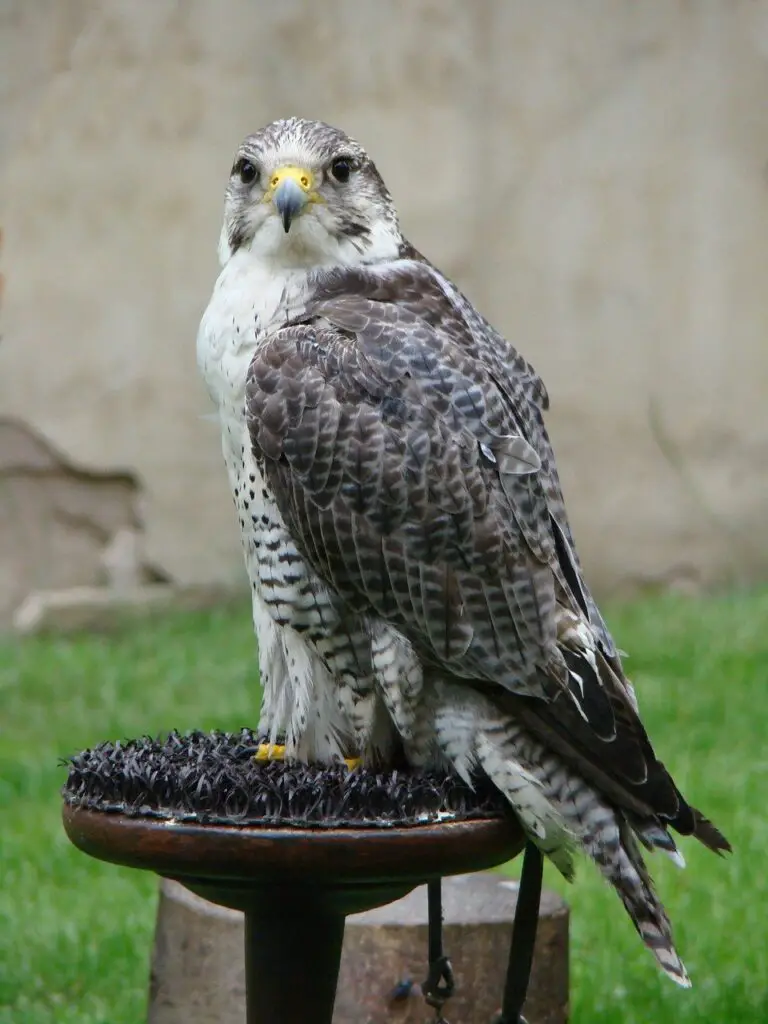
Perches and Blocks
Perches play an important role in a Gyrfalcon’s daily routine. I always place them at varying diameters to promote healthy feet and provide a comfortable grip. The perches must also be positioned strategically around the mews to encourage movement and exercise.
Blocks are essential for keeping the Gyrfalcon’s beak trimmed and in good condition. I make sure that the blocks are made of safe materials, such as concrete or grooming stones, to prevent any harm to the bird. Properly positioning the blocks at different heights within the mews allows the Gyrfalcon to maintain its beak naturally.
Leashes and Swivels
During training and hunting, it is important to have a leash attached to the bird’s jesses for added security. When choosing a leash, I always opt for materials like braided leather or high-quality nylon to provide durability and strength. The leash should be long enough to allow your Gyrfalcon to move comfortably but not so long that it compromises control.
Swivels are essential components that prevent the leash from tangling during flight or while perched, reducing the risk of injury to your bird. Look for swivels made from stainless steel for longevity and smooth rotation.
During training, always inspect your leashes and swivels for signs of wear and tear, replacing them immediately if any damage is detected.
Scales and Gloves
When handling a Gyrfalcon, selecting appropriate scales and gloves is essential to ensure both your safety and the bird’s well-being.
- Leather Gloves: Invest in high-quality leather gloves that are thick enough to protect your hands from the Gyrfalcon’s sharp talons. These gloves should allow for dexterity while providing a strong barrier against potential injuries during handling.
- Kevlar Gloves: Consider using Kevlar gloves for an extra layer of protection. Kevlar material is highly resistant to cuts and punctures, offering increased security when working closely with your Gyrfalcon.
- Digital Scale: A digital scale is necessary for monitoring your Gyrfalcon’s weight regularly. Sudden weight loss can indicate health issues, and a precise scale allows you to track changes accurately. Keep a record of the bird’s weight to make sure it remains in top condition for falconry activities.
Lures and Training Aids
When choosing lures, I look for the ones that mimic the natural prey of the Gyrfalcon, such as feathered lures or mechanical devices that simulate bird flight patterns. These lures should be enticing to the bird and encourage it to hunt.
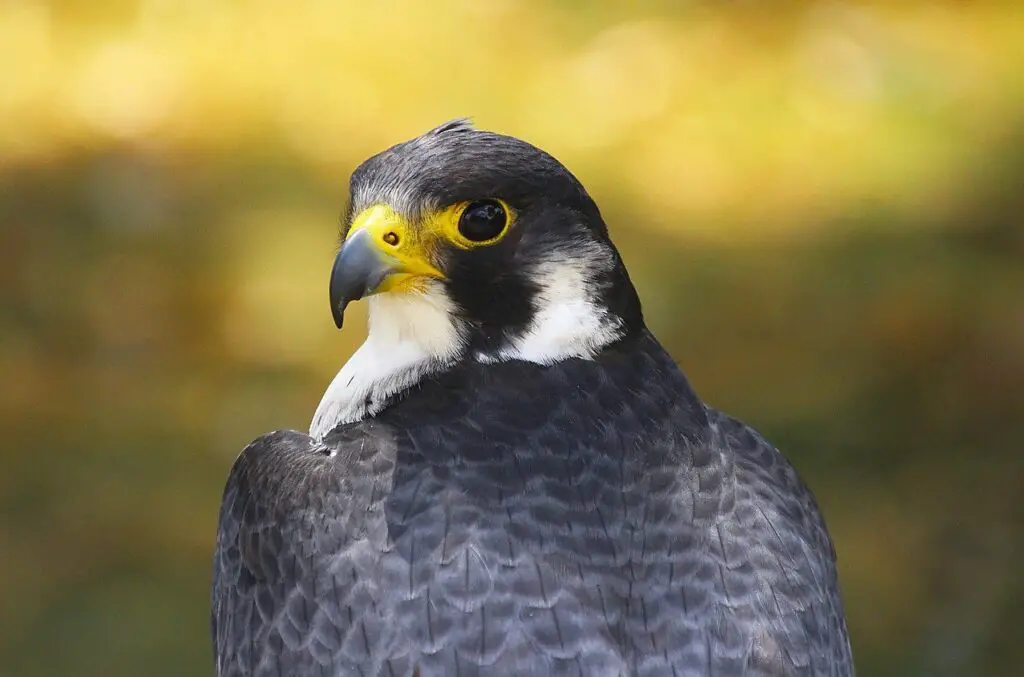
Training aids like creance lines are also important tools in Gyrfalcon training. A creance line is a long cord attached to the bird’s leash or jesses, allowing the falconer to control the falcon’s movements during training flights. This helps in building the bird’s strength, stamina, and response to commands while ensuring its safety and preventing escapes.
Using positive reinforcement techniques coupled with appropriate training aids can greatly impact the training process. With all the right equipment at hand you should have smooth sailing when you begin your training process. Remember to always prioritize the safety and well-being of your Gyrfalcon, and with proper equipment and training, you can build a strong bond with your bird.
Frequently Asked Questions
Do I need to have all this equipment before getting a Gyrfalcon?
- Ideally, yes. Properly caring for and training a Gyrfalcon requires having the necessary equipment at hand.
Can I use the same equipment for different birds of prey?
- Some of the equipment, such as scales and gloves, can be used for various birds of prey. However, it is important to have specific equipment, such as jesses and anklets, sized and fitted for each bird.
How often should I replace my Gyrfalcon’s equipment?
- Regularly inspecting and replacing any damaged or worn-out equipment is recommended for the safety of your bird. Generally, it is best to replace equipment every year or as needed.
Can I make my own equipment for my Gyrfalcon?
- While some equipment, such as perches and blocks, can be made at home with proper materials and knowledge, it is best to purchase high-quality equipment specifically designed for birds of prey to ensure their safety and well-being.