

In my experience working with Harris Hawks, the question of whether they are hard to train often arises. These raptors present a fascinating blend of intelligence and cooperation, making training them a unique journey. While some challenges may surface along the way, understanding their nature and employing the right techniques can lead to a successful partnership. Let me share with you how to go about achieving this with all my experience, which is laid out below.
Are Harris Hawks hard to train?
Training Harris Hawks is not challenging for an experienced falconer due to their cooperative nature and intelligence. Harris hawks exhibit quick progress during training sessions, grasping concepts with remarkable speed. Their intelligence allows them to understand commands and adapt to new tasks swiftly. Despite their prowess as predators, Harris hawks possess a gentle demeanor toward their handlers.
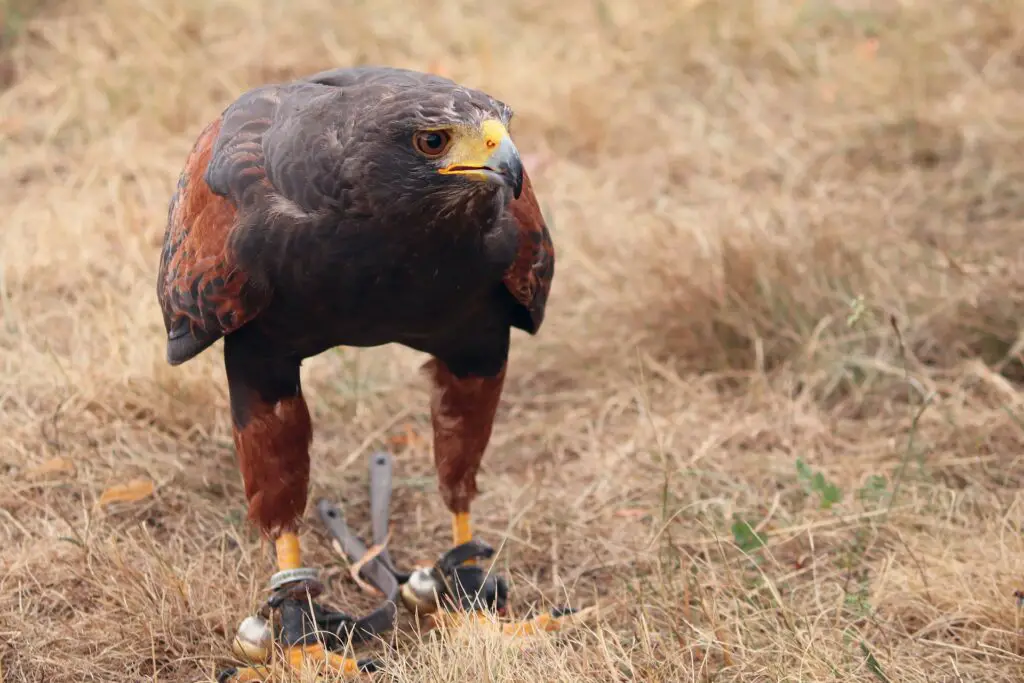
This bond is crucial for successful training, as it establishes a foundation of communication and cooperation between the falconer and the bird. The smooth training process with Harris Hawks is a result of their innate ability to learn and their willingness to engage in the training activities. Overall, their intelligence, cooperative nature, and gentle disposition make Harris hawks an ideal species for falconers looking for a rewarding training experience.
Training Challenges and Solutions
When working with Harris Hawks, one common challenge that falconers may encounter is maintaining consistency in reinforcement techniques to effectively reinforce desired behaviors. Training methods play a crucial role in overcoming this challenge. Using positive reinforcement, such as rewards like food or praise, can help shape the hawk’s behavior in the desired direction. Behavior modification techniques, like shaping and chaining, can also effectively teach new behaviors or refine existing ones.
Trust building is another key aspect when training Harris Hawks. Establishing a strong bond that is based on trust and respect is essential for effective training. Spending time with the hawk, handling it gently, and consistently meeting its needs can help build a strong relationship between the falconer and the bird.
Flight training is vital for Harris Hawks, as they are highly skilled hunters in the wild. Providing opportunities for the hawk to fly and hunt can help maintain its natural instincts and behaviors. During training, impulse control is also important to ensure that the hawk responds to commands promptly and accurately. By incorporating these strategies into training sessions, falconers can overcome challenges and successfully train Harris Hawks.
Bonding With Your Harris Hawk
To foster a deep bond with your Harris Hawk, it is crucial to prioritize consistent and positive interactions that affirm trust and respect between you and the bird. Trust building forms the foundation of a strong relationship with your hawk. Daily interactions are essential to establishing this trust. Spending time together regularly helps your bird become familiar with you and builds a sense of security. Pay attention to your body language when interacting with your hawk.
Birds are highly sensitive to non-verbal cues, so maintaining a calm and confident demeanor is key. Understanding the cues that your hawk gives is vital. Observing its behavior closely will help you anticipate its needs and respond accordingly. When handling your Harris Hawk, use gentle and deliberate handling techniques. Be careful not to startle or stress the bird with sudden movements or actions.
Positive Reinforcement Techniques
Establishing a strong bond with your Harris Hawk can be further enhanced by using positive reinforcement methods to encourage desired behaviors and foster a harmonious training relationship. Clicker training is a valuable tool in teaching your hawk to associate the sound of a clicker with a reward, facilitating clear communication during training sessions.

Target training involves using a designated object for the hawk to touch or follow, aiding in directing its focus and teaching specific movements or behaviors. Food rewards are a powerful motivator for Harris Hawks, as they are naturally food-driven birds. You can effectively reinforce positive behaviors by offering treats such as raw meat or day-old chicks as a reward for desired actions.
Desensitization techniques are crucial for acclimating your hawk to potentially stressful or unfamiliar stimuli, helping to reduce fear or aggression responses. Gradually exposing your bird to different environments, noises, or objects can help build its confidence and trust in you as its handler.
Behavior shaping involves breaking down complex behaviors into smaller achievable steps, making the training process more manageable and increasing the likelihood of success. You can build a strong training foundation with your Harris Hawk by implementing these positive reinforcement techniques consistently and patiently.
Consistency and Patience in Training
Consistent and patient training practices are essential for nurturing a strong bond and achieving successful outcomes when working with Harris Hawks. Training progress with Harris Hawks requires a steady approach, where each session builds upon the last. Tracking progress, celebrating achievements, and adjusting strategies as needed are crucial. Handling mistakes is part of the learning process; remaining calm and redirecting the bird’s focus helps in reinforcing positive behaviors.
Building trust is a cornerstone of training; spending time together, providing food, and positive reinforcement all contribute to developing a strong bond with the hawk. Establishing a routine is key to maintaining consistency. By setting a regular schedule for training sessions and activities, the bird learns what to expect, which fosters a sense of security and cooperation. Maintaining focus during training sessions is vital; minimizing distractions and creating a conducive environment helps keep the hawk engaged and attentive, leading to more productive sessions and quicker progress.
In conclusion, training Harris Hawks may come with its challenges, but with the right approach of utilizing positive reinforcement, consistency, and patience, it can be a rewarding experience. Building a strong bond with these intelligent birds through gentle handling and meeting their needs is key to successful training. With their cooperative nature and quick learning capabilities, Harris Hawks can be a joy to work with for any dedicated falconer.