

Harris Hawks are a type of raptor, or bird of prey. They are known for their unique hunting style, which includes using perches to scan the area for prey and flying low over the ground in search of food. Harris Hawks are also known to hunt in pairs or groups, which helps them succeed in their hunts.
Hawks are diurnal, so they are active during the day and sleep at night therefore they predominantly hunt in the daytime. Hawks rely on their keen eyesight to spot prey and It is much harder to see at night, so hawks would have difficulty finding food. Additionally, many of the hawks hunt diurnal animals, so their prey would be asleep at night and not available at night.
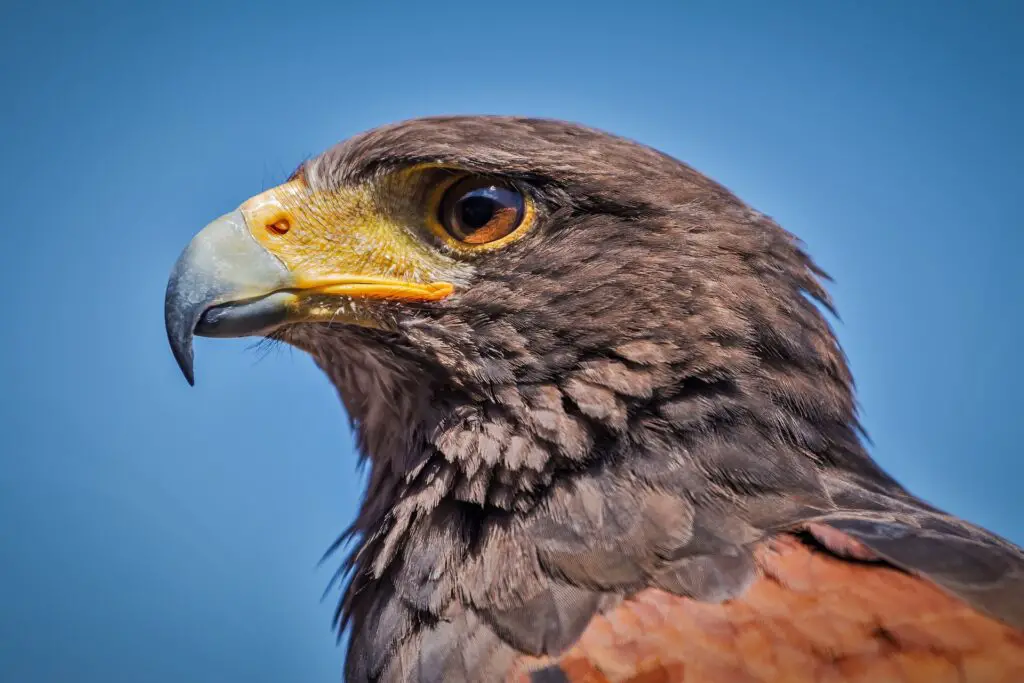
Flying at night can be dangerous for hawks because there are fewer landmarks to orient themselves by and more obstacles like power lines and trees. For all these reasons, it is safe to say that you will never see a Harris Hawk hunting at night.
Why don’t Harris Hawk hunt at night?
The Harris Hawk is a diurnal raptor. While it may seem like a disadvantage, there are several reasons why Harris Hawks benefit from being active during the daytime. For one, nighttime hunting is much riskier than daytime hunting; it’s harder to see prey and a greater chance of encountering predators. Harris Hawks rely on their excellent vision to locate prey, and visibility is much reduced at night. Finally, Harris Hawks typically hunt in open areas, and during the daytime, there is more time for them to scan the ground for signs of movement. In contrast, these areas are often cloaked in darkness at night, making it more difficult to spot potential prey. For Harris Hawks and their falconers, daytime hunting is simply more efficient and less dangerous than hunting at night.
Why do falconers avoid hunting with their Harris hawk at night
Falconers traditionally avoid hunting with their Harris Hawk at night due to the predatory bird’s unique physiology and behavior. A Harris Hawk is a daytime hunter that depends heavily on its vision, particularly during hunts when split-second decisions are made based on what it sees. This can make night hunting difficult for these birds since their eyes are not adapted to low light levels. Additionally, nighttime shadows and changes in ambient light can cause confusion for the hawk which typically relies on long-distance vision to identify its prey and calculate quick actions needed for an effective hunt. Due to this, falconers usually opt for day hunting or use other species of hawks better suited for night hunts.
Do Harris Hawks have good night vision?
Harris hawks are renowned for their powerful vision during the day, but surprisingly, they do not have excellent night vision. Due to their “cat-like” eyes and small pupils, Harris hawks are able to see very well in the daylight, however, due to the shape of these pupils at night, their vision is limited and thus they tend to focus their hunting during daytime hours. Despite this limitation, Harris hawks still attempt nocturnal hunting as a supplement if food is scarce. Additionally, once these birds spot prey in an area even at night, they can perch and wait until morning when enough light is present before striking. Therefore it is easy to see why this remarkably adaptive species continues to thrive while living in its environment – despite having somewhat limited night vision.
What is the best time for hawks to hunt?
Hawks are skilled hunters who spot prey from great heights and descend upon it with lethal precision. But when is the best time for hawks to hunt? The answer may depend on the species of hawk. Hawks are diurnal, so they are active during the day, while others are nocturnal, hunting at night. There are also crepuscular hawks, which are most active at dawn and dusk. Each type of hawk has its own advantages and disadvantages. Diurnal hawks have the advantage of being able to see their prey clearly, but they may also be more easily spotted by predators. Nocturnal hawks can avoid detection by predators, but they may have difficulty finding food in the dark.
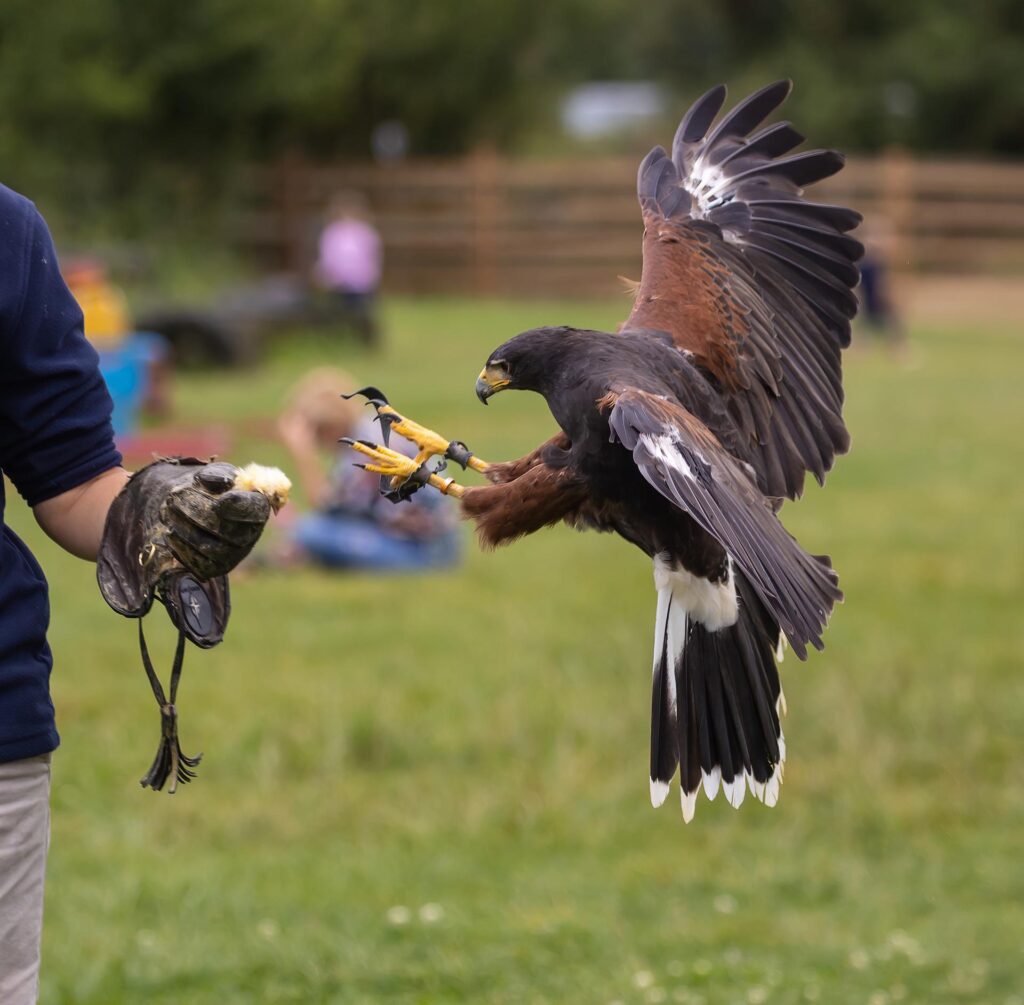
Harris hawks benefit from the low light conditions at dusk and dawn when Most animals are active, and their camouflage is most effective. The best time for a hawk to hunt depends on its strengths and weaknesses. There are a few things that all hawks have in common when it comes to hunting. They all have excellent eyesight. This allows them to spot any potential prey from far away. They also have sharp talons and beaks that they use to kill prey. Hawks typically hunt alone, although some birds like Harris hawks will team up with others to hunt larger prey.
What is a Harris Hawk’s favourite prey to hunt?
Harris Hawks are known for their fantastic hunting capabilities. Though they mainly prey on small rodents such as snakes, rabbits, and lizards, they can also be seen to pursue larger game such as wild pigs, peccaries, waterfowl, and sometimes even other birds of similar size. This is thanks to the hawk’s excellent teamwork when hunting with family or other individuals in the area; by working together they can take down much larger game than any single bird could do on its own. Additionally, the hawk’s impressive 6-foot wingspan is advantageous for swooping down on unsuspecting prey from above quickly. All in all, Harris Hawks have an impressive range of feeding habits that make them quite prolific hunters.
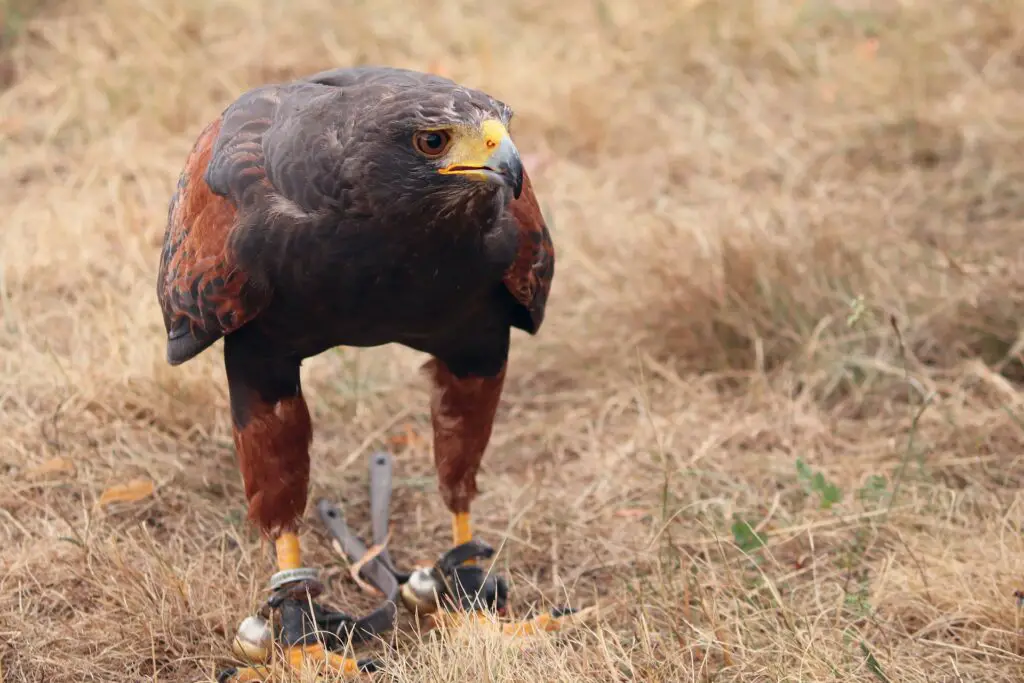
Which Bird of Prey hunts at night?
Many people are amused to learn that there are birds of prey that hunt at night. The most common night hunters are the owls. There are more than 200 different species of owls, and they can be found on every continent except Antarctica. Owls have large, round heads and large eyes that help them to see in low light conditions. They also have special feathers that allow them to fly quietly, making it easier for them to surprise their prey. In addition to owls, a few species of falcons are active at night. These birds use their sharp vision and hearing to locate their prey in the darkness. While most birds of prey prefer to hunt during the day, these nighttime hunters provide an essential service by keeping the population of rodents and other small animals in check.