

In my time in falconry, I’ve found that Harris Hawks generally measure 46 to 59 cm (18 to 23 inches) in length. Various factors, like genetics and environmental conditions, impact their size. If you’re curious to discover more about Harris Hawks and the factors influencing their size, there’s a wealth of information available below for you to use as a guide.
Harris Hawk Size Overview
Head Size
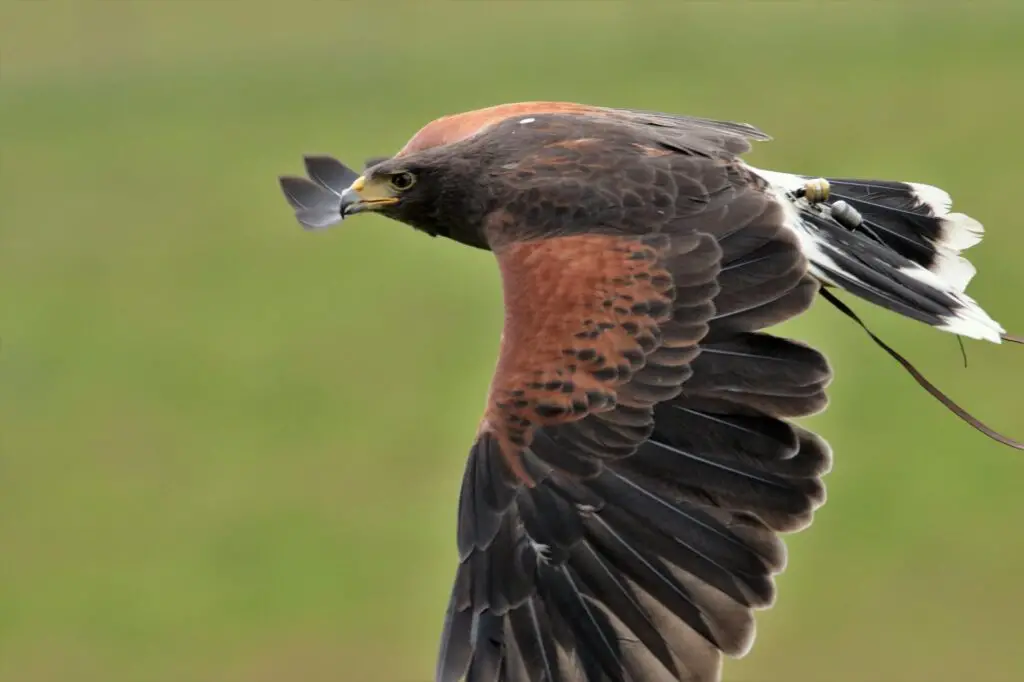
The head of a Harris Hawk is proportionate to its body, usually averaging about 15% of the total body length. This would be approximately 7 to 9 cm (2.8 to 3.5 inches) in length. A well-defined, sharp vision characteristic is vital for their hunting prowess.
Throat Area
The throat area, or gular region, is relatively slender and extends smoothly from the chin to the chest. It usually measures around 10% of the body length, making it roughly 4.6 to 5.9 cm (1.8 to 2.3 inches) for an adult Harris Hawk.
Body (Torso)
The torso of a Harris Hawk, comprising the chest and abdomen, showcases a robust and muscular build vital for their flying and hunting activities. On average, the body measures about 70% of the total length, equating to 32 to 41 cm (12.6 to 16.1 inches).
Feet
The feet of a Harris Hawk are strong and powerful, equipped with sharp talons critical for grasping prey. The feet’s length can average around 7 to 8 cm (2.75 to 3.15 inches), supporting their predatory lifestyle effectively.
Beak
A Harris Hawk’s beak is curved and sharp, perfectly designed for tearing prey. The average length of the beak is about 3 to 4 cm (1.2 to 1.6 inches), indicative of its role in feeding habits.
Wingspan
One of the Harris Hawk’s most remarkable features is its wingspan. On average, it measures around 103 to 122 cm (41 to 47 inches), making it one of the largest hawks in North America.
Factors Affecting Size
- Genetics:
There is a significant genetic component that determines the size of Harris Hawks. Offspring tend to inherit the size characteristics of their parents, with larger parents producing larger offspring.

- Diet:
Dietary habits and nutrition also play a crucial role in influencing the size of Harris Hawks. A well-balanced diet that contains a variety of prey helps ensure healthy growth and development.
- Climate and Environmental Conditions:
The climate and environmental conditions where Harris Hawks live can impact their size. Harris Hawks may be smaller in areas with harsher conditions and limited food availability.
- Gender:
Male and female Harris Hawks can differ in size, with females being larger than males. This is known as sexual dimorphism and is common in many bird species.
| Factors | Description |
| Environmental impact | Factors like temperature and habitat type |
| Genetic predisposition | Influence of genetic traits on size |
| Nutritional intake | impact of diet on growth |
| Age influence | growth and development during different life stages |
| Gender differences | Variations in size between male and female Harris Hawks |
Ensuring Healthy Growth
To ensure these body parts develop properly and maintain health, a balanced diet rich in proteins and vitamins is essential. Regular health check-ups with a veterinarian specialized in birds of prey can catch and address any developmental issues early. Should any part of a Harris Hawk not grow to its standard size or show signs of malformation, it’s crucial to seek professional advice promptly. Environmental enrichment and proper training can also support these majestic birds’ physical and mental health, promoting overall well-being and growth.
Weight Range of Harris Hawks
Harris Hawks typically weigh between 900 to 1200 grams (2.9 to 3.9 lbs) for males and 1100 to 1300 grams (3.6 to 4.2 lbs) for females. However, due to the factors mentioned above, weight variations within this range can vary. As with size, a healthy and balanced diet is essential for maintaining a proper weight for these birds. Regular exercise and flying opportunities also play a crucial role in keeping Harris Hawks fit and within their ideal weight range.
In conclusion, the Harris Hawk presents a fascinating subject when examining the intricacies of avian size and physical characteristics. From their impressive wingspan to the sharpness of their beak, each aspect of the Harris Hawk’s anatomy is fine-tuned for efficiency in their natural habitat. The impact of genetics, diet, environmental conditions, and gender on their size highlights the complexity behind the biology of these birds of prey. We can support their development and overall health by ensuring they receive a balanced diet, appropriate care, and regular health check-ups.