
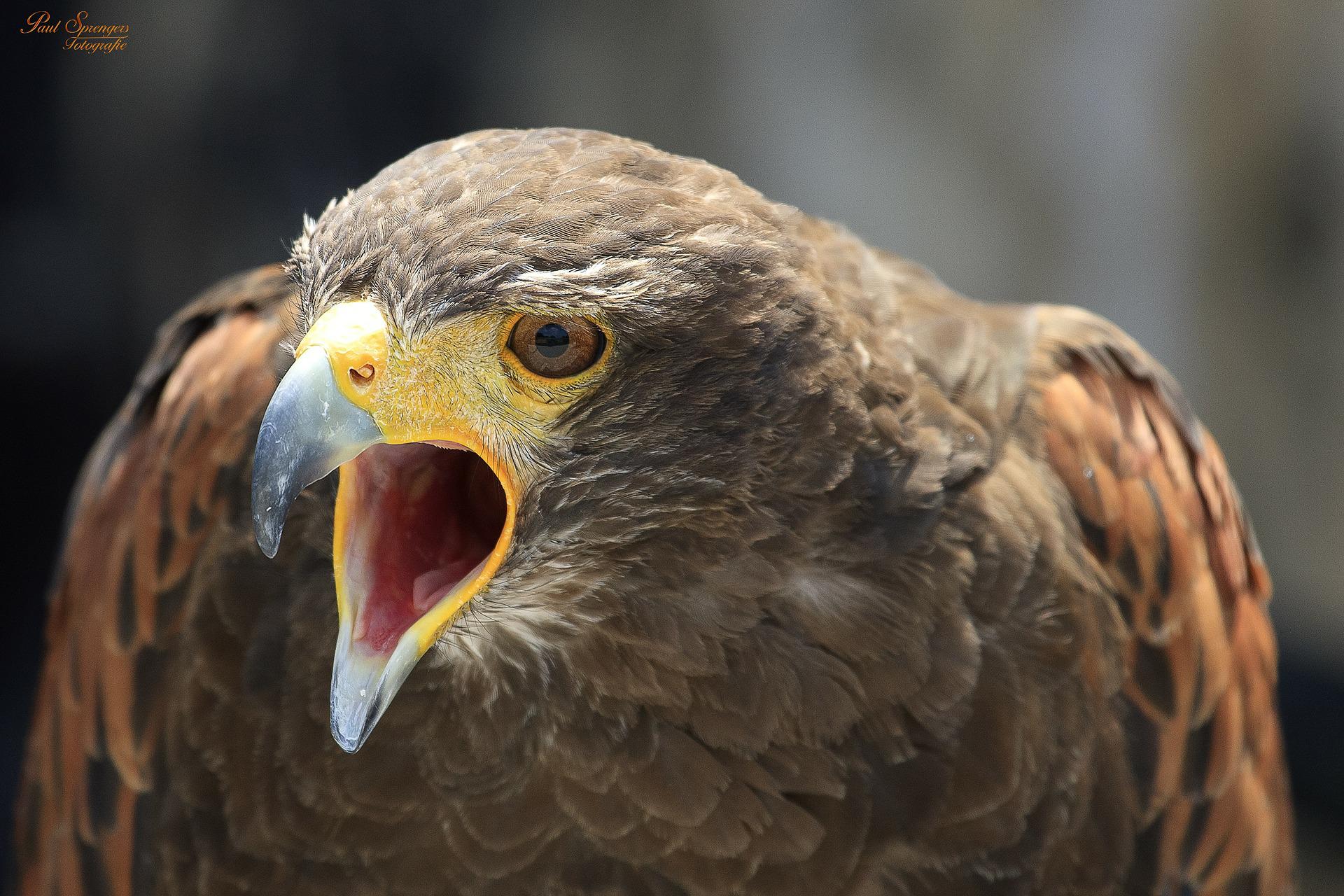
When comparing the Harris Hawk and Golden Eagle, notable differences emerge. The Harris Hawk boasts a wingspan of around 3.5 feet, relying on keen eyesight and cooperative hunting. In contrast, the Golden Eagle flaunts a wingspan of up to 7.5 feet and is equipped with strong talons for solitary hunting. The Harris Hawk’s hunting prowess lies in speed and precision in targeting small mammals, whereas the Golden Eagle excels in stealth and strategic positioning to tackle larger prey. Having kept both these raptors I can enlighten you on the various differences between these two in the content laid out below
Physical Characteristics
When comparing the physical characteristics of the Harris Hawk and the Golden Eagle, one can immediately notice distinct differences in size and coloration. The Golden Eagle boasts an impressive wingspan of up to 7.5 feet, while the Harris Hawk typically has a wingspan of around 3.5 feet. Feather coloration also sets them apart, with the Golden Eagle flaunting dark brown feathers throughout its body, whereas the Harris Hawk displays a mix of dark brown, chestnut, and white feathers for a striking appearance.
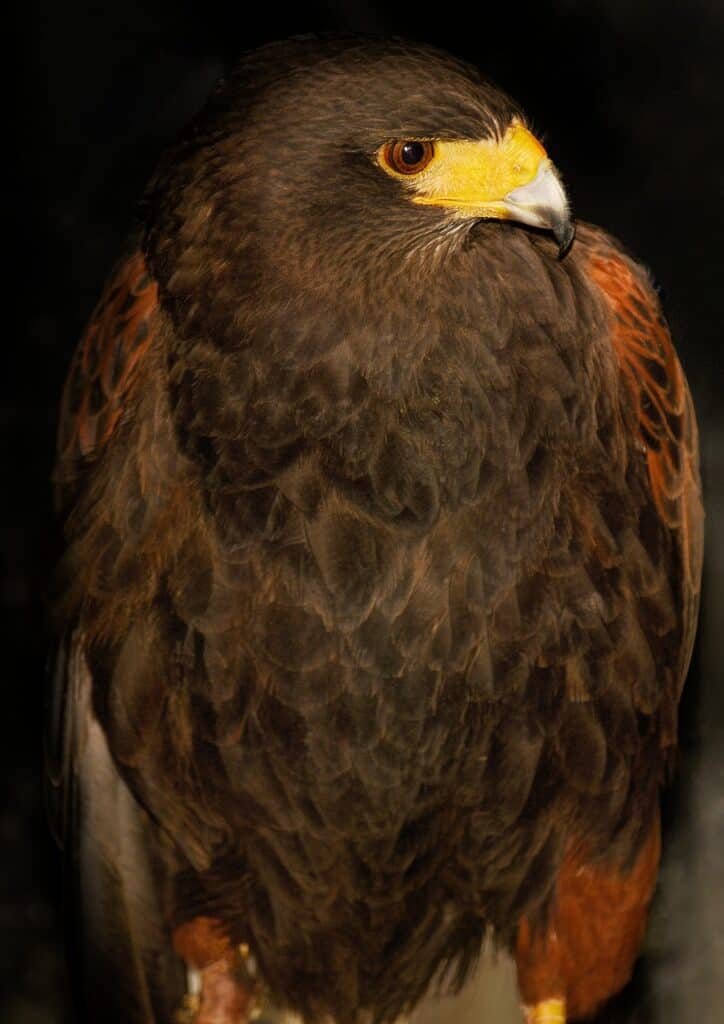
Furthermore, the Golden Eagle possesses formidable talon strength and a large beak, ideal for capturing and tearing apart prey. In contrast, the Harris Hawk relies more on its keen eyesight and cooperative hunting techniques, often working in groups to outsmart and catch elusive prey. Their diet preferences vary, with the Golden Eagle favoring larger mammals and fish, while the Harris Hawk feeds on smaller animals like rodents and lizards. Nesting habits differ as well, with the Golden Eagle preferring high cliffs for nesting, while the Harris Hawk nests in trees or shrubs. Additionally, territorial behavior and vocalizations vary, with the Golden Eagle being more solitary and vocal, whereas the Harris Hawk is known for its sociable nature and less frequent vocalizations.
Hunting Abilities
Moving on to their hunting abilities, the Harris Hawk and the Golden Eagle exhibit varied techniques and strategies in capturing prey.
- Speed, Accuracy: The Harris Hawk relies on its exceptional speed and accuracy when hunting. It can swiftly maneuver through obstacles to catch fast-moving prey with precision.
- Stealth, Strategy: In contrast, the Golden Eagle employs stealth and strategic positioning to surprise its prey. It patiently waits for the opportune moment to strike, utilizing its keen eyesight to spot potential targets from afar.
- Prey Preferences: While Harris Hawks primarily target small mammals like rabbits and rodents, Golden Eagles have a more diverse diet that includes larger animals such as hares, foxes, and even deer
- Hunting Techniques, Success Rates: Harris Hawks often hunt cooperatively in groups, using intricate communication and coordination to increase their success rates. On the other hand, Golden Eagles are solitary hunters, relying on their individual skills and power to secure a successful hunt.
Temperament and Behavior
The temperament and behavior of the Harris Hawk and the Golden Eagle differ significantly, reflecting their distinct hunting styles and ecological roles. Golden Eagles are known for their high aggression levels, especially during territorial disputes or when defending their nests. In contrast, Harris Hawks exhibit a more social behavior, often hunting cooperatively in groups.
Fear responses vary between the two species. Golden Eagles are more prone to flight than confrontation when faced with a threat. On the other hand, Harris Hawks may display fearless behavior, standing their ground in the face of danger.
Communication styles also differ. Golden Eagles primarily use vocalizations to mark territories and attract mates, while Harris Hawks rely on a combination of calls and body language to coordinate group hunting strategies.
Territorial instincts are strong in both species, but Golden Eagles tend to have larger territories, fiercely defending them from intruders. Harris Hawks, although territorial, are more tolerant of neighboring groups, sometimes even sharing hunting grounds.
Suitability for Falconry
Utilizing their keen hunting instincts and impressive aerial abilities, both the Harris Hawk and the Golden Eagle exhibit exceptional suitability for falconry. In terms of experience level, the Harris Hawk is often recommended for beginner falconers due to their cooperative nature and adaptability to training. On the other hand, Golden Eagles require a more experienced handler due to their strong-willed temperament and need for consistent, firm guidance.

Regarding space requirements, Harris Hawks are more adaptable to smaller living spaces, such as apartments or urban areas, making them a practical choice for falconers with limited room. Being larger raptors, Golden Eagles necessitate more extensive housing and flying areas, which can pose challenges for falconers without access to substantial outdoor spaces.
Regarding feeding habits, Harris Hawks have a varied diet that includes small mammals, birds, and insects, while Golden Eagles primarily prey on larger animals like rabbits and ground squirrels. Understanding these dietary differences is crucial for providing proper nutrition to these birds in a falconry setting.
Considering lifespan expectations, Harris Hawks generally live around 20-25 years in captivity. In contrast, Golden Eagles can live up to 60 years or more, requiring a long-term commitment from falconers. Also, legal considerations must be considered, as both species are protected under various regulations governing their ownership and use in falconry practices.
In conclusion, both the Harris Hawk and the Golden Eagle possess unique physical characteristics, impressive hunting abilities, and distinct temperaments. Both birds require careful training and handling to ensure their well-being and effectiveness in the field. Ultimately, the choice between the two species depends on the falconer’s specific needs and preferences in the sport of falconry.