Harris hawks possess unique traits that make them popular birds in falconry. Their social nature and cooperative hunting strategies set them apart from other raptors.
This adaptability not only enhances their trainability but also their performance in the field. However, understanding their biology and behavior is crucial for any falconer. As we explore these aspects, the implications for successful hunting practices become increasingly clear.
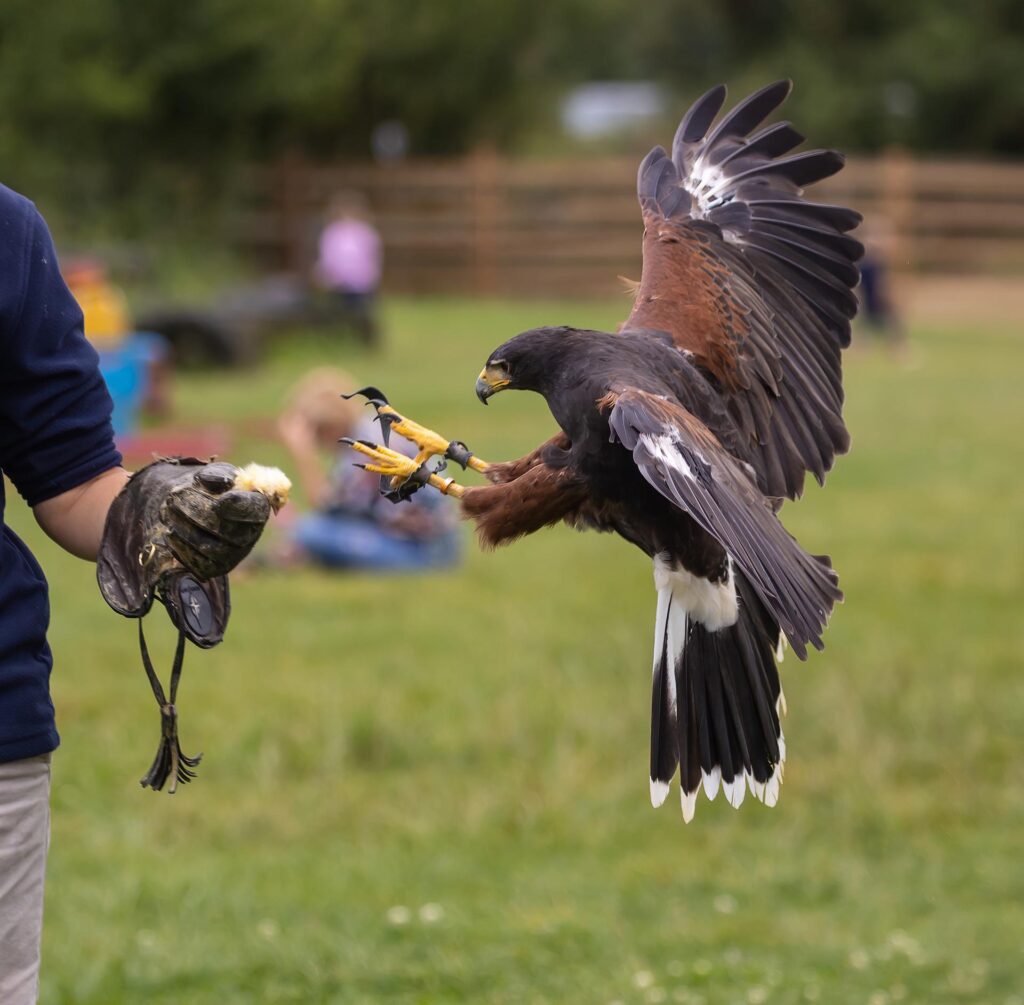
Introduction
Scientific name: Parabuteo unicinctus
Family: Accipitridae
Diet: Carnivorous, primarily feeds on small mammals, birds, and reptiles
Lifespan: 10-20 years in the wild, up to 25 years in captivity
Habitat and Range: Found in arid regions like deserts, scrublands, and semi-open areas; native to the Americas (Southwestern United States to South America)
Temperament: Intelligent, social, curious, and bold
Size: 18-24 inches (46-60 cm) in length
Weight: 1.5-3.5 pounds (700-1600 grams) Females weigh more than males
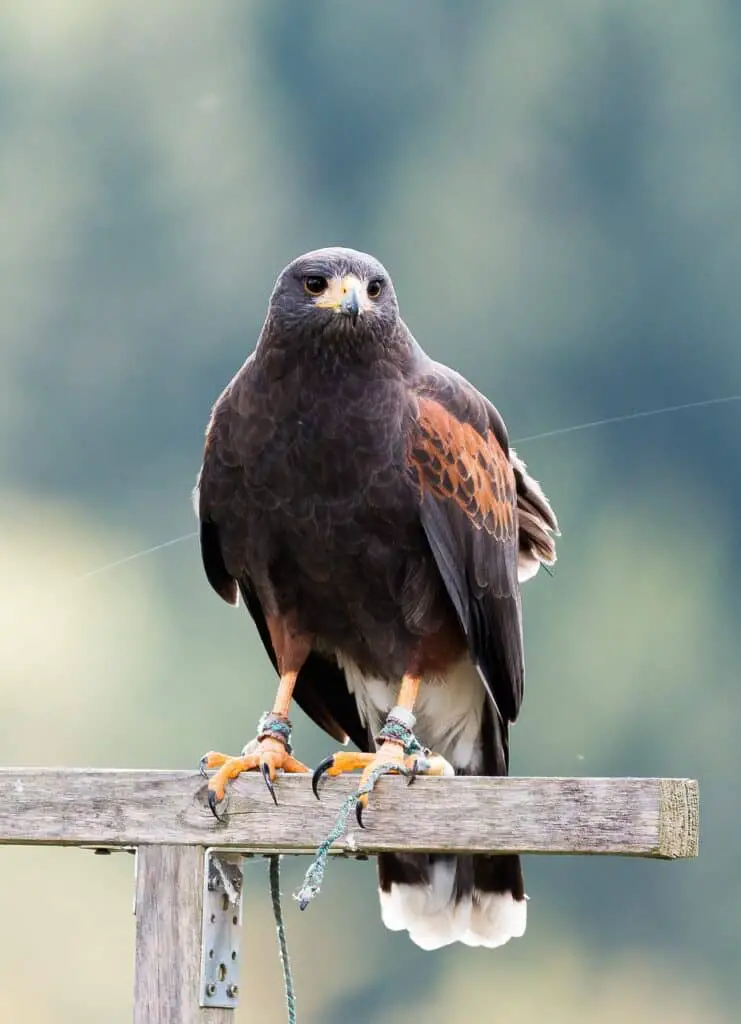
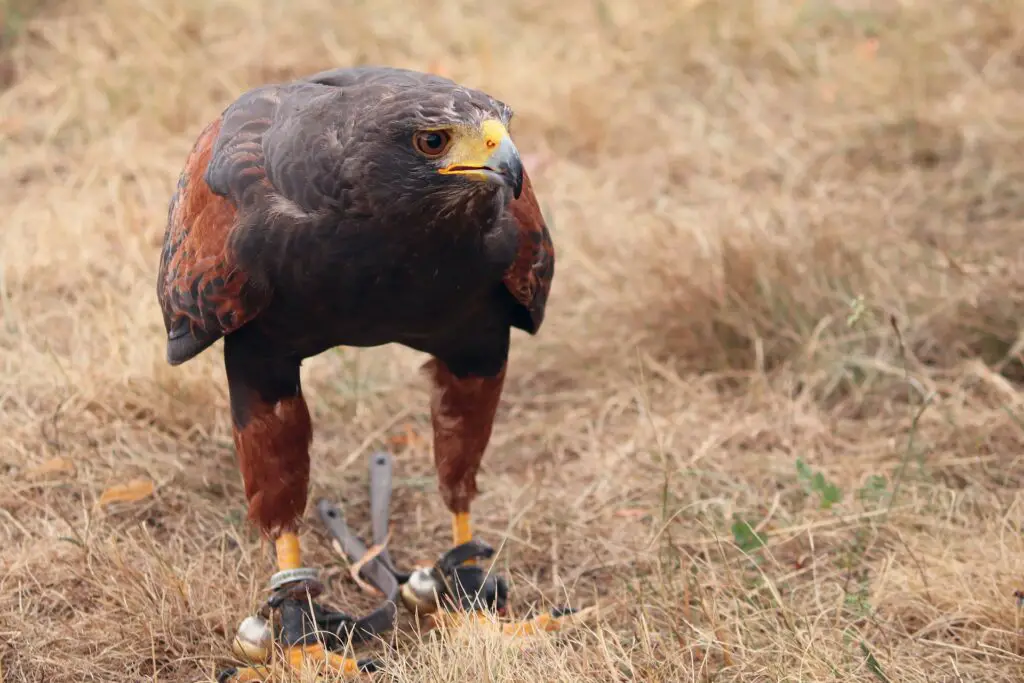
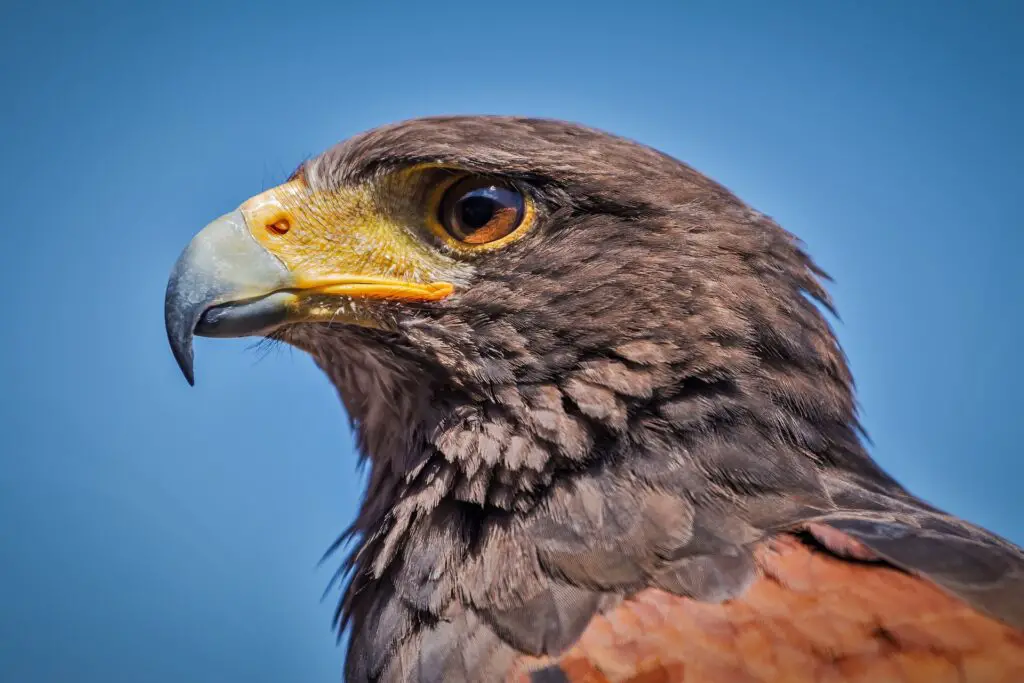
Color: Dark brown with reddish shoulders and thighs, white at the base of the tail
Wingspan: 103 to 120 cm (41 to 47 in)
Wing Shape: Broad and rounded for agility and soaring
Tail Shape: Long with a white tip, ideal for maneuverability
When considering the Harris hawk (Parabuteo unicinctus), it’s clear that this bird of prey stands out due to its remarkable traits and behaviors. One of the most fascinating aspects of the Harris hawk is its social nature. Unlike many raptors, these hawks thrive in familial groups, often hunting cooperatively in packs of two to seven.
This social structure not only enhances their hunting efficiency but also provides a unique insight into their complex behavioral dynamics. I’ve observed how their cooperative hunting strategies allow them to tackle larger prey that would be difficult for solitary hunters.
Their intelligence further complements this social behavior, making them highly trainable and adaptable, which is why they’ve gained immense popularity in falconry. The Harris hawk’s ability to bond and work alongside humans showcases their exceptional adaptability and highlights the deep connection between these birds and the practice of falconry.
Biology and Natural History
The intricate biology and natural history of the Harris hawk reveal a fascinating interplay of physical characteristics and social structures that contribute to its success as a predator. This species, native to North America, showcases distinct sexual dimorphism, with females significantly larger than males. Their dark brown plumage, accented by rust-colored wrist patches, provides effective camouflage in their arid habitats.
As a social bird, the Harris hawk exhibits unique cooperative hunting behavior, often teaming up in groups of two to seven to capture prey. This strategy is particularly advantageous in environments with scarce food resources. Their adaptability extends to urban areas, where they can find easy access to food.
Taxonomy and classification harris hawk
The Harris’s hawk (Parabuteo unicinctus) is a medium-sized bird of prey belonging to the family Accipitridae, which is also known as the harris hawk or bay-winged hawk. It is native to the southwestern United States and parts of South America, particularly in Mexico, Argentina, and Brazil.
Taxonomy
The taxonomic classification of the Harris’s hawk is as follows:
- Kingdom: Animalia
- Phylum: Chordata
- Class: Aves
- Order: Accipitriformes
- Family: Accipitridae
- Genus: Parabuteo
- Species: P. unicinctus
The Harris’s hawk was previously classified under the genus Parabuteo, which means “close to Buteo”. However, DNA analysis has shown that it is more closely related to the Black-collared hawk (Busarellus nigricollis) and White-headed vulture (Trigonoceps occipitalis), leading to its reclassification as its own genus.

Lifespan and Health
Although many factors influence the lifespan of Harris hawks, a notable discrepancy exists between their longevity in the wild and in captivity. In the wild, they typically live around 10 to 15 years, while in captivity, this can extend to 25 years or more. This difference arises from controlled environments that mitigate risks such as predation and food scarcity.
However, captive hawks are not immune to health issues. Common diseases and health concerns include bumblefoot, a debilitating foot condition, and Aspergillosis, a respiratory disease caused by fungi. Parasites can also pose a threat, particularly if the hawk’s environment isn’t properly maintained.
To ensure optimal health, it’s crucial to monitor for signs of illness, such as lethargy or changes in appetite. Regular veterinary check-ups can help address these concerns early, enhancing the overall well-being and lifespan of these remarkable birds.
Diet and Nutrition
Harris hawks primarily thrive on a diverse diet that includes small mammals, birds, and reptiles, reflecting their adaptability as hunters. In captivity, ensuring a proper diet is crucial for their health and training efficiency. I focus on providing them with a balanced intake that mimics their natural feeding habits.
Here’s a quick overview of their diet:
| Wild Diet | Captive Diet |
| Small mammals (mice) | Quail |
| Birds (quail, sparrows) | Mice |
| Reptiles (lizards) | Chicks and vitamin supplements |
Maintaining weight is also essential; it plays a significant role in training and overall well-being. A well-rounded diet and careful monitoring of their nutrition not only support their physical health but also enhance their performance as hunting partners. This attention to diet and nutrition is vital for any falconer looking to keep Harris hawks in peak condition.
Supplements
| Life Stage | Supplement | Frequency | Purpose |
| Juvenile (0-6 months) | Calcium (e.g., calcium carbonate, calcium gluconate) | 3-4 times per week | Supports bone growth and feather development |
| Juvenile (0-6 months) | Vitamin D3 | 2-3 times per week | Enhances calcium absorption and prevents metabolic bone disease |
| Juvenile (0-6 months) | Multivitamin (with A, B-complex, D3, E, and K) | 2 times per week | Ensures balanced growth and immune system support |
| Juvenile (0-6 months) | Probiotics | Weekly | Aids digestion and gut flora development |
| Juvenile (0-6 months) | Amino acids (e.g., lysine, methionine) | 2-3 times per week | Supports feather quality and muscle development |
| Sub-adult/Adult (6 months – 10+ years) | Calcium & D3 | 2-3 times per week | Maintains bone density and prevents soft bones |
| Sub-adult/Adult (6 months – 10+ years) | Multivitamin | 1-2 times per week | Overall health maintenance and immune support |
| Sub-adult/Adult (6 months – 10+ years) | Electrolytes (during hot weather or intense training) | As needed | Prevents dehydration and supports recovery |
| Sub-adult/Adult (6 months – 10+ years) | Omega-3 & Omega-6 (fish oil, flaxseed oil) | 2 times per week | Enhances feather condition and brain function |
| Sub-adult/Adult (6 months – 10+ years) | Joint Support (Glucosamine & Chondroitin) | Weekly (especially for active birds) | Supports joint health, especially for hunting and flying hawks |
| Senior (10+ years) | Calcium & D3 | 2-3 times per week | Prevents bone degradation and osteoporosis |
| Senior (10+ years) | Multivitamin | 2 times per week | Supports aging immune function and organ health |
| Senior (10+ years) | Omega-3 & Omega-6 | 2-3 times per week | Maintains cognitive function and feather condition |
| Senior (10+ years) | Joint Support | 2 times per week | Reduces joint stiffness and arthritis risk |
| Senior (10+ years) | Liver Support (Milk Thistle) | Weekly | Supports liver function, especially if on a high-protein diet |
| Senior (10+ years) | Probiotics | 1-2 times per week | Aids digestion, especially in older hawks with slower metabolism |
Notes:
- Supplements should be dusted on food or provided in liquid form based on the bird’s preference.
- Over-supplementation can be harmful—ensure balanced feeding with whole prey.
- Adjust intake based on activity level, hunting frequency, and health condition.
Training and Handling
When I begin training Harris’s hawk, the initial taming process, known as manning, is essential for building trust and creating a strong bond. I focus on equipment training, weight management, and establishing responsiveness to ensure the hawk’s effectiveness. As we progress, I introduce free-flying and hunting techniques, which are key to a successful falconry partnership.
Manning (Initial Taming Process)
Manning, the process of taming Harris’s hawk, lays the foundation for a successful falconer-hawk relationship. With Harris’s hawks being naturally social and more tolerant of human interaction than many other raptors, effective manning techniques are crucial to establishing trust. Here are three strategies I use:
- Frequent Interaction: Spending consistent time with the hawk helps it quickly adapt to human presence.
- Food Rewards: Positive reinforcement with food rewards builds trust and reinforces desired behaviors.
- Controlled Exposure: Gradually introducing the hawk to a variety of environments prepares it for real-world scenarios while minimizing stress.
These methods ensure Harris’s hawk feels safe and secure, creating a strong foundation for training. The emotional connection formed during this phase is critical for long-term success in falconry, especially given Harris’s hawk’s cooperative nature.
Equipment Training
Training Harris’s hawk requires the right equipment to ensure effective handling and safety. Tools like jesses, leashes, and perches are essential for secure and comfortable training sessions. Additionally, hoods and telemetry are vital for managing the hawk’s focus and tracking its movements during training and hunting.
Jesses
Jesses are a key tool in falconry, allowing a connection between the falconer and the bird. When working with Harris’s Hawk, I consider:
- Jesses Materials: Leather jesses are popular for their durability, though lightweight synthetic options work well for Harris’s Hawks.
- Jesses Types: Aylmeri jesses are my preference due to their secure fit and ease of use.
- Jesses Sizing: Properly sized jesses are critical for preventing discomfort or injury.
Regular inspection and maintenance of jesses ensure their longevity and the hawk’s safety during handling.
Leashes
Once the jesses are secured, a durable leash is used to maintain control during handling. For Harris’s hawks, I prefer:
- Leash Materials: Strong leather or nylon leashes work best for their durability.
- Leash Lengths: I use leashes between 4 to 6 feet for flexibility and control.
- Proper Attachment: Ensuring correct leash attachment prevents accidents and keeps the hawk secure.
Leash training is especially important for Harris’s hawks due to their active and curious nature.
Perches
Choosing the right perches is vital for Harris’s hawk’s comfort and training. These intelligent, social birds benefit from perches designed to mimic their natural environment. I focus on:
- Perch Types: I prefer T-perches and bow perches made from natural wood or padded materials for grip and comfort.
- Perch Height: Offering varied heights simulates natural perching behavior.
- Perch Placement: I position perches in quiet, distraction-free areas to help the hawk feel secure.
Proper perches enhance the hawk’s training experience and support its wellbeing.
Hoods
Hoods are an essential tool for managing a Harris hawk’s focus and reducing stress during training. Harris’s hawks generally adapt well to hood use, given their calm disposition. Key considerations include:
- Hood Types: I prefer durable leather hoods for comfort and longevity.
- Proper Fit: Ensuring the hood fits snugly without causing discomfort is crucial.
- Hood Training: Gradual exposure to wearing a hood helps the hawk become comfortable with it, improving focus during sessions.
Telemetry
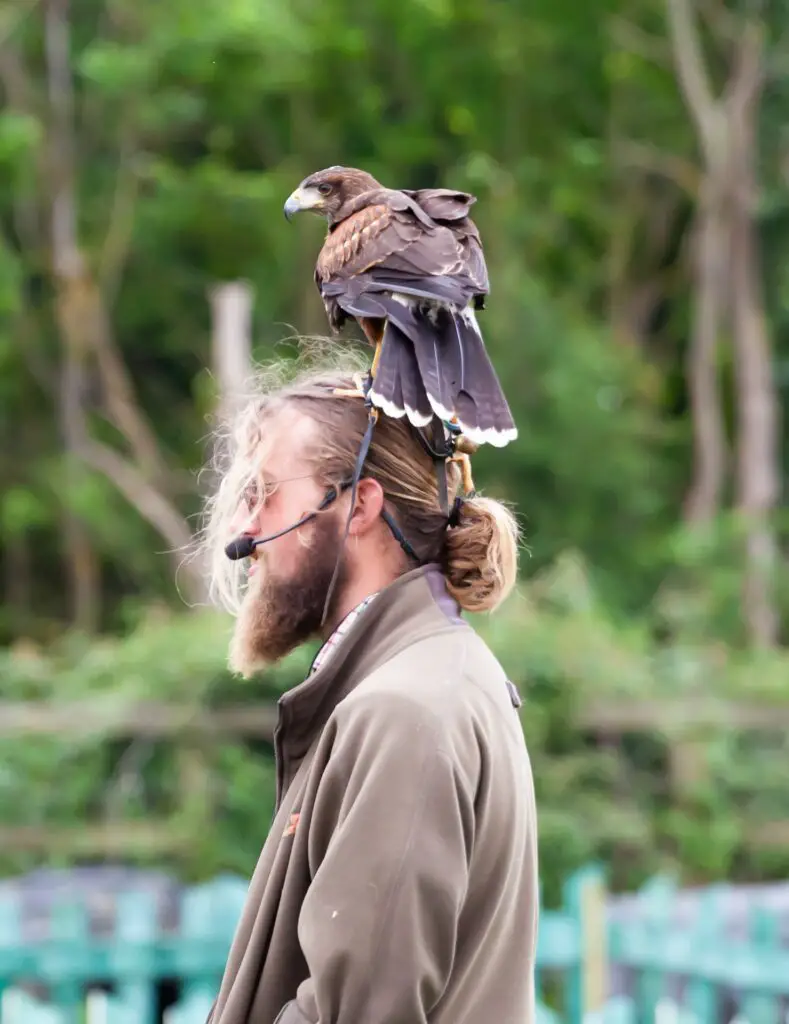
Telemetry is vital for tracking Harris’s hawk during free-flying and hunting sessions. These hawks, known for their cooperative hunting style and wide-ranging flights, benefit greatly from reliable tracking systems. Key aspects include:
- Telemetry Devices: Lightweight transmitters attach securely to the hawk.
- Real-Time Tracking: GPS technology helps me monitor the hawk’s location in real time.
- Field Data: Telemetry provides insights into the hawk’s behavior and flight patterns, enhancing training and hunting outcomes.
With these tools and techniques, training Harris’s hawk becomes an engaging and rewarding experience, leveraging their natural intelligence and sociability to create a strong falconry partnership.
Care and Maintenance
Overview: Proper Care for Harris Hawks
Harris hawks are magnificent and social birds that require thoughtful care to thrive. Their well-being depends on a combination of proper housing, health maintenance, environmental enrichment, and social interaction. Below is a detailed guide to ensure their health, performance, and overall happiness in captivity.
Housing: Spacious Mews and Weathering Yard
Harris hawks need spacious mews and a weathering yard that allows them to stretch their wings, fly short distances, and exercise safely. Exposure to natural elements like sunlight and fresh air is essential for their physical and mental health. Their environment should mimic their natural habitat as much as possible, with thoughtfully placed perches at varying heights and angles to encourage natural behaviors like perching and preening.
Preventing Foot Issues
Proper perch materials and designs are critical to preventing foot problems like bumblefoot. Perches should offer comfort and support while promoting healthy foot conditions.
Feather Maintenance: Access to Water Baths
Regular access to shallow water baths ensures feather cleanliness, promotes molting, and keeps feathers in good condition. Clean, fresh water should always be available for their hygiene and overall health.
Routine Health Checks
Routine health checks are vital to detect and address potential issues early. Regular monitoring of beak and talon conditions is essential, as overgrown or damaged beaks and talons can hinder their ability to hunt and eat effectively. Trimming and maintenance should be done carefully to avoid injury.
Environmental Enrichment
Enrichment is crucial to preventing stress, boredom, and aggression. Incorporate a variety of perches, toys, and objects to stimulate their natural instincts, such as hunting and problem-solving. Rotating perch materials and introducing bird-friendly puzzle feeders can help keep their environment engaging and dynamic.
Social Interaction
Harris hawks are naturally social and benefit from interaction with other hawks. Introduce them carefully to ensure compatibility and allow them to form bonds that mimic their cooperative behaviors in the wild. Monitor these interactions closely to prevent conflict.
Handling and Training
Spending time handling and training Harris hawks strengthens their bond with humans and ensures they remain comfortable with human interaction. This is especially important for their performance in falconry or educational demonstrations.
Balancing Physical, Mental, and Social Needs
By addressing their physical, mental, and social needs, you can create a safe and nurturing environment for Harris hawks. Proper care and maintenance allow these incredible birds to thrive and perform at their best while enjoying a high quality of life in captivity.
Legal and Ethical Considerations
While engaging in falconry, understanding the legal and ethical considerations is essential for responsible practice. As a falconer, I must navigate various regulations that govern the use of falconry birds. In the U.S., permits from the U.S. Fish & Wildlife Service and state wildlife agencies are required for both wild capture and captive breeding. Ignoring these laws can lead to severe penalties and undermine conservation efforts.
Equally important are the ethical responsibilities of falconers. We must prioritize the welfare of our birds, ensuring they are well cared for and trained without harm. Responsible hunting practices not only protect the species being hunted but also preserve the integrity of the ecosystem.
By adhering to these legal frameworks and ethical standards, we can continue to enjoy the unique partnership and connection that falconry provides with our Harris Hawks.
Hunting with a Harris Hawk
Engaging in falconry with a Harris hawk offers a unique experience, combining the thrill of the hunt with the intricate bond between falconer and bird. I’ve found that their cooperative hunting techniques, such as flush-and-chase, are essential for success. When hunting in groups, the hawks coordinate their movements, maximizing their chances of capturing prey like rabbits or pheasants.
I often utilize dogs to flush game, allowing the hawks to take flight and engage in their natural hunting behavior. While solo hunting has its merits, the excitement of group dynamics truly enhances the experience. Each hawk has its role, whether it’s casting to the sides or moving in for the kill. Observing their teamwork reveals not only their intelligence but also the beauty of their social structure.
Advantages and Challenges of Harris Hawks in Falconry
Their remarkable intelligence and adaptability stand out as significant advantages when considering Harris Hawks in falconry. However, I’ve also encountered challenges, particularly their need for social interaction, which can sometimes lead to aggressive behaviors among other birds. Understanding these dynamics is crucial for successful training and management in a falconry setting.
Pros: Intelligence, trainability, adaptability, cooperative nature
Harris Hawks stand out in falconry due to their remarkable intelligence and trainability, which significantly enhance the experience for both the falconer and the bird. Their cooperative nature is evident during hunts, where they work in groups, showcasing strategic planning that many other raptors lack. This adaptability allows them to thrive in various environments, making them a favorite among falconers.
| Trait | Description | Impact on Falconry |
| Intelligence | High capacity for learning | Quick response to training |
| Cooperative Nature | Hunts in groups | Increases hunting success |
| Adaptability | Thrives in diverse habitats | Versatile in various terrains |
| Trainability | Easily conditioned | Builds strong falconer bond |
These traits make Harris Hawks truly exceptional companions in the world of falconry.
Cons:
While the intelligence and cooperative nature of Harris Hawks make them appealing partners in falconry, their social dynamics can also present challenges. Engaging in social hunting, these birds thrive in groups, but this very trait can lead to potential aggression, especially during introductions. I’ve witnessed firsthand how improper socialization can ignite territorial disputes.
Harris Hawks can become quite dominant, and if not managed correctly, this aggression can escalate. It’s crucial to monitor their interactions closely, ensuring a harmonious environment. Additionally, falconers must facilitate social bonding while being aware of each bird’s temperament. Balancing their social needs with individual personalities is vital to prevent conflict and maintain a successful falconry experience.
Breeding and Reproduction
Understanding the breeding and reproduction of Harris’s hawks offers fascinating insights into their complex social structures and unique cooperative behaviors. These raptors are well-known for their teamwork, not just in hunting but also in raising their young. However, the differences between breeding in the wild and in captivity highlight numerous challenges and adaptations that must be considered for their successful reproduction.
1. Nesting Sites
In the wild, Harris’s hawks prefer to build their nests in elevated locations such as trees, cacti, or other tall vegetation to ensure safety from predators and provide optimal conditions for raising their chicks. These nests are often constructed using sticks, leaves, and other natural materials, placed strategically to offer both coverage and protection.
In captivity, however, providing suitable nesting sites requires careful planning. Breeders must create artificial nesting platforms or enclosures that mimic natural conditions as closely as possible. The absence of natural materials or ideal spaces can stress captive birds, making it harder for them to establish a suitable nesting environment.
2. Mating Rituals
In the wild, Harris’s hawks engage in intricate courtship rituals as a part of their bonding and mating process. These behaviors include aerial displays, such as soaring together or performing acrobatic dives, as well as mutual preening and food sharing. These rituals help strengthen pair bonds and increase the likelihood of successful mating.
In captivity, however, such behaviors may diminish due to environmental constraints or lack of space. Captive birds may not exhibit these natural courtship displays, making it essential for breeders to create an environment that encourages their innate behaviors. In some cases, introducing potential mates gradually or using visual barriers can help reduce stress and facilitate bonding.
3. Chick Rearing
One of the most fascinating aspects of Harris’s hawks is their cooperative breeding strategy. In the wild, not only do the mated pair share chick-rearing duties, but “helpers”—often older siblings or unrelated hawks—also assist in feeding and protecting the chicks. This social structure contributes to higher chick survival rates and strengthens the group dynamic.
In captivity, however, this cooperative rearing dynamic is often absent, as breeding pairs may be kept isolated. Human intervention frequently becomes necessary, with keepers taking on the responsibilities of feeding, monitoring health, and ensuring appropriate temperature and humidity levels for the chicks. While this intervention can be effective, it requires significant effort and expertise to replicate the natural advantages of cooperative care.
4. Success Rates
Reproductive success often varies significantly between wild and captive Harris’s hawks. In the wild, despite the risks posed by predators, weather, and limited food resources, cooperative breeding can result in higher fledgling numbers, as the group’s collective efforts ensure better survival.
In captivity, however, success rates are sometimes lower due to factors like stress, limited genetic diversity, and artificial environments. Stress, in particular, can interfere with breeding behaviors, while improper conditions can lead to infertile eggs or poor chick development.
Breeders must pay close attention to diet, habitat enrichment, and overall health to improve outcomes. Advances in artificial incubation and hand-rearing techniques have helped address some of these challenges, but they cannot fully replicate the benefits of natural social interactions.
The Importance of Cooperative Breeding
Harris’s hawks are one of the few raptor species that engage in cooperative breeding, making them a unique and intriguing subject for both falconers and ornithologists. Their social structure, which revolves around teamwork and shared responsibilities, sets them apart from most other birds of prey.
In captivity, preserving this social dynamic poses a significant challenge, but understanding it is critical for breeding programs. Whether in the wild or captivity, supporting these hawks’ natural behaviors is essential for their long-term survival and wellbeing.
Conclusion
In conclusion, Harris hawks stand out in the realm of falconry due to their remarkable sociability and adaptability. Their cooperative hunting strategies and impressive trainability make them an ideal choice for both novice and experienced falconers. While they require careful management and understanding, the rewards of working with these intelligent birds are immense.
Fascinated by the unique traits of Harris hawks in falconry? Dive deeper into their hunting strategies, training techniques, and care essentials. Explore more insights and expert knowledge—your journey into falconry starts here!