
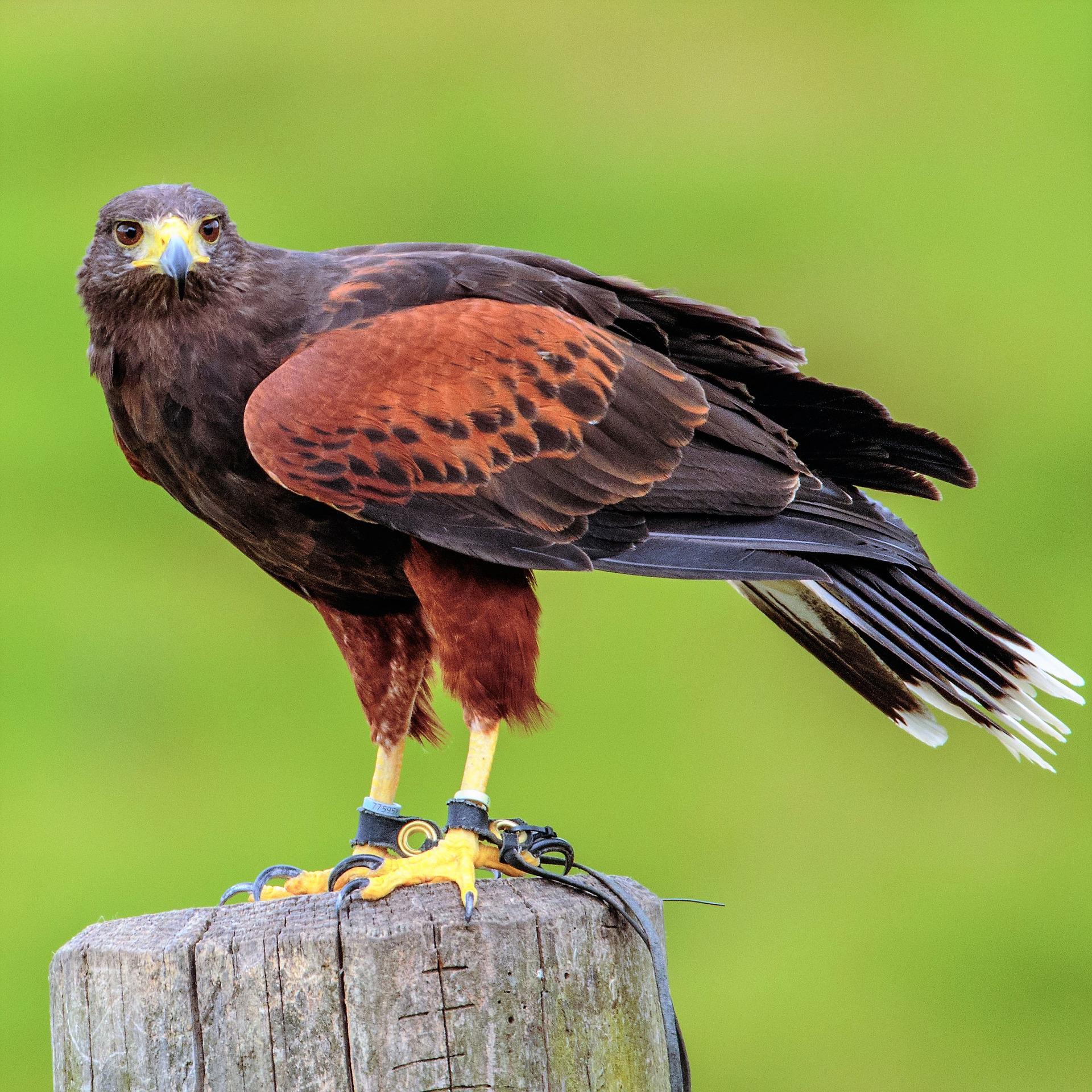
Harris hawks have a deep-rooted history in falconry that dates back over 2000 years. Their hunting prowess and adaptability have made them a popular choice in falconry, and today, they are one of the most common raptors used in the sport. Harris hawks are the only raptors that can hunt in groups, demonstrating their popularity in the falconry trade due to their unique ability. Let me share with you the history behind these amazing raptors.
The history behind Harris Hawks
The Harris Hawk, scientifically known as Parabuteo unicinctus, has traversed the arid regions of the Americas for centuries, captivating observers with its unique social structure and hunting behavior. The history of Harris hawks dates back to ancient times when these raptors were used for falconry by the Aztecs and other indigenous tribes in North America. The word “Harris” comes from the surname of Reverend Edward Harris.
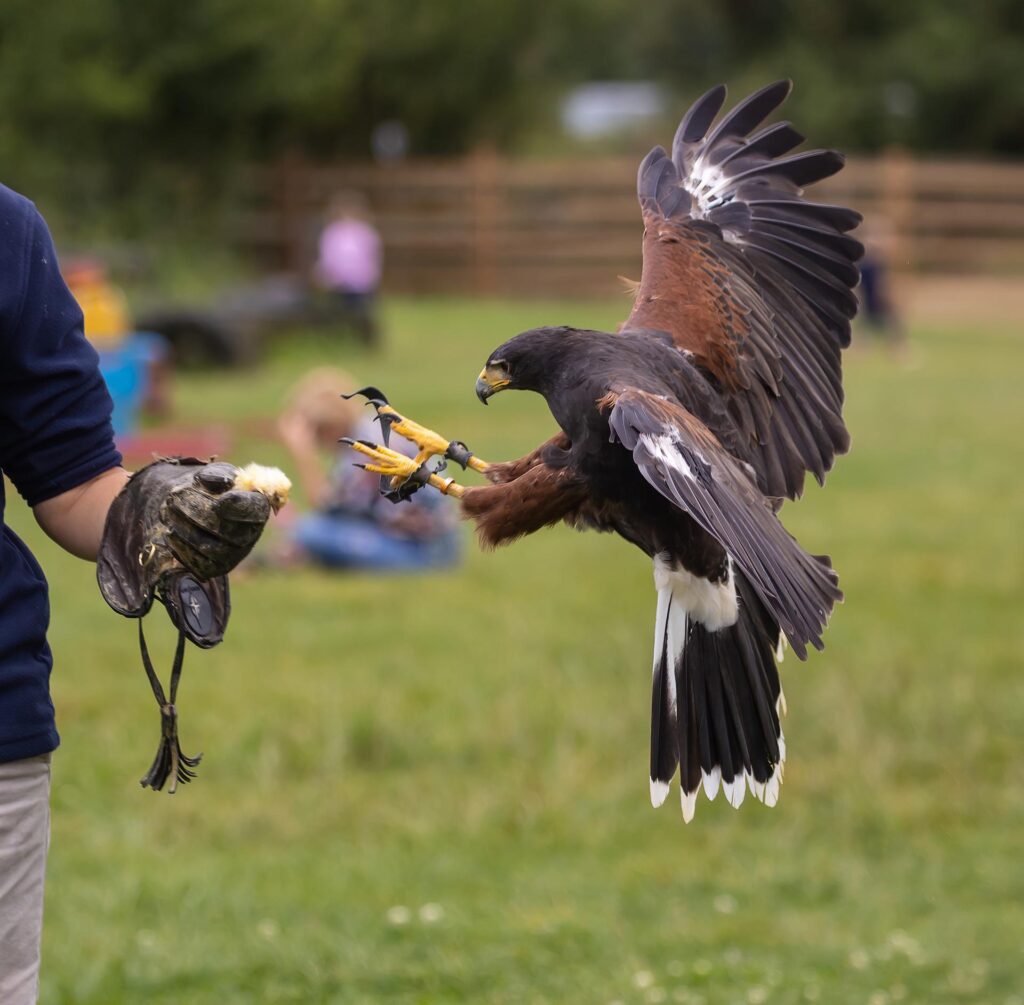
In the late 1800s, Harris hawks were imported to Europe from the southwestern United States and northern Mexico, where they were used by farmers for pest control. The popularity of these birds as hunting partners grew, and they soon became a common choice for falconers.
In modern times, Harris hawks are widely distributed in their native range from southern Arizona to Argentina. They have also been introduced to countries such as Spain, Portugal, and the United Kingdom for falconry purposes.
The evolutionary origins of Harris Hawks point to their adaptation to the sparse desert landscapes, where food scarcity demanded innovative survival techniques. These birds have learned to not only share food but also to execute strategic roles during a hunt—features that have made them stand out in the avian world. Historical records from Native American tribes and early settlers emphasize the presence of Harris Hawks in spiritual narratives and folklore, indicating the bird’s significance and longstanding presence in human culture.
During the 19th and 20th centuries, the allure of Harris Hawks reached beyond the Americas, captivating bird enthusiasts and falconers around the globe. Their trainable nature and social inclination towards humans made them ideal candidates for falconry, a practice that significantly contributed to research on their behavior and conservation.
Today, Harris Hawks continue to thrive in their natural habitats, although they face challenges from habitat loss and degradation. Conservation efforts aim to preserve the environments critical to the survival of these remarkable birds, ensuring future generations can marvel at their cooperative hunts and social intricacies.
When were Harris hawks first used in falconry?
Harris Hawks have a long history of being used in falconry, dating back to ancient times. Falconry, also known as hawking, is a sport that involves training birds of prey to hunt game animals. It originated in the Middle East and Central Asia around 2000 BC and has been practiced by various cultures throughout history.
Records show that Harris Hawks were used in falconry during the reign of King Henry VIII of England in the 16th century. It is believed that Harris Hawks were one of the most commonly used birds for falconry during this time due to their exceptional hunting abilities and adaptability to various terrains.
Today, falconry is practiced as a traditional art and sport in many parts of the world. Harris Hawks continue to be highly sought-after birds for their intelligence, agility, and cooperation. They are also used for educational purposes to raise awareness about conservation efforts and promote the importance of protecting these magnificent creatures.
Where do Harris Hawks originate from
The Harris Hawk, a fascinating bird of prey, originates from the arid landscapes of the southwestern United States, stretching down through Mexico and into South America. These regions, characterized by their desert environments and sparse vegetation, nurtured the unique social and hunting behaviors that distinguish Harris Hawks from other raptors.
Historically, the prowess and intelligence of Harris Hawks did not go unnoticed by human cultures that encountered them.

Among these were ancient tribes, including the Aztecs circa the 14th to 16th centuries, who revered these birds for their remarkable hunting abilities. The Aztecs, known for their deep spiritual connections with nature, regarded the Harris Hawk as both a symbol of power and a practical hunting ally.
Similarly, peoples from Asia and the Middle East have utilized Harris Hawks in the art of falconry since as early as 2000 BC. In these regions, where falconry emerged as both a form of hunting and a cultural tradition, the Harris Hawk’s cooperative hunting strategies and ability to form bonds with humans made them esteemed participants. The bird’s adaptability and keen hunting skills were highly valued in these societies, where they contributed to the longstanding heritage of falconry that continues to this day.
These ancient interactions highlight the cross-cultural admiration and utility of Harris Hawks throughout history. Their origins in the harsh landscapes of the Americas perhaps predestined their resilience and versatility, traits that have captivated and benefited human societies across millennia.
As a falconer with years of experience working with Harris Hawks, I can attest to their rich history and remarkable characteristics. Originating from the deserts of the southwestern United States and parts of South America, these intelligent birds have been used in falconry for centuries. Their cooperative nature, hunting prowess, and adaptability make them a favorite among falconers worldwide.