

Building a strong bond with my Harris hawk is crucial for effective training, and I cannot stress enough how important it is to spend as much time with your raptor as possible. Bonding exercises and quality time together deepen our connection beyond training sessions. Each interaction strengthens our bond, providing a seamless and rewarding training experience. Together, we build trust and gain understanding, as well as companionship. So, let me guide you on how you can achieve this with the information I provide throughout this post.
Understanding Harris Hawk Behavior
As a falconer with years of experience, I’ve come to understand that observing Harris Hawk’s behavior is crucial for successful training. These birds exhibit fascinating behavioral patterns that can pose both training challenges and opportunities for building a strong bond. Understanding their prey instincts is fundamental; it shapes their interactions during training sessions and hunts. When working with them, establishing trust is key. Harris Hawks are social birds and form strong bonds with their handlers. Building a bond based on trust and respect will ultimately result in a successful training experience for both the hawk and the trainer.
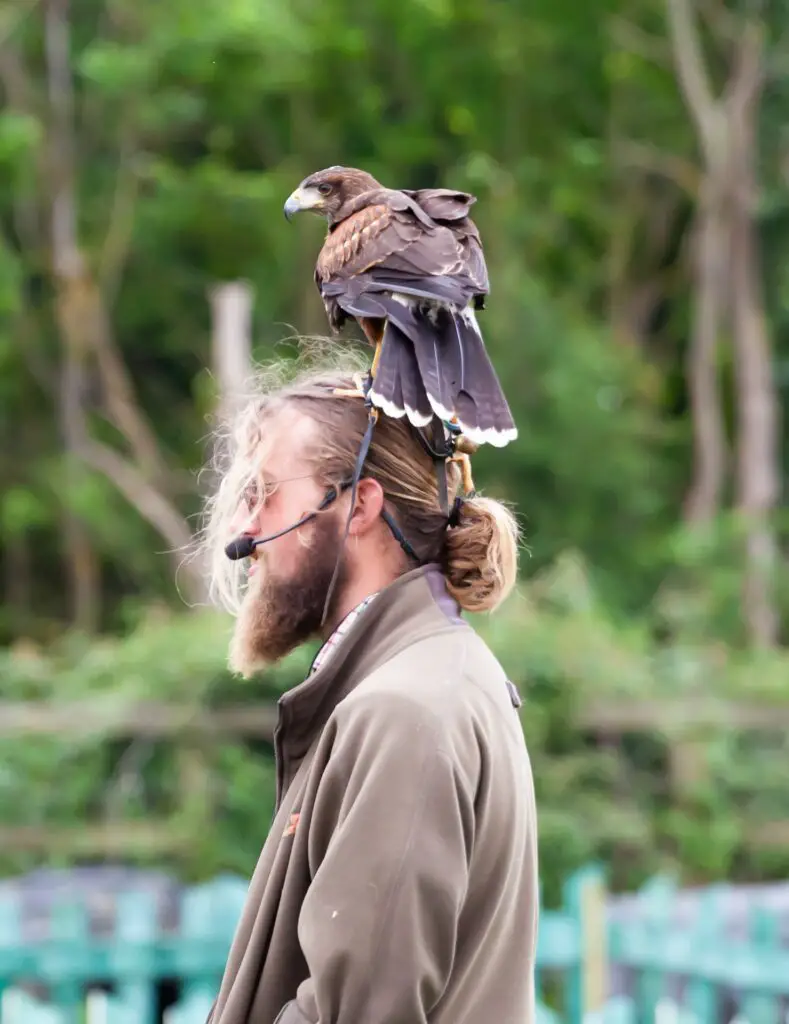
Importance of Body Language
Harris Hawks are highly communicative birds, using body language to convey emotions and intentions. As their handler, it’s essential to be aware of these cues to understand their mood and readiness. An aggressive or stressed hawk will show different body language than a calm and content one. Learning to read these cues is critical for establishing trust and avoiding any potential negative interactions during training. Harris Hawks can also learn to recognize human body language, making it important to remain consistent in your own movements and gestures while handling them.
Effective Communication Strategies
Observing the subtle cues and body language of Harris Hawks is key to developing effective communication strategies with these remarkable birds. Understanding their body language cues, such as feather position and eye contact, helps me gauge their mood and readiness to engage in training. Vocal cues are also crucial; I can better interpret their needs and responses by listening to their different calls and pitches during our interactions.
A reward system is fundamental in reinforcing positive behaviors and strengthening our bond. I use their favorite treats to show appreciation for desired actions and encourage them to repeat those behaviors. Trust exercises play a significant role in building a strong connection with my Harris Hawk. By engaging in activities that require mutual reliance and cooperation, we establish a foundation of trust that enhances our communication and partnership.
Consistency training is essential to establish clear expectations and boundaries. By consistently applying rules and commands, my Harris Hawk learns to understand what is expected of them, leading to more effective communication and a harmonious training experience.
Implementing Positive Reinforcement Techniques
Positive reinforcement is pivotal in building trust and a bond with a raptor, such as a Harris Hawk. Based on rewarding desired behavior, this technique establishes an environment of mutual respect and understanding. When a raptor experiences positive outcomes as a direct result of its actions, be it through treats, verbal praise, or affectionate gestures, it learns to associate those actions with positive feedback, encouraging repetition of the behavior. This accelerates learning and strengthens the emotional bond between the trainer and the bird.
Being intelligent and sensitive creatures, Raptors respond more favorably to encouragement and rewards rather than punishment or fear-based methods. Positive reinforcement emphasizes communication and trust, creating a safe space for the bird to learn and express itself. This method fosters a cooperative relationship, where the raptor is an active and willing participant in the training process rather than a submissive follower. In essence, positive reinforcement is about teaching specific behaviors and nurturing a deep, trusting relationship that is beneficial for both the raptor and the trainer.
Establishing Mutual Respect and Communication
Establishing mutual respect and effective communication forms the bedrock of a harmonious and successful bond with a Harris Hawk. Trust building is key; it is nurtured through consistent training and positive interactions. Bonding exercises, such as spending time together and engaging in activities like flying or feeding, are crucial for developing a strong connection. I find that respecting the hawk’s boundaries and signals is fundamental to building a solid foundation of trust and understanding.
Communication cues play a vital role in our relationship. Understanding the hawk’s body language, vocalizations, and responses to different stimuli is essential for effective interaction. By observing and interpreting these cues, I can adjust my training methods accordingly and ensure that we are on the same page.
As our training progresses, I constantly reinforce the foundation of respect we have established. Clear communication and mutual trust are the pillars that support our bond, allowing us to work together seamlessly toward our goals. Our partnership grows stronger with each successful training session, highlighting the importance of mutual respect and effective communication in building a deep connection with my Harris Hawk.
Spending Quality time together
Spending quality time is essential for nurturing the bond between a Harris Hawk and its handler. To strengthen this unique relationship, I ensure our time is filled with meaningful activities that deepen our connection. Here’s how we make the most of our moments together:
- Outdoor adventures: Exploring new terrains and allowing my Harris Hawk to soar through the skies keeps her physically active and fosters a sense of freedom and companionship between us.
- Trust exercises: Engaging in trust-building exercises such as target training and flight recall helps us establish a strong foundation of trust and mutual understanding, which is essential for successful training sessions.
- Shared experiences: Whether it’s a quiet walk in nature or participating in falconry demonstrations together, sharing these moments creates lasting memories and strengthens the bond we have built through quality time spent together.
- Simply spend time with your raptor – I communicate with my bird at any opportunity, even if we are both chilling while watching a movie. Being present and spending time together creates a sense of companionship and trust.

Through these varied experiences, our relationship transcends mere training sessions, evolving into a profound connection based on trust, respect, and shared adventures.
Strengthening the Bond Through Consistency
Consistency forms the backbone of our bond, weaving a tapestry of trust and understanding between myself and my Harris Hawk. Daily routines are the cornerstone of our relationship, providing a sense of stability and predictability that my hawk thrives on. Through shared experiences day in and day out, we establish a rhythm that deepens our connection. Each training session becomes a building block, incrementally strengthening our bond.
Tracking our training progress allows me to tailor our interactions to suit my hawk’s needs, ensuring that every session is productive and rewarding. Trust building is gradual, but my hawk learns to rely on me as a dependable partner through consistent efforts.
Building a strong bond and trust with my Harris hawk during training has been rewarding. We have established mutual respect by understanding her behavior, using effective communication strategies, and implementing positive reinforcement techniques. Spending quality time together and being consistent in our training has only strengthened our bond. Through patience, dedication, and love, our partnership grows stronger daily.