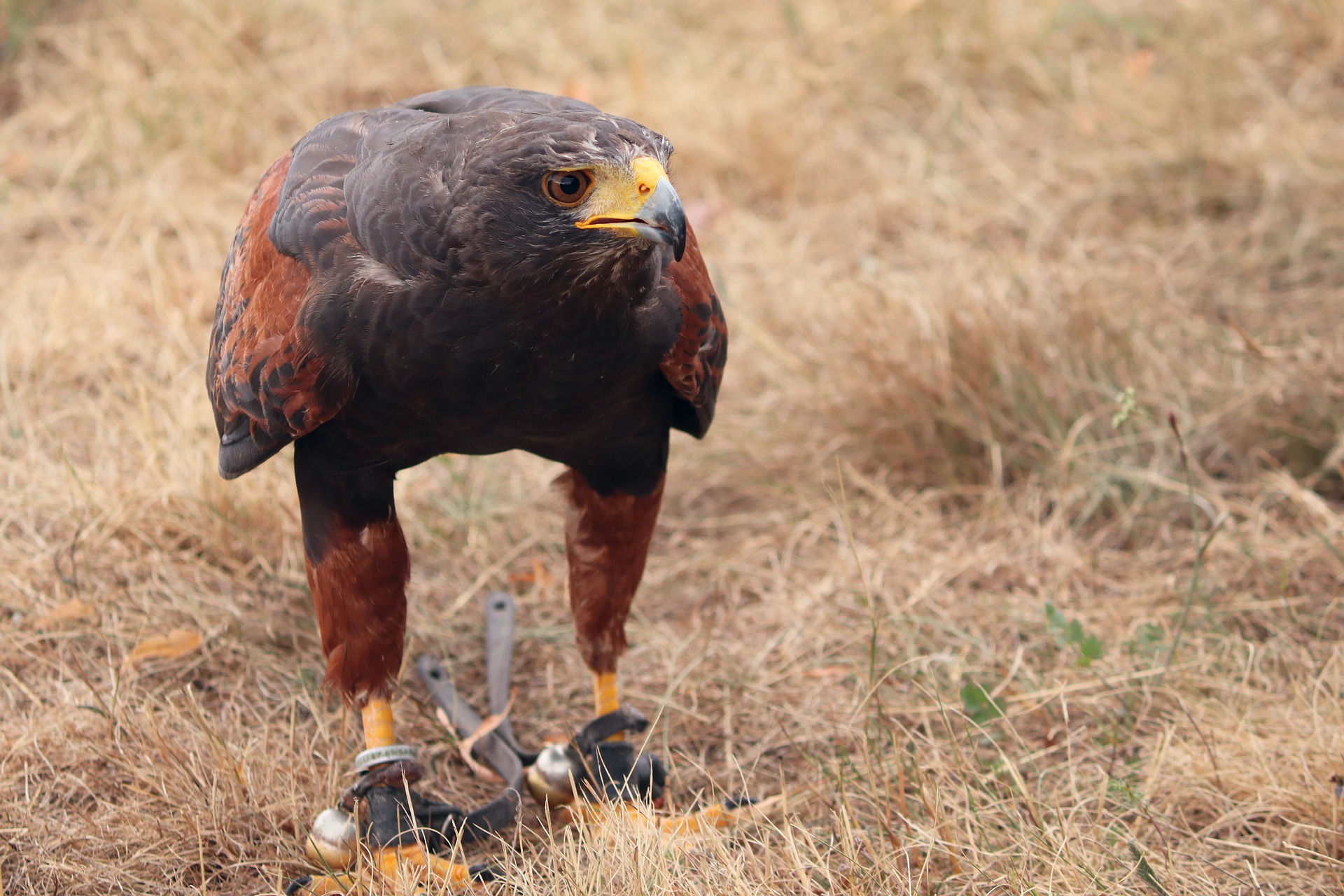
How do you establish a strong bond with your Harris Hawks that leads to successful training sessions? Through patience, consistency, and understanding, my journey in training these magnificent birds has been both challenging and rewarding. From the initial steps of building trust to the intricacies of hunting training, each phase requires a unique approach and dedication. By sharing my experiences and insights, you can gain valuable tips on developing a harmonious relationship with your Harris Hawks and achieving training success.
Trust Building and Bonding
Establishing trust with Harris Hawks is crucial to successful training. I achieve this through consistent positive reinforcement and instant rewards for good behaviour. By building a strong bond grounded in mutual respect and understanding, I create a partnership based on trust and cooperation.
How I establish trust through positive reinforcement
Using positive reinforcement techniques, I forge a deep bond of trust with my Harris Hawks, creating a strong foundation for our training journey together. Trust-building techniques are crucial when working with birds of prey. By consistently rewarding desired behaviours like responding to commands or flying back to me, I establish mutual respect and understanding with my hawks. These positive reinforcement strategies not only build trust through rewards but also strengthen the bond I share with my feathered companions. Each interaction becomes an opportunity for bonding with Harris Hawks, deepening our connection and fostering a harmonious partnership. Through patience, consistency, and a genuine love for these magnificent creatures, I lay the groundwork for a successful training experience based on trust and positive reinforcement.

Building a strong bond based on mutual respect and understanding.
In nurturing a deep bond with my Harris Hawks, the foundation of mutual respect and understanding is paramount for our successful training journey together. Bonding exercises, such as spending quality time together, going on walks, and engaging in activities that strengthen our connection, are crucial. I pay close attention to communication cues, learning to understand their body language and vocalizations to respond appropriately. Trust development is a gradual process that involves consistency, patience, and positive reinforcement. Respect training forms the basis of our interactions, where I set boundaries and expectations while acknowledging their individual personalities. Understanding behaviour is key; observing and interpreting their actions helps me tailor our training sessions to suit their needs, fostering a harmonious relationship built on trust and mutual understanding.
Basic Handling
When handling Harris hawks, the initial step involves introducing them to my presence and touch calmly and reassuringly. This process lays the foundation for building trust and establishing a cooperative relationship during our sessions. Teaching the hawk to remain composed and relaxed during handling is crucial for their well-being and our successful training endeavours.
Introducing the hawk to my presence and touch.
Approaching the Harris hawk slowly and confidently, I extend my hand towards the raptor as our connection begins to form. Patience and persistence were key as I introduced myself to the hawk, ensuring gentle handling and a slow progression in our interactions. Building trust was paramount, requiring a consistent approach to reassure the hawk of my intentions. Each touch, each moment spent together, was a step towards establishing a bond built on mutual respect and understanding. The hawk’s responses guided my actions, shaping our budding relationship with each interaction. The foundation for our future partnership was delicately laid through calm and deliberate movements.
Teaching the hawk to remain calm and cooperative during handling sessions.
With a steady hand and a calm demeanour, I guide my Harris hawks through basic handling techniques, fostering cooperative and composed behaviour during our sessions together. To achieve this, I employ the following methods:
- Calm Behavior: By maintaining a tranquil atmosphere and projecting a sense of ease, I help the hawk feel secure and relaxed during handling.
- Cooperative Training: Encouraging the hawk to participate willingly in handling exercises strengthens our bond and promotes a positive training experience.
- Gentle Handling: Using soft, controlled movements when interacting with the hawk reinforces trust and aids in developing a harmonious relationship.
- Trust Exercises: Implementing exercises that build trust, such as target training and positive reinforcement, instils confidence in the hawk and enhances cooperation.
Tethering and Leash Training
When beginning tethering and leash training with my Harris hawk, I focus on introducing the jesses and gradually teaching acceptance of restraint. Familiarizing my hawk with the tethering equipment is crucial, ensuring both comfort and compliance for successful training sessions. It’s a delicate process that requires patience and a deep understanding of my hawk’s behaviour and responses.
I introduced my hawk to its leash (jesses) and taught it to accept restraint.
I introduced my hawk to its leash, gently guiding it to accept restraint with patience and consistency. Here’s how I approached this crucial step:
- Leash Introduction & Restraint Acceptance: Gradually acclimating the hawk to the leash, starting with short periods and increasing duration over time.
- Jesse Training & Trust Building: Using positive reinforcement to associate the jesses with positive experiences, fostering trust between the hawk and me.
- Handling Techniques & Calm Cooperation: Employing gentle handling methods to ensure the hawk remains calm and cooperative during the training process.
- Tethering Equipment & Comfort Compliance: Choosing comfortable, well-fitted equipment to guarantee the hawk’s comfort and compliance during training sessions.
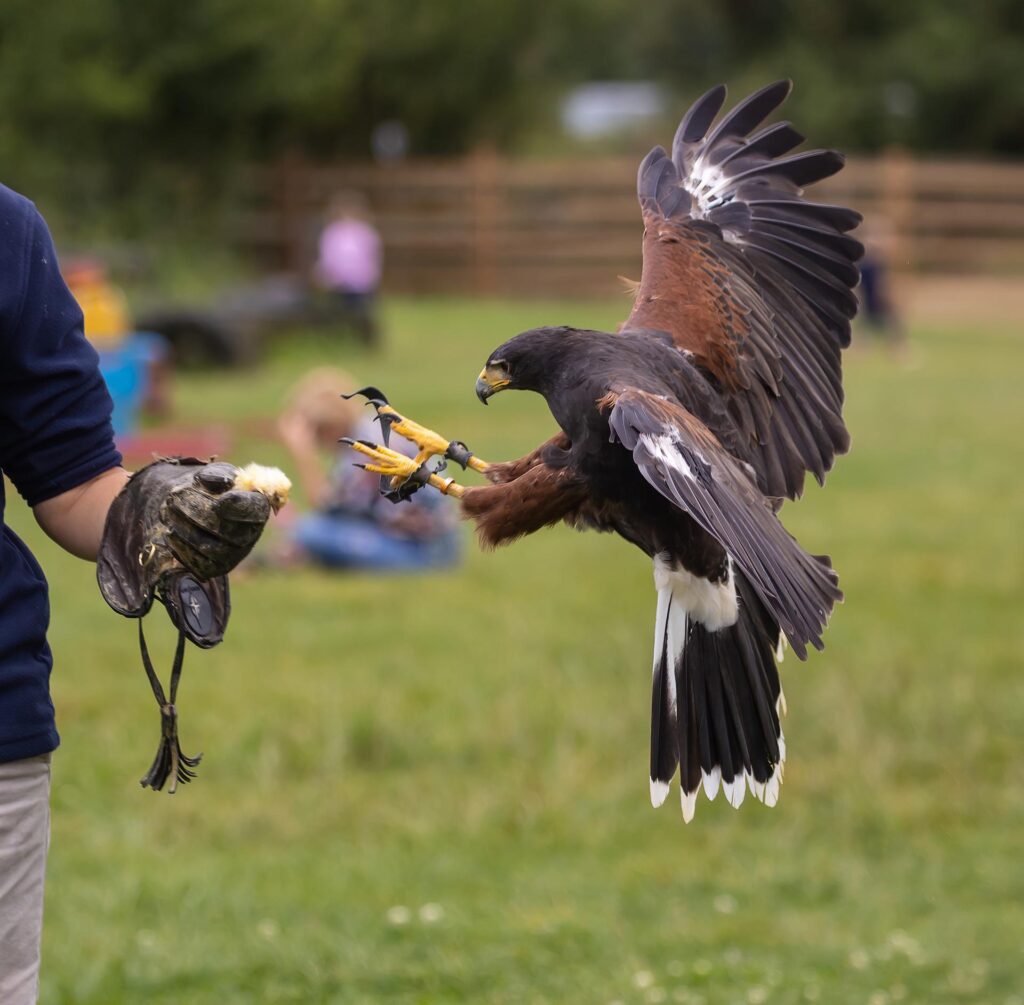
Familiarizing my hawk with tethering equipment and ensuring comfort and compliance.
Ensuring my hawk’s comfort and compliance starts with introducing it to the tethering equipment gradually and positively. I carefully familiarize my hawk with the leash and other tethering gear, ensuring it feels at ease and not restricted. By employing various tethering techniques, I guide my hawk through the process, making adjustments as needed based on its reactions. As the training progresses, I focus on rewarding desirable behaviours and providing encouragement to strengthen our bond and build trust. This trust-building process is crucial for establishing a strong connection with my hawk, leading to better compliance and a more satisfying training experience.
Response to Commands
When training my Harris Hawk, mastering its response to commands was crucial. Recall training was a key step in ensuring my hawk would promptly return when called. Perching training and creance training further solidified our communication bond, allowing my hawk to perch and fly to my glove with precision.
Recall training: Teaching my hawk to return promptly when called.
Implementing a consistent training routine has been key in teaching my hawk to promptly return when called. To achieve this, I focused on the following strategies:
- Recall Efficiency: Training short, frequent recall sessions ensured my hawk understood the command quickly.
- Training Consistency: Regular training sessions at the same time each day helped reinforce the behaviour.
- Reinforcement Strategies: Positive reinforcement with treats and praise motivated my hawk to respond promptly.
- Engagement Techniques: Using interactive toys during training sessions kept my hawk engaged and eager to return when called.
These methods, combined with patience and persistence, have led to a prompt response from my hawk when summoned.
Perching training: Training my hawk to perch on my glove or designated perches.
I’ve honed my technique for training my hawk to perch on my glove or designated perches by utilizing consistent commands and positive reinforcement. When it comes to perching posture, I ensure my hawk stands tall and alert, showing confidence in its surroundings. Perch selection is crucial; I pick sturdy, safe perches that mimic natural settings. Comfort is key, so I ensure my glove is well-padded and securely fits. During training sessions, I gradually increase perching duration, starting with short periods and extending as the hawk becomes more accustomed. Using various perch training techniques, such as target training and shaping behaviour, I encourage my hawk to perch reliably and comfortably, fostering a strong bond built on trust and cooperation.
Creance training: Using a long line (creance) to teach my hawk to fly to the glove and return reliably.
Skillfully utilizing a long line, I guide my Harris hawk through creance training to master the art of flying to the glove and returning reliably, responding promptly to commands with precision and grace.
Key Points:
- Flight Recall: Teaching my hawk to respond swiftly to recall commands, ensuring a seamless return to the glove.
- Training Progress: Monitoring improvements in flight accuracy and speed as training sessions progress.
- Distance Control: Fine-tuning the hawk’s ability to gauge distances accurately for a successful flight.
- Flight Behavior: Observing and adjusting flight behaviours to enhance agility and responsiveness.
This phase of training is crucial for building a strong connection with my hawk and fostering trust and reliability in our partnership. We strengthen our bond through consistent practice and positive reinforcement while honing essential flying skills.
Hunting Training
When training my Harris hawk for hunting, I begin by introducing it to different prey species and hunting environments. I then move on to lure training, where I teach my hawk to pursue a lure that mimics natural prey behaviour. Finally, field training becomes crucial as I take my hawk out to practice hunting behaviours in real-life scenarios under controlled conditions.
Introducing my hawk to potential prey species and hunting environments.
As I prepare to introduce my Harris hawk to potential prey species and diverse hunting environments, it is crucial to approach this phase with patience and strategic planning.
Key Steps:
- Prey introduction, habitat exploration: Gradually expose the hawk to different prey species in various habitats to build familiarity.
- Simulation exercises, prey encounters: Engage in simulated hunting scenarios to allow the hawk to experience prey encounters in a controlled environment.
- Adaptation challenges, hunting scenarios: Present the hawk with challenges that mimic real hunting situations to enhance its adaptability.
- Prey response, environmental cues: Observe the hawk’s responses to different prey and environmental cues to tailor further training.
Lure training: Teaching my hawk to pursue a lure mimicking prey behaviour.
In the art of training a Harris hawk, one pivotal aspect is mastering lure training to instil the instinctual drive for pursuing prey-like lures. Flight simulation plays a crucial role in this training phase. By creating a lure that mimics the movements of prey, such as a bird or small mammal, I engage the hawk’s natural hunting instincts. Through target training, the hawk learns to focus its attention on the lure, honing its accuracy and agility in flight. Behavioural shaping techniques help refine the hawk’s responses, ensuring it follows the lure with precision and determination. Motivation techniques, like rewarding successful pursuits, further encourage the hawk’s enthusiasm for chasing the lure, laying a solid foundation for future hunting endeavours.

Field training: Taking my hawk into the field to practice hunting behaviours under controlled conditions.
Having honed my hawk’s instinctual drive through lure training, the next step is to take my bird into the field to put its hunting behaviors to the test under controlled conditions.
Key Aspects of Field Training:
- Field Techniques: Implementing effective strategies for hunting scenarios.
- Prey Simulation: Utilizing realistic prey-like objects for practice.
- Controlled Hunting: Ensuring a safe environment for the hawk to showcase its skills.
- Behaviour Observation: Analyzing the hawk’s actions and reactions during the hunt.
Field training allows me to witness firsthand the progress my hawk has made in its hunting abilities. By carefully observing its behaviour in these controlled settings, I can track the training progress and make necessary adjustments to enhance its skills further.
Positive Reinforcement and Encouragement
When training Harris Hawks, positive reinforcement and encouragement play a vital role in shaping their behaviour. By rewarding desired actions with verbal praise, treats, or other incentives, you create an environment where the hawks are motivated to excel. This positive approach fosters a strong bond between the handler and the bird, leading to successful training outcomes.
Using positive reinforcement techniques to reward desired behaviours.
Employing positive reinforcement techniques empowers trainers to effectively reward desired behaviours in Harris Hawks, fostering a strong bond between the bird and the handler. When training these magnificent birds, I have found the following techniques to be particularly effective:
- Clicker training: Using a clicker to mark correct behaviours helps the hawk understand exactly what action is being rewarded.
- Target training: Teaching the hawk to touch a target stick helps in guiding their movements during training sessions.
- Food rewards: Offering small pieces of food as a reward reinforces positive behaviours and motivates the hawk to continue learning.
- Training schedule: Consistency in training sessions helps reinforce the desired behaviours and maintain progress over time.
Providing verbal praise, treats, or other rewards to reinforce successful training outcomes.
To enhance training progress with Harris Hawks, I use verbal praise, treats, and rewards to reinforce successful outcomes, creating a positive learning environment. Clicker training marks desired behaviours, followed by treatment dispensing to solidify positive associations. Clear verbal cues help hawks understand expectations, leading to smoother sessions. Play rewards keep birds engaged and motivated. This approach has contributed to progress, with hawks eager to learn and respond effectively. Reinforcement techniques have built a harmonious bond, fostering success in training.
Monitoring Progress and Adjustments
Regularly assess the hawk’s progress and adjust training methods as needed.
Regularly evaluating the hawk’s progress and adapting training techniques accordingly is crucial for fostering growth and success in falconry.
Key Steps for Monitoring Progress and Adjustments:
- Progress Evaluation: Tracking improvements in hunting skills and obedience.
- Training Adjustments: Modifying techniques based on the hawk’s responses and performance.
- Performance Assessment: Analyzing the effectiveness of training sessions and adjustments made.
- Skill Development: Focusing on enhancing the hawk’s abilities through tailored training methods.
Assessing the hawk’s development in areas such as hunting proficiency and responsiveness to commands allows for targeted interventions. By continuously evaluating its progress and adjusting training methods as needed, the hawk’s skills can be honed, leading to a stronger bond between falconer and bird.
Being attentive to the hawk’s responses and adapting training techniques to suit its individual needs and preferences.
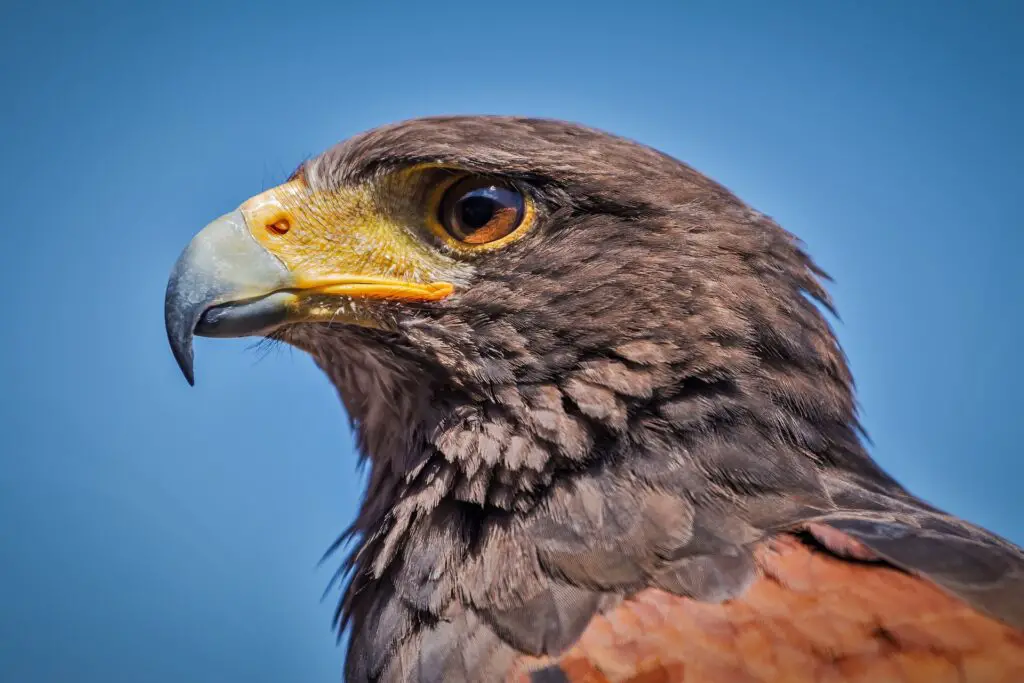
Attending closely to the hawk’s reactions and adjusting training techniques accordingly plays a pivotal role in nurturing a successful partnership between falconer and bird. Understanding the individualized training methods required for each hawk is crucial. The hawk’s communication cues, whether subtle or overt, guide my approach. By observing their body language, vocalizations, and overall demeanour, I tailor my training strategies to suit their needs. This adaptive training approach ensures that the hawk remains engaged and responsive throughout our sessions. A tailored approach not only fosters trust and respect but also enhances the effectiveness of the training. My personalized training techniques are a reflection of my commitment to the unique bond I share with each of my Harris Hawks.
| Training Methods | Description |
| Positive Reinforcement | Rewarding desired behaviours with treats or praise. |
| Free-Flight Training | Allowing the hawk to fly freely and return on command. |
| Enrichment Activities | Providing mental stimulation through hunting simulations. |
Training my Harris Hawks has been a journey filled with trust, patience, and dedication. Building a strong bond with these magnificent birds has been the key to our success. Through consistent handling, positive reinforcement, and hunting training, they have developed into skilled and responsive companions. I am proud of how far we have come together and look forward to continuing our journey of growth and success.