
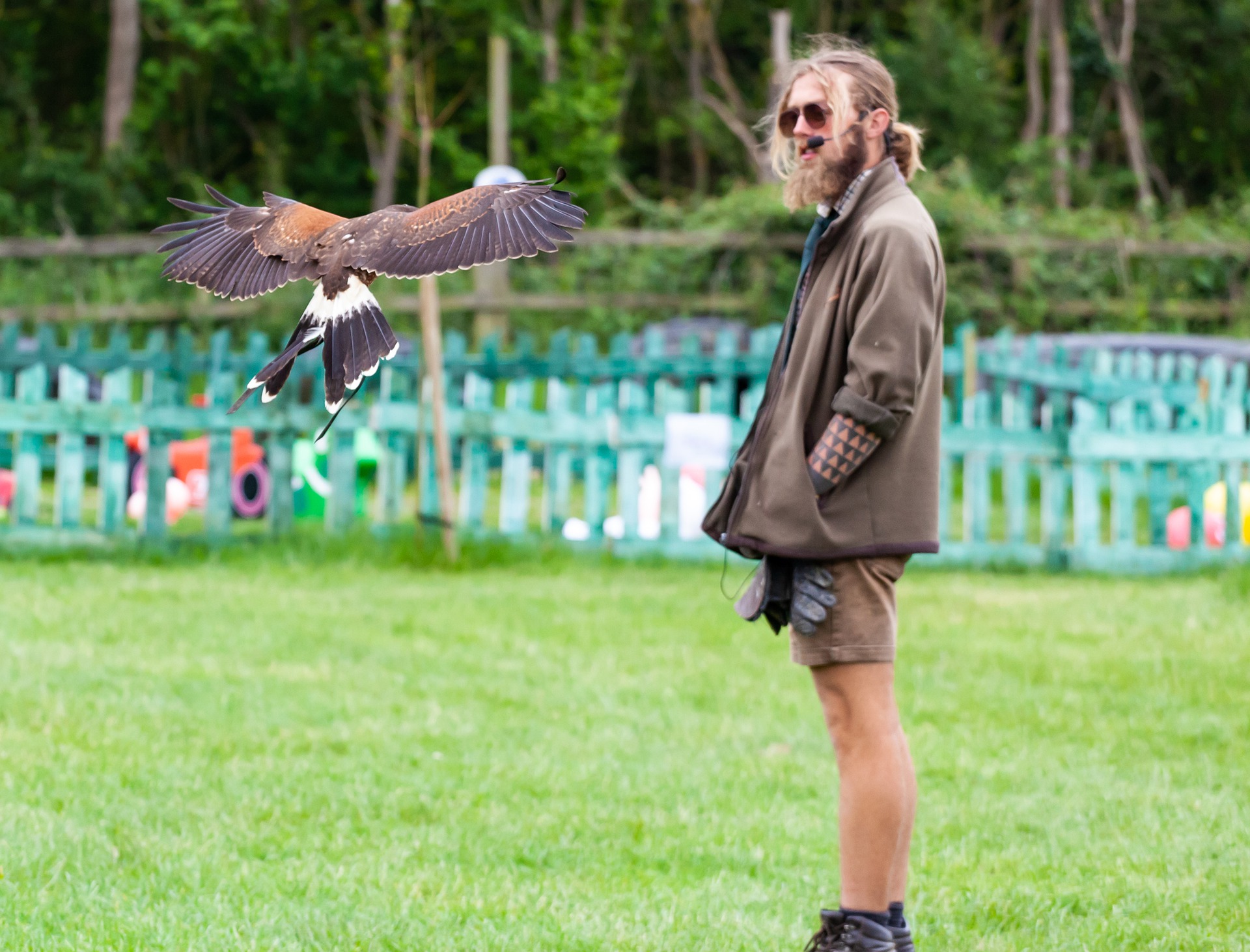
When it comes to falconry, one question that often arises is, ‘Are hawks easy to train?’ The answer, much like the birds themselves, is not quite black and white. Hawks possess unique characteristics that both aid and complicate the training process.
In this discussion, we will talk about the factors that influence the ease of training hawks for falconry and the challenges that arise.
How trainable are hawks for falconry compared to other birds?
Hawks, in general, are highly trainable for falconry compared to other birds, making them a popular choice among falconers. Their natural intelligence and keen instincts make them responsive to training and capable of learning a wide range of skills. Unlike some other birds, hawks have a strong bond with their handlers, which allows for effective communication and cooperation during falconry activities.
Hawks are easier to train for falconry due to their natural hunting instincts. These birds have an innate drive to hunt and capture prey, which can be refined through training. Falconers can tap into this instinct by using positive reinforcement techniques, like rewarding the hawk with food or praise for desired behaviours. This motivates the hawk to repeat those behaviours and develop the necessary skills for successful falconry.
Which hawks are the easiest to train?
While all hawks have the potential to be trained for falconry, some species are known to be more responsive and easier to train compared to others. The easiest hawk to train may vary depending on individual characteristics and training methods, but here are a few species that I’ve trained for falconry:
- Red-tailed Hawks – These hawks are often considered the best for beginner falconers due to their adaptability and forgiving nature. They are quick learners, and once they establish a bond with their handler, they become highly responsive to training.
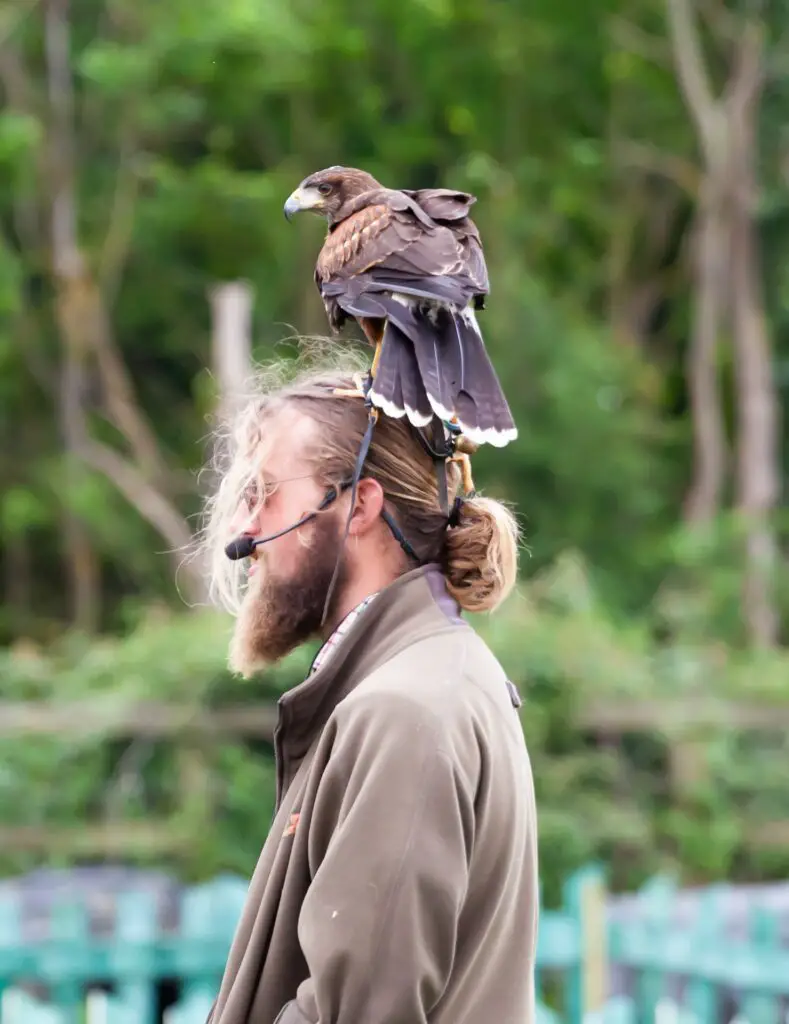
- Harris’s Hawks – These hawks have a strong social structure and thrive in groups, making them highly trainable for falconry activities involving multiple birds. They are very intelligent and can learn a variety of skills, from hunting to flying in formation.
- Cooper’s Hawks – These hawks have excellent agility and are known for their ability to manoeuvre through forests and catch prey on the wing. They are highly trainable for falconry, but their high energy levels require consistent training and exercise.
What factors influence the ease of training hawks for falconry?
Factors such as the age and temperament of the hawk, as well as the experience and training techniques of the falconer, can greatly influence the ease of training hawks for falconry. When it comes to age, younger hawks are generally easier to train than older ones. Young hawks are more adaptable and can learn new skills more quickly. However, it’s important to note that even older hawks can be trained with patience and perseverance.
I find that temperament also plays a crucial role in training hawks. Some hawks may have a more docile and cooperative temperament, making them easier to handle and train. On the other hand, some hawks may be more aggressive or independent, which can pose challenges during training. Understanding the individual temperament of the hawk and adjusting the training methods accordingly is essential for successful falconry training.
What methods effectively train hawks for falconry?
Effective methods for training hawks in falconry involve positive reinforcement techniques and consistent, patient efforts to establish trust and cooperation with the bird. By utilizing positive reinforcement, you can reward desired behaviours and encourage the hawk to repeat them. This can be done through the use of treats, such as small pieces of meat, which can be given to the bird when it displays the desired behaviour, such as returning to your glove or following commands.
Consistency is key when training a hawk for falconry. By providing regular training sessions and sticking to a routine, you can help the bird understand what’s expected of it. It’s important to be patient and understanding during the training process, as hawks are wild creatures and may take time to adjust to being handled and trained.
Building trust with your hawk is crucial for successful falconry training. This can be done by spending time with the bird, allowing it to become familiar with its presence, and using positive reinforcement to reward its cooperation. It’s important to remember that each hawk is unique and may respond differently to various training techniques, so it’s important to be adaptable and find what works best for your specific bird.

How important is hawk selection in falconry training?
Choosing the right hawk for falconry training is crucial to ensure a successful and fulfilling partnership. When it comes to hawk selection, there are several factors to remember.
Firstly, you need to think about the species of hawk that best suits your needs and preferences. Different hawk species have different hunting styles and temperaments, so it’s important to choose one that aligns with your falconry goals.
Secondly, you should evaluate the hawk’s age and level of experience. Younger hawks may be easier to train but require more time and patience, while older hawks may already have some hunting skills but could be more set in their ways.
Lastly, you should assess the hawk’s health and physical condition. A healthy hawk will be better equipped for the demands of falconry training and hunting.
In conclusion, hawks are highly trainable for falconry, but the ease of training may vary depending on their species, age, temperament, and the training methods used. By understanding these factors and utilizing effective training techniques, you can develop a strong partnership with your hawk and enjoy the sport together.
Frequently Asked Questions about Training Hawks for Falconry
Can all hawk species be trained for falconry?
- While all hawk species have the potential to be trained for falconry, some may be more responsive and easier to train compared to others.
What is the easiest hawk to train for falconry?
- The easiest hawk to train may vary depending on individual characteristics and training methods, but some species that are known to be highly trainable include Red-tailed Hawks, Harris’s Hawks, and Cooper’s Hawks.
How long does it take to train a hawk for falconry?
- The time it takes to train a hawk for falconry can vary greatly depending on the individual bird, its age, and the training techniques used. It can take anywhere from several weeks to months or even years to fully train a hawk for falconry.
Can I train a hawk that has been bred in captivity?
- Yes, hawks bred in captivity can be trained for falconry, but they may require additional time and patience due to their lack of exposure to the wild. It’s important to source your hawk from a reputable breeder and ensure they have been socialized with humans before attempting to train them.