
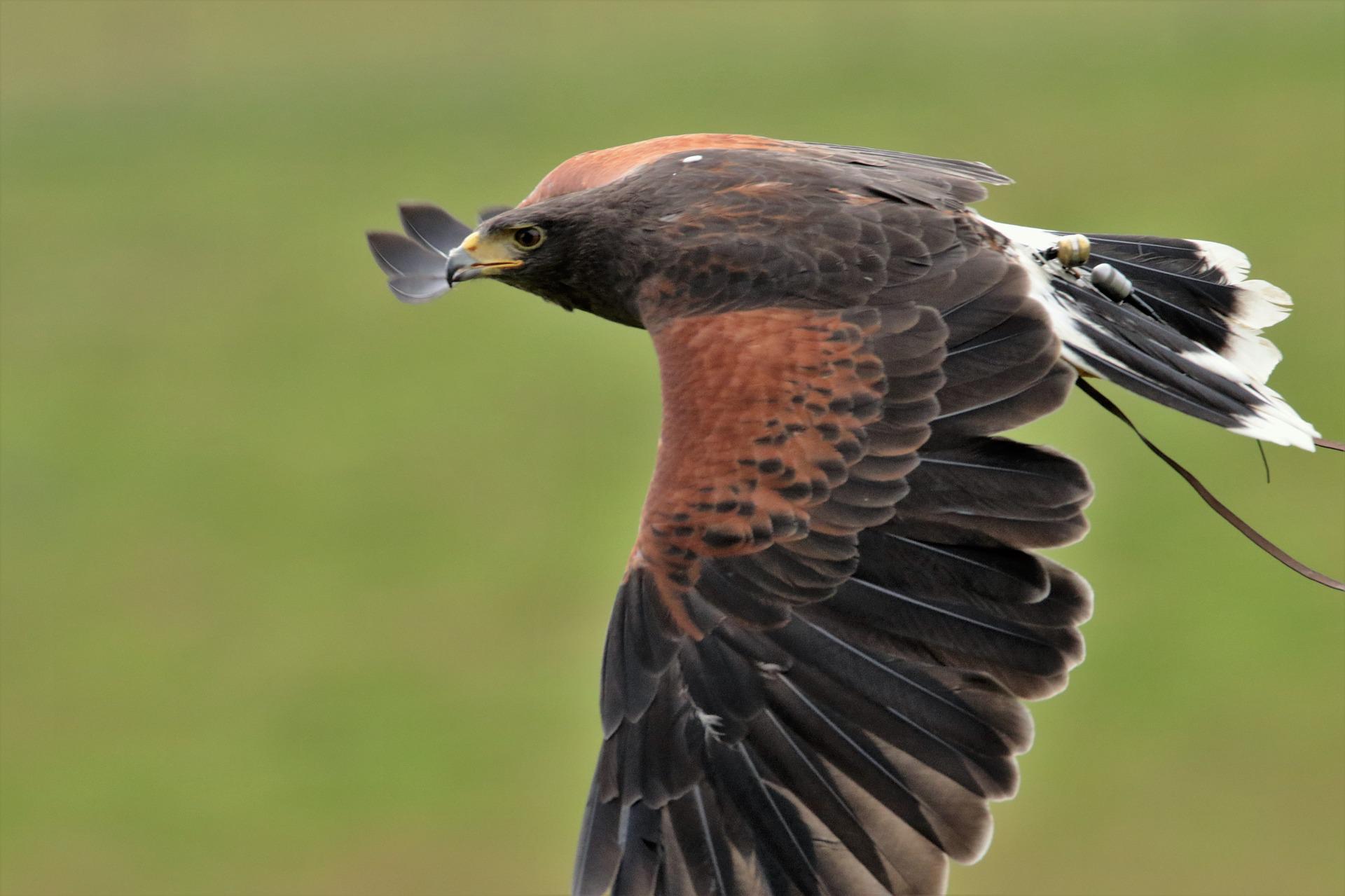
Flying with both the Harris Hawk and Goshawk, I noticed that the Harris Hawk is smaller, with a 3.5-foot wingspan, unlike the robust Goshawk, which has over 4 feet. Both species are formidable predators, but there are many differences. Because I have had the pleasure of keeping both these raptors, let me share with you what I have found to be factors that set them apart.
Size and Physical Characteristics
When comparing the size and physical characteristics of the Harris Hawk and the Goshawk, the Harris Hawk typically appears smaller and more slender in build than the robust and larger Goshawk. The Harris Hawk showcases a wingspan of around 3.5 feet, while the Goshawk boasts a wingspan of over 4 feet. In terms of coloration, the Harris Hawk is known for its striking chestnut shoulders and thighs, contrasting with dark plumage elsewhere, whereas the Goshawk displays a grey upper body and white underside.

Regarding talon size and beak shape, the Goshawk possesses larger and sharper talons compared to the Harris Hawk, aiding in capturing larger prey. The Goshawk’s beak is hooked for tearing flesh, while the Harris Hawk’s beak is more slender for precision. Weight differences are evident, with the Goshawk weighing up to 4 pounds more than the Harris Hawk. Eye color varies, with the Harris Hawk having reddish-brown eyes in contrast to the Goshawk’s piercing orange eyes.
In terms of physical agility and hunting speed, the Harris Hawk excels in maneuverability and can reach impressive speeds while hunting. Its flight patterns are characterized by swift movements and sudden dives, contributing to its hunting success.
Hunting Techniques and Strategies
In the realm of avian predators, the hunting techniques and strategies of the Harris Hawk and the Goshawk reveal distinct approaches shaped by their unique physical attributes and instincts. The Harris Hawk, known for its social nature, can employ group hunting as a strategy. Working together, they coordinate aerial attacks on prey, demonstrating remarkable teamwork. In contrast, the Goshawk relies on stealthy approaches and ambushing tactics. With its agility and speed, the Goshawk excels in surprise attacks, swiftly capturing prey with precision.
The Harris Hawk’s group hunting allows for a collaborative effort, increasing the chances of successful hunts. Their coordinated aerial attacks involve strategic positioning and communication among group members, showcasing a blend of speed and teamwork. On the other hand, the Goshawk’s solitary nature is evident in its preference for stealth and ambush. This bird of prey relies on patience and calculated strikes, emphasizing precision over sheer speed. Whether it’s the Harris Hawk’s cooperative aerial assaults or the Goshawk’s calculated ambushes, both species exhibit remarkable hunting techniques tailored to their strengths and instincts.
Prey Preferences and Feeding Habits
With a keen eye and swift wings, the Harris Hawk selectively targets small mammals and birds for its meals, showcasing a preference for agile prey that matches its hunting prowess. When observing the hunting behavior of Harris Hawks, one can notice their strategic approach to capturing prey. These hawks often hunt in groups, displaying coordinated tactics to increase their chances of success. Their diet variations include a wide range of animals, from rabbits and squirrels to small birds like doves and quails. This diverse diet reflects the adaptability of Harris Hawks to different environments and prey availability.

Training and Falconry Popularity
Due to their intelligence and adaptability, both the Harris Hawk and Goshawk are popular in the world of falconry. Falconers praise the Harris Hawk for its social nature, making it easier to train and handle than other raptor species. The cooperative hunting style of the Harris Hawk also adds to its appeal as a falconry bird. In contrast, the Goshawk is a more challenging bird to train and handle with its solitary nature and aggressive tendencies. Despite this, many falconers are drawn to the beauty and power of the Goshawk, making it a highly sought-after species for falconry.
After observing both the Harris hawk and Goshawk in action, it’s clear that each bird has unique skills and characteristics. The Harris hawk’s hunting style and versatility make it a popular choice for falconers, while the Goshawk’s fierce hunting tactics and strength make it a formidable predator. Both birds are truly impressive in their own right, showcasing the beauty and power of nature’s predators.