
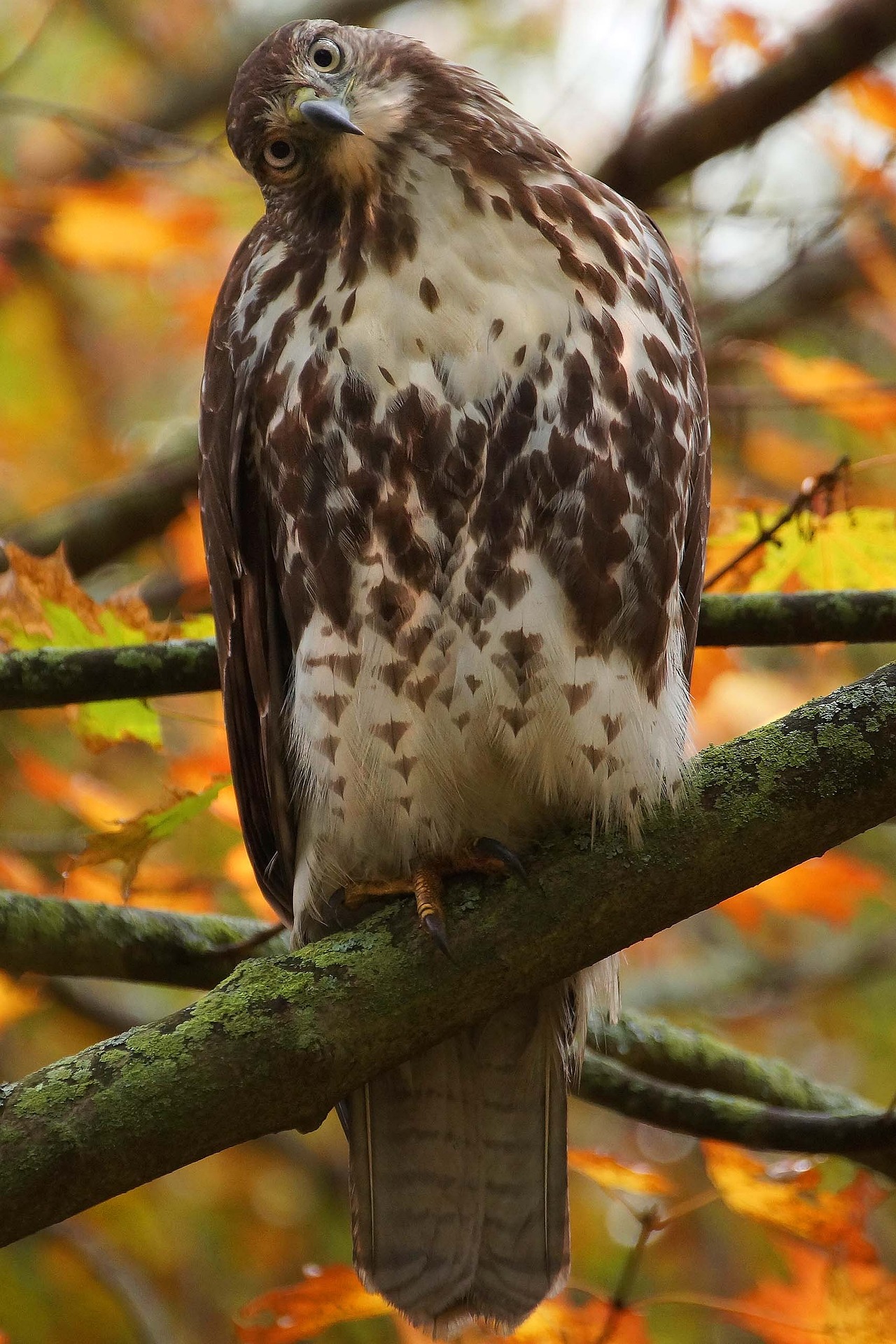
Red-tailed hawks are one of North America’s most common birds of prey. They’re known for their rusty-coloured tail feathers, and they typically hunt small rodents, reptiles, or birds. But what do red-tailed hawks eat in the wild? And how do they go about catching their prey? Keep reading to find out!
Red-tailed hawks typically hunt rodents, reptiles, rabbits, squirrels, and other birds, using their sharp, curved beaks to tear their food into smaller pieces. In addition to being skilled hunters, red-tailed hawks are also relatively easy to train.
The falconer will often use a trained hawk to flush out the game before releasing the bird of prey to chase and capture its quarry. With their sharp beaks and powerful talons, red-tailed hawks are fierce predators that make for skilled hunters.

Red-tailed hawks typically prey on
A red-tailed hawk is one of the most common hawk species in North America. These birds of prey can be found in forests, grasslands, and urban areas. Their typical prey items include squirrels and rabbits, as well as reptiles, amphibians, fish, and insects. Some red-tailed hawks have even been reported killing larger mammals, such as deer and coyotes. In addition to their natural diet, red-tailed hawks are sometimes used in falconry. Falconers train these birds to hunt other animals for sport or entertainment. As a result, red-tailed hawks play an important role in the ecosystem by helping control small animal populations.
Is there any special equipment you need to hunt with a red-tailed hawk?
Falconry is an ancient art that involves the use of trained birds of prey to hunt small game. Falcons, hawks, eagles, and owls are all commonly used in falconry, and each species has its own strengths and weaknesses. For example, falcons are known for their speed and agility, while hawks are known for their keen eyesight. When choosing a bird for falconry, the falconer must take into account the size and weight of the prey, as well as the terrain where the hunt will take place.
Red-tailed hawks are a popular choice for falconry because they are relatively easy to train and are well-suited for hunting in open areas. Not only are red-tailed hawks good for falconry, red-tailed hawks are also widespread in North America, making them a familiar sight to many people. However, you need some special equipment to hunt with a red-tailed hawk. The most important thing is a hood, which keeps the bird calm and prevents it from seeing anything that might startle it. Other important items include gloves, jesses (leather straps used to secure the bird’s feet), and a lure (a piece of meat or other food used to entice the bird to fly). With the proper knowledge and equipment, anyone can enjoy the excitement of falconry.
Is the red-tailed hawk fast enough to hunt?
It turns out that speed is important for falcons, but not necessarily in the way you might think. Falcons actually use their speed to manoeuvre in mid-air and make sudden turns to surprise their prey. They don’t need to be the fastest bird in a straight line. In fact, the red-tailed hawk, a common bird used in falconry, has an average flight speed of only 25 to 30 miles per hour. That’s slower than many other birds of prey, like the peregrine falcon, which can reach speeds of up to 60 miles per hour in a dive.
So why is the red-tailed hawk still a good choice for falconry? It turns out that this bird’s skill at flying low and turning quickly makes it well-suited for hunting in wooded areas, where its prey is more likely to be hiding. The red-tailed hawk’s slower speed also gives the falconer more time to react and give commands, which is important when training these birds. The choice is ultimately a matter of style: some falconers prefer the high-flying speed of the peregrine falcon, while others prefer the stealthy manoeuvres of the red-tailed hawk.
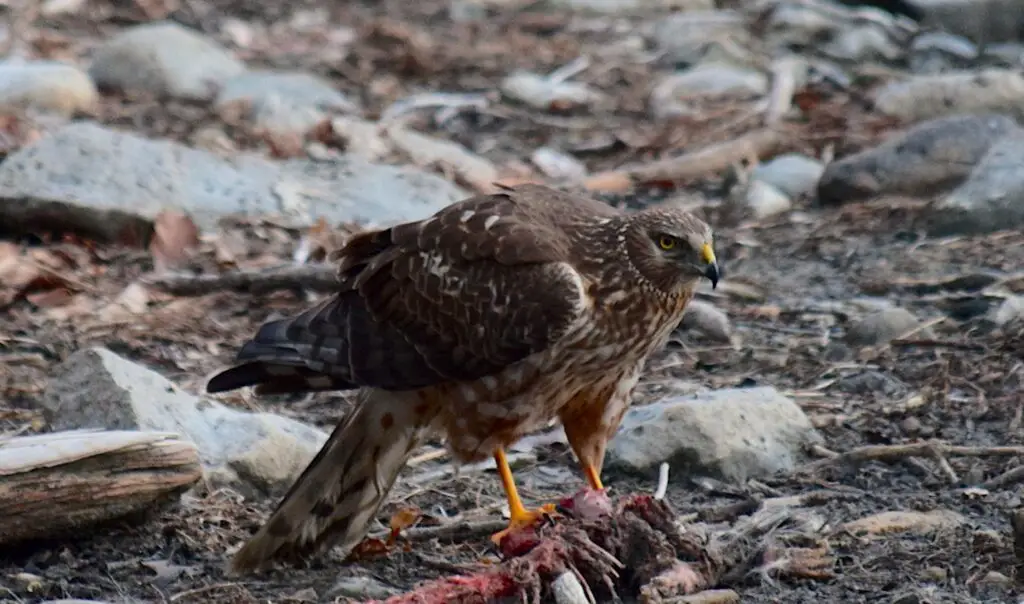
Are red-tailed hawks fish hunters?
While red-tailed hawks are not typically associated with fish, they are actually skilled hunters of aquatic prey. In falconry, the practice of training birds of prey for hunting, red-tailed hawks are often used to target fish. The falconer will perch the hawk on a high vantage point, such as a cliff or tree branch, and wait for the bird to spot its prey below. When a fish is spotted, the hawk will dive down and strike with its sharp talons, snatching the fish out of the water. While most red-tailed hawks prefer to hunt small mammals such as rabbits and squirrels, these powerful predators can bring down a fish. In my many years of falconry, a common question I get asked is whether or not a red-tailed hawk would go after a cat or dog or basically a domesticated pet. After some research, I have obtained some insight on the matter, so have a quick read through a post dedicated to whether or not a red-tailed hawk will attack a cat or dog.
What is a red-tailed hawk’s most common prey?
Red-tailed hawks are often used in falconry, as they are relatively easy to train. The red-tailed hawk’s most common prey is small mammals, such as squirrels, rodents and rabbits. However, they will also eat birds, reptiles, and insects. In urban areas, they have been known to eat pigeons and rats. The red-tailed hawk typically hunts from a perch, watching for movement below. When it spots its prey, it will swoop down and capture it with its talons.
What is the best way to sharpen the hunting skills of a red-tailed hawk?
In order to sharpen the hunting skills of a red-tailed hawk, falconers typically use a method of training called falconry. Falconry is an ancient practice that involves the use of trained birds of prey to hunt wild game. Hawks are commonly used in falconry, as they are among the most skilled hunters in the avian world. In order to train a hawk, a falconer must first gain its trust. This is typically done by providing the bird with food and shelter. Once the falconer has earned the trust of the hawk, he or she will begin to teach it how to hunt. This process can take months or even years, but it is essential for sharpening the hunting skills of a red-tailed hawk.