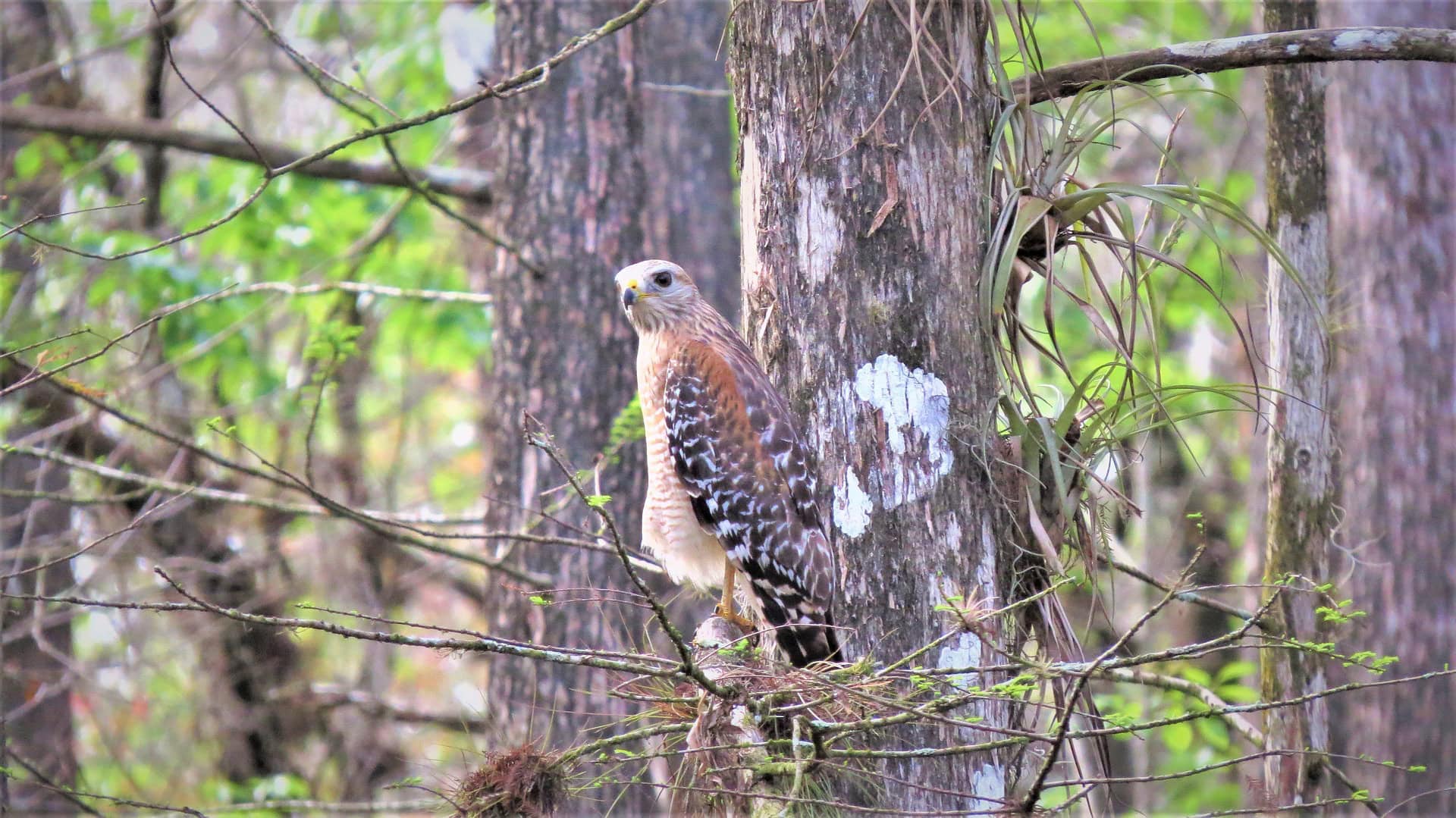
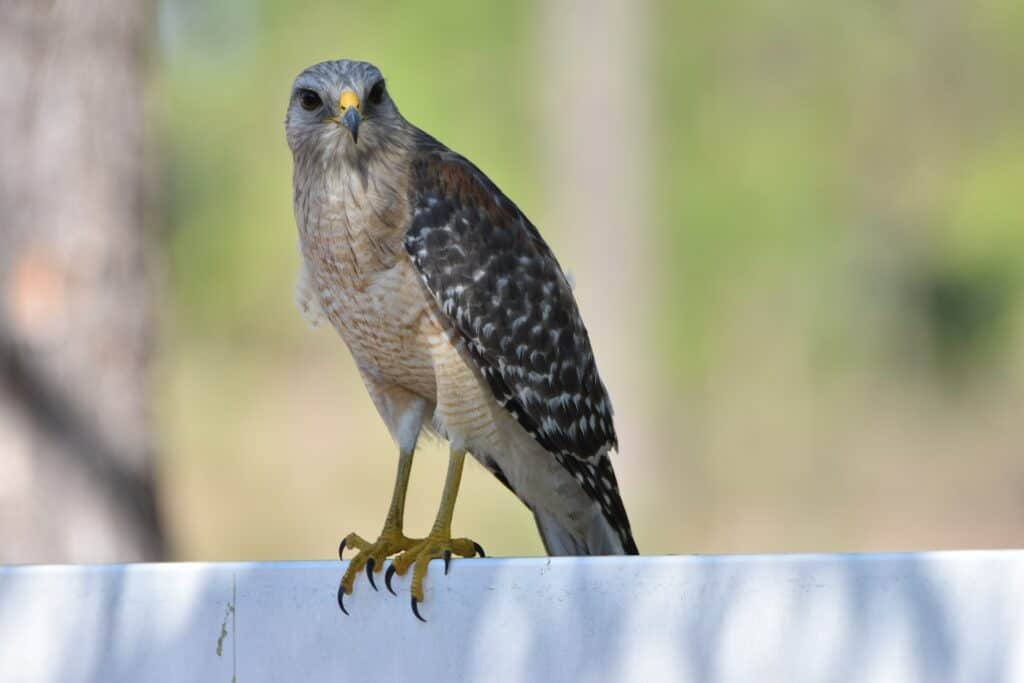
This medium-sized Hawk (Buteo lineatus) has a red shoulder. It breeds in eastern North America and often migrates to South America. These hawks are common throughout their range and can be found in many different habitats. So, what is the lifespan of a Red-shouldered Hawk? But first, let’s take a look.
Red-shouldered Hawks can live up to 10-15 years in the wild, though ten years is their average lifespan. Their lifespan can reach 20 years in captivity. These hawks’ main causes of death include being hit by cars, getting shot, or dying from illness or predation.
So, if you’re ever lucky enough to see one of these beautiful birds in the wild, be sure to take a moment to appreciate them – you may not get another chance! Many factors could hinder the lifespan of these birds; let’s look through a few reasons below:
How does Red-shouldered Hawk’s lifespan differ in captivity and in the wild?
The lifespan of a red-shouldered hawk in captivity can differ significantly from that of a hawk in the wild. In captivity, red-shouldered hawks typically have access to a greater variety of food, more regular veterinary care, and less exposure to environmental hazards. As a result, captive red-shouldered hawks live several years longer than their wild counterparts. In the wild, however, red-shouldered hawks face many challenges that can shorten their lifespan. These include predation, disease, and exposure to harsh weather conditions.
Additionally, wild red-shouldered hawks must contend with a shortage of food during lean times. Consequently, while captive red-shouldered hawks often have a lifespan of 20 years or more, wild hawks typically only live for 10-15 years. Despite the difference in lifespan, however, both captive and wild red-shouldered hawks are protected under the federal Migratory Bird Treaty Act.
What can a falconer do to increase the Red-shouldered Hawk’s lifespan?
A falconer can do many things to help increase the lifespan of a Red-shouldered Hawk:
- It is important to provide the Hawk with a nutritious diet. A variety of fresh meats, including chicken, quail, and rabbit, should be offered daily. In addition, the Hawk should have access to clean water at all times.
- The Hawk’s living quarters should be clean and debris-free. The perches should be inspected regularly for splinters and other sharp objects that could injure the Hawk’s feet.
- The Hawk should be exercised on a regular basis.
Daily flights or hunts will help to keep the Hawk in the good physical condition and improve its longevity. By following these simple guidelines, a falconer can help to ensure that a Red-shouldered Hawk enjoys a long and healthy life.
What will deteriorate the lifespan of my Red-shouldered Hawks?
One of the most common problems is exposure to lead poisoning. This can happen when the Hawk eats prey that has been shot with lead pellets or when they drink from water sources that have been contaminated with lead. Another threat to red-shouldered hawks is habitat loss. As development occurs and natural areas are cleared, the hawks lose places to hunt and nest. Additionally, the use of pesticides can also reduce the lifespan of red-shouldered hawks, as it can poison both their food and their water sources. However, we can help ensure that these majestic birds will be around for many years by protecting their habitat and reducing exposure to toxins.
Is regular vet care beneficial to Red-shouldered Hawk to extend its life expectancy?
There is no denying that regular vet care can be beneficial to any animal, including Red-shouldered Hawks. Vet care can help to identify and treat health problems early on so they can be treated before they cause permanent damage. In addition, regular checkups can help to ensure that Hawks are up-to-date on vaccinations and other preventive care measures. However, it is important to remember that wild animal are not domesticated pets. As such, they may not respond well to being handled by humans or confined to small spaces. For this reason, some experts believe that the stress of regular vet visits could outweigh any potential benefits. It should be noted that the decision to provide regular vet care for Red-shouldered Hawks is a complex one that should be made on a case-by-case basis.
How can a falconer make the life of a Red-shouldered Hawk more enjoyable?
As any experienced falconer knows, a good routine is the key to a happy and healthy hawk. A well-fed hawk will have plenty of energy for flying and hunting, so it’s important to make sure that meals are regular and nutritious. Hawks also need plenty of exercises is important for all birds of prey, but it’s especially crucial for Red-shouldered Hawks, who are known for their high activity levels. Daily flyings sessions will help to keep your Hawk in top condition while also providing an opportunity for bonding between you and your bird. Finally, a good night’s sleep is crucial for all animals, and hawks are no exception. Making sure your Hawk has a comfortable perch to sleep on will help ensure that it remains healthy and well-rested. Following these simple guidelines can make your Red-shouldered Hawk’s life more enjoyable for you and your bird.

Red-shouldered Hawk deaths are usually caused by what?
Collisions usually cause red-shouldered Hawk deaths with vehicles or power lines or by being caught in traps or nets. These birds are relatively small, with long wings and short tails. However, they are proficient hunters, preying on small mammals, reptiles, and birds. In North America, they are found along the East Coast and in parts of the Midwest. They typically nest in wooded areas near streams or wetlands. Given their habitats and hunting habits, it’s not surprising that Red-shouldered Hawks are particularly vulnerable to human activity. In addition to being hit by cars and getting caught in traps, these birds are often killed when their habitats are destroyed by development. As a result, many conservation organisations consider Red-shouldered Hawks a species of concern. Steps can be taken to help protect these birds, such as creating safer roads and protecting their habitat.