
As a falconer, ensuring the safety of your avian companions is paramount. You’ve invested time, resources, and care into their well-being, but have you truly predator-proofed your aviary? Imagine a world where your birds can roam freely without the looming threat of predators. In this guide, I will share essential tips and strategies to fortify your aviary against potential dangers, allowing you to create a secure haven for your precious feathered friends.
Understanding the Risks
As a falconer, understanding the risks your birds face is crucial for their safety. Common predators such as foxes, raccoons, and even other prey birds can threaten your avian companions. Knowing the importance of predator-proofing your aviary is essential in creating a secure environment for your birds to thrive.

Common predators
Predators constantly threaten the safety and well-being of birds in aviaries. Understanding common predators’ behaviour is crucial to safeguarding your avian companions. Some predators, like raccoons and snakes, exploit aviary vulnerabilities such as small openings or weak wiring to gain access. Birds’ prey instincts can make them susceptible to attacks, as they may not recognize danger until it’s too late.
Predator adaptations, such as keen senses or climbing abilities, further heighten the risk. Wildlife interactions within and around aviaries can attract predators, increasing the likelihood of attacks. By recognizing these factors and taking proactive measures, like predator-proofing your aviary, you can create a secure environment for your birds.
Importance of predator-proofing
Understanding the risks associated with predators and their potential threats to aviaries is paramount for any bird owner. Safety measures, predator awareness, and aviary security are crucial
components in safeguarding your feathered companions. Conducting a thorough risk assessment is the first step towards developing effective prevention strategies.
By identifying potential vulnerabilities in your aviary, such as weak spots in fencing or gaps in netting, you can proactively address these issues to minimize the risk of predator attacks. Implementing robust security measures, such as installing motion-activated lights or predator-proofing enclosures, can significantly reduce the likelihood of unwanted visits from predators.
Structural Foundations
When considering the structural foundations of your aviary, it’s crucial to focus on secure flooring options to prevent predators from burrowing in. Implementing buried wire mesh techniques can add an extra layer of protection against digging threats. Predator aprons, extending outward from the base of the aviary, can deter predators attempting to access the enclosure from below.
Secure flooring options
A crucial aspect of predator-proofing your aviary is selecting secure flooring options to establish strong structural foundations. When considering the flooring for your aviary, keep in mind the following key points:
- Flooring durability: Opt for materials that can withstand wear and tear over time.
- Ground protection: Choose flooring options that provide a barrier between your birds and the ground below.
- Safe surfaces: Prioritize surfaces that are easy to clean and maintain to ensure the health and safety of your birds.
- Aviary flooring: Select flooring that is specifically designed for aviary use, taking into account bird behaviours and needs.
Buried wire mesh techniques
Burying wire mesh is an effective strategy to enhance your aviary security. Start by excavating the soil to securely bury a durable mesh that can resist environmental factors and predator attacks. Regular maintenance is essential to keep the mesh intact, providing an extra barrier that deters predators from digging in and ensuring your birds are well-protected.

Predator aprons
Having fortified the structural integrity of your aviary with buried wire mesh techniques, the next step in enhancing its predator-proofing capabilities involves implementing predator aprons as part of the structural foundations. Predator aprons play a crucial role in safeguarding your birds from potential threats. Here are key points to consider:
- Secure Installation: Ensuring the apron is firmly attached to the aviary structure.
- Effective Prevention: Preventing predators from digging underneath the aviary.
- Predator Awareness: Understanding the types of predators in your area and their behaviours.
- Proper Maintenance: Regularly inspecting and repairing any damages to the apron.
Walls and Roofing
When it comes to predator-proofing your aviary, the materials you choose for the walls and roofing play a crucial role. It is key to select appropriate materials that are sturdy and resistant to tampering. Ensuring the mesh size and quality are suitable for the species you protect is essential, along with reinforcing corners and joints to prevent any weak points predators could exploit.
Appropriate materials
A crucial aspect of predator-proofing your aviary is selecting appropriate materials for the walls and roofing. When choosing materials, consider the following:
- Material selection: Opt for sturdy and durable materials such as galvanized steel or pressure-treated wood.
- Safety measures: Ensure that the materials are non-toxic and do not pose any harm to your birds.
- Construction tips: Properly seal any gaps or openings to prevent intrusions from predators.
- Maintenance schedule: Regularly inspect and maintain the walls and roofing to promptly address any wear or damage.
Mesh size and quality
To keep your birds safe from predators, it’s essential to choose high-quality mesh for the walls and roof of your aviary. Focus on durable materials that can resist penetration and ensure the mesh size prevents access. Proper installation is key to eliminating any gaps. Paying attention to these details will enhance your aviary’s protection and effectiveness in preventing predator attacks.
Reinforcing corners and joints
For optimal security in your aviary, reinforcing corners and joints in the walls and roofing is critical in deterring potential predators. When it comes to ensuring the safety of your birds, paying attention to these details is key. Here are some essential measures to consider:
- Joint reinforcements: Strengthening the connections where panels meet is crucial for overall stability.
- Corner strengthening: Adding extra support to the corners will enhance the structural integrity of your aviary.
- Secure fastenings: Using high-quality, secure fasteners will prevent predators from exploiting any weak points.
- Reinforced connections: Ensuring that all connections are reinforced will make it harder for predators to breach the aviary.
Entry Points and Access
When it comes to safeguarding your aviary against predators, paying close attention to the entry points is crucial. Secure door designs, robust lock mechanisms, and implementing double-door systems are key elements to consider. These features not only prevent unauthorized access but also provide an added layer of protection for your avian companions.
Secure door designs
When designing secure doors for your aviary, paramount consideration should be given to preventing unauthorized entry by predators. To ensure the safety of your avian companions, here are some essential factors to consider:
- Door reinforcement: Strengthening the door structure to withstand potential attacks.
- Lock types: Choosing high-quality locks that are resistant to tampering.
- Entry security: Implementing additional security measures such as alarms or motion sensors.
- Door access: Controlling and monitoring who has access to the aviary at all times.
Remember that regular seal maintenance is key to preventing gaps that could compromise the security of your aviary.
Lock mechanisms
Secure your aviary’s entry points with durable and reliable lock mechanisms to protect your birds from predators. Choose high-quality, tamper-resistant locks, and consider adding electronic keypads or smart locks for enhanced access control. I’d like you to regularly check and maintain your locks to ensure effectiveness, as the strength of your security relies on their reliability.
Double-door systems
To enhance the security of your aviary and protect your birds from potential threats, implementing a double-door system at entry points is a highly effective strategy. When it comes to door security, access control, and predator prevention, a double-door system offers a robust solution for ensuring aviary safety. Here are key benefits of incorporating this system:
- Enhanced Security: Double doors provide an additional layer of protection, making it harder for predators to breach.
- Improved Access Control: Control who enters and exits the aviary more effectively with a double-door setup.
- Better Predator Prevention: Minimize the risk of predators gaining access to your birds with this added barrier.
- Increased Entry Protection: Safeguard your birds by fortifying entry points with a double-door system.
Ventilation and Windows
When it comes to predator-proofing your aviary, ensuring proper ventilation and protecting windows are crucial aspects to consider. Predator-proof venting helps maintain airflow while keeping unwanted visitors out, safeguarding your birds. Additionally, reinforcing windows with sturdy materials can prevent potential break-ins and ensure the safety of your avian companions.
Predator-proof venting
Proper predator-proof venting in your aviary can ensure the safety and well-being of your avian companions. When considering ventilation design, predator resistance is crucial to prevent unwanted intruders. Air circulation needs to be balanced with mesh protection to keep predators out while allowing fresh air in. Explore various venting solutions to find the best fit for your aviary setup. Remember, the safety of your birds depends on the effectiveness of your predator-proof venting system.
- Prioritize predator resistance in your ventilation design.
- Ensure proper air circulation without compromising mesh protection.
- Explore different venting solutions to find the most suitable one for your aviary.
- Regularly inspect and maintain your predator-proof venting system.

Window protection
In safeguarding your aviary against potential threats, ensuring proper window protection is paramount. Glass barriers are essential to prevent predators from breaking into the aviary. Mesh screens can be added for extra security, keeping out insects and smaller animals. Installing bird spikes on window sills deters larger predators from perching or gaining access. Reflective tape on windows confuses birds of prey, reducing the risk of collisions. Sound alarms near windows can startle predators and alert you to their presence.
Perimeter Security
Perimeter security plays a crucial role in ensuring the safety of your avian companions. Fencing considerations are paramount in keeping predators at bay, so investing in sturdy materials like welded wire or chain link is essential. Additionally, incorporating deterrents and repellents such as motion-activated lights and predator urine can further fortify your aviary against potential threats.
Fencing considerations
Often overlooked but crucial in protecting your avian companions is the security of the perimeter fencing. When considering fencing for your aviary, keep in mind the following key points:
- Fence height: Ensure the fencing is tall enough to prevent predators from climbing over.
- Material durability: Choose sturdy materials like galvanized fencing wire to withstand weather and predator attempts to breach.
- Electric options: Electric fencing can provide an added layer of security to deter predators.
- Visual barriers: Consider adding visual barriers, such as netting or screens, to block the view of predators and reduce bird stress.
Regular maintenance routines are essential to check for damages or weak spots in the fencing that may compromise the safety of your avian companions.
Deterrents and repellents
To effectively safeguard your aviary from potential predators, it is crucial to implement strategic deterrents and repellents as part of your perimeter security measures. You can choose between natural options like planting thorny bushes or artificial methods such as motion-activated lights when considering deterrents.
Visual repellents like scarecrows or shiny objects can be effective, while sound repellents like ultrasonic devices may also deter predators. For a more hands-on approach, DIY deterrent options such as homemade pepper sprays can be utilized. It’s important to note the environmental impact of repellents and opt for those that are eco-friendly.
Nighttime Protection
When it comes to protecting your aviary at night, implementing a combination of effective strategies is crucial. Lighting systems can help deter predators by illuminating the area and making it less appealing for potential threats. Surveillance cameras offer a way to monitor activity and detect any suspicious movements, while motion-activated deterrents can startle and drive away unwanted visitors.
Lighting systems
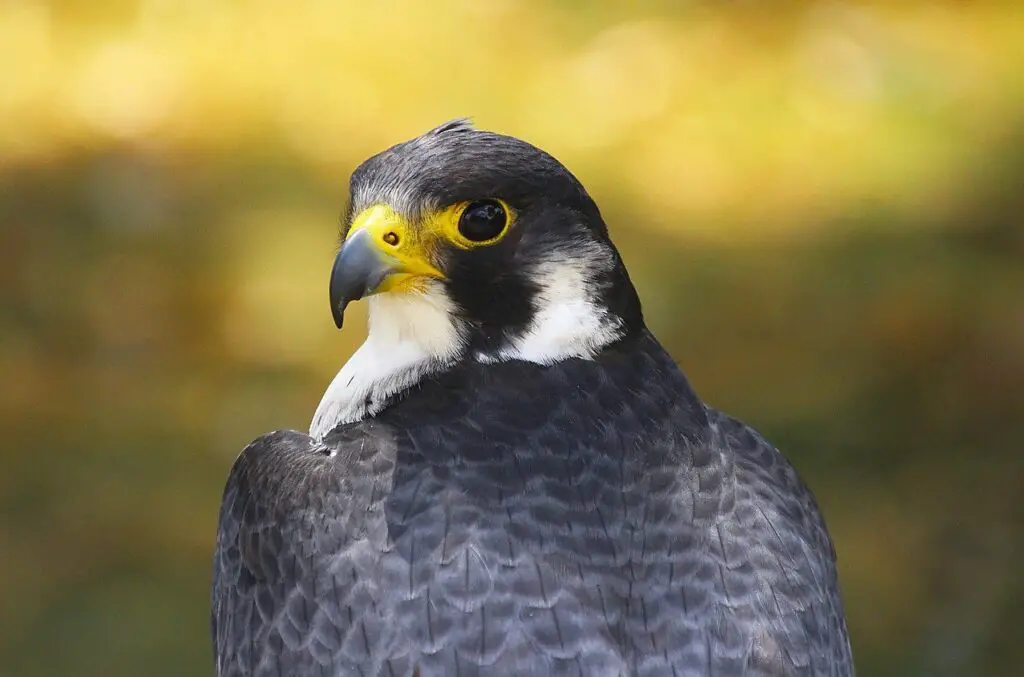
Through my experiences as a falconer, I have found that implementing effective lighting systems is crucial for safeguarding your aviary against nocturnal predators. When it comes to nighttime security, here are some key aspects to consider:
- Safety lighting: Ensure pathways are well lit for safety during night checks.
- Predator visibility: Bright lights can make predators hesitant to approach.
- Nighttime security: Illuminating the perimeter deters unwanted visitors.
- Bright deterrents: Use motion-activated lights to startle potential threats.
Surveillance cameras
To ensure optimal nighttime protection of your aviary, install surveillance cameras strategically to cover all angles, especially vulnerable areas. Monitor live feeds and recorded footage using software, and enable remote viewing for peace of mind. Regular maintenance of cameras is essential for effective monitoring, enhancing your ability to protect your birds.
Motion-activated deterrents
As we focus on bolstering nighttime protection for your aviary, the implementation of motion-activated deterrents emerges as a strategic safeguard against potential threats. When considering safeguarding your birds during the night, the following options are effective choices:
- Noise repellents
- Visual deterrents
- Scent deterrents
- Ultrasonic devices
These motion-activated deterrents work by startling and deterring predators, creating an environment that is unwelcoming to unwanted visitors. Noise repellents emit sounds that scare off predators, while visual deterrents use lights or moving objects to deter them.
Scent deterrents confuse predators, making it difficult for them to locate your aviary. Ultrasonic devices emit high-frequency sounds that are uncomfortable for predators, encouraging them to stay away. By incorporating these methods, you can significantly enhance the nighttime protection of your aviary.
Regular Maintenance and Inspection
As a responsible falconer, it’s crucial to prioritise regular maintenance and inspection of your aviary to ensure the safety of your birds. Checking for weak points in the structure and promptly repairing any damage can prevent potential breaches by predators. You can maintain a secure environment for your avian companions by staying vigilant and addressing any issues promptly.
Checking for weak points
Inspecting an aviary for weak points is a crucial aspect of predator-proofing to ensure the safety and security of your avian companions. To effectively safeguard your birds, consider the following:
- Conduct a thorough vulnerability assessment.
- Identify weak points such as gaps, loose wires, or compromised locks.
- Use an inspection checklist to ensure no area is overlooked.
- Implement reinforcement strategies like adding hardware cloth or securing perches.
Repairing damage promptly
Regular inspections of your aviary are vital to quickly identify and address any damage or vulnerabilities to ensure security. Prioritize timely repairs, such as fixing loose wires and reinforcing weak spots, to maintain the structure’s integrity. Implement quick fixes for locks and hinges to prevent breaches, and have an emergency response plan ready to act swiftly. Being proactive in addressing damages is essential for safeguarding your birds.
Considerations for Specific Predators
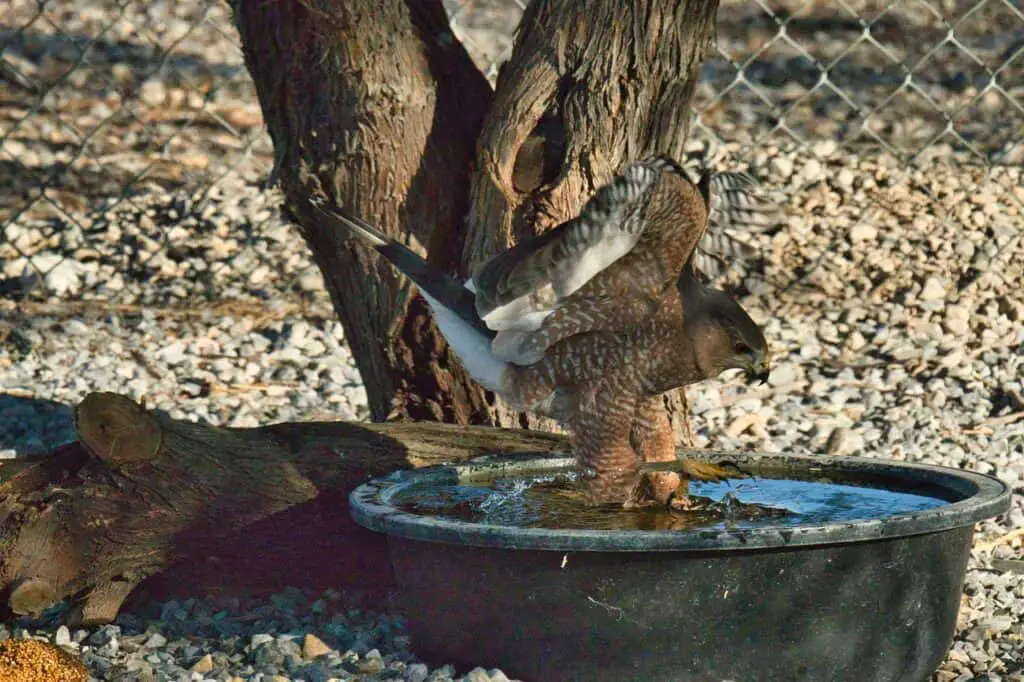
When it comes to predator-proofing your aviary, it’s crucial to consider the specific threats posed by different types of predators. Aerial predators like hawks and owls can be deterred with proper netting or overhead cover, while ground predators such as raccoons and snakes may require secure fencing and underground barriers.
Additionally, don’t overlook the threat of small intruders like rats and weasels, which can be kept at bay with traps or bait stations placed strategically around the aviary perimeter.
Aerial predators (hawks, owls, wild birds)
Navigating the airspace above your aviary, aerial predators like hawks, owls and other wild birds pose a significant threat to the safety of your birds. To protect your feathered friends from these aerial threats, consider the following tips:
- Implement hawk deterrents to discourage these larger birds from approaching your aviary.
- Use owl prevention techniques such as installing motion-activated lights or reflective objects.
- Ensure your aviary safety by inspecting for any potential entry points or weak spots that predators could exploit.
- Practice effective predator management strategies to proactively deal with any potential threats.
Ground predators (raccoons, snakes)
To effectively protect your aviary from ground predators such as raccoons and snakes, it is crucial to implement specific deterrents and preventive measures tailored to these threats. For snake deterrents, consider installing snake-proof fencing and keeping the area around the aviary clear of debris where snakes could hide.
Raccoon prevention methods include securing latches with predator-proof locks, using motion-activated lights or sound devices, and placing smooth metal sheeting around posts to prevent climbing.
Ground predator solutions like burying wire mesh around the perimeter can also enhance aviary protection. Additionally, ensuring predator-proof flooring within the aviary can further safeguard your birds from potential threats. Incorporating these measures can significantly reduce the risk of ground predators infiltrating your aviary.
Small intruders (rats, weasels)
Small intruders like rats and weasels pose significant threats to the safety and well-being of birds in your aviary. To protect your feathered companions, focus on the following key aspects:
- Rodent prevention: Seal gaps or openings in the aviary that could serve as rodent entry points.
- Weasel deterrence: Install mesh wire with small gaps to prevent weasels from entering the aviary.
- Small intruder control: Set up traps strategically around the aviary to catch and remove small intruders.
- Aviary security: Regularly inspect the aviary for any signs of damage or weakness that could compromise its security.
In conclusion, safeguarding your avian companions from potential predators requires a comprehensive approach to security. By understanding the risks, implementing strong structural foundations, securing entry points, and considering specific predator behaviours, you can create a safe and protected environment for your birds. Regular maintenance and vigilance are essential to ensure the ongoing safety of your aviary. Remember, a well-protected aviary is a happy and secure home for your feathered friends.
Ready to take your aviary’s safety to the next level? Discover practical tips and strategies that can help you effectively predator-proof your aviary, ensuring a secure environment for your avian companions. Dive deeper into each section of our guide and learn how to implement these essential safety measures. Your birds deserve the best protection—let’s make that happen together!