
If you’re interested in Merlin falcons for falconry, you’re in for a treat. These birds are incredibly agile, making them a thrilling choice for hunting. Depending on care, they thrive in various habitats and have a lifespan of 3 to 10 years. Their diet consists mainly of small songbirds, and training them can be rewarding yet challenging due to their spirited nature. There’s plenty more to discover about their care, hunting strategies, and the legal aspects of keeping these magnificent birds.
Scientific Name: Falco columbarius
Family: Falconidae
Diet: Primarily small birds, such as sparrows and shorebirds, insects, and small mammals.
Lifespan: Typically up to 11 years in the wild, though some individuals may live slightly longer under ideal conditions.
Habitat and Range: Merlins are found throughout the Northern Hemisphere. They inhabit open areas such as grasslands, scrublands, tundra, and coastal regions. They can also adapt to urban environments. Many populations migrate to warmer regions during winter, particularly those breeding in northern latitudes.
Temperament: Highly aggressive hunters are known for their speed, agility, and persistence in pursuing prey.

Size: Adult length ranges from 24 to 33 cm (9.4 to 13.0 in).
Weight:
- Males weigh between 125 and 165 g (4.4 to 5.8 oz).
- Females weigh between 190 and 300 g (6.7 to 10.6 oz).
- (Note: The upper weight range for males should be corrected to 165 g in most cases.)
Color:
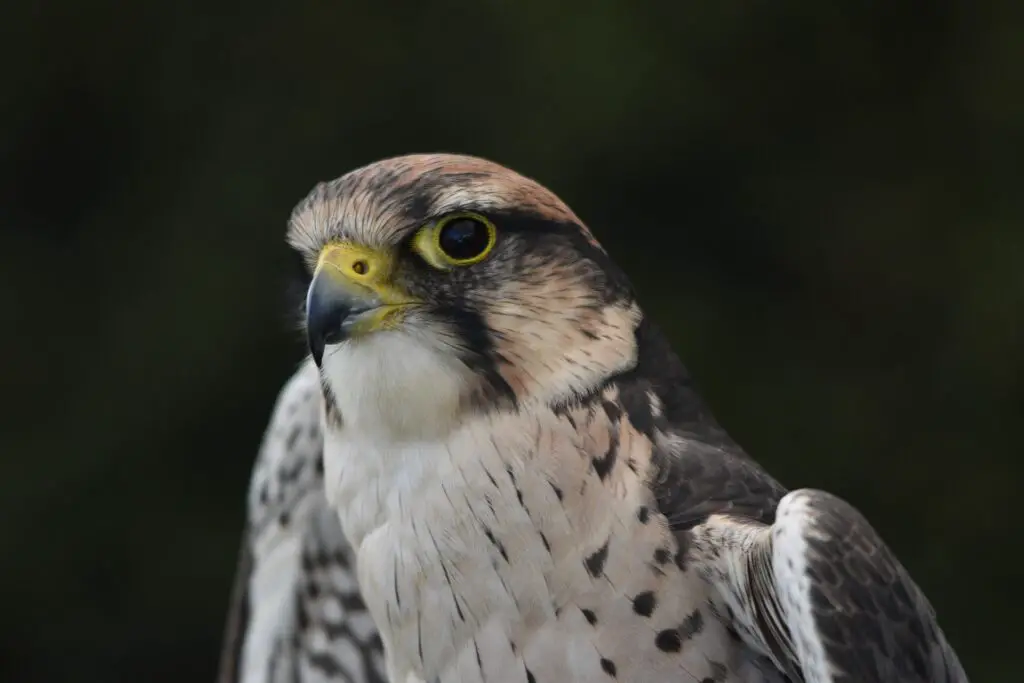
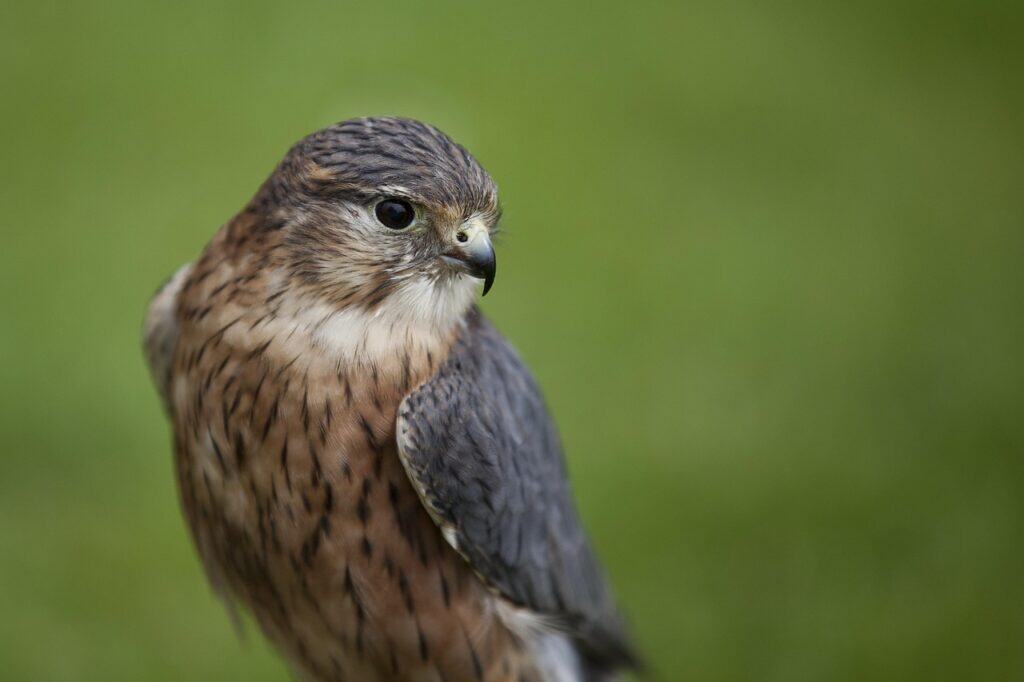
- Males have slate-blue or blue-grey backs with a pale underside streaked with dark brown.
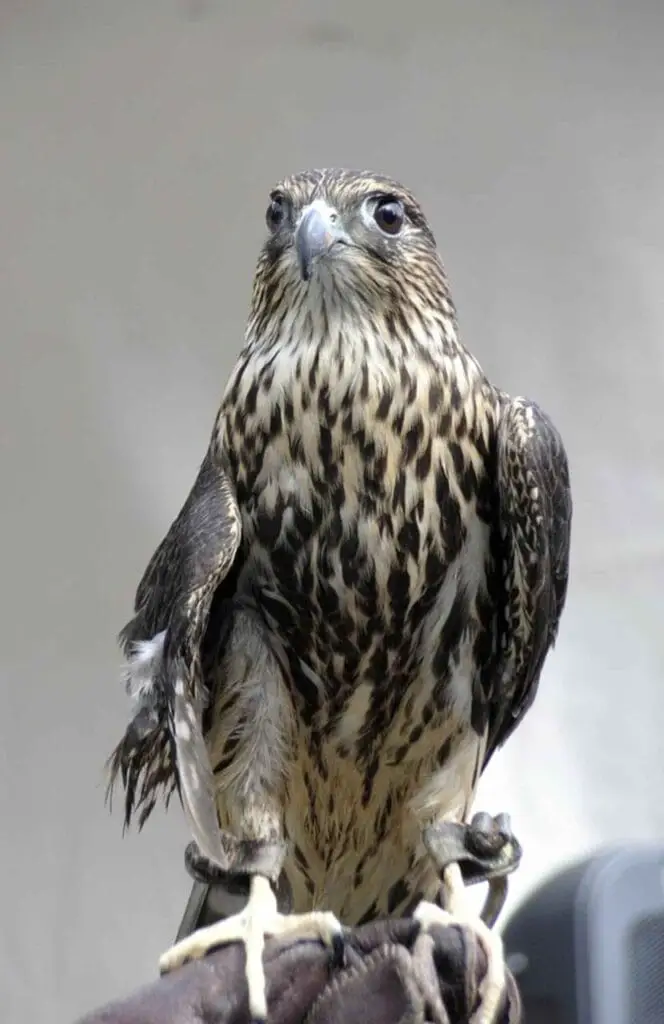
- Females and juveniles are brownish-grey above with heavy streaking below.
Wingspan: Approximately 50 to 67 cm (20 to 26 in).
(Note: The upper wingspan range should be corrected to 67 cm rather than 73 cm.)
Wing Shape: Sharply pointed wings that contribute to their fast and maneuverable flight style.
Tail Shape: Medium-length tail with narrow dark bands alternating with pale bands, ending in a broad dark terminal band.
Conservation Status: Classified as “Least Concern” globally by the IUCN Red List due to their wide distribution and stable population trends. However, some regional populations are vulnerable due to habitat loss, pesticide use, and urbanization.
Biology and Natural History of Merlins
These birds are native to a variety of habitats across North America and Eurasia, showcasing a remarkable range. Understanding their social structure and hunting behavior reveals the adaptability and prowess that make Merlins such skilled predators.
Taxonomy and Classification
Taxonomy:
- Domain: Eukaryota
- Kingdom: Animalia
- Phylum: Chordata
- Class: Aves
- Order: Falconiformes
- Family: Falconidae
- Genus: Falco
- Species: Falco columbarius
Subspecies:
The species Falco columbarius includes several subspecies, divided into European and American groups:
European Subspecies:
- Falco columbarius columbarius (Eurasian Merlin)
- Falco columbarius aesalon (formerly considered a separate species)
Additional European subspecies recognized include various regional forms.
American Subspecies:
- Falco columbarius bendirei (Bendire’s Merlin)
- Falco columbarius richardsoni (Richardson’s Merlin)
- Falco columbarius suckleyi (Suckley’s Merlin)
Historical Classification:
For many years, the Merlin was thought to consist of two separate species: the European merlin (Falco aesalon) and the American merlin (Falco columbarius). However, it was later determined that Falco aesalon is a subspecies of Falco columbarius. Falco columbariusEurope and North America.
Native Habitat and Range
Merlins are native to a wide range of habitats, including open coniferous woodlands, grasslands, tundra, and urban areas. They can be found throughout the Northern Hemisphere, including North America, Europe, and Asia. They prefer semi-open terrains with trees for nesting and open areas for hunting.
Here is the information in a table format:
| Region | Habitat Type | Notable Features |
|---|---|---|
| North America | Open forests, grasslands | Breeds in various habitats; migratory |
| Europe | Moorlands, coastal areas | Diverse prey availability; some sedentary |
| Asia | Taiga, tundra | Adapted to harsh climates; migratory |
| Greenland | Arctic tundra | Seasonal migration |
Merlins prefer habitats with ample open space for hunting. Their range extends from the Arctic to temperate regions, showcasing their resilience and adaptability.
Social Structure and Hunting Behavior
While observing Merlins in their natural environment, it’s fascinating to see how their social structure influences their hunting behavior.
These small, agile falcons are often solitary or found in pairs, which affects how they hunt and interact with their surroundings. Their social dynamics can sometimes lead to cooperative hunting, particularly during migration or when food is scarce.
- Merlins are generally territorial, defending their hunting grounds.
- They often hunt alone, relying on speed and agility.
- In pairs, they can engage in coordinated hunting strategies.
- Their social interactions can influence prey selection.
- Seasonal changes may alter their social structures and hunting tactics.
Lifespan and Health of Merlins
Lifespan in the Wild vs. Captivity
The lifespan of merlins (Falco columbarius) varies significantly between the wild and captivity. In the wild, the average lifespan is around 3 years, with a year-to-year survival rate of approximately 62% for adults and only about 23% for fledglings in their first year. The oldest recorded wild merlin was nearly 13 years old. In captivity, merlins can live significantly longer, with reports of individuals reaching up to 15 years due to better nutrition, healthcare, and protection from environmental hazards.
Common Diseases and Health Concerns Faced by Merlins
Merlins can face various health issues, including:
- Trauma from collisions: Their hunting style and urban habitats often lead to accidents with vehicles and buildings, resulting in injuries.
- Parasites: They may be affected by external parasites like mites and ticks, as well as internal parasites that can impact their digestive health.
- Environmental toxins: Exposure to pesticides and pollutants can lead to health problems, including reproductive issues and weakened immune systems.
While merlins are generally resilient, these factors can pose significant risks to their health in both wild and captive environments.
Signs of Illness and Veterinary Care
Signs of illness in merlins may include:
- Changes in behavior: Increased lethargy or a lack of interest in feeding can indicate health issues.
- Physical symptoms: Abnormal feather condition (such as ruffled or missing feathers), difficulty in flight, or noticeable weight loss may suggest underlying health problems.
- Respiratory distress: Signs such as labored breathing or nasal discharge can indicate respiratory infections or other serious conditions.
Veterinary care for merlins typically involves:
- Routine check-ups: Regular health assessments by avian veterinarians help monitor overall health.
- Diagnostic testing: Blood tests, fecal examinations, and imaging can help identify diseases or parasites.
- Treatment plans: Depending on the diagnosis, treatment may include medications (antibiotics, anti-parasitics), nutritional support, or rehabilitation for injuries.
Diet and Nutrition
Natural Diet
Merlins are carnivorous birds of prey, primarily feeding on small birds such as Horned Larks, House Sparrows, Bohemian Waxwings, Dickcissels, Least Sandpipers, and Dunlins. They also consume insects (e.g., dragonflies), bats, nestling birds, and small mammals. Merlins are skilled hunters, often capturing prey in mid-air during rapid pursuits.
Proper Diet in Captivity
In captivity, merlins require a diet that mimics their natural prey. This typically includes:
- Small birds: Quail or sparrows.
- Insects: Large insects like crickets or mealworms can be used as supplements.
- Small mammals: Mice or small rodents can be part of their diet.
It is crucial to provide a varied diet to ensure nutritional balance. Fresh meat should be offered regularly, and the diet should be enriched with vitamins and minerals if necessary.
Weight Management and Its Role in Training
Weight management is essential for maintaining the health and performance of merlins, especially in training. Here are some considerations:
- Optimal Weight Range: Keeping a merlin at its optimal weight enhances its agility and hunting ability. Overweight birds may become lethargic and less responsive to training cues.
- Training Techniques: Trainers often use food as a reward during training sessions. By adjusting the amount of food given before and after training, trainers can maintain the bird’s motivation without compromising its health.
- Health Monitoring: Regular health checks are vital to ensure that weight management does not compromise the bird’s overall health. Signs of malnutrition or excessive weight loss should be addressed promptly.
Care and Maintenance
Housing: Mews and Weathering Yards
Proper housing is crucial for the well-being of merlins in captivity. Here are some considerations:
- Mews: These are enclosed structures designed to protect birds from the elements and predators. Mews should be well-ventilated, secure, and large enough to allow the merlin to fly and exercise freely.
- Weathering Yards: These are outdoor enclosures that provide birds with exposure to natural sunlight and weather conditions. Weathering yards should be securely fenced to prevent escape and protected from extreme weather conditions.
Both mews and weathering yards should be designed with safety and comfort in mind, ensuring that the birds have ample space to fly and exercise.
Perches, Baths, and Environmental Enrichment
Providing a stimulating environment is essential for maintaining the physical and mental health of merlins:
- Perches: Offer a variety of perches made from different materials and sizes to help maintain foot health and prevent pressure sores.
- Baths: Access to water for bathing is important for maintaining feather condition and overall hygiene. Shallow dishes or pools should be provided for this purpose.
- Environmental Enrichment: Adding elements like branches, plants, or toys can help stimulate natural behaviors and reduce stress. Rotating enrichment items regularly keeps the environment interesting and engaging.
Routine Health Checks and Beak/Talon Maintenance
Regular health checks are vital for detecting any health issues early:
- Health Checks: Regular inspections by a veterinarian can help identify signs of illness or injury. This includes checking for signs of respiratory distress, feather condition, and overall body condition.
- Beak and Talon Maintenance: Birds of prey naturally wear down their beaks and talons through hunting and perching. In captivity, these may need to be trimmed or filed by a professional to prevent overgrowth, which can lead to discomfort or health issues.
Preventing Stress and Aggression in Captivity
Reducing stress and aggression is crucial for maintaining the well-being of merlins in captivity:
- Environmental Factors: Ensure that the enclosure is quiet, secure, and free from disturbances that might cause stress.
- Social Interaction: While merlins are generally solitary, providing opportunities for social interaction with other birds or handlers can help reduce stress. However, this should be managed carefully to avoid aggression.
- Training and Handling: Positive reinforcement training techniques can help build trust and reduce aggression. Handling should be gentle and consistent to avoid causing stress.
By addressing these aspects, caregivers can create a supportive environment that promotes the health and happiness of merlins in captivity.
Training and Handling
Training merlins for falconry involves a combination of behavioral conditioning, positive reinforcement, and careful handling. Here’s a more in-depth look at the process:
Bonding
Bonding is the foundation of any successful falconry relationship. It involves establishing trust between the handler and the merlin through gentle interaction and consistent handling. This process helps the bird become comfortable with human presence, which is essential for effective training.
Manning (Initial Taming Process)
Manning is the initial taming process for birds of prey, including merlins. It requires patience and consistency to avoid stressing the bird. The process typically begins with the bird on a perch, where it is encouraged to step onto the handler’s gloved fist in exchange for food rewards. This sequence is repeated until the bird responds without hesitation, gradually increasing the distance and complexity of interactions.
Equipment Training
Equipment training is crucial for safe handling and effective training of merlins. Key pieces of equipment include:
Jesses
Jesses are leather straps attached to the bird’s legs, used to secure it to the handler’s glove or a perch. They help maintain control and safety during handling.
Leashes
Leashes are used to allow the bird some freedom while still maintaining control. They are particularly useful during training sessions where the bird needs to move around.
Perches
Perches are essential for providing a comfortable resting place for the bird. They come in various sizes and materials to accommodate different species and needs.
Hoods
Hoods are used to calm birds by blocking their vision, reducing stress and anxiety. They are particularly useful during handling or transportation. For merlins, hoods can be introduced positively by associating them with food rewards.
Telemetry
Telemetry involves using tracking devices to monitor the bird’s location and movements. This is especially useful for tracking birds during free flights or when they are released back into the wild.
Weight Control for Training Effectiveness
Maintaining optimal weight is crucial for training effectiveness. Birds that are too heavy may lack motivation, while those that are too light may not have enough energy. Adjusting food intake before and after training sessions helps maintain the bird’s optimal weight and motivation. Daily weighing is essential to ensure that the bird is at its flying weight, which varies by species and sex.
Training Techniques
Effective training techniques are vital for developing a strong working relationship with merlins. Here are some key methods:
Creance Flying
Creance flying involves using a long line to allow the bird to fly while still maintaining control. This technique helps build trust and strengthens the bond between the handler and the bird. For merlins, creance flying is typically introduced after the bird is comfortable flying short distances to the glove.
Recall Training
Recall training teaches the bird to return to the handler upon command. This is achieved through consistent rewards and positive reinforcement. Merlins are known to respond well to recall training, especially when motivated by food rewards.
Lure Training
Lure training uses a lure (often a piece of food or a toy) to encourage the bird to fly towards the handler. This method helps develop the bird’s hunting instincts and strengthens its recall response. Merlins are particularly responsive to lures, making this technique effective for training them.
Preventing Stress and Aggression
Preventing stress and aggression in merlins involves several key strategies, but it’s also important to understand the potentially fatal consequences of unmanaged stress. Here’s a comprehensive overview:
Environmental Considerations
- Quiet and Secure Enclosures: Ensure that the enclosure is quiet and free from disturbances that might cause stress. This includes minimizing loud noises and ensuring the bird feels secure.
- Visual Barriers: Providing visual barriers or covers can help reduce stress by allowing the bird to feel hidden from potential threats.
Handling Techniques
- Gentle Handling: Handling should be gentle and consistent to avoid causing stress. Avoid direct eye contact or sudden movements, which can be perceived as threatening.
- Positive Reinforcement Training: Use positive reinforcement techniques during training to build trust and reduce aggression. This involves rewarding desired behaviors with food or other incentives.
Hood Training
- Hood Use: Hoods can be used to calm birds by blocking their vision and reducing stress and anxiety.
Weight Management
- Optimal Weight: Maintaining optimal weight reduces stress and improves training effectiveness. Weight reduction should be gradual to avoid stress or malnutrition.
Consequences of Stress
- Adrenal Exhaustion: Chronic stress can lead to adrenal exhaustion, which is often fatal in birds. This occurs when the bird’s adrenal glands are overworked due to prolonged stress, leading to a weakened immune system and increased susceptibility to diseases.
- Immune Suppression: Stress can suppress the immune system, making birds more vulnerable to infections and diseases. This can be particularly dangerous if the bird is exposed to pathogens or has underlying health issues.
- Behavioral Changes: Chronic stress can lead to behavioral changes, such as increased aggression or fearfulness, which can be fatal if not managed properly. For example, a stressed bird may become more prone to accidents or injuries during handling or training.
By understanding these factors and implementing stress-reduction strategies, handlers can help prevent fatal outcomes and ensure the well-being of merlins in captivity.
Free-flying and Hunting Preparation
Merlins are natural hunters, and free-flying allows them to fulfill their instinctual behaviors. However, it’s essential to prepare the bird for safe and successful hunting experiences.
Preparing for Free-flights
Preparing a Merlin for free flight involves several important steps:
- Basic Training: Before allowing a bird to fly freely, it should be trained in recall, lure, and creance techniques to ensure it responds reliably.
- Telemetry: It’s crucial to equip the bird with a tracking device before free-flying. This helps locate the bird if it doesn’t return on cue or gets lost.
- Weather Considerations: Pay attention to weather conditions and avoid flying in strong winds or rain, which can be dangerous for the birds.
Hunting Preparation
Preparing a merlin for hunting involves gradually introducing it to live prey and ensuring it is comfortable with handling and feeding on its own. Here are some key steps:
- Introducing Live Prey: Start by presenting the bird with live prey (such as mice) while still on the glove. Gradually increase the distance between the bird and handler until it’s comfortable flying longer distances.
- Practice Handling: The bird should be comfortable being handled when it returns with prey. This ensures that the handler can safely retrieve the kill without causing stress or aggression in the bird.
Legal and Ethical Considerations
Legal Considerations
- Falconry Permits: To keep or hunt with merlins, one must obtain a valid falconry license. This typically involves passing a written examination and meeting specific requirements set by state or federal regulations.
- Species Regulations: Merlins are among the species that can be taken from the wild for falconry, but this is subject to local regulations and permits. For example, in some regions, there are no restrictions on the cumulative number of merlins captured during a license year.
- Reporting Requirements: Falconers must report any take, transfers, or loss of falconry birds to their state or federal agency within a specified timeframe.
Ethical Considerations
- Animal Welfare: Ethical falconry emphasizes the welfare of the birds. This includes providing proper care, housing, and nutrition to ensure the health and well-being of the merlins.
- Conservation Impact: Falconry should not negatively impact wild populations. Ethical falconers ensure that their activities do not harm local ecosystems or wildlife populations.
- Responsible Hunting Practices: Ethical falconry involves responsible hunting practices, such as ensuring that the bird is not overworked and that hunting is conducted in a manner that respects the environment and other wildlife.
Here are some key points to consider:
- Obtain proper licensing and permits for falconry.
- Ensure the welfare and health of your Merlin through proper care and habitat.
- Respect local wildlife regulations, including hunting laws.
- Participate in conservation efforts to protect raptor populations.
- Educate others about falconry, promoting responsible practices.
Advantages and Challenges of Merlins in Falconry
Merlins are a popular choice among falconers due to their unique characteristics and hunting abilities. However, like any bird of prey, they present both advantages and challenges in the sport of falconry.
Advantages
- Versatility and Adaptability: Merlins are highly adaptable and can be flown in a variety of settings, including urban environments. This adaptability makes them suitable for modern falconry, where large open spaces may not always be available. They can hunt small birds like sparrows and starlings year-round without requiring large tracts of land or hunting dogs.
- Speed and Agility: Merlins are swift fliers with powerful bodies, allowing them to dominate small flocks of birds. Their speed and agility make them effective hunters of small game birds such as doves and quail. This speed also provides an exciting spectacle during hunts, as merlins often perform high-speed dives and aerial maneuvers.
- Exciting Hunting Style: The way merlins hunt is particularly thrilling for falconers. They are known for their high-speed pursuits, often catching prey in mid-air. This style of hunting is both challenging and rewarding, as it requires skill and strategy to successfully catch small birds.
- Conservation Contribution: Falconry, including with merlins, contributes positively to raptor conservation by helping manage prey populations and supporting the release of healthy birds back into the wild. This aspect of falconry helps maintain ecological balance and supports conservation efforts.
Challenges
- Difficulty in Hunting Small Birds: While merlins are skilled hunters, catching small birds can be challenging and requires experience. Novice falconers often find it difficult to master the nuances of hunting with merlins, as these birds are highly specialized in their hunting style.
- Training Complexity: Training merlins involves a steep learning curve, especially for those new to falconry. It requires patience and practice to develop the skills needed to successfully hunt with these birds. The process involves gradual exposure to different environments and prey, which can be time-consuming and demanding.
- Environmental Adaptation: While merlins are adaptable to urban environments, they still require careful management to ensure their well-being in captivity. This includes providing suitable housing that mimics their natural habitat, managing stress through proper handling and training, and ensuring they receive a balanced diet.
- Regulatory Compliance: Falconers must comply with local and national regulations regarding the capture, training, and hunting of merlins. This includes obtaining necessary permits and adhering to conservation guidelines. Compliance with these regulations is crucial to ensure that falconry practices do not harm wild populations or ecosystems.
Conclusion
Merlins are unique raptors that have been highly valued in falconry for centuries. Their adaptability, speed, and exciting hunting style make them a popular choice among falconers. However, they also present challenges that require dedication, patience, and experience to overcome. By understanding the legal and ethical considerations involved in keeping merlins for falconry and recognizing their advantages and challenges as hunting partners, one can appreciate these birds’ role in this ancient sport and contribute to their conservation efforts.
Want to connect with experienced Merlin falconers? Join the International Association for Falconry and Conservation of Birds of Prey to learn from seasoned professionals and share your passion for these incredible birds.