
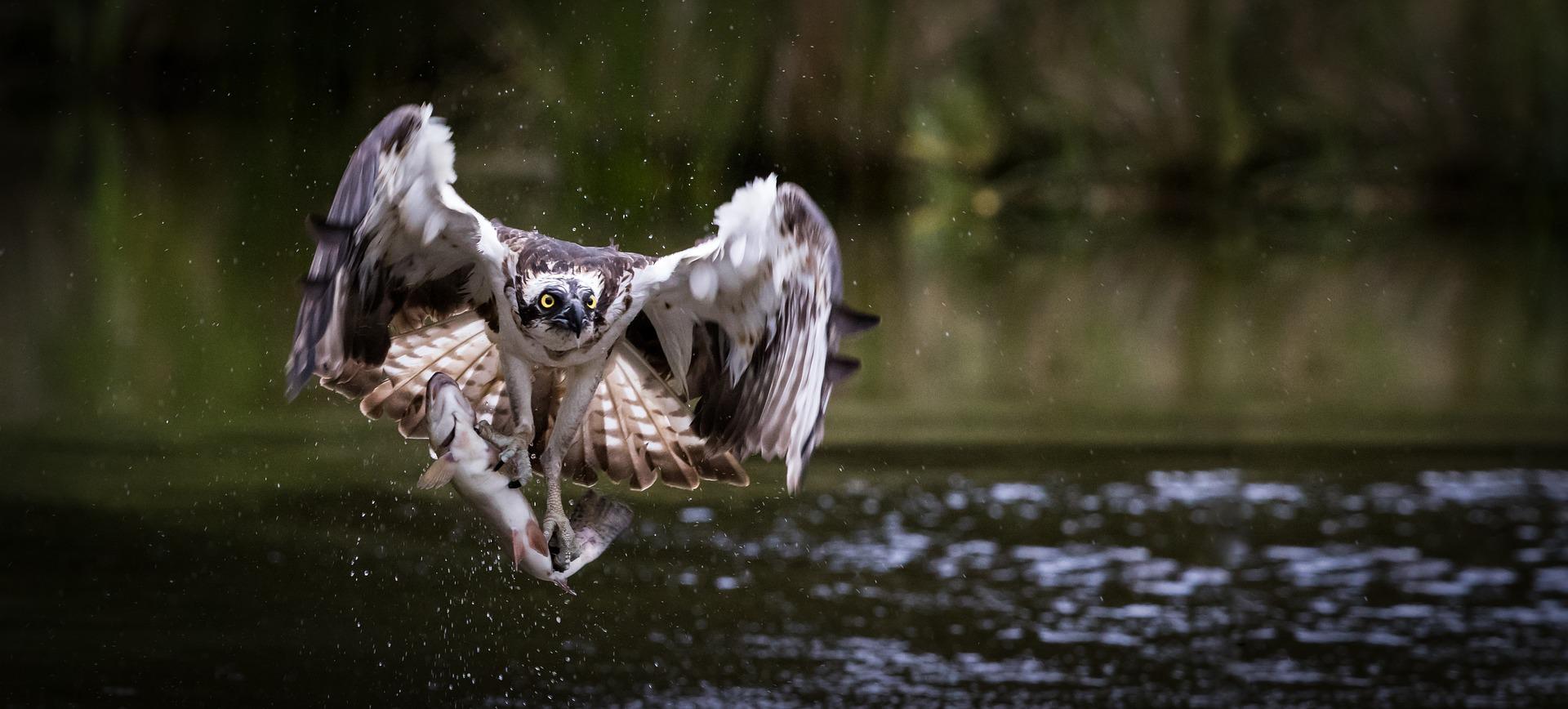
Have you ever seen an osprey in flight? If not, you are missing out! Ospreys are amazing aerialists, capable of reaching great speeds. They can change direction in midair and even fly backwards if necessary. This is quite a majestic Bird of Prey that not many are well clued up on.
It hunts for fish in nearly any aquatic environment while gliding effortlessly through the air on broad wings. As a result of wind speed and air temperature, experts estimate the maximum elevation an osprey can reach, but most agree that this feathered hunter has been known to soar to heights of over 3,000 feet.
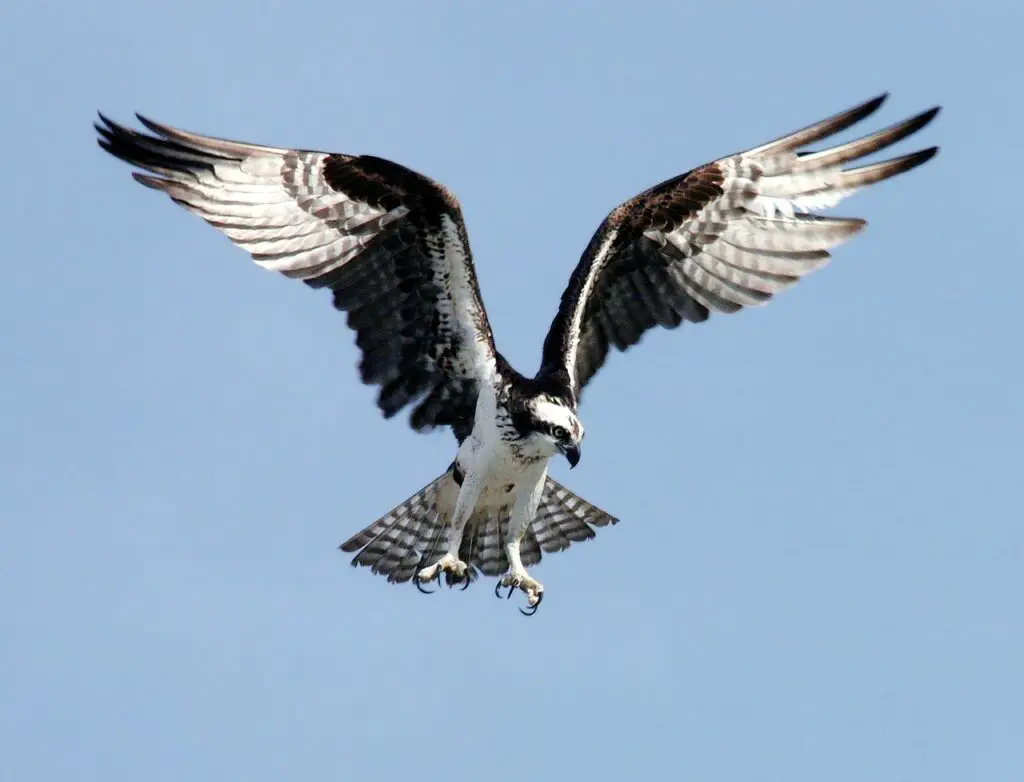
With ospreys being among the very few birds of prey that predominantly hunt fish, their fly capabilities have been of interest to many falconers, so let’s have a look at a few discoveries on the speed and agility of these majestic birds.
How fast can an osprey fly?
According to recent research, ospreys have been found to fly at incredibly high speeds, reaching up to 80 miles per hour while in flight. This makes them particularly fast at catching prey, giving them a distinct advantage over other birds. But what is the reason behind this remarkable speed? Experts believe that the shape and design of an osprey’s wings allow for quick acceleration and high manoeuvrability. Additionally, these birds fly through a combination of flapping and gliding, which helps conserve their energy as they travel long distances over land or water. So whether they are hunting small fish below or soaring overhead, it’s clear that ospreys can move at incredible speeds that few other bird species can match. And although they may not be able to beat fighter jets in a race, they certainly do make up for it with their keen hunting instincts and unmatched agility! Ospreys are not the most popular bird of prey used in falconry, and not many falconers own these birds, but that doesn’t mean that they arent amazing hunters.
How far can Osprey fly?
According to recent research, ospreys can fly nearly 400 – 700 miles in a single day. This incredible feat is aided by the bird’s unique physiology, including very short legs optimized for diving and mighty wings that allow it to soar and glide through the air easily. So while Osprey may not be able to travel as far as some other large species, such as eagles or falcons, they certainly pack a punch when it comes to distance. And given their importance as indicator species in many ecosystems makes their long flights all the more remarkable!
How deep can an Osprey dive?
While there is some variation among individual birds when it comes to their maximum dive depth, many ospreys have been documented diving as deep as 1 meter below the water. This ability makes them particularly effective hunters, enabling them to capture elusive prey that might otherwise escape their grasp. In addition to helping them catch food in various challenging environments, this diving ability also underscores the importance of protecting ospreys and their habitat, both of which are essential to maintaining a healthy ecosystem. After all, without fish populations being adequately supported by ospreys, other local species would suffer too. So whether you’re a nature lover or just an avid falconer, it’s clear that the diving prowess of these magnificent birds benefits us all in one way or another.
What is the speed difference between an Osprey, Peregrine Falcon and a Harris Hawk?
The speed of an Osprey, Peregrine Falcon, and Harris Hawk can vary depending on its size and weight, wing shape and size, overall aerodynamic efficiency, and environmental conditions such as wind speed and air density. Generally speaking. However, an Osprey is considered the slowest of these three birds of prey.
| Bird | Speed MPH |
| Osprey | 80 MPH |
| Peregrine Falcon | 200-240 MPH |
| Harris Hawk | 120 MPH |
Are male Ospreys better Flyers than Females?
It is widely known that male and female Ospreys have very different physical characteristics, with females being larger and stronger than males. While most would assume that this would make females better suited for certain tasks, such as hunting or flying, there is some debate about whether males are better flyers than their female counterparts.
On the one hand, many experts argue that female Ospreys have heavier bodies and longer wingspans, so they have a significant advantage when tackling high-altitude flights or long-distance journeys. Researchers suggest that males may actually be more nimble fliers than females due to their lighter and more streamlined bodies. Ultimately, it seems likely that both sexes have unique strengths when it comes to navigating the skies, making it difficult to conclude definitively whether one sex flies higher or faster than the other. So while we may not know for sure who reigns supreme in the world of flight among Ospreys, one thing is clear: these incredible birds are truly masters of the air.
Do younger Ospreys fly faster than older Ospreys?
While much has been written about the habits and behaviours of ospreys, one particular question regarding these majestic birds has remained unanswered: do younger ospreys fly faster than older ones? Many scientists believe that this is the case, based on anecdotal evidence such as differences in migratory behaviour. However, no comprehensive study has been conducted to confirm or refute this idea.
One possible way to test this theory would be to use high-tech tracking equipment to collect data on flight speed over different ages of Osprey. Such a study could involve monitoring multiple groups of young and adult ospreys as they migrate from breeding grounds in the northern part of their range down to their wintering grounds in the south. Researchers could record individual flight times for each bird over a set distance and analyze the data obtained to determine whether there is any difference in speeds between younger and older birds.
Although there are certainly factors that impact flight speed, such as wind conditions or weather conditions, it is likely that age plays an important role as well. If indeed, young ospreys do fly faster than older ones, further research on this phenomenon may reveal insights into how these birds adapt and respond to changes in their environment throughout their lives. This information could help researchers and falconry experts better understand osprey migration patterns and development strategies across generations, ultimately contributing to efforts to conserve this iconic species for future generations.