
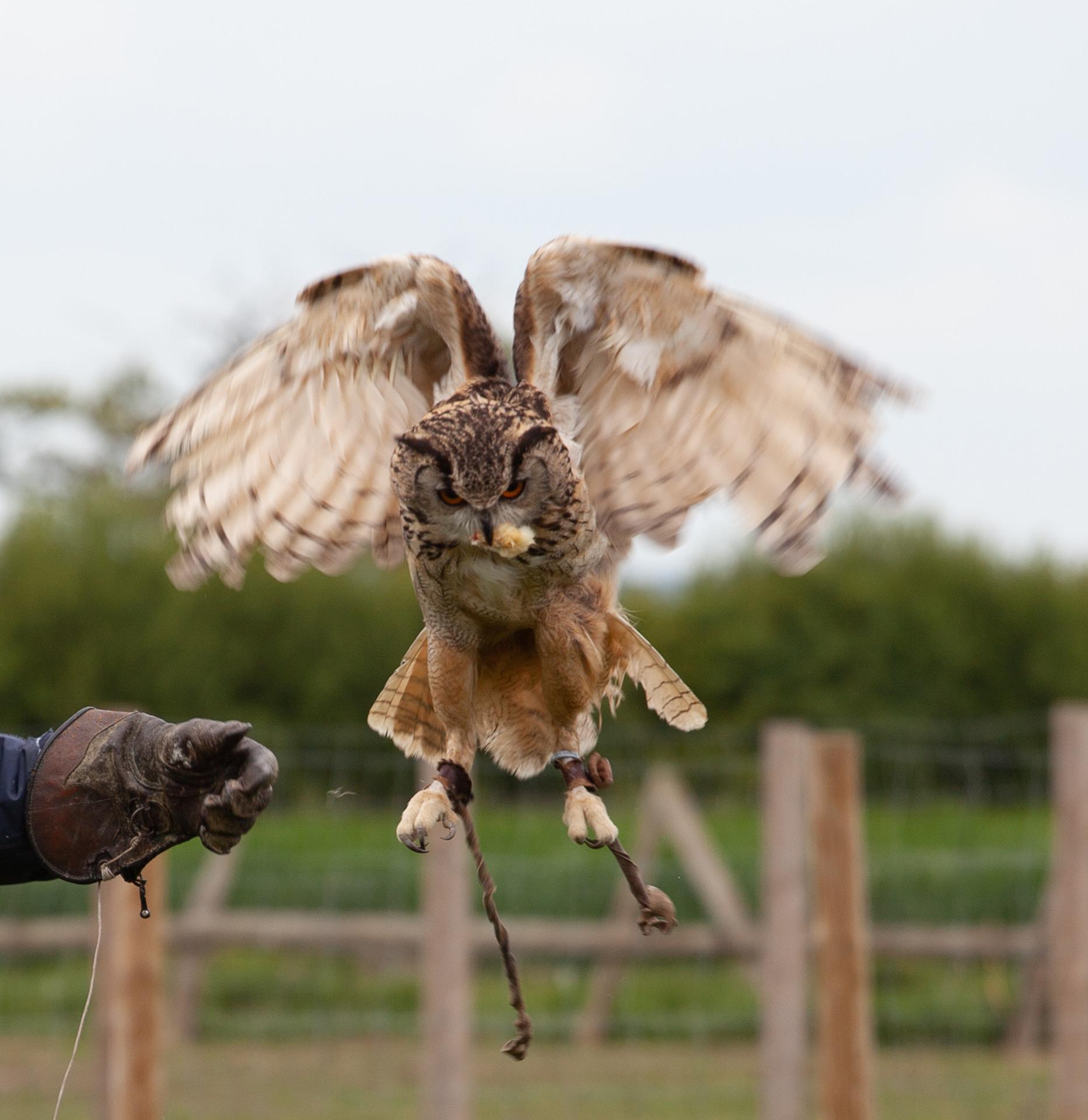
Owls may seem like a natural choice for falconry, but are they really as easy to train as falcons? While owls possess many desirable qualities for hunting, such as excellent eyesight and silent flight, they also have their own individual challenges regarding training.
Training owls for falconry is not impossible, but it requires a different approach than training falcons or hawks. Owls are a bit challenging to train due to their natural instincts, but with patience and dedication, they can be successfully trained for falconry.
Let’s explore the intricacies of owl training for falconry together.
Understanding Owl Behaviour
Before attempting to train an owl for falconry, it is crucial to understand their behaviour and natural instincts. Owls are solitary creatures, and they do not have the same social instincts as falcons or hawks. They also have a strong instinct to roost during the day and hunt at night.
Furthermore, owls have a much lower motivation to hunt than other birds of prey. This means they may not respond as well to traditional falconry training methods, which rely heavily on the bird’s motivation for food.
These are just a few reasons why I wouldn’t recommend a beginner falconer to start with an owl. However, for experienced falconers, owls can make great hunting companions if trained properly.
Challenges in Owl Training
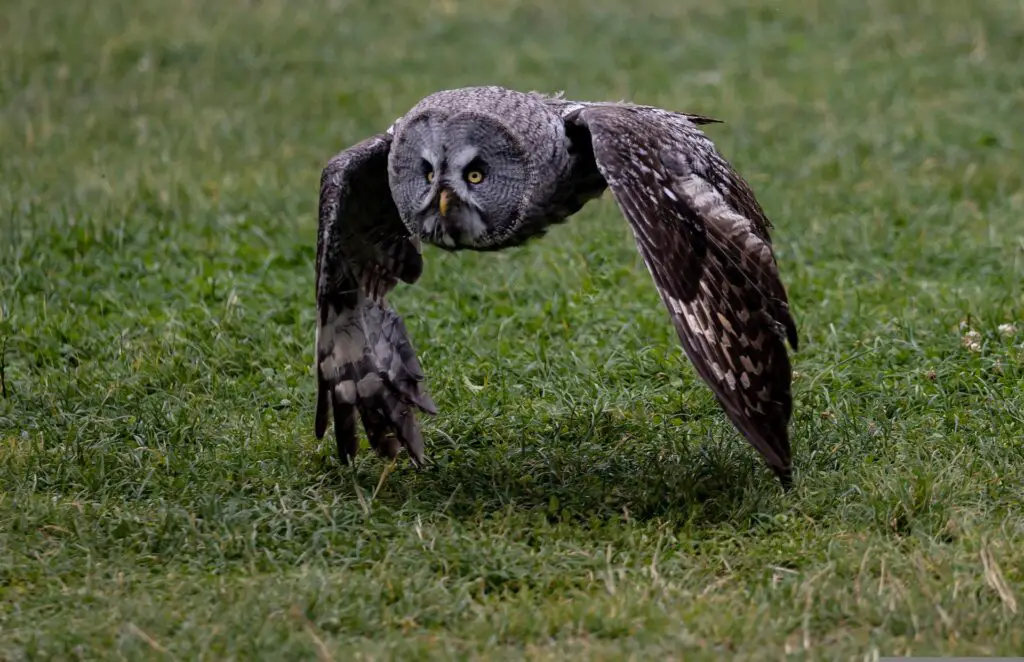
One of the biggest challenges in training owls for falconry is their unpredictable nature. Owls have a strong flight response and can easily be startled, which makes them prone to flying off during training sessions.
Additionally, since owls are not as social as falcons or hawks, they may not form the same bond with their trainers. This can make it harder to establish a trusting relationship, which is essential for successful training.
Another challenge is that owls are less motivated to eat than other birds of prey. This means traditional methods of using food rewards may not be as effective in training them. Instead, trainers must find alternative ways to motivate their owls, such as using play or toys.
Training Techniques for Owls
When it comes to training owls for falconry, patience and a gentle approach are key. Unlike falcons or hawks, forcing an owl to do something will only result in frustration and could potentially harm the bird.
Positive reinforcement techniques, such as conducting clicker training, have proven to be effective in teaching owls new behaviours. This involves using a clicking sound followed by a food reward to reinforce desired behaviours.
Another technique is using a lure, which is a piece of meat that should be attached to a string and swung around. This mimics the natural hunting behaviour of an owl and can be used to train them to fly towards prey.
Owls Vs. Other Birds of Prey
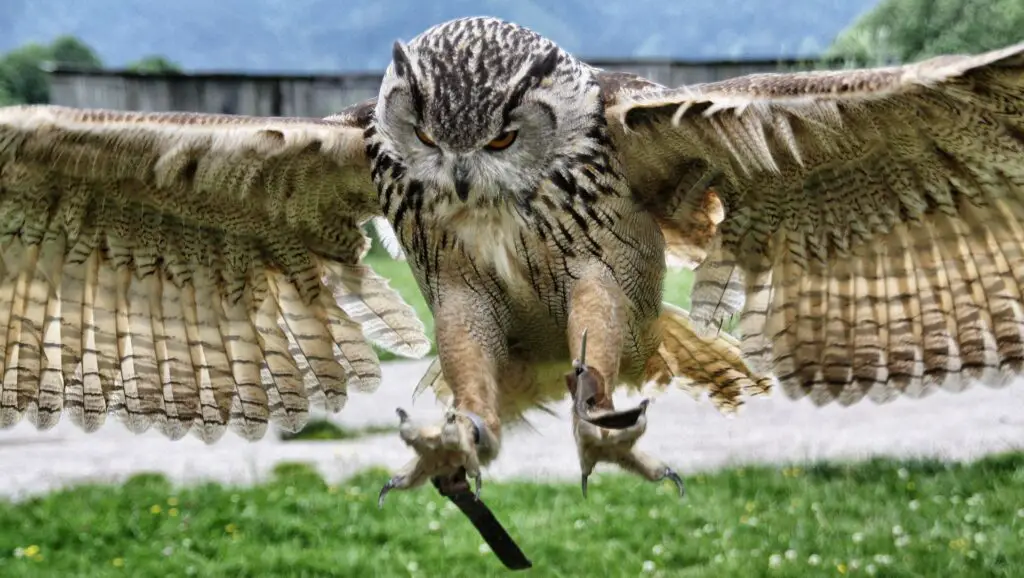
Owls, known for their nocturnal habits, possess exceptional hearing and silent flight capabilities, making them efficient hunters at night. Their unique physiology includes forward-facing eyes for binocular vision, aiding in precise depth perception during hunts. While owls are intelligent and adaptable, they can be more solitary and less social compared to other birds of prey.
On the other hand, birds like falcons and hawks are diurnal hunters with keen eyesight and impressive speed and agility. Falcons, for instance, are known for their aerial acrobatics and swift dives to catch prey. These birds are often more social and trainable, forming strong bonds with their falconers. Their diurnal nature may make them more suitable for falconry activities that require hunting during the day.
Tips for Successful Owl Training
Here are a few tips to help in training owls for falconry:
- Start with an experienced and trained owl rather than attempting to train a wild one.
- Begin training at an early age when the owl is still young and more adaptable.
- Use positive reinforcement techniques, such as training with a clicker or lure flying.
- Be patient and understanding of the owl’s natural instincts and behaviours.
- Never force the owl to do something it is not ready for.
In conclusion, owls may pose unique challenges when it comes to training for falconry, but with the right techniques and understanding of their behaviour, they can be trained to be successful hunting companions.
Frequently Asked Questions
Can any owl be trained for falconry?
- Not all species of owls are suitable for falconry due to their unique behaviours and natural instincts. Species like the Great Horned Owl and Eurasian Eagle Owl are commonly used in falconry as they have a larger size and strong hunting abilities.
How long does it take to train an owl for falconry?
- The training time for an owl can vary depending on the individual bird and the trainer’s approach. It could take anywhere from a few weeks to several months to successfully train an owl for falconry.
Is it legal to train owls for falconry?
- Falconry laws vary by country and state, so it is essential to research and understand the regulations in your area before attempting to train an owl for falconry.
Is it necessary to have experience in training other birds of prey before attempting to train an owl?
- Having prior experience in training other raptors can be beneficial when working with an owl, but it is not necessary.
Are there any specific safety precautions to take when training an owl for falconry?
- It is essential to always put safety first when working with any bird of prey, including owls. Owls have sharp talons and their beak can cause injury, so proper protective gear should be worn during training sessions. It is also crucial to handle the owl gently and try not to make any sudden movements that could startle or stress the bird.