
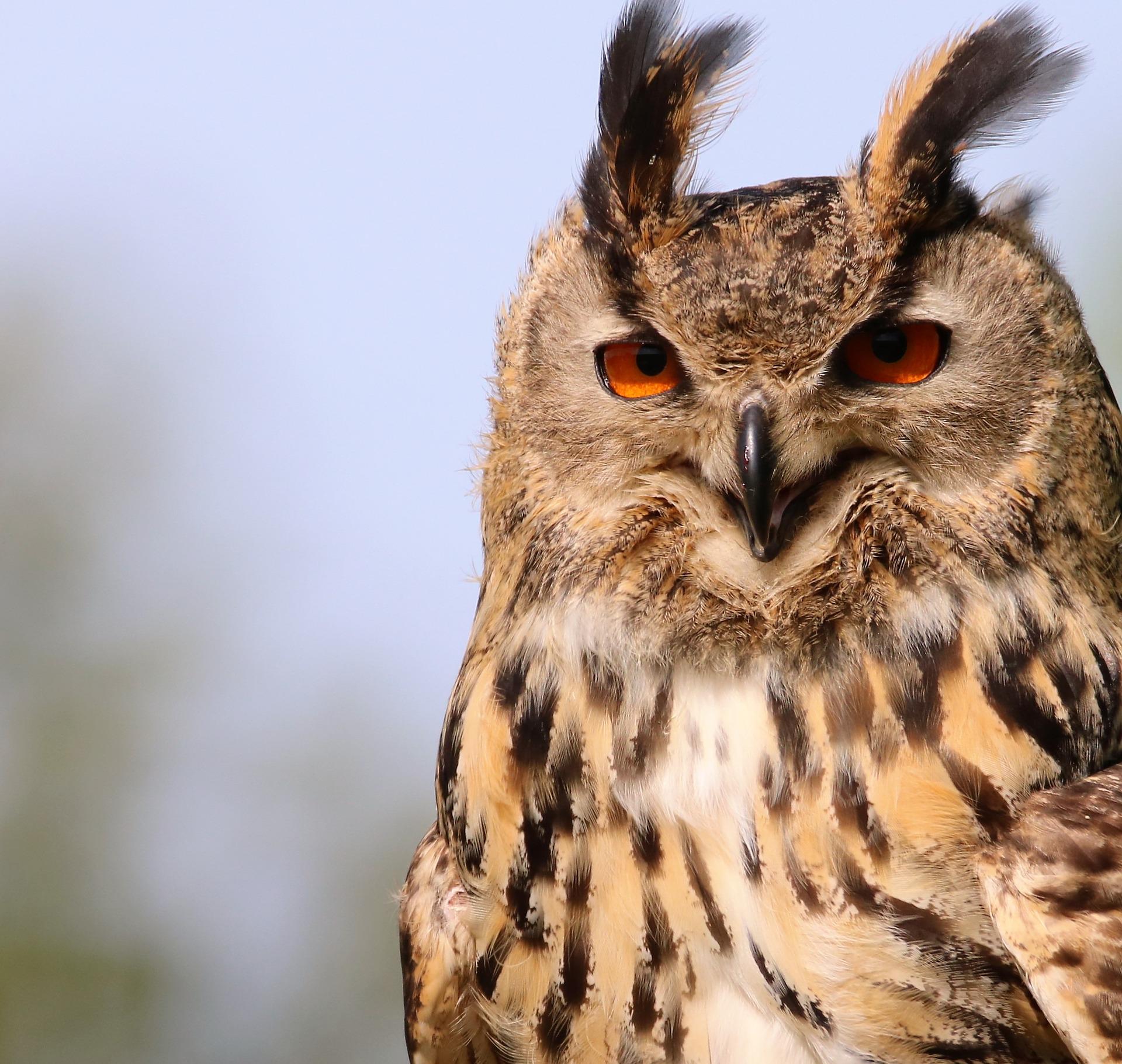
While falcons have long been the birds of choice for traditional falconry, an increasing number of modern-day falconers are starting to rethink the use of Eurasian owls as trained hunting companions. With their silent flight and ability to spend considerable time up in the air, owls offer unique skills that make them desirable in many situations where the smaller game is being targeted, such as rabbit or quail hunts.
Yes, Eurasian owls can be used in falconry. They have excellent vision and hearing capabilities, making them particularly well-suited for hunting small game animals. Additionally, they have a good disposition towards humans if trained correctly, making them appealing to falconers.
But what challenges must be overcome when trying to train Eurasian owls? And is it truly possible to be successful with these larger predators? In this blog post, we’ll explore some of the pros and cons that come along with using owl species in your next hunting expedition.
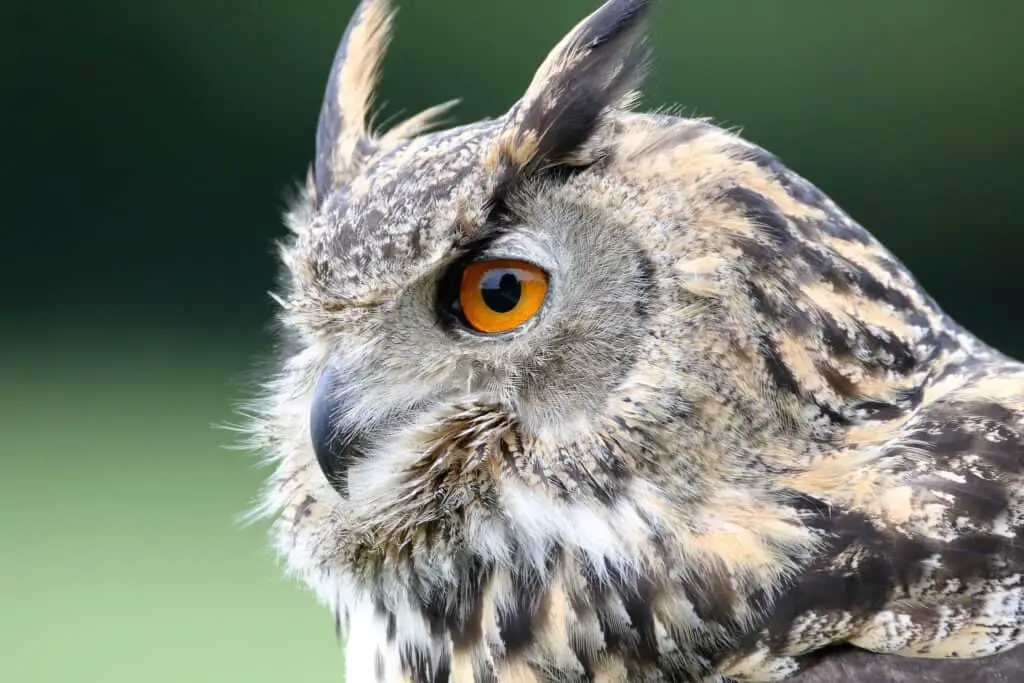
Are there more than one species of Eurasian owl?
Did you know that there is more than one type of Eurasian owl? That’s right! In fact, a closer look into the magnificent birds reveals 12 subspecies. Its size makes it stand out among the other eagle owls. Meanwhile, the Ural owl is somewhat smaller yet no less impressive compared to other species of owl in Europe. However, arguably the most interesting of all is the Tengmalm owl which has incredibly long legs and a strangely diminutive body in comparison. It’s no wonder why these remarkable creatures were often written about and described in great detail by authors who looked upon them with wonder.
Training: how to train Eurasian owls?
Training Eurasian owls requires patience and consistency. A good start is to create a schedule that works for you and your bird. This should include meals, playtime, and a variety of activities to challenge your feathered friend. As you begin training, using positive reinforcement is highly recommended as it encourages your owl to perform tasks correctly. Treats are often used for this purpose, but habit patterns can also be established using clicks or whistles. While it may seem difficult at first, given time and effort, the rewards from training a Eurasian owl are great – from show performances to forming a strong bond with your feathered companion!
Understanding their natural hunting behaviours
Oftentimes, owls are seen as mysterious creatures that never cease to amaze. To fully appreciate the beauty of the Eurasian owls, one should take a closer look at their natural hunting behaviours. For instance, Eurasian owls have excellent hearing and vision to detect their prey even in darkness. They patiently wait with poise before swooping down on their unsuspecting victims, usually at an incredibly swift speed. Moreover, they can rotate their heads up to 270 degrees due to specialised ligaments and vertebrae geared towards the hunt – a feature unmatched by most other animals. Through closer observations, we better understand how these powerful birds survive in the wild by adapting to nature’s demands through centuries of evolution.
What equipment do I need to house and train my Eurasian owl successfully?
You will need the following training equipment to train your Eurasian owl successfully:
- A perch for the owl to land on and practice flight
- An outdoor enclosure for exercising and hunting activities
- Prey lures or a smaller game bird for basic hunting exercises
- Materials to construct an artificial nest box, such as logs, bark, sticks, moss, and dry grass
- Treats to reward successful hunting training sessions
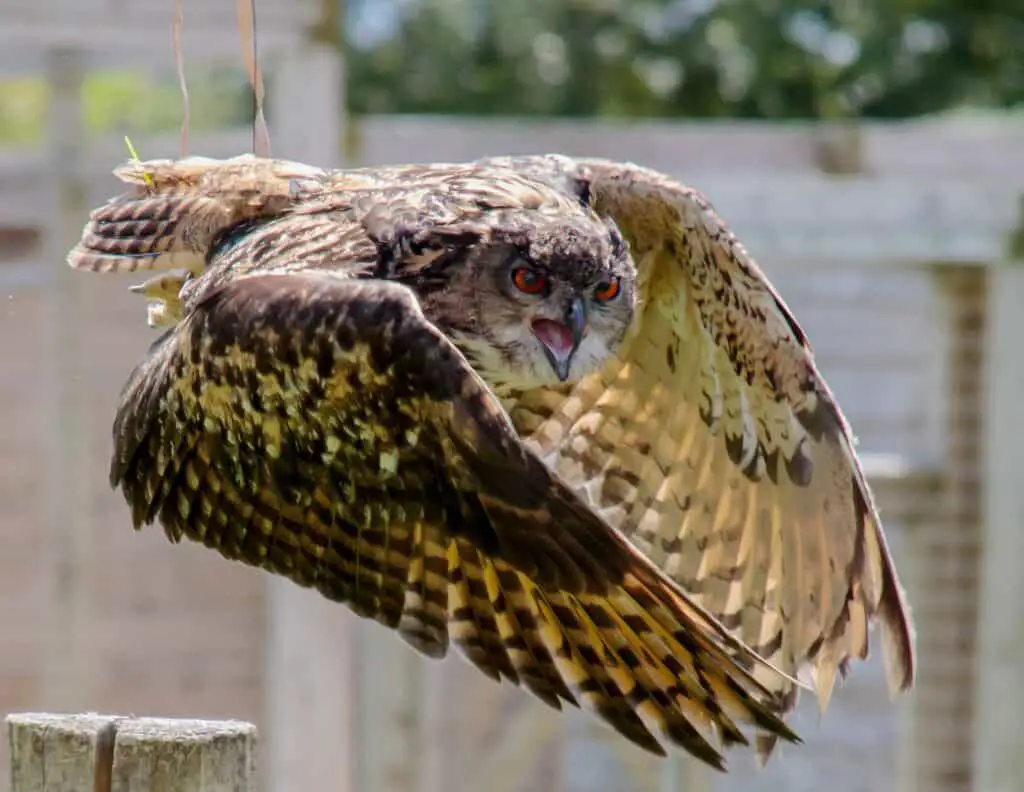
Are there any Laws or Regulations to own and use Eurasian owls for falconry?
Several countries require permits and licences, which are frequently accompanied by a veterinary assessment of the bird. Also, falconers need to be fully competent with these birds to ensure they are not endangering the bird. Because of their nocturnal nature, few people are aware that owls can be employed in falconry, so I have taken the time to dig into the possibility of using owls for falconry.
In the realm of falconry, Eurasian owls are highly sought after. These predators have been trained to hunt with humans for many years. But, their employment in this age-old sport is not without controversy. Some people believe that capturing wild animals for human amusement is cruel. Some think that falconry, when done correctly, can benefit both the bird and the trainer. The truth is somewhere in the middle and depends entirely on how you treat your bird. If you are one of the good ones, you could be preserving this species or even aiding in their reproduction if you intend to breed them. If you’re thinking about taking up falconry, do your homework beforehand. Make certain that you are prepared to manage a highly demanding species and that you understand the responsibilities that come with owning an owl.