
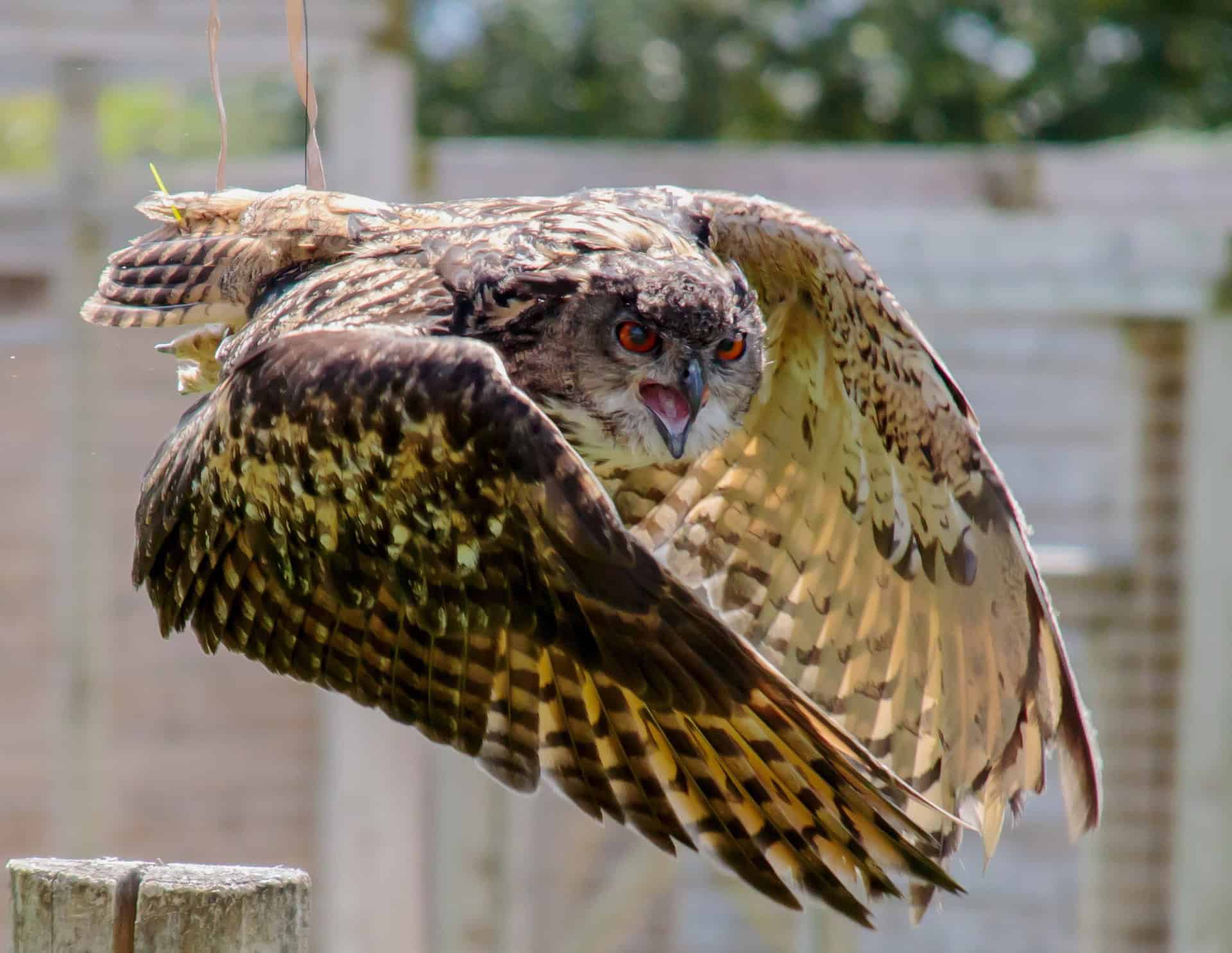
Owls have been long known for their hunting abilities, with their excellent eyesight and silent flight being two of the most impressive features. While falcons are more commonly used in this sport due to their speed, agility and power, there are certain species of owls that have also been trained and used in falconry. In this section, we will explore the different types of owls used in falconry and their unique characteristics.
Types of Owls Used in Falconry
Eurasian Eagle Owl
The Eurasian Eagle Owl (Bubo bubo) is one of the largest owls in the world and has been used in falconry for centuries. Its impressive size, with a wingspan of up to 6 feet, makes it well-suited for hunting larger prey such as hares, foxes, and even small deer. These powerful birds have strong talons and a sharp beak, making them skilled hunters in the wild. In falconry, this owl’s size grants it the advantage of being able to take down larger prey compared to other, smaller owl species commonly used.
I started training my Eurasian owl after about five years into my falconry journey. It was a completely different experience compared to training falcons or hawks, as owls have a different temperament and hunting style. However, with patience and consistency, my Eurasian Eagle Owl became one of my most reliable hunting partners.
This bird is not among those I would suggest a beginner falconer to train, as its size and power can be intimidating. Proper handling and training techniques are crucial. You would require a year of handling experience and knowledge before attempting to train a Eurasian owl for falconry.
Great Horned Owl
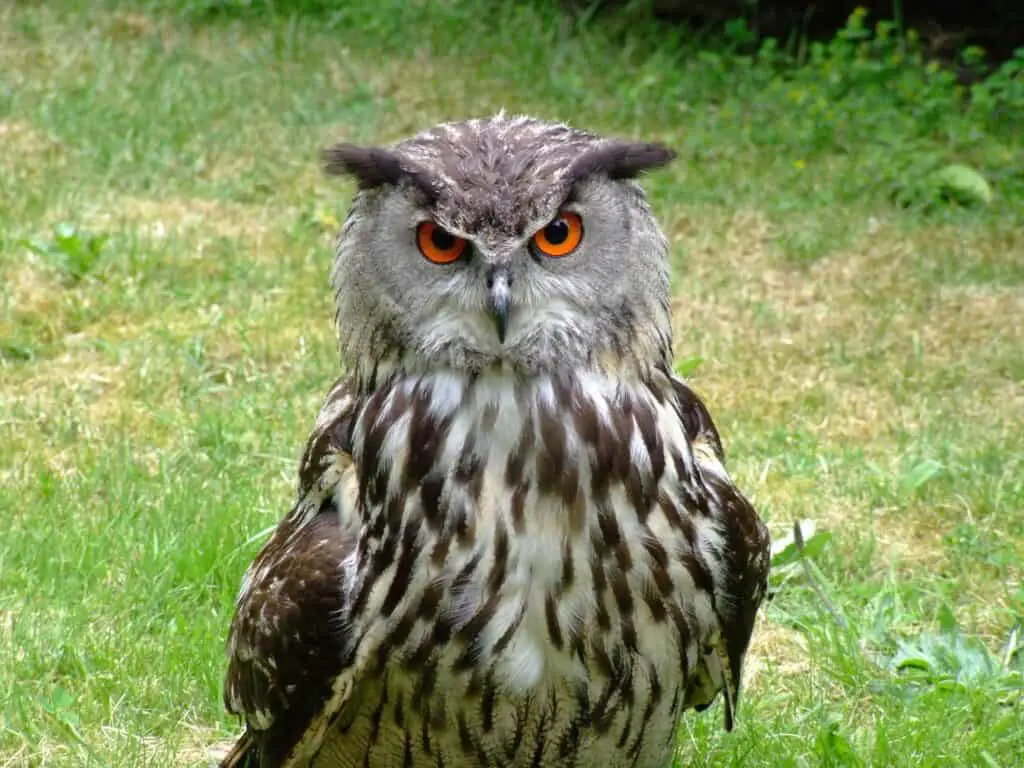
The Great Horned Owl (Bubo virginianus) is another large species of owl commonly used in falconry. With a wingspan of up to 5 feet, this bird has incredible strength and agility that make it a formidable hunter. In falconry, they are known for taking down larger game, such as rabbits, squirrels, and even skunks.
I personally have not trained a Great Horned Owl for falconry, but I have had the opportunity to handle and fly one belonging to a fellow falconer. The experience was exhilarating as this species is known for its strong personality and fierce hunting abilities.
Patience and consistency are key when training a Great Horned Owl for falconry. These owls are known for their intelligence and independent nature, making them both challenging and rewarding hunting partners. Understanding their natural instincts and adapting training methods to harness their predatory skills is crucial for success in the sport.
Other owls that are used in falconry
Apart from the Eurasian Eagle Owl and Great Horned Owl, there are other smaller owl species that have been trained and used in falconry but are very rarely used. These include:
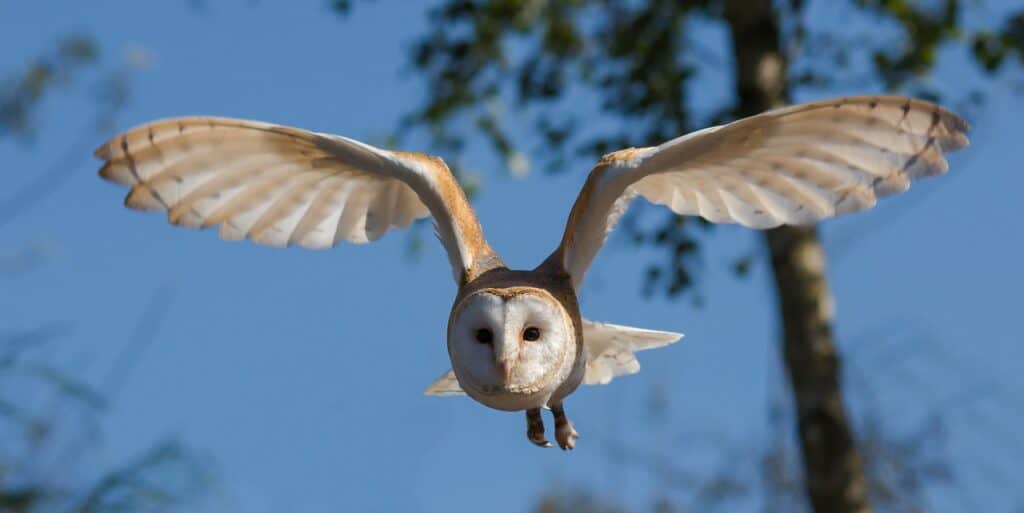
- Barn Owls (Tyto alba)
- Tawny Owls (Strix aluco)
- Snowy Owls (Bubo scandiacus)
- Saw-whet Owls (Aegolius acadicus)
Why are there so few species of owls that are trained for falconry?
Unlike falcons and hawks, which have been domesticated for hunting purposes for centuries, owls are still primarily wild birds. This means that they have retained their natural instincts and behaviours, making them more difficult to train for falconry compared to other birds of prey. There are several reasons why they are not as commonly used in falconry compared to other birds of prey. Let’s take a look:
- Temperament: Owls, by nature, are solitary and nocturnal creatures, making them less inclined to bond with humans compared to diurnal birds of prey like falcons and hawks. This inherent behaviour makes training owls for falconry more challenging and time-consuming.
- Hunting Style: Owls have a different hunting technique than falcons and hawks. Their silent flight and preference for small mammals mightn’t align with the hunting methods required in falconry, which often involves pursuing birds in open spaces.
- Legal Restrictions: Some owl species are protected by strict conservation laws due to declining populations or endangered status. This limits the availability of certain owl species for falconry training, as conservation efforts prioritize wild populations over captive use.
In conclusion, the Great Horned Owl and Eurasian Eagle Owl are the two main species used in falconry due to their impressive hunting abilities and trainable nature. These owls have unique characteristics that make them well-suited for this ancient sport.
Frequently Asked Questions
How Long Does It Typically Take to Train an Owl for Falconry?
- Typically, training an owl for falconry can take several months. It involves building trust, teaching hunting skills, and honing responses to commands.
Are There Any Specific Personality Traits That Make an Owl Well-Suited for Falconry Training?
- Yes, certain owl species have been found to be more trainable for falconry due to their personality traits such as intelligence, adaptability and responsiveness.
Can Owls Be Trained for Falconry at Any Age, or Is It Best to Start When They Are Young?
- Starting falconry training at a young age is ideal, as it allows for a stronger bond to form between the owl and falconer. However, owls can be trained at any age with patience and dedication.
Are There Any Specific Challenges or Difficulties That Come With Training an Owl for Falconry Compared to Other Birds of Prey?
- Training an owl for falconry presents unique challenges. Their nocturnal nature can impact training schedules. Owls also have different hunting instincts than diurnal birds, requiring specialized techniques.