

As a passionate falconer and bird lover, I’ve been lucky to have the opportunity to engage with Peregrine Falcons – majestic creatures that are renowned as some of the world’s swiftest birds. Although it may appear intimidating to train such powerful animals, doing so can be an immensely rewarding experience which creates strong connections between falconer and feathered friends alike. Here, I’ll share some of my own experiences and insights on how to train a Peregrine Falcon, including the tools and techniques needed to ensure success. Whether you’re a seasoned falconer or just starting out, I hope this post will provide valuable insights into the training process of these incredible birds.
Training a Peregrine Falcon for falconry requires patience, persistence, and a deep understanding of their behaviour. Start with basic obedience and gradually introduce prey. Use positive reinforcement and reward good behaviour. Ensure they are physically fit and get regular exercise. Remember to never train falcons in the wild or without the proper permits.
Falconry has been a significant part of human history for centuries, and a highly sought-after bird in falconry is the Peregrine Falcon, celebrated for its speed and agility. However, training the bird to hunt takes effort and persistence. Below, we will discuss the process I use when training a Peregrine Falcon, starting from basic obedience training to excellent hunting ability. Thus, to indulge in the exciting world of falconry, join us in this journey of learning how to train a Peregrine Falcon for falconry.
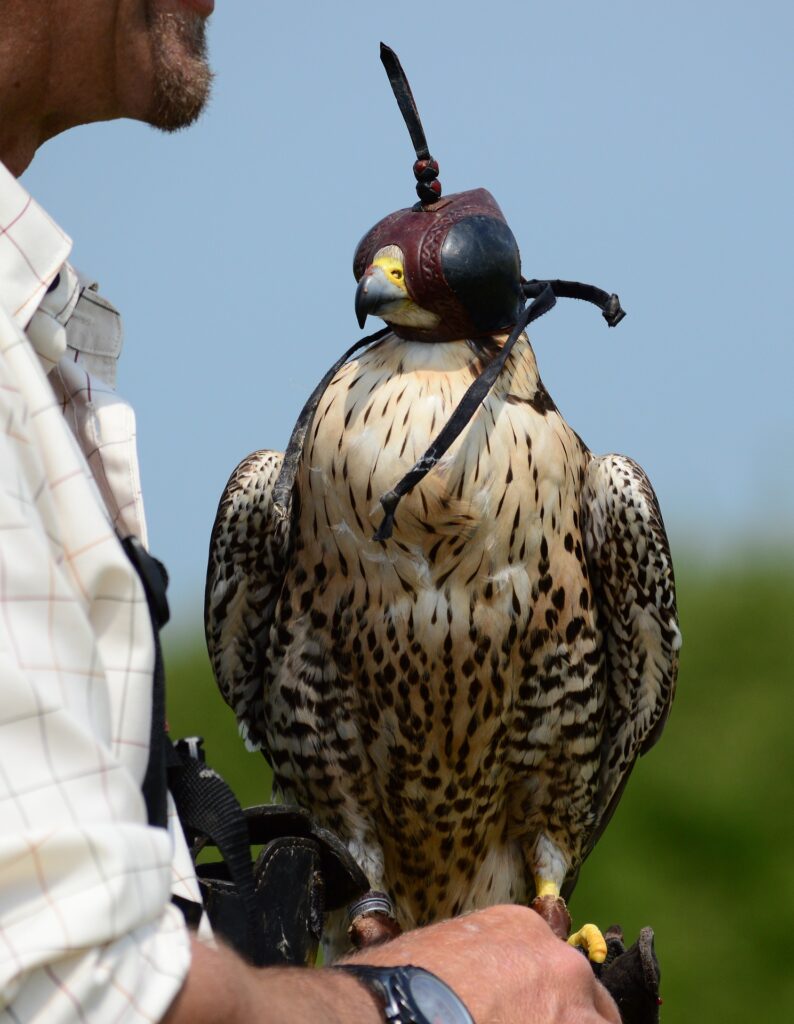
Understanding Peregrine Falcons’ Purpose in Hunting and Falconry
One of the most common birds used in falconry is the Peregrine Falcon. Because of their immaculate speed and agility, they are outstanding hunters. Peregrine Falcons are taught to hunt small game, including rabbits, pheasants, pigeons, hares, and birds in falconry. The falconer is in charge of leading and guiding the bird as it is being taught to hunt, utilizing its innate instincts and hunting skills. Therefore, knowing what you are doing is essential when trying to train these birds. There’s no such thing as “I’ll just wing it” and see what happens. You will require proper experience and knowledge for this task.
Choosing the Right Peregrine for You
When choosing a Peregrine Falcon for hunting, it’s crucial to pick one that’s healthy and has the right personality. I personally search for birds with strong bones and muscles, sharp beaks and talons, and exceptional eyesight. Additionally, it’s important to choose a falcon that is easy to train and takes commands well, as this will give you greater control during the hunt. In my experience, the best option is to raise a young Peregrine chick from infancy to adulthood by hand. This method allows both the bird and the falconer to become more comfortable with each other and develop a deeper understanding of one another.
Building the Right Hunting Equipment and Area
Before you start training your Peregrine Falcon, you will need to set up an appropriate hunting area and equipment. The size of a suitable hunting field should permit the bird to fly unhindered and safely. Whenever I let my bird out, I make sure to keep it far away from hazardous obstacles such as power lines and congested highways. A few pieces of equipment that I find essential when training to hunt is a leather glove, a hood, and a set of jesses and bells. These are all necessary for falconry.
Making a Hunting Training Schedule and Plan
Your Peregrine Falcon’s training will be successful if you create a hunting training program and plan. My training program is always customized and unique to the needs and skills of each bird. The timetable needs to be adaptable and allow for changes dependent on the bird’s development.
Begin with fundamental obedience and recall instruction.
Establishing fundamental obedience and recall training is the first stage in preparing a Peregrine Falcon for hunting. This entails training the bird to comply with simple instructions like approaching the falconer’s glove and remaining still. Training in the recall is crucial because it will enable the falconer to recover the bird if it takes flight during a hunt. A lure is an essential piece of equipment during this stage of training.
Establishing the Bird’s Hunting Instincts and Exposing It to Prey
The next phase is to expose the bird to prey so that it can hone its hunting instincts after it has mastered fundamental obedience and recall training. This entails introducing the bird to live prey gradually, beginning with smaller prey like mice and working up to larger prey like rabbits. The falconer must exercise patience and let the bird develop at its own rate.
The process of teaching the bird to fly at prey and land on the falconer’s glove
The next step is to teach the bird to fly toward real prey and then return to the falconer’s glove once it is familiar with it. This entails luring the bird toward the target using bait, like a piece of meat. The falconer should then use a whistle or a spoken command to call the bird back to the glove.
Creating the Bird’s Hunting Strategies and Technique
The falconer should concentrate on refining the bird’s hunting tactics as it advances in its training. In order to accomplish this, the bird must be trained to use its innate hunting instincts and skills, such as its speed and agility, to capture prey. The falconer should also teach the bird how to cooperate with other hawks and falcons, and other hunting birds.
Ability to hunt in different Terrain
Furthermore, the bird should be trained to adjust to multiple hunting environments, including vast plains and dense forests.
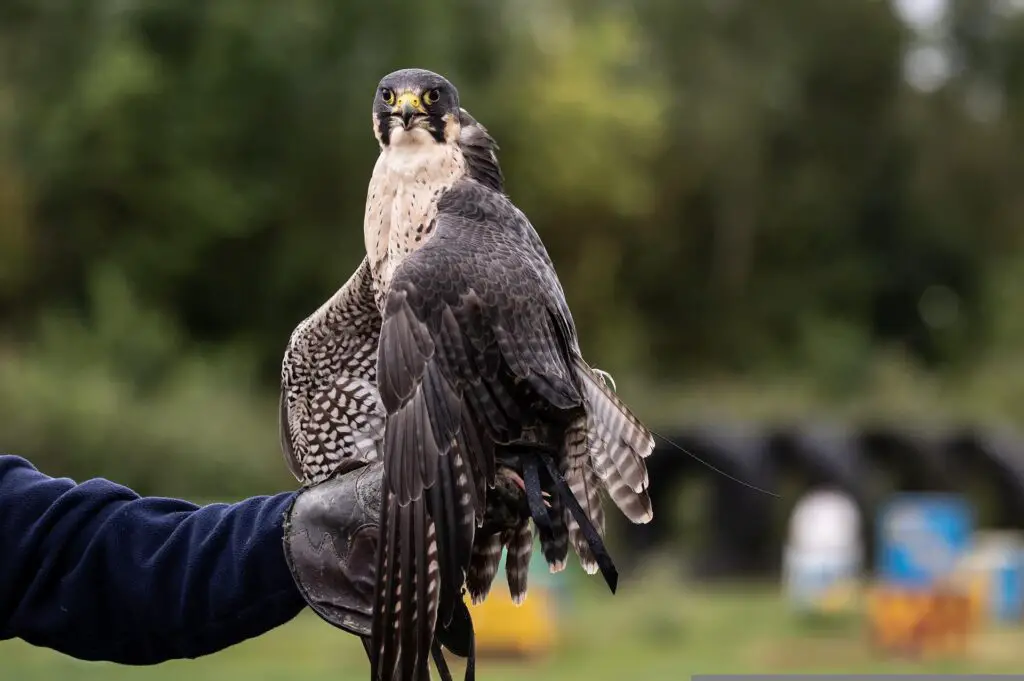
Optimizing Bird Nutrition and Diet for Best Hunting Performance
The diet of a peregrine falcon is essential to its general well-being and performance. The bird needs a balanced diet to stay strong and have the energy necessary for hunting. I feed my Peregrines a diet that is high in protein and low in fat. This often includes a combination of quail, pigeon, and beef heart.
Continually Developing Your Hunting Techniques and Skills Over Time
The process of teaching a Peregrine Falcon to hunt for falconry never ends. The falconer should continue to develop the bird’s skills and tactics throughout time as part of ongoing training. Any changes in the bird’s behaviour or health should be reported to the falconer, who should then modify their training program.
Patience, commitment, and a thorough grasp of the Peregrine Falcon’s natural instincts and habits are necessary while training one to hunt for falconry. In addition to being enjoyable, raising a falcon for falconry also fosters a close relationship between the falconer and the animal. You can effectively train your peregrine falcon to become a skilled falconry hunting bird according to the instructions provided in this article.