

Peregrine falcons can be aggressive, especially when defending their territory from intruders. Their protective instincts drive them to fiercely guard their nesting sites and hunting grounds. Although falconers have trained these birds of prey for centuries, wild peregrine falcons are still considered to be aggressive animals.
Characteristics that Contribute to Aggression
Peregrine falcons have several characteristics that can contribute to their aggressive behavior:
- Territoriality: These birds are highly territorial and will defend their nesting sites and hunting grounds from other peregrine falcons and other bird species.
- Protective of young: Peregrine falcons are protective parents and will aggressively defend their nests and offspring from any perceived threat.
- Speed and agility: As one of the fastest birds in the world, peregrine falcons have incredible speed and agility. This allows them to quickly attack intruders or potential threats.
- Sharp talons and beak: Peregrine falcons have sharp talons and a powerful beak, which they use for hunting prey. These same tools can also be used for defense against potential threats.
Instances Where Aggression May Be Displayed
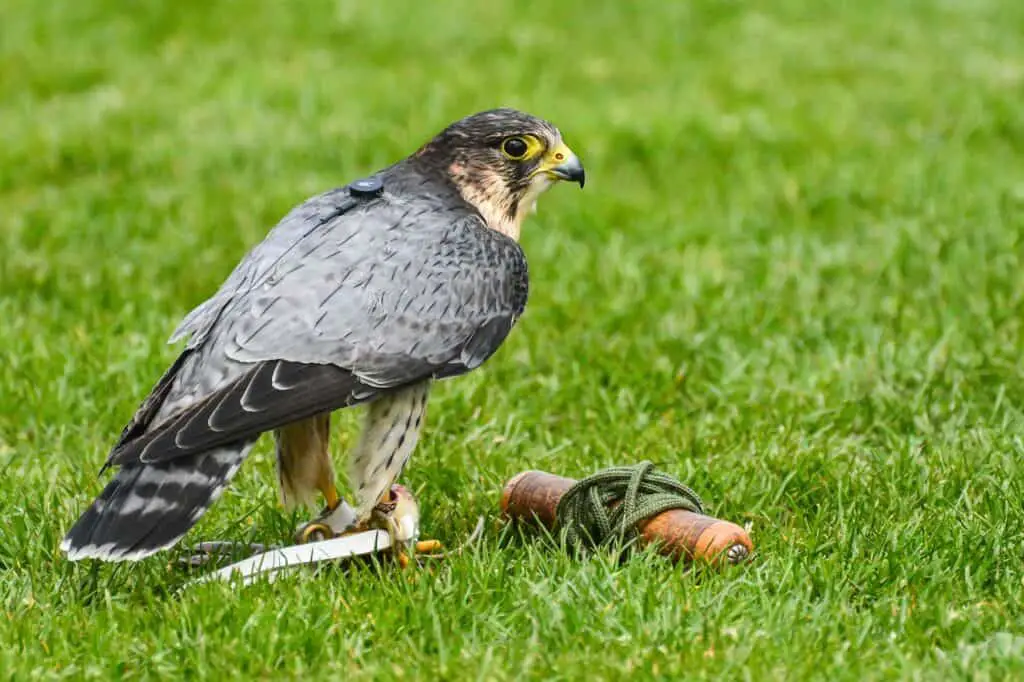
I’ve seen Peregrine falcons display aggression in the following situations:
- Defending territory: As mentioned earlier, peregrine falcons are highly territorial and will aggressively defend their nesting sites and hunting grounds.
- Protecting young: When peregrine falcon chicks are present, the parents become even more aggressive in protecting them from any perceived danger.
- Interactions with other bird species: Peregrine falcons may display aggression towards other bird species that they view as competition for food or territory.
- Human interactions: While peregrine falcons are not typically aggressive towards humans if they feel threatened or their nesting site is disturbed, they may exhibit aggressive behavior.
How to Avoid Conflict with Peregrine Falcons
If you own a peregrine falcon or regularly interact with wild ones, it’s important to understand how to avoid conflict and potentially aggressive behaviors. Here are some tips:
- Respect their territory: If you know peregrine falcons are nesting in a certain area, avoid disturbing them by staying away from their nesting site.
- Keep your distance: If you encounter a peregrine falcon in the wild, give them plenty of space and avoid approaching too closely.
- Avoid disrupting their routines: Peregrine falcons are creatures of habit, and any sudden disruptions to their daily routine may cause them stress and potentially trigger aggressive behavior.
- Seek professional training: If you own a peregrine falcon, it’s important to seek professional training from an experienced falconer to properly handle and train your bird.
Aggression Towards Humans
Surprisingly, captive peregrine falcons can exhibit aggressive behavior towards humans under certain circumstances.
Reasons for Aggression:
- Peregrine falcons may become aggressive if they feel threatened or cornered, especially during breeding season.
- Some falcons may display aggression due to past negative experiences with humans, such as improper handling or mistreatment.
- Intrusion into their nesting area can trigger defensive behavior and lead to aggression toward perceived threats.
In my experience, I’ve observed that while peregrine falcons are generally not aggressive towards humans in the wild, captivity can alter their behavior. It’s important to approach them with caution and respect their space to prevent triggering any aggressive responses.
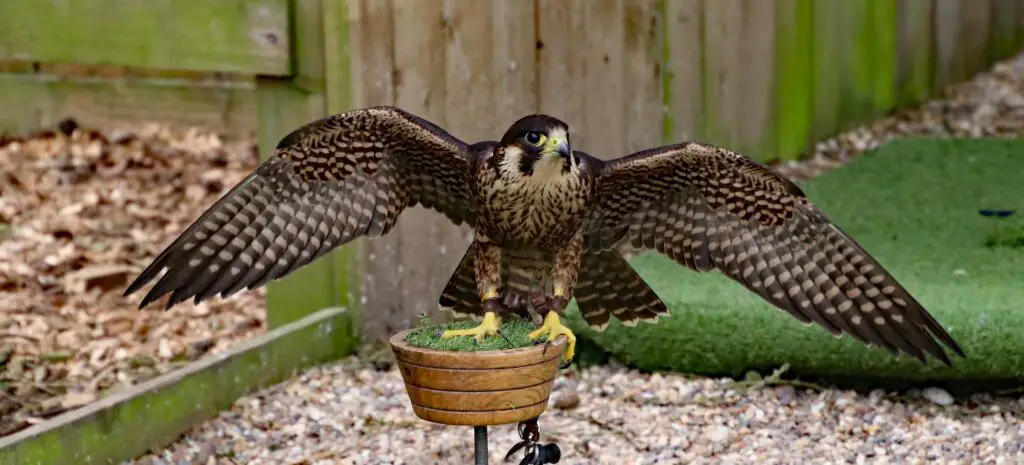
Factors Influencing Falcon Aggression
Factors influencing Peregrine falcon aggression can vary depending on the individual bird’s experiences and environment. Understanding these factors is essential in caring for and handling peregrine falcons. Here are some key elements that can influence falcon aggression:
| Factor | Description | Impact |
| Previous Trauma | Any past negative experiences can make a falcon more defensive. | Increased likelihood of aggressive behavior. |
| Territorial Behavior | Falcons are protective of their nesting sites and may exhibit aggression when they feel threatened. | aggression towards perceived intruders |
| Health Issues | Illness or injury can cause discomfort, leading to defensive or aggressive responses. | aggression as a form of self-protection |
| Training | Proper training techniques can help manage and reduce aggression in falcons. | Effective training can decrease aggressive tendencies. |
While peregrine falcons are known for their aggressive behavior, it is mostly a result of their natural instincts to protect themselves and their young. By understanding their behaviors and taking necessary precautions, humans can coexist peacefully with these magnificent birds of prey.