

Do peregrine falcons punch their prey? It’s a question that has long been debated by falconers and bird enthusiasts alike. Some say that the powerful talons of the peregrine falcon are more than enough to take down prey without having to resort to punching it. Others believe that the falcon’s strong beak can efficiently dispatch prey with a good old-fashioned punch. So which is it?
Peregrine falcons are known to divebomb their prey at extreme speeds, which results in a punch-like effect. This method often stuns prey and immobilizes them, and, more often than not, kills them upon impact. This is another top trick in a peregrine’s arsenal of tactics and demonstrates just how much speed they hit their prey with.
Peregrine falcons are famous for the impact they deliver on their prey, and its no doubt that they can due to them reaching speeds of 390 Kmp (242.3 Mph). So we’ll take a closer look at the peregrine falcon and see if we can explain more in-depth about their punch, how it is delivered and what is the consequences for prey.
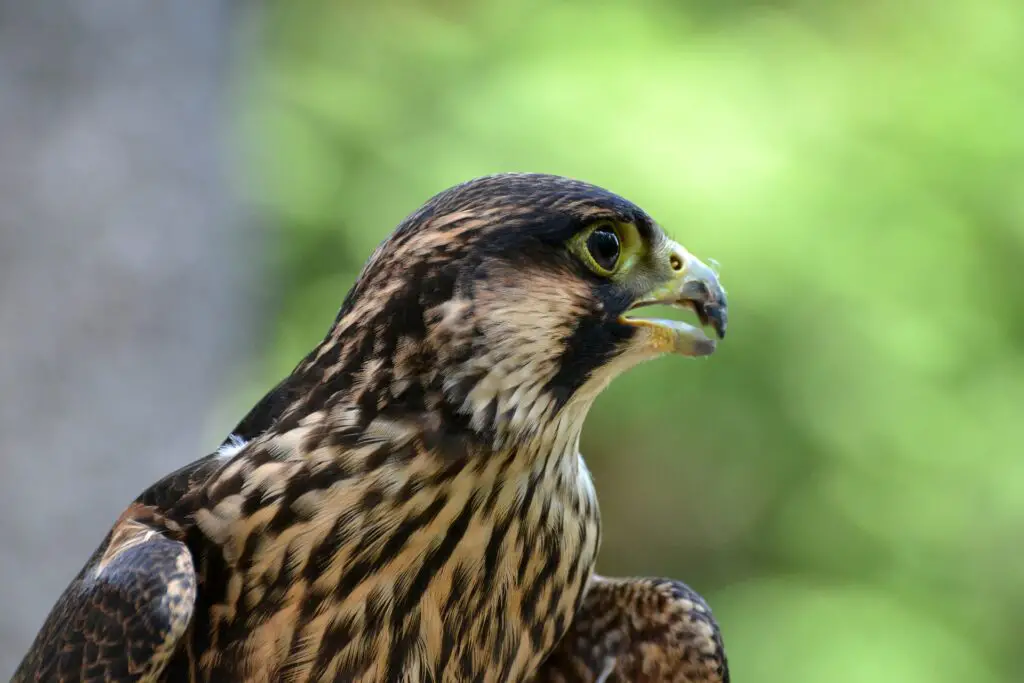
What does it mean when they say a peregrine punches its prey?
Among birds of prey, the peregrine falcon is known for its impressive hunting abilities. One of the falcon’s hunting techniques is known as “striking” or “punching.” This involves the peregrine diving down on its prey from a high altitude and using its powerful legs to strike the victim. The force of the impact is often enough to kill or disable the target, making it easy for the peregrine to swoop in and make the kill. This hunting method requires excellent accuracy and coordination, as the peregrine must time its dive perfectly to make a successful strike. While “striking” may sound brutal, it is an efficient and effective way for the peregrine to secure its next meal.
Does a falcon punch kill prey on impact?
The peregrine falcon is a fierce predator that has been known to take down animals much larger than itself. One of the falcon’s most impressive hunting techniques is its “punch kill.” When attacking prey, the peregrine will close its talons around the animal’s body and then quickly jerk its head to the side, delivering a decisive blow. This punch is so powerful that it can kill the animal instantly or cause it to suffocate. In either case, the bird can then quickly dispatch its prey and begin eating. While the peregrine’s punch kill is an impressive feat of strength, it is not always successful; sometimes, the bird will misjudge its prey and miss entirely, leaving itself vulnerable to attack.
How hard does a falcon hit its prey?
A falcon’s talons are its most deadly weapon, capable of delivering a crushing blow that can kill even the largest prey and they often do this in falconry. Falcons typically strike their target from above, using the weight of their body to generate extra force. Studies have shown that the impact of a falcon’s talons can reach speeds of up to 60 miles per hour, with a force of up to 300 pounds per square inch. In comparison, the strongest human punches clock in at around 30 miles per hour and 200 pounds per square inch. This makes the falcon’s talons some of the most potent weapons in the animal kingdom. While not all prey is killed outright by the initial impact, the falcon’s talons can cause severe internal damage, leading to a quick and merciful death for its victim.
Do parents teach young falcons how to dive punch, or does it come naturally to them?
One of the most impressive displays of avian athleticism is the peregrine falcon’s ability to divebomb its prey at speeds approaching 200 miles per hour. But how do these birds learn to dive bomb? Do their parents teach them, or is it instinctive behaviour?
Biologists have observed that peregrine falcons are born with the urge to hunt. Their first attempts at hunting are often clumsy and unsuccessful, but they quickly learn from their mistakes. Young falcons will often perch near their parents and watch as they hunt. They will also imitate their parents’ hunting behaviours, such as flying in circles or hovering in the air. Over time, they perfect their skills and become proficient hunters in their own right.
So peregrine falcons are born with the instinct to hunt, but they must learn the specifics of how to hunt effectively. Their parents play an essential role in this education, serving as both mentors and teachers. Thanks to this transfer of knowledge, peregrine falcons are able to perfect one of the most impressive displays of predatory prowess in the animal kingdom.
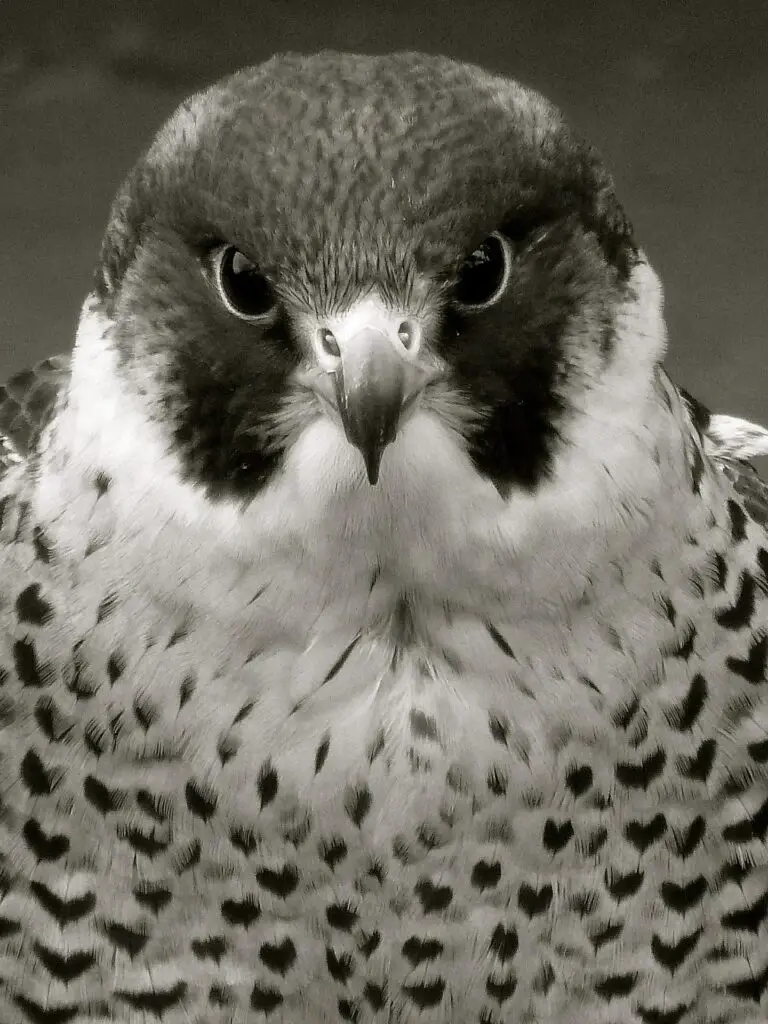
What are the chances of prey surviving a falcon’s punch?
A falcon’s hunting technique is exact and deadly. The bird first locates its prey, then swoops down at high speed, hitting the victim with its powerful feet. This impact is often enough to kill or disable the prey outright. However, some animals are able to survive a falcon’s punch. Smaller prey like rodents or birds may be knocked unconscious but escape serious injury. Larger game, such as rabbits or squirrels, may be stunned by the impact but are able to flee before the falcon can deliver a fatal blow. In either case, the chances of survival are slim; most prey that a falcon hit does not survive.
How does the size and weight of the falcon affect its strike?
The size and weight of a peregrine falcon affect its divebomb strike in several ways. First, the larger the bird, the more momentum it has and the harder it is to change direction. This makes it more difficult for the bird to pull up in time and increases the chances of it hitting its target. Second, the heavier the bird, the more force it can generate when it strikes. This makes it more likely to kill or seriously injure its prey. Finally, the larger the bird, the easier it is for wind resistance to slow it down. This means that the bird has to be moving faster to make a successful strike. All of these factors combine to make the peregrine falcon one of the most lethal predators in the world.
Peregrine falcons are known for their hunting techniques in falconry. While some falconers debate whether or not they punch their prey, the fact remains that these birds are efficient predators. To discover more about these fascinating creatures, check out our other posts on peregrine falcons.