

Perch training is a crucial part of falconry, allowing the falconer to handle and transport their bird safely. The process of perch training a peregrine falcon requires patience, consistency, and trust between the bird and the handler. Here, I’ll go through the steps I took when perch training my peregrine falcon, as well as some tips and tricks to make the process smoother.
Preparing for Perch Training
Before beginning perch training, it is important to have all the necessary equipment ready. The first step is to choose a sturdy perch that’s the right size for the falcon to comfortably stand on. It should be made of a material that’s easy to clean and disinfect to maintain hygiene. Additionally, guarantee the perch is placed in an area free from distractions or loud noises to help the falcon focus during training sessions.
Next, gather the necessary tools, such as a falconry glove, a leash, swivels, and creances. The falconry glove should fit well and provide protection for your hand during handling. The leash should be strong and secure to prevent the falcon from flying off during training. The swivels and leashes will be used to attach the falcon to the perch.
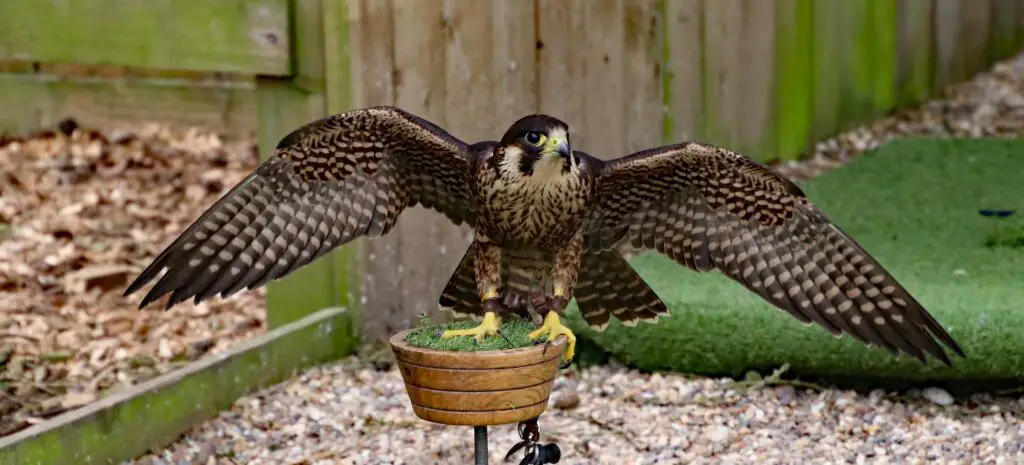
You should also work on creating a suitable environment for the falcon. This includes providing proper housing, food and water, and regular exercise. A happy and healthy falcon will be more receptive to training and have better performance.
Selecting the Right Perch
When choosing the right perch for perch, I always consider selecting a sturdy platform that is appropriate in size and material. The perch should be wide enough for the falcon to comfortably stand on and have a rough surface to provide a good grip for their talons. I always use materials that are durable to withstand the weight and movements of my bird. Here is a comparison table to help you select the best perch for your falcon:
| Perch Type | Advantages | Disadvantages | Recommended |
| Wooden | Natural feel, good grip | Prone to weather damage | Yes |
| PVC | Lightweight, easy to clean | Slippery when wet | No |
| Metal | Long-lasting, sturdy | Conducts heat/cold easily | Yes |
| Concrete | Durable, provides good grip | Heavy and difficult to move | Yes |
Introducing Your Falcon to the Perch
Introducing your falcon to the perch should be done gradually and with patience. Begin by placing the falcon on top of the perch while wearing a glove. Slowly move your hand towards the back of their legs, gently pushing them onto the perch. If they resist, do not force them and try again later.
Once they are comfortably standing on the perch, reward them with a treat and praise. Repeat this process several times a day, gradually increasing the time spent on the perch. It is essential to make sure that your falcon is fully comfortable and confident on the perch before moving on to the next step.
Encouraging Perching Behavior
To encourage perching behavior, it’s essential to create a positive association between the perch and a rewarding experience for your falcon. Start by placing your falcon near the perch and gently guiding it to land on the perch using a lure or a treat. Repeat this process several times, praising and rewarding your falcon each time it successfully perches on the designated spot.
Consistency is key in encouraging perching behavior. Make sure that every training session includes opportunities for your falcon to practice perching. By including perch training into your daily routine, your falcon will gradually become more comfortable and confident in perching on command. Additionally, providing a variety of perches of different sizes, textures, and heights can help improve your falcon’s perching skills and agility.
During training sessions, observe your falcon’s body language closely. Look for signs of interest or readiness to perch, such as head bobbing or wing fluttering. When you notice these cues, gently guide your falcon towards the perch and reward its perching behavior promptly.
Patience and Consistency
When working with these birds, it’s essential to understand that each falcon is unique and will progress at its own pace. Patience is vital. Rushing the training process can lead to setbacks and hinder the falcon’s development.
Consistency in your methods and handling is equally important. Falcons thrive on routine and predictability, so maintaining a consistent training schedule and approach will help build trust and understanding between you and the bird.
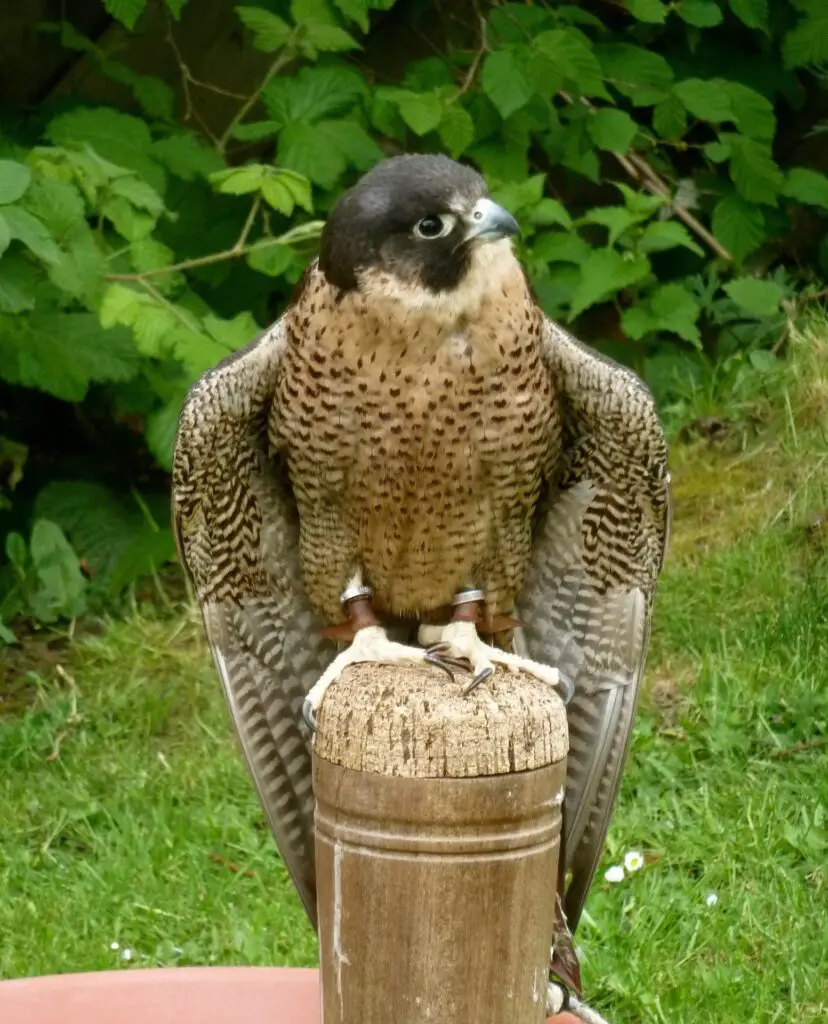
It is essential to approach each training session with a calm and focused mindset. Falcons are sensitive to their handler’s emotions, so staying patient and composed will create a positive learning environment. Celebrate small victories and progress, no matter how incremental, as this will reinforce good behavior and motivate the falcon to continue learning.
Perch training is a fundamental aspect of falconry, and it requires time, patience, and consistency. By preparing the necessary equipment and creating a suitable environment for your falcon, selecting the right perch, and gradually introducing your bird to perching behavior, you can successfully train your peregrine falcon to perch comfortably.
Frequently Asked Questions
How Long Does It Typically Take to Perch Train a Falconry Peregrine Falcon?
- Typically, perch training a falconry peregrine falcon takes several weeks to a few months.
Are There Any Common Mistakes That Falconers Make During the Perch Training Process?
- Improper equipment fitting and lack of patience.
Is It Possible to Train a Falcon to Perch in Different Locations or Heights?
- Yes, it is possible to train a falcon to perch in different locations or heights. By gradually introducing new perching spots during training sessions, the falcon can learn to adapt and feel comfortable perching in various environments.