

To care for a molting peregrine falcon, it is crucial to create a stress-free environment and adjust its diet to support feather regrowth and health. Here are some essential tips on how falconers care for their molting peregrine falcons:
Understanding Molting: What Happens to Peregrine Falcons?
During the molting process, peregrine falcons shed and replace their old feathers to maintain healthy plumage and efficient flight capabilities. This natural cycle usually occurs once a year, and strong, undamaged feathers are essential for falcons to have the best hunting and flying abilities.
Molting typically begins in late spring or early summer and is triggered by changes in daylight and hormone levels. The old feathers are gradually pushed out by the growth of new ones, starting from the head and progressing towards the tail. This can be a physically demanding time for falcons, as they require extra nutrients and care to support the growth of new feathers. Ensuring they have a balanced diet rich in proteins, vitamins, and minerals is crucial during this period to aid in feather regeneration and overall health.
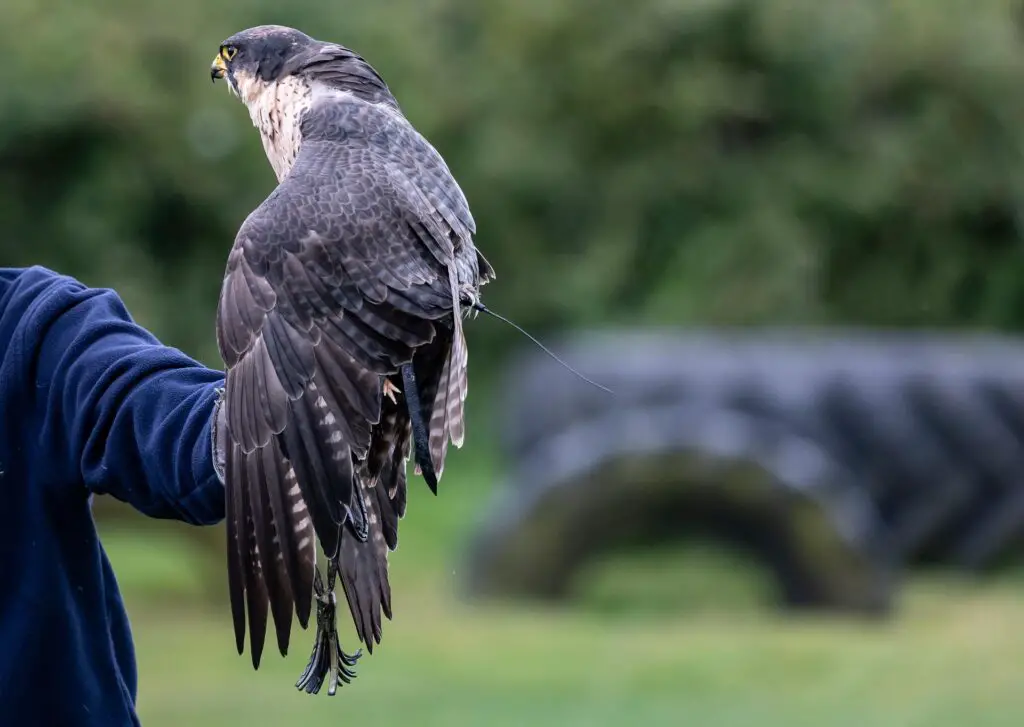
Understanding the molting process allows you to provide the necessary support and care for their peregrine falcons, helping them shift smoothly and emerge with strong, sleek feathers for successful flights and hunts.
Dietary Adjustments During Molting
To support the molting process of peregrine falcons, you should make the necessary dietary adjustments to promote peak feather regeneration and overall health. During this critical period, the falcon’s nutritional needs change to aid in the growth of new feathers and to maintain its well-being. Here are three key dietary adjustments that falconers should consider:
- Increased Protein Intake: A diet rich in high-quality protein sources, such as fresh meat or specially formulated falconry food, can support feather growth and help the falcon maintain its muscle mass during molting.
- Essential Fatty Acids: Including sources of omega-3 and omega-6 fatty acids in the falcon’s diet, such as fish or flaxseed, can help improve feather quality and maintain proper skin health.
- Vitamins and Minerals: Supplementing the falcon’s diet with essential vitamins and minerals, like vitamin E and calcium, can help support the overall health of the bird and aid in the molting process.
Creating a Comfortable Molting Space
Creating a stress-free and comfortable environment for the peregrine falcon during molting is essential for its well-being and successful feather regeneration. Here are some tips to help create an ideal space for your falcon:
| Comfortable Molting Space | Description |
| Temperature Control | Make sure the area is not too hot or cold, maintaining a comfortable temperature for the falcon. |
| Soft Flooring | Provide soft bedding materials to cushion the falcon’s sensitive feet during molting. |
| Natural Light | Allow natural light to enter the space, mimicking the falcon’s natural habitat. |
| Quiet Environment | Minimize noise and disturbances to create a peaceful setting for the falcon to relax and regenerate |
| Adequate Space | Allow ample room for the falcon to move around freely and stretch its wings comfortably. |
Monitoring Health and Behavior Changes
During molting, you may notice changes in your peregrine falcon’s behavior and physical appearance. It is essential to monitor these changes closely and seek veterinary help if necessary.
Health Monitoring:
- Physical Examination: Conduct regular physical examinations to check for any signs of injury, illness, or abnormalities. Look for signs of feather damage, skin lesions, or parasites.
- Weight Monitoring: Track their weight to ensure they are maintaining a healthy body condition. Sudden weight loss can indicate health issues or nutritional deficiencies.
- Dietary Assessment: Ensure they are consuming an appropriate diet rich in nutrients essential for feather growth and overall health. Monitor their food intake and adjust their diet if necessary.
- Blood Tests: Periodically perform blood tests to assess their overall health, check for any infections, and monitor the levels of essential nutrients and hormones.
Behavior Monitoring:
- Activity Levels: Observe their daily activity levels to ensure they are moving normally and engaging in typical hunting and flying behaviors.
- Feather Preening: Note any changes in feather preening behavior, as excessive preening or picking can indicate discomfort or irritation associated with molting.
- Flight Performance: Monitor their flying abilities to ensure they can fly effectively despite the molting process. Look for any signs of decreased agility or stamina.
- Social Interactions: Observe their interactions with other birds to assess their social behavior and ensure they are not being bullied or excluded from their social group.

Molting is a natural and crucial process for peregrine falcons that requires proper care and support from falconers. By understanding the molting process, making necessary dietary adjustments, creating a comfortable molting space, and monitoring health and behavior changes, you can help your peregrine falcon successfully emerge with strong, healthy feathers for optimal hunting and flying abilities.
Frequently Asked Questions
Can Molting Peregrine Falcons Still Fly During This Period?
- During molting, peregrine falcons can fly but may be more cautious because feather loss affects their speed and agility.
Do Falconers Need to Adjust Training Routines During Molting?
- Adjusting training routines during molting is recommended to avoid further stress on the bird and allow for proper feather regeneration. Light exercise, such as short flights or free-flying in a controlled environment, can help maintain muscle strength without hindering the molting process.
How Long Does Molting Typically Last?
- The duration of molting can vary for each peregrine falcon, but it typically takes 8-12 weeks to complete the molting process. Some factors that may affect the duration include age, health status, and diet.