

When luring training a Peregrine Falcon for falconry, I believe that choosing the right lure is key. Match the size, color, and movements to mimic natural prey. Spend quality time building trust and bonding with your falcon. Use a specially designed lure to simulate hunting behavior and teach them to focus on a target. Start slowly, gradually increasing distance and height as your falcon improves. Monitor their reactions closely and maintain consistency. Reward their successes to reinforce training effectively. Mastering these steps will pave the way for a successful falconry journey.

Selecting the Right Lure
When selecting the right lure for training a Peregrine Falcon, I always consider the size, color, and movement to mimic natural prey effectively. The size of the lure should resemble the typical prey of the Peregrine Falcon, such as small birds or rodents. It’s important to match the size of the lure to what the falcon would naturally hunt to ensure the training is effective.
I also found that color plays a significant role in attracting the falcon’s attention. Bright, contrasting colors like red, yellow, or orange can make the lure more visible and appealing to the falcon. These colors can simulate the appearance of a healthy and vibrant prey animal.
In terms of the material, I always pick one that’s durable and can withstand the falcon’s sharp talons and beak. I commonly use leather lures due to their toughness and ability to withstand the bird’s powerful grip. The size of the lure should be appropriate for the birds’s hunting capabilities. A lure that’s too large may be challenging for the bird to handle, while one that’s too small may not be as engaging.
Building Trust and Bonding
Before starting any training, it’s crucial to spend quality time building trust and bonding with your falcon. This process will help establish a strong foundation for successful training sessions. Spend time hand-feeding your falcon and allowing them to get comfortable around you. Take things slow and be patient, as this trust-building period may take some time. Here are some key tips to help you establish a meaningful connection with your bird of prey:
- Spending Quality Time: Dedicate time each day to interact with your falcon, whether it’s through training sessions, feeding, or simply being in its presence.
- Positive Reinforcement: Use rewards like food treats to reinforce good behavior and create a positive association with training sessions.
- Understanding Body Language: Learn to interpret your falcon’s body language to better understand its moods and needs, allowing you to respond appropriately.
- Respect Boundaries: Always respect your falcon’s personal space, as they are still wild animals and may become aggressive if they feel threatened.
Introducing Lure Training
Training a Peregrine Falcon with a lure is a key step in falconry. The lure teaches the bird to focus on a target for flying exercises. It acts like a signal, drawing the falcon’s attention and sharpening its hunting skills. When starting with the lure, it’s key to make the falcon see it as something good so it wants to chase it during training.
To start lure training, I first let the falcon get used to how the lure looks and smells. I put the lure near the falcon so it can check it out. Adding the lure to feeding times helps the falcon link the lure with good things, like food.
As the falcon gets used to the lure, I begin to move it to act like its prey. This step grabs the falcon’s attention and gets it ready to hunt. Moving the lure like a prey animal makes the falcon focus more, getting it ready for more flying training later. Pay close attention to how your falcon acts and reacts during training. This way, you can change how you train to fit your falcon’s needs and speed of learning. Be consistent in how you train your falcon. Doing things the same way helps your falcon learn and remember better. This builds a strong base for your falcon’s training and growth.
Steps to Lure Training
The following steps are what I do when lure training my Peregrine Falcons:
- Start by familiarizing your falcon with the lure in a positive and non-threatening manner.
- Slowly incorporate the lure into feeding times to create a positive association.
- Gradually increase the movement of the lure, mimicking natural prey behavior.
- Once your falcon is comfortable with the lure, begin incorporating distance and height into training sessions.
- Monitor your falcon’s reactions closely and adjust training accordingly.
- Use positive reinforcement, like food rewards, to reinforce good behavior and progress.
- As your falcon improves, the difficulty of training gradually increases by simulating various hunting scenarios.
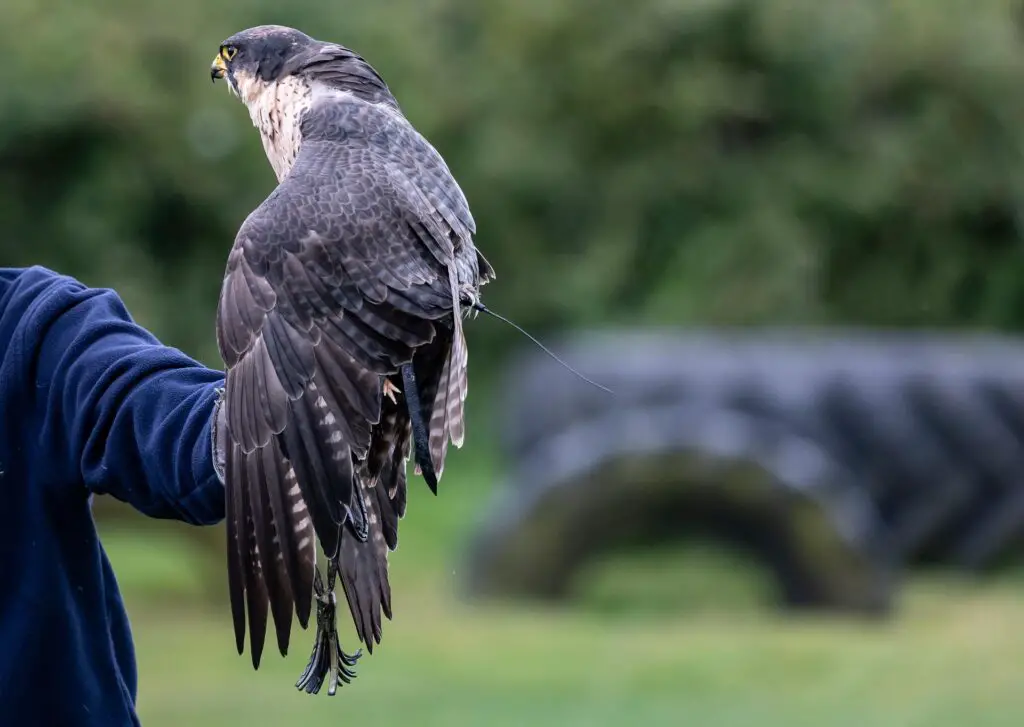
During these initial stages, patience is key. Each falcon is unique, and some may take longer to warm up to the lure. Observing the falcon’s behavior closely and adjusting your training methods accordingly can help make lure training better for both you and your bird.
Reinforcing Training Through Rewards
Reinforcing the peregrine falcon’s training through rewards enhances its motivation and strengthens the desired behaviors. When working with these birds, it’s important to understand the power of positive reinforcement. Offering rewards like food treats or praise immediately after the falcon successfully completes is important. This creates a positive association in the falcon’s mind, encouraging it to repeat the desired behavior in the future.
Using rewards strategically can also help shape more complex behaviors. By breaking down the training process into smaller steps and rewarding the falcon for each incremental achievement, you can gradually build up to the desired behavior. This method, known as shaping, allows you to guide the falcon toward the ultimate goal while keeping it engaged and motivated throughout the training process.
Ultimately, by consistently rewarding the peregrine falcon for its efforts and successes, you can create a strong foundation for effective falconry training. Remember, patience and consistency are key when reinforcing training through rewards.
Frequently Asked Questions
How Often Should I Replace the Lure Used for Training a Peregrine Falcon?
- Depending on the material, wear and tear can occur over time from the bird’s sharp talons and beak. It’s recommended to replace the lure every 6-12 months or sooner if it shows signs of damage.
Can I Use Other Types of Lures besides a traditional leather lure?
- Yes, there are various types of lures available on the market, such as plastic or feathered lures.
How Can I Prevent My Peregrine Falcon From Becoming Distracted by Other Prey While Lure Training?
- It’s important to choose a quiet and secluded training area away from other potential prey animals.