
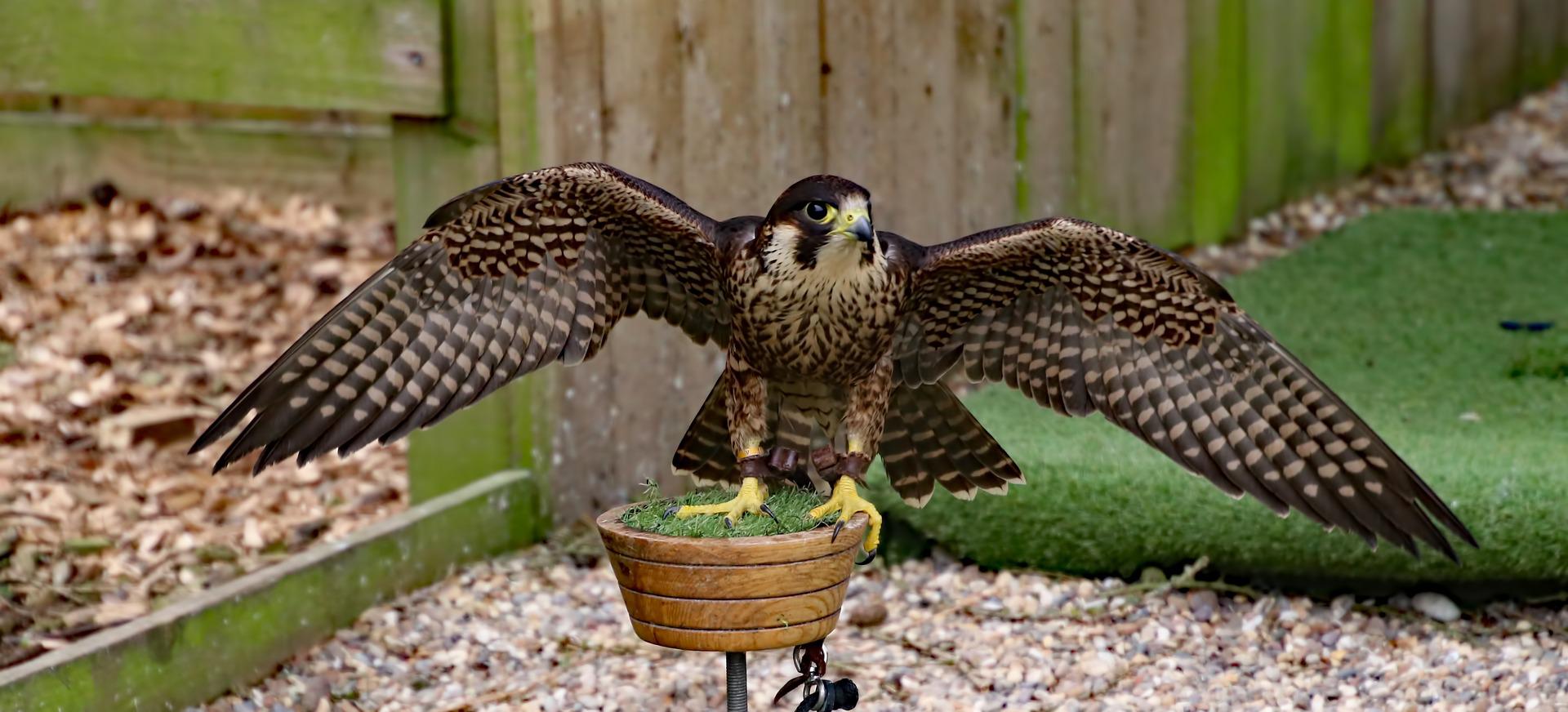
You’ll need several specialized equipment and supplies to train a peregrine falcon. These birds are known for their incredible speed, strength, and agility, so it’s important to have the right tools to help them reach their full potential as hunters. Below is a list of essential equipment for training a peregrine falcon.
Falconry Glove
When training a Peregrine Falcon, the Falconry Glove is essential to protect your hand while handling the bird. The glove is made of thick leather, providing a barrier between your skin and the sharp talons of the falcon. It’s designed to withstand the bird’s gripping strength, which can be quite powerful. The glove should fit snugly but allow for flexibility in your fingers when handling tasks.
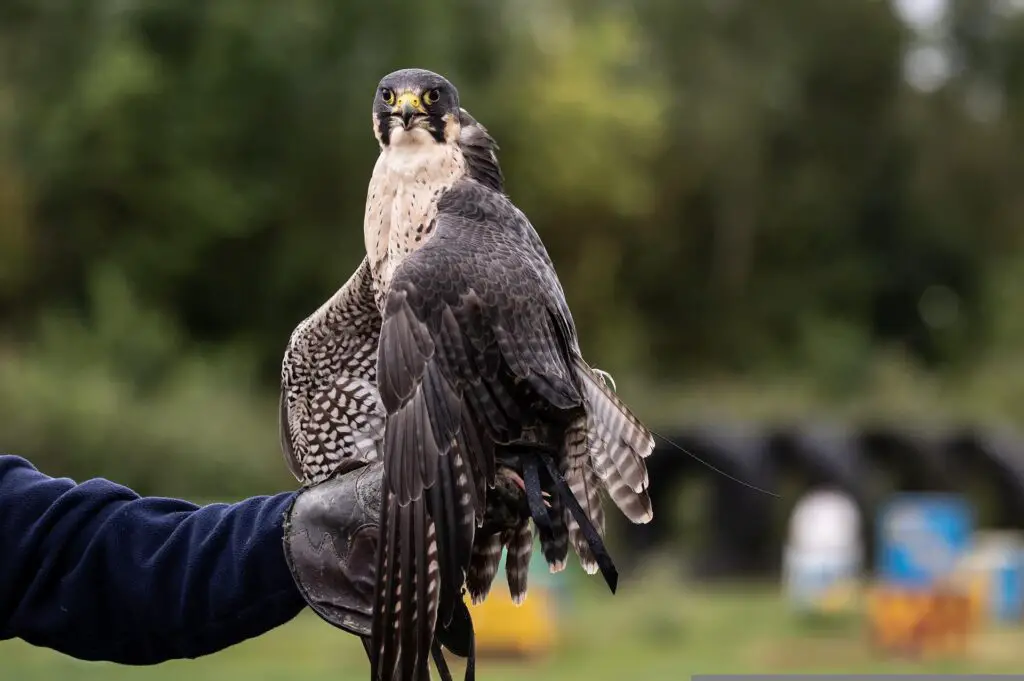
Using the Falconry Glove properly is important for maintaining a safe and comfortable interaction with your Peregrine Falcon. Before approaching the bird, ensure the glove is securely fastened to your hand. When offering food or training cues, present your gloved hand palm-up, allowing the bird to perch or land without causing harm. Practicing good glove hygiene is essential to prevent the spread of any potential infections between you and the falcon. Remember, the Falconry Glove isn’t just a piece of equipment but a crucial protective barrier that fosters a successful training relationship with your bird.
Jesses and Leashes
I attach jesses and leashes to my Peregrine Falcon to provide controlled restraint during training sessions. Jesses are thin strips of leather attached around the bird’s legs, just above the feet, and serve to handle and secure the falcon. Leashes are connected to the jesses and give the falcon more freedom while maintaining control. These tools are essential for safety and effective guidance when training my Peregrine Falcon.
Jesses and leashes are vital in falconry training as they allow me to keep my bird close by without restricting its movements entirely. The jesses are carefully fitted to ensure they’re snug but not constricting, providing a comfortable experience for the falcon. The leashes extend from the jesses and enable me to guide the falcon during training exercises, ensuring it stays within a safe distance.
Lure and Whistle
A lure is a small, weighted object used as prey in training exercises. It’s typically made of leather or fur and mimics the movements of small animals like rabbits or birds. Using a lure, you can simulate hunting scenarios for your Peregrine Falcon without causing harm to live prey. The falcon will learn to chase and capture the lure, honing its hunting instincts and skills.
A whistle is essential to communicate with the falcon during training. The specific sound of the whistle can serve as a cue for the bird to fly, return, or perform other tasks. Training your Peregrine Falcon to recognize different whistle commands is crucial in developing a strong bond and trust between you and your bird.
Perches and Blocks
Positioned strategically within the training area, perches and blocks are essential tools for providing resting spots and launching points for the Peregrine Falcon during training sessions. Perches, typically made of natural branches or PVC piping, mimic the falcon’s natural environment and offer elevated vantage points for the bird to observe its surroundings. These perches are vital for maintaining the falcon’s physical strength and mental sharpness.
Blocks, usually wooden platforms of varying heights, help simulate different take-off points, preparing the falcon for aerial pursuits. Observing the falcon’s behavior around these structures helps me gauge its comfort level and adjust training strategies accordingly. Placing perches and blocks requires careful consideration to safeguard the falcon’s safety and optimize its training experience.
Mews or Aviary
A mews or aviary is a larger training area where the Peregrine Falcon can freely fly and practice hunting skills in a controlled environment. These structures serve as a haven for the bird while providing ample space for flight exercise and mental stimulation. A spacious mews enables the falcon to build its strength, agility, and endurance gradually.
Keeping your Peregrine Falcon in a mews or aviary also provides a consistent and safe training environment, limiting external distractions that may impact the bird’s focus. It’s essential to maintain cleanliness and hygiene within these structures to prevent any potential infections that may hinder your bird’s success.
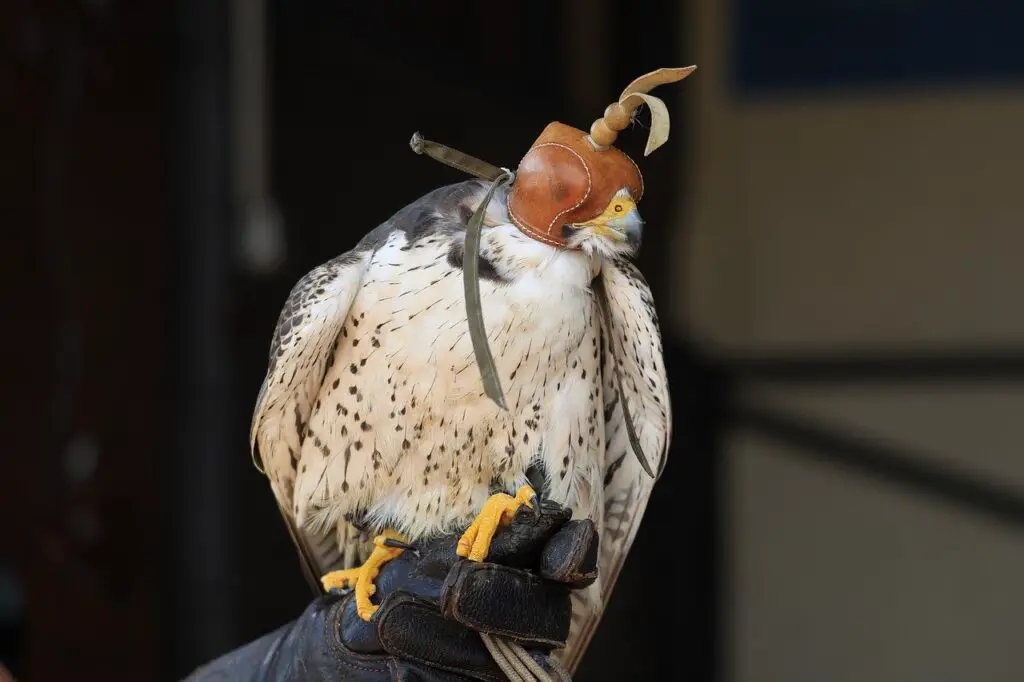
Here are some considerations for setting up a suitable mews or aviary:
- Size: The mews or aviary should be spacious enough to allow the falcon to exercise and stretch its wings adequately.
- Perches: Various perches of different heights and textures should be provided to mimic natural environments and encourage natural behaviors.
- Lighting: Proper lighting, including natural sunlight or artificial full-spectrum lighting, is critical for the falcon’s health and mental well-being.
- Ventilation: Good airflow is crucial to maintain air quality and regulate temperature within the mews or aviary.
- Security: To guarantee the safety of the Peregrine Falcon during training sessions, make sure the mews or aviary is predator-proof and escape-proof.
Telemetry System
A telemetry system is a tracking device attached to the Peregrine Falcon during training exercises or hunting trips. It allows falconers to monitor their bird’s location and movements, ensuring its safety and retrieval in case of escape or loss. These systems use radio waves or GPS technology, providing real-time data on the falcon’s whereabouts.
Proper usage and maintenance of a telemetry system are crucial for successful falconry training. Regularly checking and changing the batteries, ensuring the signal strength is strong, and familiarizing yourself with any potential technical issues can help prevent mishaps and ensure the safety of your Peregrine Falcon.
| Telemetry System Features | Description |
| GPS Tracking | Pinpoints falcon’s location |
| Accelerometer | Measures speed and altitude |
| Barometer | Monitors air pressure |
| Gyroscope | Tracks falcon’s orientation |
| Data Logger | Records flight data |
Scales
I carefully weigh and prepare the precise portions of scales and food essential for the Peregrine Falcon’s daily dietary requirements. As a falcon trainer, it’s important to ensure the bird receives the correct nutrients and amounts to maintain its health and performance.
Here are some key considerations:
- Balanced Diet: The falcon’s overall well-being requires incorporating a mix of high-quality proteins, fats, vitamins, and minerals.
- Weighing: Regularly weighing the food portions helps monitor the falcon’s intake and adjust as needed to maintain the best weight.
- Variety: Offering a range of food items such as quail, pigeons, and other small birds ensures the falcon receives a diverse range of nutrients.
- Calcium Supplements: Including calcium supplements or sources like crushed eggshells helps prevent calcium deficiency, especially in breeding females.
- Feeding Schedule: A consistent feeding schedule ensures the falcon receives meals at appropriate times to support its training and hunting activities.
Bath Pan
The Peregrine Falcon’s bath pan should be shallow yet spacious enough to allow for comfortable bathing and drinking. When providing water for a falcon, it’s important to guarantee the cleanliness and safety of the water source. Falcons are meticulous creatures who prefer to bathe and drink clean water.
A shallow pan, around 2-3 inches deep, is ideal for the falcon to immerse itself during bathing comfortably. This depth allows the falcon to splash around and clean its feathers effectively. Additionally, the pan should be wide enough for the falcon to move around comfortably. It’s important to change the water frequently to prevent any contamination or bacterial growth.
Hooding
Hooding is a training technique used to condition the falcon to remain calm and focused during transportation or social settings. A hood is a leather cap that fits comfortably over the bird’s head, covering its eyes and preventing any visual distractions. This method is crucial for keeping the Peregrine Falcon relaxed and cooperative during falconry outings.
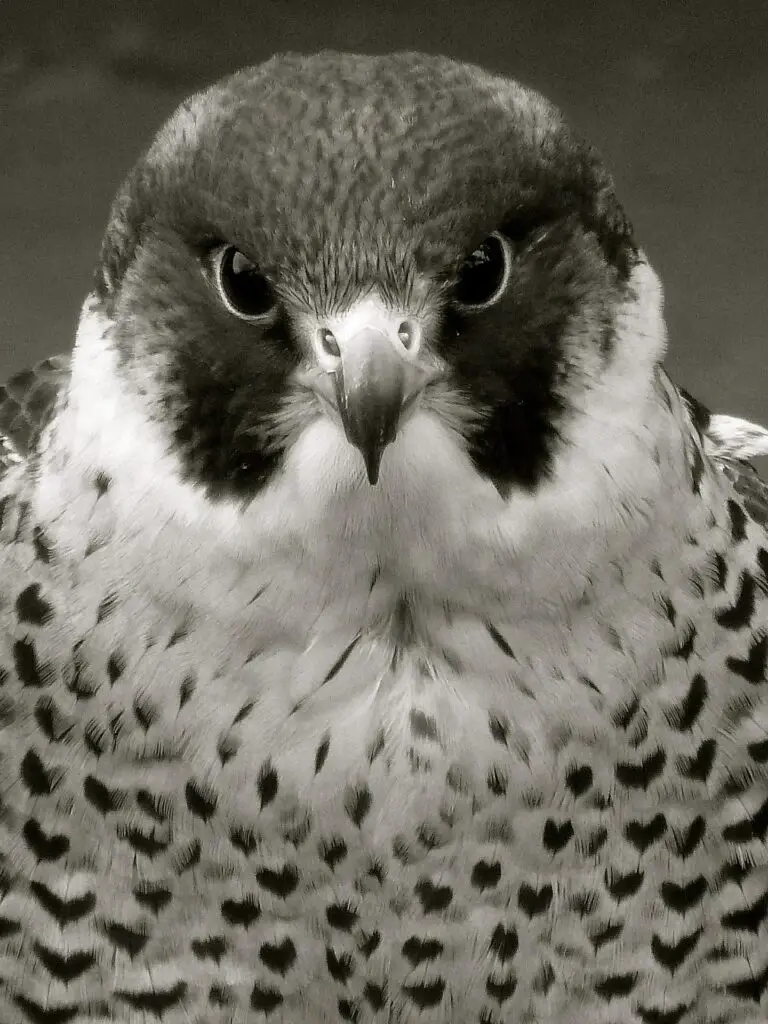
Properly fitting the hood and desensitizing the bird to this tool is crucial. A well-fitted hood should completely cover the falcon’s eyes while allowing it to breathe comfortably. Gradual exposure and positive reinforcement can help the Peregrine Falcon become accustomed to wearing a hood without feeling anxious or stressed.
Falconry training requires careful attention to detail and providing a conducive environment for the Peregrine Falcon to thrive. From setting up a suitable mews or aviary to utilizing modern technology like telemetry systems, every aspect plays a crucial role in training and nurturing these birds of prey.
Frequently Asked Questions
How Do You Introduce a Peregrine Falcon to the Lure?
- To introduce a peregrine falcon to the lure, I start slowly, dangling it near the bird to pique interest.
What’s the Best Way to Acclimate a Falcon to a New Perch?
- Gradually introduce the bird to the perch location, rewarding desired behavior with treats. Allow the falcon to explore the perch at its own pace, creating positive associations. Patience is key in this process.
What is the Importance of Using a Hood in Training?
- Using a hood in training is essential for reducing visual stimuli and calming the falcon. This helps prevent stress and maintain focus during training sessions.
How Often Should a Peregrine Falcon Be Weighed on Scales?
- I weigh my peregrine falcon regularly on scales to monitor its health and ensure proper training. Typically, a falcon should be weighed daily during training sessions.