
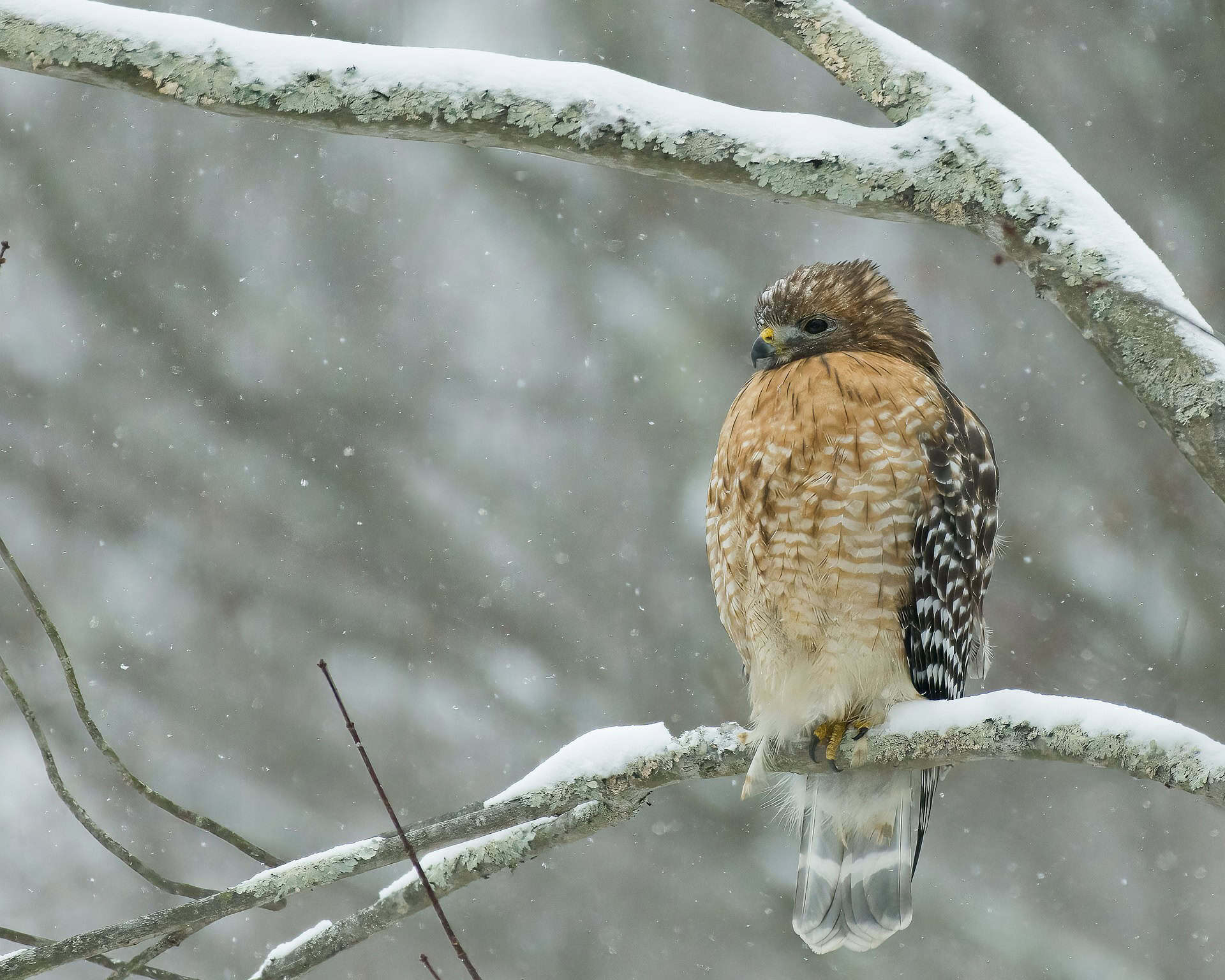
Falconry is more than just a hobby to falconers. It’s an ancient and honourable art form that dates beyond the Viking era. It involves understanding the behaviour of your bird of prey, caring for its health and well-being, as well as providing physical exercise. But perhaps one of the most intriguing aspects to many aspiring falconers is: what can you hunt with a red-shouldered hawk?
Falconers have used Red-shouldered hawks to hunt a multitude of prey this is including rat mice, squirrels, rabbits, and voles, along with other small mammals and, more often than not, pheasants. In the wild, they also prey on snakes, insects, worms, snails, and reptiles, and they especially like frogs. In addition, they are opportunistic predators and will even eat carrion if it is available.
When I started my journey with my first red-shouldered hawk, I was curious to know what I could hunt with these raptors, and to my surprise, I learned that there is a whole host of prey that can be targeted, so in this post, I will dive into the fascinating world of red-shouldered hawking, exploring the various techniques and strategies used by expert falconers in pursuit of various quarry ranging from small game animals like rabbits to larger birds such as pheasants.
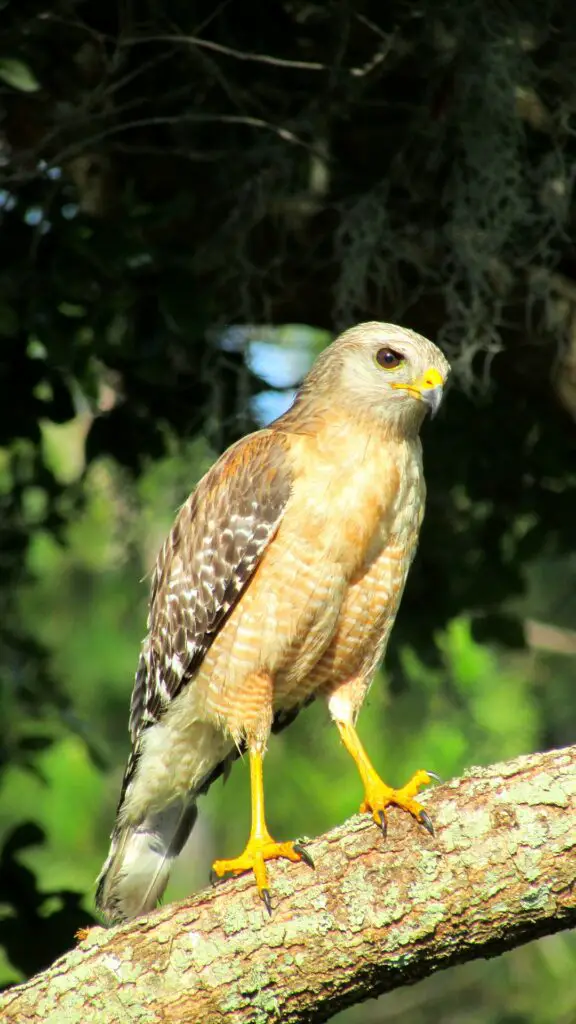
Game species commonly hunted with red-shouldered hawks.
Picture this: you’re venturing deep into the forest, ready to hunt game with your red-shouldered hawk. You hear the rustling of leaves and the chirping of birds as your hawk flies off to scout ahead. Suddenly, it spots prey and swoops down to capture it with lightning-fast speed. Red-shouldered hawks are adept at hunting small game like rabbits, squirrels, and even small birds. These majestic birds are popular with hunters because of their exceptional hunting instincts and loyalty to their handlers. As you continue on your hunting journey, you’ll be amazed by what your red-shouldered hawk can do – this bird truly is a force to be reckoned with in the hunting world.
Techniques for hunting rabbits with a red-shouldered hawk
When you plan on hunting rabbits with a red-shouldered hawk, you should consider a few tips and tricks to make your hunt more successful. Before venturing out, you should know that these birds of prey are skilled hunters and will take down a rabbit and mere seconds. The only job you have to do is select the proper hunting grounds that have this prey in abundance. To do this, you should avoid overcrowded areas and areas that have lots of noise. To enhance the success rate of your hunt, you can use ferrets or hunting dogs such as Jack Russels to flush prey out. Finally, before even attempting to hunt rabbits, you should ensure that you often train with your raptor to enhance both your and your bird’s skill and ability to hunt. If these tips are followed, you can expect to bring plenty of rabbits to the table.
Techniques for hunting squirrels with a red-shouldered hawk
Suppose you considered going hunting with your red-shouldered hawk. In that case, this could be a rewarding experience, even though it may seem like an unusual tactic. The red-shouldered hawk is a skilled hunter and will easily take down squirrels. Many methods can be used, but the most common of them all is allowing your bird to perch high up and wait for a squirrel to pop up. This will only work if you choose the right location. If not, you may be waiting the whole day with no joy. Squirrel hunting is a magnificent experience that cannot be explained. It needs to be felt but to feel this experience, you ensure many training sessions need to be conducted to ensure you and your bird are both equipped to hunt squirrels.
Techniques for hunting voles with a red-shouldered hawk
Undoubtedly, using a red-shouldered hawk to hunt voles is a pretty impressive feat. But how do you go about doing it? Well, first things first – you need to train your hawk to recognize and pursue voles. This involves getting the hawk used to the scent and sight of voles and practising with mock hunts until they’re ready for the real deal. Timing is also key – voles are most active during the early morning or late evening, so that’s when you want to take your hawk out. After that, it’s all about letting your hawk loose, closely watching its movements, and rewarding them when it catches something.
Techniques for hunting small birds with a red-shouldered hawk
Using red-shouldered hawks to hunt smaller birds is something that will come naturally to your hawk th main job you would have is finding a landscape rich with prey items, and your hawk can do the rest. This means walking through the woods with your hawk on your glove and waiting for it to see a bird. One way to hunt is called “hawking.” You release your hawk, and it looks for prey from high above. Of course, you have to be patient while it does its job. Red-shouldered hawks are good hunters; with some training, they can help you hunt.

With their acute eyesight and agile flight skills, Red Shouldered Hawks make excellent hunting companions for experienced falconers. Hunting with a Red Shouldered Hawk is an enjoyable and rewarding pastime and helps control rodent populations near homes and farms. While success when hunting with a Red Shouldered Hawk depends largely on the falconer’s experience, they can be trained to catch everything from small birds to rabbits, raccoons, and other animals. Falconry is truly an ancient art form that has been passed down through generations and remains popular today. With the right knowledge and practice, any falconer can successfully train a Red Shouldered Hawk to hunt. With so many possibilities available – from hunting for sport or pest control – there’s sure to be something for everyone who wants to experience the thrill of hawking with a Red Shouldered Hawk!