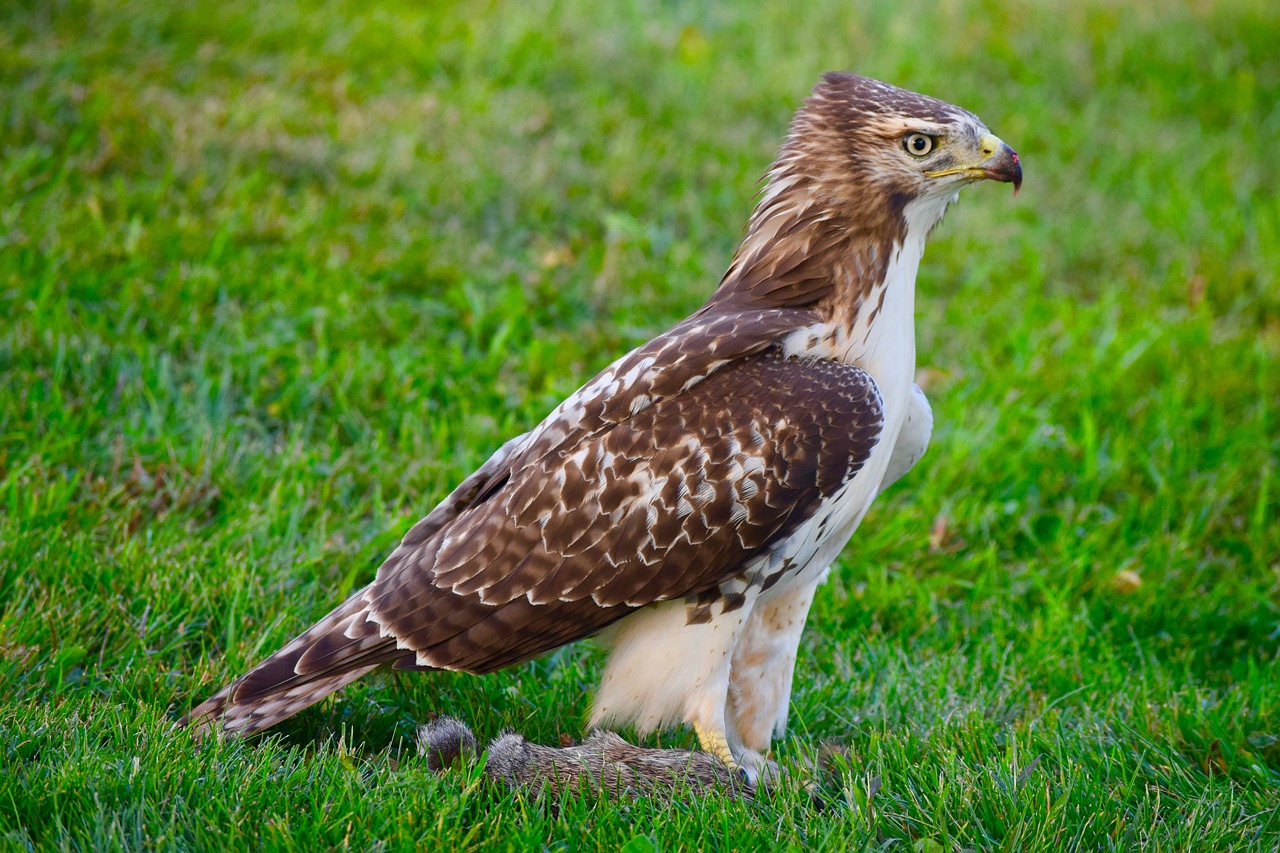
To properly equip a red-tailed hawk’s mew, you’ll need perches of various sizes and textures, a cozy nesting box, wide roosting bars, engaging enrichment toys, specialized lighting, efficient coolers, and robust security measures. These elements ensure the hawks’ comfort, safety, and mental stimulation. Each item plays a crucial role in supporting these majestic birds’ natural behaviors and well-being. Remember, the right equipment setup can significantly enhance the quality of life for your red-tailed hawks.
Equipment Needed in Red-Tailed Hawks Mew or Aviary
- Perches
- Nesting Box
- Roosting Bars
- Enrichment Toys
- Specialized Lighting
- Birdbath
- Heaters
- Coolers
- Security Measures
Perches of Various Sizes and Textures
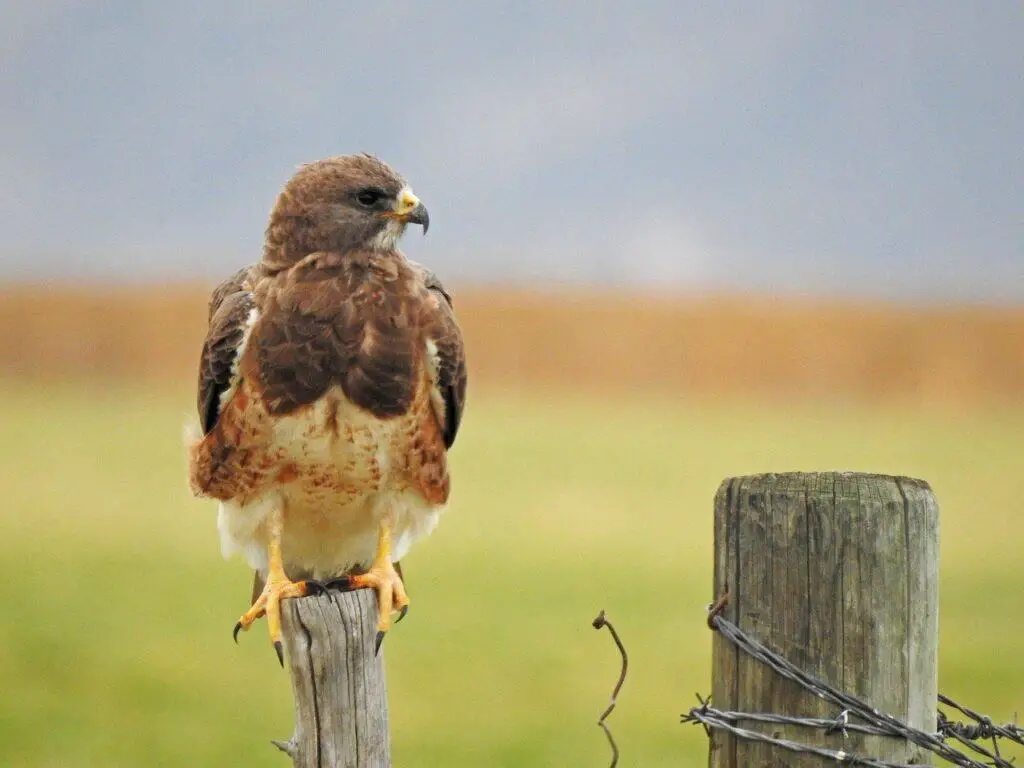
Red-tailed hawks need a variety of perches in their mew to exercise their feet, legs, and wings. The perch diameter should match the bird’s foot size, allowing it to comfortably grip and balance. You can use branches, dowels, or natural logs for perches, but they must be free from splinters and rough edges that could harm the hawk’s feet. Consider providing different textures such as smooth, rough, and bumpy surfaces for the hawk to experience diverse sensations while perching.
Cozy Nesting Box
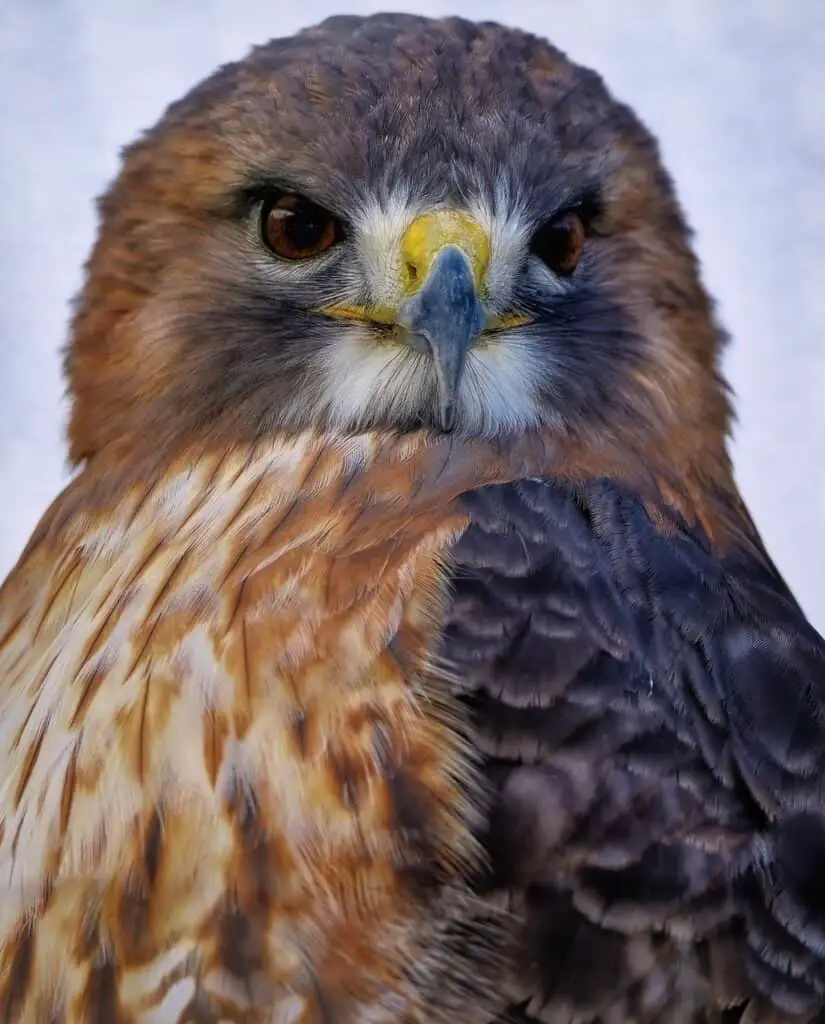
A nesting box provides shelter for your red-tailed hawks to rest and sleep in. It mimics their natural nesting conditions in the wild, providing a sense of security and comfort. The box should be large enough for the hawk to move around comfortably and made from sturdy materials to withstand their powerful talons. Make sure it is well-insulated and protected from extreme temperatures.
Wide Roosting Bars
Roosting bars are essential for red-tailed hawks to maintain healthy feet and leg muscles. These birds often perch on branches while hunting or waiting for prey, so having wide roosting bars in their mew allows them to mimic this natural behavior. The bars should be at least 3-4 inches wide to comfortably accommodate the hawk’s feet.
Enrichment Toys
Incorporating a variety of enrichment toys is crucial to enhance the environmental stimulation and mental engagement of a red-tailed hawk in its mew or aviary. These toys help prevent boredom and encourage natural behaviors. Below is a table showcasing some essential enrichment toys for red-tailed hawks:
| Enrichment Toys | Description | Benefits |
| Foraging puzzles, interactive feeders | Toys that require problem-solving to access food | Stimulates natural foraging instincts |
| Climbing structures, hanging swings | Structures for physical exercise and play | Promotes physical activity and agility |
| Puzzle feeders, treat dispensers | Toys that dispense treats as rewards | Encourages mental stimulation and rewards |
Lights
When setting up the lighting system in a red-tailed hawk’s mew or aviary, proper illumination levels are essential to support the bird’s natural circadian rhythm and overall well-being.
- Dimmer switch, bird behavior: Adjusting the light intensity can mimic sunrise and sunset, influencing the hawk’s activity levels.
- Natural lighting and hunting patterns: Providing a light cycle similar to the natural environment can help maintain the bird’s hunting instincts and patterns.
- LED bulbs and sleep cycles: LED bulbs can more effectively regulate the hawk’s sleep-wake cycles than traditional lighting.
- UV lighting, feather health: Incorporating UV lighting aids in the synthesis of Vitamin D, which is crucial for maintaining healthy feathers.
- Spotlight training sessions: Using spotlights during training sessions can help focus the hawk’s attention and improve training outcomes.
Bathing
Regularly providing a suitable birdbath or shallow container for water is crucial in maintaining the hygiene and health of a red-tailed hawk housed in a mew or aviary. Feather care is essential during bathing to ensure the hawk’s plumage remains in optimal condition. The water temperature should be lukewarm, around 85-100°F, to prevent thermal stress. Bathing frequency varies, but generally, once a week is sufficient. Drying methods involve providing a warm, draft-free area for the hawk to air-dry naturally or using a low-setting blow dryer if needed. Misting techniques can also be employed by lightly spraying the hawk with water to simulate natural rain. Below is a table summarizing key points:
| Topic | Description | Importance |
| Feather care | Essential for plumage health | High |
| Water temperature | Lukewarm (85-100°F) to prevent stress | High |
| Bathing frequency | Typically once a week | Moderate |
Heaters
To maintain optimal temperature conditions within a red-tailed hawk’s mew or aviary, heaters are essential equipment that provides warmth during colder periods. When considering heaters for your avian companions, factors such as temperature control, heating options, insulation techniques, climate considerations, and energy efficiency play crucial roles. Selecting the right heater will ensure your red-tailed hawks stay comfortable and healthy regardless of the external climate. Here is a table outlining some common heating options and their features:
| Heating Option | Features |
| Ceramic Heat Emitters | Provides consistent heat without light emission |
| Radiant Heat Panels | Efficiently warms specific areas without drying the air |
| Infrared Heaters | Emits heat that is easily absorbed by objects and birds |
| Brooders | Ideal for providing warmth to young or injured birds |
| Electric Heaters | Offers adjustable heat settings for precise temperature control |
Coolers
When considering the equipment needed in a red-tailed hawk’s mew or aviary, the inclusion of coolers becomes crucial for maintaining optimal temperature conditions.
- Cooler Insulation: Ensuring proper insulation to regulate temperature effectively.
- Cooler Size: Selecting a size that accommodates the space without overcrowding.
- Cooler Placement: Place the cooler strategically to distribute cool air evenly.
- Cooler Maintenance: Regularly clean and service to uphold efficiency.
- Cooler Brands: Opt for reputable brands known for durability and performance.
Security systems
Ensuring the security of a red-tailed hawk’s mew or aviary necessitates the installation of advanced surveillance and alarm systems. Surveillance cameras and motion sensors are essential for monitoring any suspicious activity within the premises. Alarm systems with access control features add an extra layer of protection, alerting me to any unauthorized access attempts. Security gates and perimeter fencing help in creating a physical barrier to deter intruders. Additionally, biometric scanners or key cards can be utilized to control access to sensitive areas within the mew.
In conclusion, setting up a red-tailed hawk’s mew requires specific equipment to ensure the bird’s safety and well-being. Items such as perches, jesses, and a weathering area are essential for providing a suitable environment for the hawk. Properly outfitting the mew with these necessary tools will help create a comfortable living space for the raptor. Attention to detail in equipping the mew is key to the hawk’s health and happiness.